 German
  English
  Spanish
  Portuguese
  French
  Japanese
  Arabic
  Korean
  Vietnamese
  Russian
 Special Fasteners Processing: A Complete Guide to Making High-Performance Hardware
Special fasteners are specially designed parts that work in tough conditions where regular bolts and screws would break. Unlike ordinary hardware you can buy at any store, these fasteners are used in airplanes, medical equipment, ships, and other important applications where failure could be dangerous. Their special abilities—like working in extreme heat, having incredible strength, or resisting rust—don’t come from the metal alone. Instead, they come from a series of carefully controlled manufacturing steps. Making a special fastener is like a transformation journey. This guide provides a roadmap of that journey, breaking down the key steps that turn raw metal into mission-critical hardware. We will look at the important role of material science, the main manufacturing methods of shaping and cutting, the metal improvement process of heat treatment, the protective coating process, and the final step of thorough quality testing.
The Foundation of Performance
Choosing the right material is the most important first step in Special Fasteners Processing. This choice controls all the manufacturing steps that follow and ultimately determines how well the fastener will perform. The entire process works by combining the natural properties of a metal with the manufacturing methods used to shape and improve it.
How Metal Science Works
Metal science is the field that connects what metals are made of to how they perform mechanically. For special fasteners, properties like tensile strength (how much pulling force they can handle), shear strength (resistance to sideways forces), fatigue life (how long they last under repeated stress), rust resistance, and performance in extreme temperatures are most important. These aren’t random numbers—they directly depend on what elements are in the metal and how its microscopic structure is arranged. Different elements are added to a base metal to achieve specific results. Chromium makes metals more rust-resistant and harder. Molybdenum increases strength at high temperatures. Nickel improves toughness and rust resistance. Vanadium makes the grain structure finer, increasing toughness and shock resistance. The skill in special fastener manufacturing lies in controlling this grain structure through processing to unlock the material’s full potential.
Materialauswahlleitfaden
The environment where a fastener will be used determines what material to choose. A bolt for airplane landing gear needs incredible fatigue strength, while a fastener in a chemical reactor needs superior rust resistance. We use a systematic approach to material selection, guided by what the application demands.
Table 1: Materialauswahlleitfaden for Special Fasteners
| Material Klasse | Specific Alloy Example | Wesentliche Merkmale | Optimal Applications | Processing Considerations |
| Titan-Legierungen | Ti-6Al-4V | High strength-to-weight ratio, excellent corrosion resistance. | Aerospace structures, medical implants, marine hardware. | Difficult to machine; requires vacuum heat treatment; susceptible to galling. |
| Superlegierungen auf Nickelbasis | Inconel 718 | Maintains high strength at extreme temperatures; creep resistant. | Gas turbine engines, combustion sections, nuclear applications. | Extremely difficult to machine; requires specialized solution and aging heat treatments. |
| PH Stainless Steels | 17-4 PH | High strength, good corrosion resistance, hardenable by heat treatment. | Valve parts, gears, chemical processing equipment. | Requires precipitation hardening (aging) after fabrication. |
| Legierte Stähle | 4140 / 4340 | High tensile strength, toughness, and fatigue resistance. | High-strength automotive bolts, structural connections, landing gear. | Must be quenched and tempered; requires protective coating for corrosion. |
Design for Easy Manufacturing
A fastener’s design is closely connected to how it’s made. Design for Manufacturability (DFM) is an important engineering principle where the design is optimized for its manufacturing process. For special fasteners, this means thinking about how geometric features will be formed. The radius of a head-to-shank curve, for example, isn’t just a size requirement—it’s a critical feature that affects stress concentration and is best formed by forging. Choosing a thread form, such as a J-form thread with a larger root radius, is a design choice made specifically to improve fatigue life and work well with the Gewindewalzen process. Tight tolerances may require CNC machining instead of forging, affecting cost and mechanical properties. DFM ensures the final design not only works but can also be manufactured in a way that maximizes its performance characteristics.
Zentrale Fertigungsprozesse
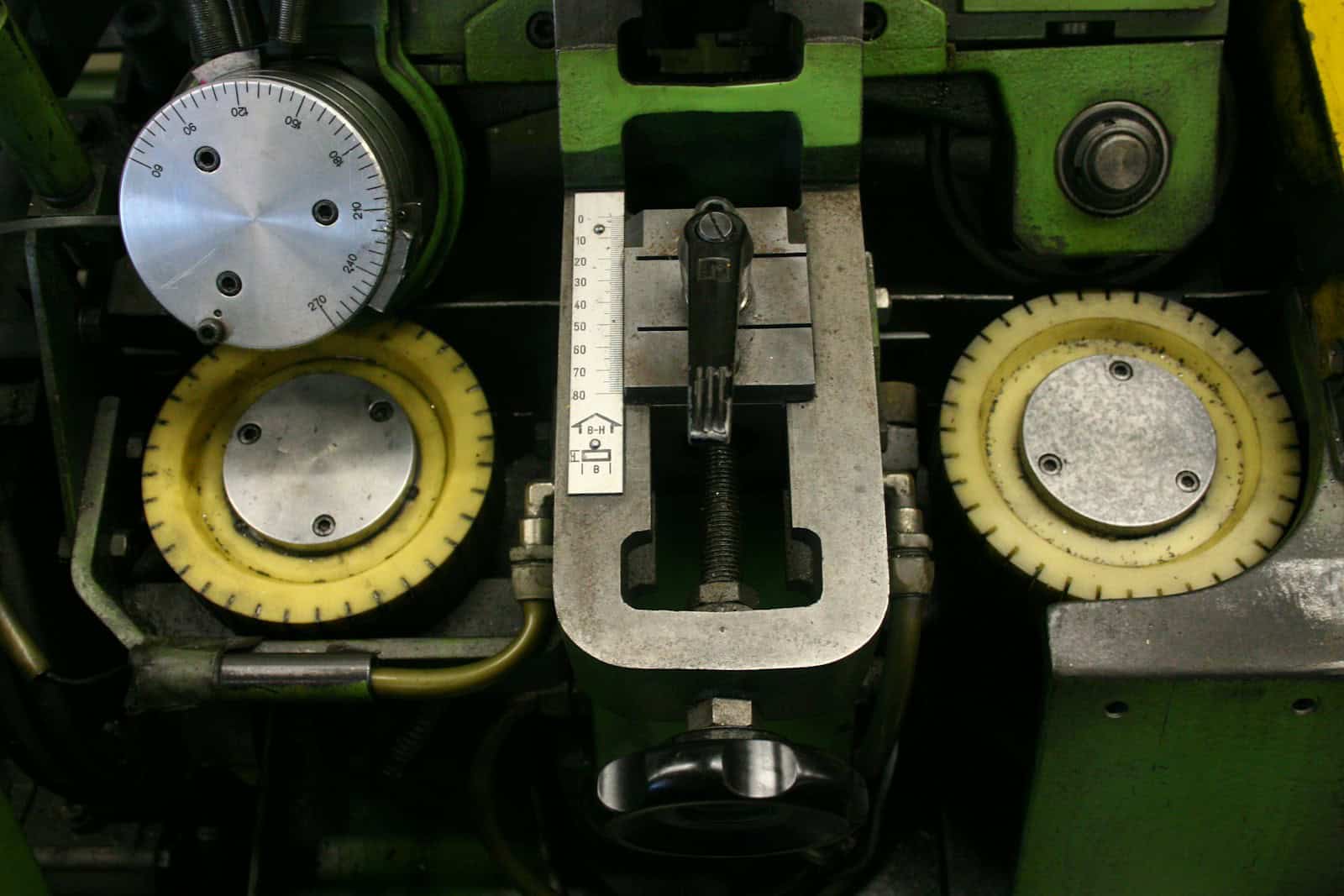
After choosing the material, the raw metal must be shaped into the fastener’s basic form. This is done through two main families of processes: forging and machining. The choice between them is a fundamental engineering decision based on material, shape, production volume, and, most importantly, the required mechanical properties.
Forging Processes
Forging is a manufacturing process that involves shaping metal using localized squeezing forces. It is a forming process, not a cutting one, which has major effects on the material’s internal structure.
Kaltumformung
In cold forging, also known as cold heading, wire or bar stock is shaped at room temperature through a series of dies. The material is forced to flow into the die cavity, forming the head and shank. Because the process is done below the material’s recrystallization temperature, it causes work hardening, which significantly increases the fastener’s tensile strength and hardness. The benefits are numerous: exceptional size accuracy, a smooth surface finish that often needs no additional operations, and high production speeds. However, the high forces required limit the process to more bendable materials and less complex shapes.
Warmumformung
cURL Too many subrequests.
cURL Too many subrequests.
cURL Too many subrequests. cURL Too many subrequests..
cURL Too many subrequests.
cURL Too many subrequests.
cURL Too many subrequests.
cURL Too many subrequests.
cURL Too many subrequests.
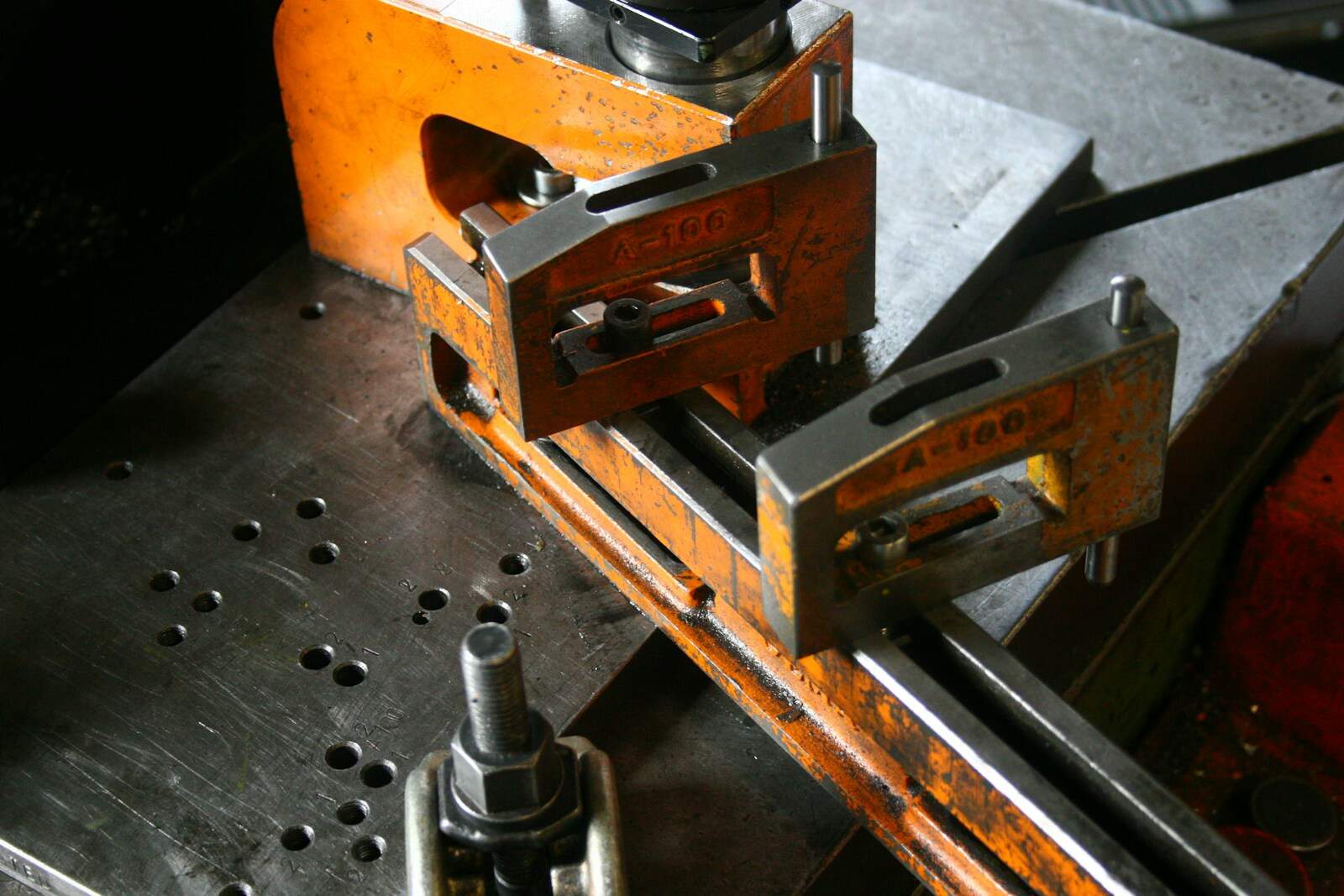
cURL Too many subrequests.
cURL Too many subrequests.
cURL Too many subrequests.
| Parameter | Kaltumformung | Warmumformung | CNC-Bearbeitung |
| Mechanische Eigenschaften | cURL Too many subrequests. | cURL Too many subrequests. | cURL Too many subrequests. |
| Ermüdungsfestigkeit | Sehr gut | Ausgezeichnet | cURL Too many subrequests. |
| Materialabfälle | Minimal | Niedrig bis mittel | Hoch |
| Produktionsgeschwindigkeit | Sehr hoch | Hoch | Niedrig bis mittel |
| Werkzeugkosten | Hoch | Hoch | Niedrig |
| cURL Too many subrequests. | cURL Too many subrequests. | cURL Too many subrequests. | cURL Too many subrequests. |
| Geometrische Komplexität | Begrenzt | Mittel | Sehr hoch |
cURL Too many subrequests.
cURL Too many subrequests.
cURL Too many subrequests.
cURL Too many subrequests. cURL Too many subrequests. cURL Too many subrequests.
cURL Too many subrequests.
cURL Too many subrequests.
- cURL Too many subrequests.
- cURL Too many subrequests.
- cURL Too many subrequests.
cURL Too many subrequests.
cURL Too many subrequests.
cURL Too many subrequests.
cURL Too many subrequests.
cURL Too many subrequests.
cURL Too many subrequests.
cURL Too many subrequests. Oberflächenbehandlungen cURL Too many subrequests.
| Behandlung / Beschichtung | Hauptfunktion | cURL Too many subrequests. | cURL Too many subrequests. |
| cURL Too many subrequests. | Sacrificial corrosion protection; excellent lubricity. | AMS-QQ-P-416 | Aerospace structural fasteners (use is declining due to environmental concerns). |
| Passivierung | Enhances natural corrosion resistance of stainless steels. | ASTM A967 | All stainless steel fasteners, especially for medical and food-grade use. |
| Silver Plating | Anti-galling and conductivity at high temperatures. | AMS 2410 | High-temperature engine nuts and turbine bolts. |
| Dry Film Lubricant (MoS₂, Graphite) | Reduces friction and prevents galling during installation. | AS5272 | Threaded fasteners in titanium or stainless steel to ensure proper preload. |
| Phosphate & Oil | Mild corrosion resistance and anti-galling for steel. | MIL-DTL-16232 | Automotive and industrial steel fasteners. |
Advanced Surface Modification
Not all surface treatments are additive coatings. Some of the most effective methods modify the properties of the base material itself.
Shot peening is a prime example. It is a cold-working process where the surface of the fastener is bombarded with small spherical media (shot). Each impact acts like a tiny peening hammer, creating a small indentation. This plastic deformation creates a layer of high-magnitude compressive residual stress at and just below the surface. Because fatigue cracks cannot start or spread in a compressive environment, this layer acts as a powerful barrier against fatigue failure. Shot peening is not a coating; it is an integral change to the part’s surface properties. It is a required process for the threads and curves of many dynamically loaded aerospace components, as it can increase fatigue life by ten times or more.
Process in Action
To bring these concepts together, we can walk through the manufacturing sequence of a real-world special fastener. This demonstrates how each processing step is a deliberate and interconnected part of achieving the final engineering requirements.
Case Study: A Turbine Bolt
- The Challenge: A fastener for a jet engine turbine section, specifically an Inconel 718 bolt. It must maintain extreme strength at operating temperatures up to 650°C (1200°F) while resisting creep and high-cycle fatigue from engine vibration.
- The Process Flow:
- Material Certification: The process begins with the receipt of certified Inconel 718 bar stock. We verify that the material’s chemical composition and metallurgical properties meet the stringent aerospace specification via its accompanying test reports.
- Hot Forging: A blank is cut from the bar and heated above its recrystallization temperature. The head is then hot-forged in a press. This is done specifically to create an optimal, continuous grain flow from the shank into the head, maximizing shear and fatigue strength at this critical junction.
- Solution Treatment: After forging, the blank is subjected to a solution heat treatment. It is heated to a high temperature (approx. 955°C / 1750°F) to dissolve the strengthening phases (gamma prime and double prime) into a solid solution, preparing the material for hardening.
- Machining: The solution-treated blank is now relatively soft and can be machined. The shank is turned to the precise pre-roll diameter required for the threading operation.
- Gewindewalzen: The threads are cold-rolled, not cut. This critical step plastically deforms the shank material, creating strong, fatigue-resistant threads with beneficial compressive residual stresses at their roots.
- Precipitation Aging: The fully formed fastener undergoes a two-stage aging heat treatment. It is held at a specific intermediate temperature (e.g., 720°C / 1325°F) and then at a lower temperature (e.g., 620°C / 1150°F). This carefully controlled cycle causes the strengthening phases to precipitate out of the material’s matrix, developing the alloy’s final high-temperature strength and creep resistance.
- Oberflächenbehandlung: To prevent galling (a form of wear caused by adhesion between sliding surfaces) during high-torque assembly into the engine, the threads are silver-plated according to a specification like AMS 2410.
- cURL Too many subrequests. cURL Too many subrequests.
cURL Too many subrequests.
cURL Too many subrequests.
cURL Too many subrequests.
cURL Too many subrequests.
cURL Too many subrequests.
cURL Too many subrequests.
- cURL Too many subrequests. cURL Too many subrequests.
- cURL Too many subrequests. cURL Too many subrequests.cURL Too many subrequests.
- cURL Too many subrequests.
- cURL Too many subrequests.
- cURL Too many subrequests. cURL Too many subrequests.
- cURL Too many subrequests. cURL Too many subrequests.
cURL Too many subrequests.
cURL Too many subrequests.
- ASTM International – Befestigungselement-Standards & Tests https://www.astm.org/
- cURL Too many subrequests. https://www.sae.org/
- Institut für industrielle Verbindungselemente (IFI) https://www.indfast.org/
- cURL Too many subrequests. https://www.asminternational.org/
- ISO - Internationale Organisation für Normung https://www.iso.org/
- ASME - Amerikanische Gesellschaft der Maschinenbauingenieure https://www.asme.org/
- Vereinigung der Schmiedeindustrie (FIA) https://www.forging.org/
- NIST - Nationales Institut für Normung und Technologie https://www.nist.gov/
- cURL Too many subrequests. https://www.aia-aerospace.org/
- ANSI - Amerikanisches Institut für Normung https://www.ansi.org/