 Portuguese
  English
  German
  Spanish
  French
  Japanese
  Arabic
  Korean
  Vietnamese
  Russian
 Quando você está na metade da instalação de um sistema de teto suspenso e percebe que seus parafusos padrão são muito curtos, ou quando precisa criar pontos de ancoragem de comprimento personalizado em concreto, toda a rosca se torna seu melhor amigo. Essas hastes totalmente roscadas salvaram inúmeros projetos de atrasos e redesenhos caros. Seja você um profissional de construção gerenciando instalações em grande escala ou um entusiasta de DIY construindo móveis personalizados, entender como selecionar e usar toda a rosca de forma adequada pode significar a diferença entre uma instalação segura, duradoura e uma falha frustrante.
O que é Toda a Rosca? Entendendo o Básico da Haste Rosqueada
toda a rosca refere-se a hastes de metal que apresentam roscas contínuas ao longo de toda a sua extensão, de ponta a ponta. Diferente de parafusos convencionais que possuem roscas apenas em uma porção próxima à ponta, toda a rosca mantém uma rosca consistente ao longo de toda a haste, tornando-a incrivelmente versátil para aplicações que requerem posicionamento ajustável ou comprimentos personalizados.
O termo “toda a rosca” não é o único nome que você encontrará. Este mesmo produto é conhecido por vários aliases dependendo da região e da indústria:
Haste Rosqueada – O nome técnico mais reconhecido universalmente
Toda a Rosca (ATR) – Abreviação padrão da indústria para referência rápida
Redi Rod – Nome de marca comercial comum que se tornou genérico
TFL Rod – Significa “Rosca de Comprimento Total”, enfatizando a rosca completa
Pino Totalmente Rosqueado – Geralmente usado ao se referir a comprimentos menores que 30 cm
Encontramos pela primeira vez toda a rosca em um canteiro de obras comercial onde parafusos de ancoragem tradicionais não conseguiam acomodar as mudanças de projeto arquitetônico ocorridas no meio da obra. O empreiteiro de HVAC do edifício precisava suspender dutos em alturas variadas em diferentes zonas. Parafusos padrão com comprimentos fixos teriam exigido a encomenda de dezenas de tamanhos personalizados. Em vez disso, usamos toda a rosca de 1/2 polegada de diâmetro corte em comprimentos precisos no local, economizando tempo e dinheiro enquanto fornece a ajustabilidade exata necessária.
A beleza de toda rosca está na sua simplicidade. Encaixe a haste através de orifícios alinhados, adicione porcas e arruelas em cada extremidade e aperte para criar força de prensagem. Precisa ajustar a altura posteriormente? Basta afrouxar as porcas, reposicionar e reapertar. Essa ajustabilidade torna-se toda a rosca indispensável para sistemas suspensos, conexões estruturais e qualquer aplicação onde o posicionamento exato seja mais importante do que a velocidade de instalação.
Rosca Total vs Parafusos Comuns: Diferenças Chave Explicadas
Compreender quando usar toda a rosca versus parafusos padrão requer reconhecer suas diferenças de projeto fundamentais e como essas diferenças afetam aplicações do mundo real.
Cobertura de Rosca: A distinção mais óbvia é que a rosca total apresenta roscas ao longo de toda a sua extensão, enquanto parafusos possuem hastes lisas com extremidades roscadas. Essa rosca completa oferece flexibilidade, mas também afeta as características de resistência. As roscas contínuas significam menor resistência ao cisalhamento em comparação com um parafuso de diâmetro equivalente, pois as roscas criam pontos de concentração de tensão.
Opções de Comprimento: Parafusos padrão raramente excedem 15 centímetros em tamanhos comumente estocados, e qualquer comprimento maior geralmente requer pedido especial. toda a roscaRosca total, no entanto, vem em comprimentos padrão de 1 metro, 2 metros, 3 metros e até 4 metros. Precisa de algo mais longo? Basta conectar duas peças usando porcas de acoplamento. Criamos sistemas de suporte que excedem 6 metros conectando várias seções.
Design da Cabeça: Parafusos possuem cabeças integrais – hexagonais, quadradas, de botão ou outras formas – que fornecem uma superfície de apoio e evitam puxamento. toda a rosca não possui cabeça, exigindo porcas em ambas as extremidades para funcionar. Essa simetria mostra-se vantajosa quando ambas as extremidades da haste precisam de ajuste, mas desvantajosa quando você precisa de um ponto de ancoragem fixo.
Metodologia de Instalação: Parafusos normalmente ancoram em uma extremidade (seja através de roscas em um orifício roscado ou uma porca), com a cabeça fornecendo a força oposta. A rosca total requer porcas em ambas as extremidades, tornando a instalação um pouco mais demorada, mas oferecendo uma ajustabilidade superior após a instalação inicial.
Capacidade de Carga: Para um diâmetro e grau determinados, os parafusos geralmente oferecem maior resistência à tração porque a área da haste lisa distribui a tensão de forma mais eficaz do que as roscas. No entanto, a rosca total destaca-se em aplicações onde as cargas são relativamente modestas e a ajustabilidade supera a resistência bruta. Uma rosca total de 1/2 polegada Grau B7 fornece aproximadamente 5.700 libras de capacidade de tração – mais do que suficiente para a maioria das aplicações de construção e mecânicas.
Da nossa experiência, escolha toda a rosca quando precisar de flexibilidade de comprimento, ajuste de ambos os lados ou a capacidade de cortar tamanhos personalizados no local. Opte por parafusos quando precisar de máxima resistência em um pacote compacto ou quando a velocidade de instalação for primordial.
Tipos e Classes de Rosca Completa: Material Importa
Classes comuns de rosca completa e suas propriedades
Nem toda toda a rosca é criada igual. A designação de classe impacta diretamente na resistência, custo e aplicações apropriadas. Compreender essas classes evita tanto o superdimensionamento (desperdício de dinheiro em resistência desnecessária) quanto o subdimensionamento (risco de falha).
ASTM A307 Classe A representa a linha de base para barra roscada de aço carbono. Com 60.000 psi de resistência à tração, ela atende perfeitamente aplicações de construção geral e de baixa carga. Essa classe domina lojas de ferragens de varejo e responde por provavelmente 70% de toda a rosca usada em trabalhos residenciais e comerciais leves. O menor custo a torna ideal quando as cargas são modestas e o ambiente não é severo.
ASTM A193 Classe B7 avança significativamente em resistência e resistência a temperaturas. Com 125.000 psi de resistência à tração, a rosca completa B7 lida com aplicações exigentes, como fixação de maquinaria pesada, sistemas de tubulação de alta pressão e conexões estruturais sujeitas a cargas dinâmicas. A composição de aço liga também fornece resistência utilizável a temperaturas de até 1000°F, tornando-se essencial para refinarias, usinas de energia e fornos industriais.
ASTM A354 Classe BD oferece a maior resistência disponível comumente em 150.000 psi de resistência à tração. Especificamos essa classe para aplicações críticas onde a falha não é aceitável – pense em suspensões de pontes, ancoragem de equipamentos pesados e conexões de edifícios resistentes a sismos. O preço premium (tipicamente 3-4 vezes a classe padrão) limita seu uso a aplicações realmente críticas.
Opções de Material: Aço, Aço Inoxidável e Além
Além das classes, a seleção de material afeta fundamentalmente o desempenho e a durabilidade.
Rosca completa de aço carbono oferece uma excelente relação resistência/custo para ambientes controlados. No entanto, enferruja rapidamente quando exposto à umidade. Mesmo o revestimento de zinco comum em barras roscadas vendidas no varejo oferece apenas proteção temporária – talvez 6 a 12 meses de exposição ao ar livre antes que a ferrugem apareça.
Aço inoxidável 304 revoluciona aplicações externas e de qualidade alimentar. O teor de cromo forma uma camada de óxido passiva que resiste à corrosão na maioria das condições atmosféricas. Usamos aço inoxidável 304 toda a rosca em instalações de assentos externos de restaurantes costeiros que permaneceram impecáveis após 5 anos de exposição ao ar salgado. O material custa aproximadamente o dobro do aço carbono, mas elimina a manutenção e a substituição.
aço inoxidável 316 adiciona molibdênio para resistência superior ao cloreto. Isso é extremamente importante em ambientes marinhos e de processamento químico. Em um projeto de plataforma offshore, a barra roscada de aço inoxidável 316 não apresentou praticamente nenhuma corrosão após 3 anos de exposição contínua à névoa salina, enquanto as amostras 304 exibiram pitting. Para aplicações marítimas, o prêmio de 25-30% sobre o 304 é um seguro barato.
Barra roscada de latão serve para aplicações especializadas que exigem propriedades não magnéticas, condutividade elétrica ou aparência decorativa. Embora mecanicamente mais fraco (cerca de 40.000 psi de tração), o latão se destaca em sistemas de aterramento elétrico e luminárias personalizadas.
Opções de revestimento para proteção contra corrosão
Quando o aço inoxidável excede o orçamento, os revestimentos prolongam significativamente a vida útil do aço carbono.
Zincagem (eletrogalvanizado) fornece proteção básica adequada para ambientes internos ou ocasionalmente úmidos. O revestimento fino (normalmente 0,0002-0,0005 polegadas) adiciona um custo mínimo, mas apenas atrasa o início da ferrugem em meses em exposição ao ar livre.
Galvanização por imersão a quente aplica um revestimento de zinco mais espesso (0,002-0,004 polegadas) por imersão em zinco fundido. Isso melhora drasticamente a durabilidade ao ar livre – vemos rotineiramente galvanização por imersão a quente toda a rosca durando 15 a 20 anos em condições normais ao ar livre. A aparência áspera e salpicada não vai ganhar concursos de beleza, mas a funcionalidade importa mais do que a estética na maioria das aplicações estruturais.
Tabela 1: Comparação de Material e Grau de Barra Roscada
| Grau/Material | Resistência à tração | Resistência ao Escoamento | Resistência à Temperatura | Aplicações típicas | Resistência à corrosão |
|---|---|---|---|---|---|
| A307 Grau A | 60.000 psi | 36.000 psi | Até 400°F | Construção geral, uso leve | Baixo (necessita revestimento) |
| B7 (A193) | 125.000 psi | 105.000 psi | Até 1000°F | Ambientes de alta temperatura, petroquímico | Moderado |
| A354 Grau BD | 150.000 psi | 130.000 psi | Até 750°F | Máquinas pesadas, automotivo | Moderado |
| Aço Inoxidável 304 | 75.000 psi | 30.000 psi | Até 1500°F | Processamento de alimentos, marítimo leve | Bom |
| Aço Inoxidável 316 | 80.000 psi | 35.000 psi | Até 1500°F | Marinha severa, usinas químicas | Excelente |
| Latão | 40.000 psi | 15.000 psi | Até 400°F | Decorativo, elétrico (não sparking) | Excelente |
Comprimentos padrão e opções de dimensionamento personalizado
Entre em qualquer fornecedor de fixadores ou loja de ferragens bem abastecida, e você encontrará toda a rosca em comprimentos padronizados que atendem à maioria das aplicações:
1 metro (36 polegadas) - O comprimento padrão para construção geral, suspensão de teto e montagem de equipamentos. Este comprimento equilibra a facilidade de manuseio com material suficiente para a maioria das instalações de um único andar.
2 metros (72 polegadas) - Ideal para aplicações de piso ao teto em espaços comerciais padrão de 2,4 a 3 metros de altura. Contratantes elétricos frequentemente preferem esse comprimento para sistemas de suporte de conduíte que vão do contrapiso ao deck.
3 metros (120 polegadas) - Serve aplicações estruturais grandes e minimiza conexões em instalações altas. O transporte e manuseio tornam-se mais desafiadores, mas o comprimento contínuo oferece integridade estrutural superior.
4,5 metros (144 polegadas) - O comprimento mais longo normalmente disponível em estoque, geralmente sob encomenda. Usamos esses principalmente para sistemas de suporte de tubos em edifícios de vários andares e instalações de salas mecânicas altas onde minimizar conexões é fundamental.
Para comprimentos menores que 30 centímetros, a indústria geralmente se refere ao produto como tuchos totalmente roscados em vez de rosca completa, embora mecanicamente sejam idênticos.
Transformações de corte personalizadas toda a rosca em exatamente o comprimento que você precisa. Mantemos uma serra de fita portátil DeWalt em obras especificamente para cortar barra roscada. O processo leva de 30 a 45 segundos por corte para diâmetro de 1/2 polegada, e você pode cortar dezenas de peças antes de trocar a lâmina. Sempre corte um pouco maior – você pode aparar mais, mas não pode adicionar material de volta. Após o corte, chanfrar a extremidade com uma lima para evitar que a aresta afiada danifique as roscas das porcas durante a instalação. Essa etapa de 15 segundos evita inúmeros problemas na instalação.
Como Cortar e Instalar Rosca por Completo: Guia Prático
Técnicas corretas de corte e instalação diferenciam resultados profissionais de frustrações amadoras. Aqui está o que aprendemos com milhares de instalações.
Ferramentas e Técnicas de Corte
Serra Manual: Funciona para cortes ocasionais em diâmetros de até 1/2 polegada, mas espere de 3 a 5 minutos por corte e braços cansados. O esforço manual torna isso impraticável para mais de algumas peças.
Esmerilhadeira Angular com Disco de Corte: Rápido (menos de 20 segundos por corte) e produz resultados limpos. A chuva de faíscas exige equipamento de segurança adequado e vigilância contra incêndios em ambientes sensíveis. Usamos esse método para cortes rápidos em obras ativas.
Serra de Fita Portátil: O padrão ouro para cortes em volume. Modelos Milwaukee M18 ou DeWalt 20V cortam através de 1/2 polegada toda a rosca em 30-45 segundos com ruído mínimo e sem faíscas. Lâminas novas produzem cortes quadrados que requerem limpeza mínima.
Serra Reciprocante: Útil quando você precisa cortar rosca já instalada, embora a vibração possa soltar conexões próximas. Sempre apoie a barra e use uma lâmina para corte de metal.
Melhores Práticas de Instalação
O processo de instalação parece simples, mas os detalhes importam:
Passo 1: Calcule o Comprimento Necessário. Some a espessura de todos os componentes sendo presos, mais a espessura da porca em cada extremidade (tipicamente 1,5x o diâmetro da barra), mais 2-3 fios de protrusão. Melhor errar por excesso – você sempre pode adicionar porcas extras como espaçadores.
Passo 2: Rosqueie as Porcas Antes de Cortar. Rosqueie uma porca além da marca de corte antes de cortar. Após o corte, essa porca limpa qualquer dano às roscas do processo de corte ao desrosquear. Essa dica simples evita roscas danificadas nas extremidades do corte.
Etapa 3: Cortes chanfrados nas extremidades. Use uma lima ou esmeril para criar um chanfrado de 30-45 graus na extremidade cortada. Isso guia a porca suavemente para as roscas, evitando roscas cruzadas.
Etapa 4: Limpe as roscas. Limpe toda a rosca com um pano para remover resíduos de corte, óleo e sujeira. Roscas contaminadas criam atrito inconsistente, tornando os valores de torque pouco confiáveis.
Etapa 5: Instale e aperte corretamente. Rosqueie as porcas manualmente até ficarem firmes, depois use uma chave de torque calibrada para o aperto final. Para rosca completa de 1/2 polegada A307, normalmente aplicamos 75-85 ft-lbs de torque em cada porca. Grades mais altas requerem torque proporcionalmente maior – B7 precisa aproximadamente 100-120 ft-lbs para o mesmo diâmetro.
Por experiência, o erro mais comum na instalação é o torque insuficiente. Aperto manual não é suficiente. A força de aperto que impede o afrouxamento vem do alongamento do toda a rosca leve dentro de sua faixa elástica. O torque adequado alcança essa pré-carga. Conexões subapertadas se soltam sob vibração; conexões com torque excessivo arranham as roscas ou quebram a haste.
Conectar e Estender Rosca Completa: Métodos e Melhores Práticas
Quando seu projeto requer comprimentos maiores que o estoque padrão, ou quando você precisa conectar toda a rosca a outros componentes, existem vários métodos de conexão comprovados.
Porcas de acoplamento (também chamadas de porcas de acoplamento de haste) são essencialmente porcas longas com roscas internas. Rosqueie uma peça de haste completa em uma extremidade e outra peça na extremidade oposta, e você criou uma conexão contínua. Esses acoplamentos normalmente alcançam 95% da resistência total da haste quando instalados corretamente – ou seja, uma haste de 1/2 polegada com capacidade de 10.000 lb falhará na haste antes que o acoplamento falhe.
A chave para conexões de acoplamento confiáveis é alcançar o engajamento de rosca igual de ambos os lados. Nós rosqueamos cada haste até aproximadamente 55-60% do comprimento do acoplamento, deixando uma pequena folga entre as extremidades da haste dentro do acoplamento. Isso evita contato de ponta a ponta que impediria o aperto completo.
Conectores de Haste Rosqueada (às vezes chamados de acopladores de haste ou conectores de rosca completa) são dispositivos de acoplamento especificamente projetados que frequentemente incorporam parafusos de trava ou mecanismos de travamento. Estes proporcionam uma retenção de resistência ainda maior – frequentemente 98% ou melhor – e um travamento mais positivo. O custo adicional ($5-10 versus $2-3 para porcas de acoplamento padrão) faz sentido para aplicações críticas.
Soldagem cria a conexão mais forte possível, atingindo teoricamente 100% ou mais da resistência da haste base com técnica adequada e soldagens de penetração total. No entanto, soldar toda a rosca apresenta desafios. A geometria fina da rosca queima facilmente, e o calor da solda pode alterar as propriedades do material. Nós só soldamos toda a rosca quando a conexão é permanente, as cargas são extremas e temos soldadores qualificados disponíveis. Para aplicações de construção padrão, as porcas de acoplamento funcionam bem por uma fração do custo.
Catracas combinam conexão com ajuste embutido. Esses dispositivos rosqueiam em cada extremidade de toda a rosca seções e apresentam um corpo central que gira para alongar ou encurtar o conjunto geral. Usamos catracas extensivamente para reforço diagonal, cabos de estai e qualquer aplicação de tensão que exija ajuste em campo. A capacidade de ajustar a tensão com precisão sem desmontar a conexão economiza tempo enorme.
Tabela 2: Comparação dos Métodos de Conexão de Rosca Completa
| Método de Conexão | Resistência | Facilidade de Instalação | Removibilidade | Custo | Melhor Caso de Uso |
|---|---|---|---|---|---|
| Porca de Acoplamento | Alta (95% da resistência da haste) | Muito fácil | Totalmente removível | Baixo ($2-5) | Extensões padrão, ajustáveis |
| Conector de barra roscada | Muito alto (resistência 98%) | Fácil | Removível | Médio ($5-10) | Instalações profissionais |
| Soldagem | Máximo (100%+) | Difícil | Perpétuo | Alto (mão de obra+equipamento) | Crítico estrutural, permanente |
| Catraca | Alto (resistência 90%) | Moderado | Ajustável | Médio ($8-15) | Aplicações de tensão, cabos de estai |
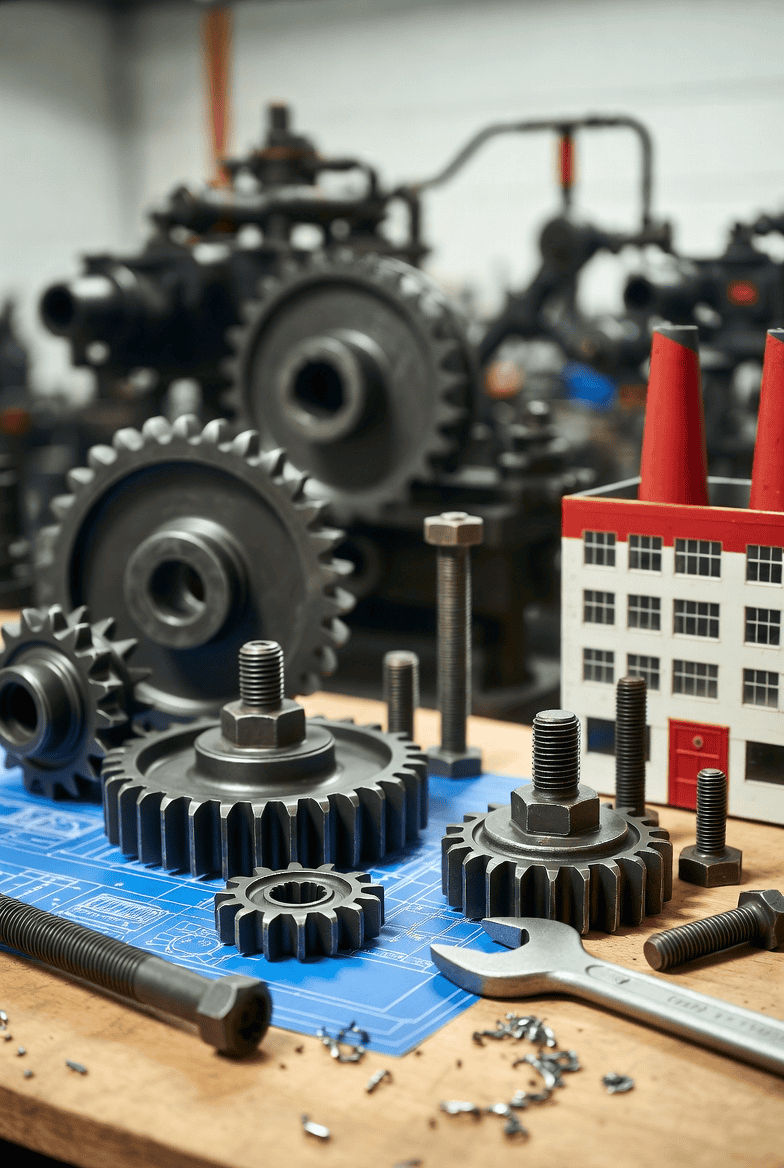
Aplicações industriais: Onde o Fio Rosqueado se Destaca
Suporte estrutural e de construção
toda a rosca domina sistemas de teto suspenso na construção comercial. Um edifício de escritórios típico de 4.645 metros quadrados contém 3.000-5.000 pontos de suspensão, cada um usando de 1 a 2,5 metros de barra roscada. A capacidade de ajustar cada ponto de suspensão de forma independente durante a instalação acomoda irregularidades do edifício e garante planos de teto nivelados.
Embedamento de concreto representa outra aplicação importante. Despeje concreto ao redor de toda rosca posicionada através de formas, e você criou pontos de ancoragem permanentes que projetam-se da laje. Estes aceitam equipamentos, divisórias ou elementos estruturais meses ou anos após a construção inicial. Em um projeto recente de hospital, embedamos mais de 2.000 peças de rosca de aço inoxidável revestida com epóxi em lajes de piso para montagem futura de equipamentos médicos, proporcionando flexibilidade para mudanças de equipamentos ao longo da vida útil de 50 anos do edifício.
Dobragem sísmica em regiões propensas a terremotos depende fortemente de toda a rosca para reforço diagonal de tubos, dutos e equipamentos. Os códigos de construção na região, Japão e outras zonas sísmicas exigem padrões específicos de reforço usando graus aprovados de barra roscada. A ductilidade da rosca de alta resistência permite dissipação de energia durante eventos sísmicos sem falha frágil.
Instalações elétricas e de HVAC
Empreiteiros elétricos usam toda a rosca de forma extensiva para sistemas de suporte de bandejas de cabos. Cabos que transportam energia por edifícios comerciais descansam em bandejas suspensas da estrutura do teto por barra roscada em intervalos regulares. Um grande centro de dados pode conter 25-30 milhas de bandejas de cabos suportadas por dezenas de milhares de pontos de suspensão.
Montagem de painéis elétricos beneficia-se da ajustabilidade da rosca. Nivelar painéis com precisão requer ajuste fino dos pontos de montagem, o que seria quase impossível com parafusos de comprimento fixo. Normalmente usamos rosca de aço inoxidável de 3/8 de polegada ou 1/2 polegada para suportes de painéis em ambientes onde o código elétrico exige fixadores resistentes à corrosão.
Suspensão de dutos HVAC em edifícios comerciais cria uma demanda enorme por toda a rosca. Seções de dutos retangulares pesando de 50 a 200 libras cada penduram-se na estrutura acima, exigindo pontos de suspensão a cada 8-12 pés. A haste roscada permite que os instaladores nivelam os dutos apesar de irregularidades na estrutura e tetos inclinados. Para ambientes costeiros ou de alta umidade, especificamos aço inoxidável 316 para evitar manchas de ferrugem em tetos acabados.
Sistemas de suporte para encanamentos e tubulações
toda a rosca revolucionaram as instalações de encanamento comerciais. Antes de a haste roscada se tornar padrão, suportes de tubos usavam suportes soldados e ganchos fixos que ofereciam pouca ajustabilidade. Os sistemas modernos de suporte para tubos usam olhais ajustáveis em toda a haste roscada, permitindo que os instaladores posicionem as tubulações com precisão para inclinação e alinhamento corretos.
Tubos de grande diâmetro – pense em tubos de 15 a 60 centímetros de aço ou PVC – geram peso substancial ao longo de longos trechos. Os engenheiros calculam o espaçamento necessário dos suportes com base no diâmetro do tubo e no conteúdo, muitas vezes resultando em suportes a cada 3-4,5 metros. Uma instalação de tubo de 150 metros pode precisar de 30-50 pontos de suporte, cada um usando de 1,2 a 2,4 metros de haste roscada.
Conexões de flange em tubulações industriais às vezes usam toda a haste roscada em vez de parafusos tradicionais quando a ajustabilidade é crítica. A capacidade de posicionar as flanges de forma independente em cada lado da conexão, e depois puxá-las gradualmente com porcas, garante o assentamento adequado da junta e operação sem vazamentos.
Automotivo e Fabricação Personalizada
Construtores de carros personalizados e equipes de corrida usam toda a rosca para criar suportes ajustáveis para motores e suportes de transmissão. A capacidade de ajustar a posição do motor afeta a geometria do trem de força, distribuição de peso e folgas. Já vimos veículos de competição onde a posição do motor é ajustável dentro de uma faixa de 5 centímetros usando sistemas de montagem com haste roscada.
Modificações na suspensão frequentemente incorporam toda a haste roscada para criar suportes ajustáveis para braços de controle, links de barra estabilizadora e outros componentes da chassis. As roscas permitem ajuste na altura de condução sem trocar molas, e ajuste de posição para otimização do alinhamento.
Construção de gaiola de proteção em veículos de corrida às vezes usa alta resistência toda a rosca para cruzetas removíveis. Regulamentos de segurança exigem estrutura interna extensa, mas as equipes precisam de acesso periódico aos componentes dentro da gaiola. Conexões com haste roscada proporcionam integridade estrutural enquanto permitem desmontagem quando necessário.
Fabricação de Móveis e Projetos DIY
O movimento maker abraçou toda a rosca para criar móveis com altura ajustável. Mesas de estilo industrial, bancadas de trabalho e unidades de prateleiras usam pernas de haste roscada que ajustam a altura através do posicionamento de porcas acima e abaixo das superfícies horizontais. Essa estética de design – fixadores expostos e materiais industriais – tornou-se uma característica definidora do mobiliário maker moderno.
Prateleiras de alta resistência em oficinas, garagens e armazéns dependem de rosca contínua tanto para suportes verticais quanto para reforço horizontal. Um sistema de prateleiras pode usar postes de canto de haste roscada de 3/4 de polegada que oferecem mais de 13.600 kg de capacidade total quando projetado e ancorado corretamente.
Aplicações criativas que encontramos incluem luminárias personalizadas onde pendentes pendem do teto com haste roscada ajustável em altura, esculturas cinéticas usando haste roscada para estrutura, e pérgulas externas onde toda a rosca tensionam cabos diagonais para estabilidade lateral.
Selecionando a Haste Roscada Adequada para Seu Projeto
Escolher a toda a rosca requer avaliação sistemática de múltiplos fatores. Esta matriz de decisão agiliza o processo de seleção:
Tabela 3: Matriz de Decisão para Seleção de Haste Roscada
| Tipo de Aplicação | Classe Recomendada | Material | Revestimento | Comprimento Típico | Consideração de Carga |
|---|---|---|---|---|---|
| Construção Interna | A307 Grau A | Aço carbono | Zinco revestido | 3-6 pés | Médio (2.000-5.000 lbs) |
| Estrutura Externa | B7 ou 304SS | Aço Inoxidável/Galvanizado | Galvanizado por imersão a quente | 6-12 pés | Alto (5.000-10.000 lbs) |
| Ambiente Marinho | Aço Inoxidável 316 | 316 SS | Nenhum necessário | 3-6 pés | Médio-Alto |
| Alta Temperatura | B7 (A193) | Aço-liga | Óxido preto | 3-10 pés | Muito Alto (>10.000 lbs) |
| Elétrico/HVAC | A307 ou 304SS | Preferido de aço inoxidável | Zinco ou Aço Inoxidável | 2-4 pés | Baixo-Médio (<2.000 lbs) |
| Faça Você Mesmo/Móveis | A307 Grau A | Aço carbono | Zinco revestido | 1-3 pés | Baixo (<1.000 lbs) |
Processo de Tomada de Decisão
Etapa 1: Determine os Requisitos de Carga. Calcule a carga estática mais quaisquer fatores dinâmicos (vibração, sísmico, expansão térmica). Aplique um fator de segurança de 3-5x para aplicações críticas. Um componente que pesa 500 libras suportado por quatro toda a rosca pontos de suspensão coloca 125 libras em cada haste – especifique hastes com classificação de pelo menos 375-625 libras para alcançar uma margem de segurança adequada.
Etapa 2: Avalie as Condições Ambientais. Ambientes internos controlados permitem aço carbono de custo-benefício com galvanização básica. Exposição ao ar livre requer galvanização a quente ou aço inoxidável. Locais costeiros a até 8 km de água salgada devem usar aço inoxidável 316, a menos que o orçamento proíba – a proteção contra corrosão se paga ao eliminar substituições.
Etapa 3: Selecione a Classe e o Material Apropriados. Combine a resistência da classificação com as cargas calculadas. A maioria das obras de construção geral funciona bem com A307 Classe A. Aplicações de alta carga ou alta temperatura justificam B7 ou superior. Aplicações marítimas e de processamento de alimentos exigem aço inoxidável independentemente da carga.
Etapa 4: Determine a Especificação de Comprimento. Meça o vão necessário do ponto de montagem ao ponto de montagem, adicione a espessura da porca para ambas as extremidades (aproximadamente 1,5x o diâmetro da haste por lado), e adicione uma margem de ajuste de 10-15%. Melhor cortar do que descobrir que está curto e precisa fazer emendas.
Etapa 5: Escolha o Revestimento, se aplicável. Hastes de aço carbono precisam de proteção. Galvanização a zincagem é suficiente para ambientes internos; galvanização a quente para externos; aço inoxidável elimina completamente a necessidade de revestimento.
Etapa 6: Verifique a Especificação e Disponibilidade da Rosca. A barra roscada padrão usa rosca Unified National Coarse (UNC) no Brasil – 1/4″-20, 5/16″-18, 3/8″-16, 1/2″-13, 5/8″-11, 3/4″-10, etc. Certifique-se de que porcas, arruelas e outros acessórios correspondam exatamente às especificações da rosca.
Problemas Comuns e Dicas de Solução de Problemas
Mesmo com seleção e instalação cuidadosas, problemas ocasionalmente surgem. Veja como lidamos com os problemas mais comuns:
1. Danos na Rosca Durante o Corte ou Manuseio
Roscas danificadas impedem que as porcas rosqueiem suavemente e reduzem a força da conexão. Isso acontece quando a barra roscada cai com as roscas primeiro, é cortada sem suporte adequado ou rosqueada incorretamente durante a instalação da porca.
Solução: Para danos menores, use uma lima de rosca (uma lima especializada com superfícies de corte que correspondem aos perfis da rosca) para limpar e restaurar as roscas. Para danos mais graves, invista em uma matriz de rosca que corresponda ao diâmetro da sua haste – girar a matriz na seção danificada recorta as roscas e restaura a funcionalidade. A prevenção funciona melhor: sempre rosqueie uma porca sacrificial além da sua linha de corte antes de cortar, chanfre todas as extremidades cortadas e comece as porcas à mão para sentir se há roscas cruzadas antes de aplicar força com a chave.
2. Flexão e Curvatura Sob Carga
Vãos longos e sem suporte de toda a rosca tendem a se curvar sob carga, especialmente com diâmetros menores. Descobrimos isso da maneira mais difícil em um projeto de teto onde vãos de 3 metros de barra roscada de 3/8 de polegada se curvaram visivelmente sob o peso do duto, criando uma aparência inaceitável.
Solução: Adicione pontos de suporte intermediários ou atualize para uma barra roscada de diâmetro maior / grau mais alto com maior rigidez. Como regra geral, vãos verticais sem suporte que excedam 1,8 metros devem ter um diâmetro de pelo menos 1/2 polegada para cargas típicas de HVAC/elétricas. Para vãos que excedam 2,4 metros, considere um diâmetro de 5/8 de polegada ou 3/4 de polegada, ou adicione reforços no meio do vão para reduzir o comprimento efetivo.
3. Corrosão e Desenvolvimento de Ferrugem
A barra roscada de aço carbono enferruja rapidamente em ambientes úmidos ou externos. Vimos a barra roscada zincada desenvolver ferrugem superficial em apenas 3 a 6 meses em climas costeiros e degradação estrutural completa em 2 a 3 anos em exposição marinha severa.
Solução: Substitua por material resistente à corrosão apropriado – aço inoxidável 316 para marinha, aço inoxidável 304 para uso geral ao ar livre ou aço carbono galvanizado por imersão a quente para exposição moderada ao ar livre. Se a substituição não for viável, aplique um conversor de ferrugem penetrante seguido de um revestimento protetor. A prevenção supera o reparo: especifique os materiais adequados inicialmente com base em uma avaliação ambiental realista.
4. Afrouxamento da Porca Devido à Vibração
As porcas sextavadas padrão se soltam sob vibração sustentada. A montagem de equipamentos, máquinas suspensas e estruturas expostas ao tráfego geram vibração que gradualmente afrouxa as conexões.
Solução: Use porcas de trava com inserto de nylon para novas instalações em aplicações propensas a vibração. Para instalações existentes que apresentem afrouxamento, aplique Loctite 242 (azul) trava-rosca após limpar as roscas – este composto de resistência média previne o afrouxamento enquanto permite futuras desmontagens com ferramentas manuais. O método de duplo porca – rosquear duas porcas padrão juntas e apertá-las contra uma à outra – fornece travamento mecânico sem hardware especial.
5. Cortes Desiguais ou Angular
Corte toda a rosca sem fixação adequada muitas vezes produz cortes angulares que impedem as porcas de rosquear até o final e criam superfícies de apoio irregulares.
Solução: Sempre fixe toda a rosca em uma morsa antes de cortar. Marque a linha de corte completamente ao redor da circunferência, não apenas de um lado. Ao usar uma serra manual, gire a haste 90 graus a cada doze golpes para manter cortes perpendiculares. Serras de fita portáteis naturalmente produzem cortes quadrados se a haste estiver devidamente apoiada. Se acabar com um corte angular, recorte novamente para ficar quadrado ou use uma esmerilhadeira para facear a extremidade perpendicular às roscas.
6. Desalinhamento em Conexões Acopladas
Ao conectar duas peças de rosca contínua com porcas de acoplamento, alcançar um alinhamento perfeito evita tensões de flexão na conexão.
Solução: Use uma régua ou nível a laser para verificar o alinhamento antes de apertar completamente a porca de acoplamento. Rosqueie cada haste no acoplamento até que quase se toquem por dentro (deixe uma folga de cerca de 3 mm), garantindo engajamento igual de ambos os lados. Alguns instaladores colocam a porca de acoplamento em uma haste primeiro, depois rosqueiam a segunda haste enquanto alinham manualmente ambas as hastes paralelamente. Para aplicações estruturais críticas, considere usar acoplamentos rígidos com parafusos de fixação que travam as hastes em alinhamento perfeito.
Tendências Futuras: Inovação na Tecnologia de Rosca Contínua (2026-2030)
A indústria de hastes roscadas continua evoluindo com inovações em materiais, revestimentos e integração de tecnologia inteligente.
Materiais Leves de Alta Resistência estão ganhando destaque em aplicações sensíveis ao peso. Hastes roscadas de titânio oferecem relações resistência-peso muito superiores ao aço, embora a um custo de 8 a 10 vezes maior. Aplicações aeroespaciais e automotivas de alto desempenho cada vez mais especificam titânio para fixações críticas. Parafusos de polímero reforçado com fibra de carbono para ambientes não magnéticos, como salas de ressonância magnética e fabricação de eletrônicos sensíveis, onde até as propriedades magnéticas mínimas do aço inoxidável causam problemas. O mercado global de fixadores de titânio (incluindo toda a rosca contínua) deve crescer a CAGR de 8,51% até 2030, à medida que a produção aeroespacial aumenta e os preços diminuem gradualmente.
Tecnologia de Monitoramento Inteligente está emergindo em aplicações de infraestrutura crítica. Pesquisadores estão desenvolvendo toda a rosca com sensores de fibra óptica embutidos ou extensômetros que monitoram a tensão em tempo real. Implantações iniciais em suspensões de pontes e sistemas de telhado de estádios transmitem dados sem fio para sistemas de manutenção, permitindo a manutenção preditiva que evita falhas antes que ocorram. Embora atualmente caro (adicionando R$50-200 por haste monitorada), as economias de escala podem tornar esta tecnologia padrão na construção comercial Classe A dentro de 5 a 7 anos.
Revestimentos Avançados prolongam drasticamente a vida útil em ambientes corrosivos. Revestimentos nano-cerâmicos fornecem resistência à corrosão superior à galvanização tradicional em 40-60% enquanto mantêm coeficientes de atrito mais consistentes para relações de torque-tensão previsíveis. Revestimentos autolubrificantes incorporando dissulfeto de molibdênio ou PTFE reduzem os requisitos de torque de instalação e melhoram a resistência à fadiga. As regulamentações ambientais estão impulsionando o desenvolvimento de revestimentos sem cromo que correspondem ou excedem o desempenho tradicional do cromagem sem fluxos de resíduos tóxicos.
Manufatura Aditiva (impressão 3D) permite barra roscada personalizada com passo variável, diâmetro variável ou recursos integrados impossíveis com a fabricação convencional. Uma empresa pode imprimir barras roscadas com passo fino em uma extremidade para precisão de ajuste e passo grosso na outra para rosqueamento rápido – tudo em uma única peça contínua. Os custos atuais (3-5x a fabricação convencional) limitam a adoção à prototipagem e aplicações muito especializadas, mas o avanço da tecnologia e as economias de escala expandirão a viabilidade.
Manufatura Sustentável iniciativas estão remodelando a produção. Os principais fabricantes agora produzem barras roscadas contendo aço reciclado até 85% sem comprometer a resistência. A tecnologia de forno de arco elétrico reduz o consumo de energia na fabricação por 20-30% em comparação com métodos tradicionais de alto-forno. Algumas empresas oferecem programas de devolução onde toda a rosca antiga é coletada, derretida e remanufaturada em um novo produto – um verdadeiro modelo de economia circular.
Projeções de Crescimento de Mercado refletem uma demanda contínua e forte. O mercado global de hastes roscadas (incluindo toda a rosca) atingiu aproximadamente USD 4,2 bilhões em 2026 e está projetado para crescer até USD 5,6 bilhões até 2030, representando uma CAGR de 5.8%. Os fatores de crescimento incluem renovação de infraestrutura em economias desenvolvidas, construção rápida em nações em desenvolvimento, expansão de instalações de energia renovável (turbinas eólicas usam quantidades enormes de hastes roscadas de alta qualidade) e aumento dos requisitos de código para contenção sísmica.
Considerações de Custo e Onde Comprar Rosca Completa
Compreender os preços ajuda a orçar projetos com precisão e identificar boas ofertas versus fornecedores com preços elevados.
Referência de Preços (Taxas de Mercado de 2026):
Aço carbono A307, zincado, 1/2″ x 6 pés: $3-5 por haste (quantidade unitária no varejo)
Aço liga de alta resistência B7, 1/2″ x 6 pés: $8-12 por haste
Aço inoxidável 316, 1/2″ x 6 pés: $15-25 por haste
Compras em grande quantidade (100+ hastes): Esperar desconto de 20-35% a partir do preço de varejo
Os preços aumentam aproximadamente com o quadrado do diâmetro – parafuso de rosca de 3/4 de polegada custa aproximadamente 2,25 vezes o preço do de 1/2 polegada (pois 0,75² ÷ 0,5² = 2,25), refletindo o aumento proporcional no material.
Canais de compra:
Lojas de ferragens locais funcionam bem para pequenas quantidades e necessidades de emergência. A conveniência de disponibilidade imediata justifica preços um pouco mais altos quando você precisa de poucas peças rapidamente. No entanto, a seleção tende a ser limitada – normalmente apenas aço carbono A307 em comprimentos de 3 e 6 pés, diâmetros de 1/4 de polegada a 3/4 de polegada.
Fornecedores profissionais de fixadores (como Fastenal, Grainger ou distribuidores regionais) oferecem uma seleção abrangente, incluindo materiais de alta qualidade, aço inoxidável e várias opções de revestimento. Eles atendem pedidos em grande quantidade, fornecem suporte técnico para seleção de materiais e frequentemente oferecem entrega no local de trabalho. Os preços geralmente ficam 15-25% abaixo dos preços de varejo em lojas de ferragens, com descontos maiores para volumes.
Fornecedores online (McMaster-Carr, Amazon Business, Fasteners Plus) oferecem preços competitivos e pedidos convenientes, mas requerem espera pelo envio. Para projetos planejados com tempo de entrega, a compra online muitas vezes oferece os melhores preços. Leia as especificações com atenção – alguns vendedores online podem representar grades incorretamente ou substituir materiais importados que podem não atender aos padrões ASTM.
Fabricantes diretos fazem sentido para projetos muito grandes ou materiais especiais. Comprimentos personalizados, roscas não padrão, ligas exóticas e revestimentos especiais geralmente exigem trabalho direto com os fabricantes. Quantidades mínimas normalmente começam em vários milhares de pés, tornando esse canal adequado apenas para projetos comerciais ou industriais substanciais.
Dominando a Rosca Completa: Seu Caminho para Instalações Profissionais
Ao longo deste guia, exploramos como toda a rosca serve como o cavalo de batalha versátil da construção moderna, fabricação e fabricação personalizada. O conhecimento que você adquiriu – desde a seleção de materiais e especificações de grau até técnicas de corte e métodos de conexão – fornece a base para instalações confiantes e de qualidade profissional.
A seleção de materiais determina o sucesso. Escolher o grau, material e revestimento adequados para o seu ambiente específico evita falhas prematuras e substituições caras. Lembre-se de que o prêmio inicial do aço inoxidável geralmente se paga com a eliminação de manutenção e maior vida útil em ambientes corrosivos.
Versatilidade de comprimento e conexão faça com que toda rosca seja única e adaptável. Parafusos padrão bloqueiam você em dimensões fixas; toda a rosca fornece liberdade de ajuste que acomoda irregularidades do mundo real e mudanças de projeto. Métodos de acoplamento permitem criar qualquer comprimento necessário, e olhais de tensionamento adicionam ajuste de tensão para aplicações exigentes.
Detalhes da técnica de instalação importam mais do que muitos percebem. Corte adequado com chanfrado, roscas limpas, torque apropriado e resistência à vibração diferenciam conexões confiáveis de falhas frustrantes. Os poucos minutos extras gastos fazendo corretamente evitam horas de solução de problemas posteriormente.
Aplicações industriais variando de grandes projetos de infraestrutura usando dezenas de milhares de pontos de suspensão até projetos de móveis DIY que requerem apenas algumas hastes. Os mesmos princípios fundamentais se aplicam independentemente da escala – entenda suas cargas, escolha materiais adequados e instale com cuidado.
O futuro da toda a rosca tecnologia promete capacidades ainda maiores através de monitoramento inteligente, materiais avançados e fabricação sustentável. Mas a versatilidade fundamental e confiabilidade que tornaram a haste roscada indispensável na última década permanecem inalteradas.
Seu próximo projeto – seja pendurar uma grade de teto em um edifício comercial, fabricar suportes personalizados para equipamentos ou construir móveis de estilo industrial – se beneficia do conhecimento adquirido aqui. Selecione com confiança, instale profissionalmente e aproveite a satisfação de conexões que funcionam de forma confiável por décadas.