 English
  German
  Spanish
  Portuguese
  French
  Japanese
  Arabic
  Korean
  Vietnamese
  Russian
 Anti theft screws for licence plates are tamper-resistant fasteners — using one-way drives, spanner heads, or pin-in-socket designs — that stop thieves from removing your number plates without a dedicated removal tool, typically included in the security screw kit.

Your number plate is one of the cheapest and most targeted items on your vehicle. Replacing a stolen plate costs relatively little money, yet the downstream consequences — your registration linked to toll evasion, traffic violations, or crimes you had nothing to do with — can cost you days of headaches, fines, and police paperwork. The fix is a set of anti theft screws for licence plate. This guide covers every variant, every installation detail, and every buying decision so you can make a once-and-done purchase.
What Are Anti Theft Screws for Licence Plate?
Anti theft screws for licence plates are security fasteners engineered specifically to resist unauthorized removal of your vehicle’s number plates. Unlike the standard Phillips or hex-head screws that come with most mounting kits, anti-theft variants use drive geometries that require either a proprietary tool or a specialized socket not found in any standard toolkit.
How They Differ from Standard Number Plate Screws
Standard number plate screws are typically M5 or M6 machine screws with a cross (Phillips) or slotted head. Any screwdriver removes them in seconds. Anti theft screws for licence plate shift that dynamic completely. They use one of several mechanisms:
- One-way / anti-back-out heads — the drive allows tightening but cams out on reversal
- Spanner or snake-eye heads — require a two-pin driver not sold in hardware stores
- Pin-in-Torx / pin-in-hex — a central pin in the socket blocks every standard bit
- Security caps — enclosures that fit over existing screws, sealing them behind a rotation-lock mechanism
The result: a thief with a multi-tool or standard screwdriver will spend far longer than the 8–15 seconds typically needed to pop a standard plate — and will almost certainly move on to an easier vehicle.
Why Licence Plate Theft Is Still a Problem in 2026
Licence plate theft rose sharply in the early 2020s, driven partly by fuel prices (stolen plates used on vehicles filling up and driving off) and partly by organized vehicle cloning operations. According to the National Insurance Crime Bureau, vehicle theft and plate-related fraud costs US consumers over $8 billion per year.
In the UK the problem is equally acute. Plate cloning — copying an existing plate onto a stolen car or one being used for fines evasion — affects tens of thousands of drivers annually. ANPR camera networks mean a cloned plate can generate dozens of penalty charge notices in a single day, each one requiring individual challenge by the innocent registered keeper.
Two vehicle categories are most frequently targeted:
- High-mileage delivery and commercial vehicles — their plates are regularly scanned by ANPR systems, so a cloned commercial plate helps criminals avoid detection
- Popular make-model-colour combinations — thieves match stolen plates to visually similar vehicles, making roadside spot-checks ineffective
Anti theft screws for licence plate don’t make removal impossible. They make it slow enough that opportunist thieves choose an easier target.
TABLE 1: Standard vs. Anti-Theft Screws — At a Glance
| Feature | Standard Screw | Anti-Theft Security Screw |
|---|---|---|
| Drive type | Phillips / Slotted | One-way / Spanner / Pin-Torx |
| Removal tool required | Any screwdriver | Kit-only or proprietary |
| Removal time for thief | 8–15 seconds | 2–5+ minutes (typically abandoned) |
| Typical material | Zinc-plated steel | A2 or A4 stainless steel |
| Corrosion resistance | Low–medium | High (stainless) |
| Price per set (4 screws) | $1–$3 | $8–$25 |
| Removal key included | No | Yes (usually) |
Types of Anti Theft Licence Plate Screws
Not all anti theft screws for licence plate work the same way. Choosing the right type means understanding the mechanical principle behind each design — and matching that to your actual threat level.
One-Way / Anti-Back-Out Screws
The one-way screw is the entry-level option. The head has angled ramps machined into it: a standard flat-blade driver can engage and turn the screw clockwise for installation, but when reversed the tool skates off the ramp rather than gripping. In practice these work well against casual opportunists. A determined thief with pliers, a rubber band, or a screw extractor can still remove them — so they’re best suited to low-risk environments, or as part of a layered deterrent strategy.
Look for one-way screws made from A2 or A4 stainless steel rather than zinc-plated carbon steel. Coastal and winter road environments destroy zinc coatings in less than a season, turning what was a security fastener into a rusted stub that won’t come out even with the right tool.
Spanner (Snake-Eye) Head Screws
Spanner screws feature two small holes or pins positioned symmetrically on the head, requiring a matching two-pin driver (commonly called a snake-eye bit). These bits are uncommon in general toolkits and aren’t stocked in most hardware stores. Spanner anti theft screws for licence plate represent a solid mid-range security level — high enough to deter most thieves, inexpensive enough for fleet-scale deployment.
A real-world caution: cheap spanner-head screws from generic suppliers often have inconsistent hole depth and geometry. We’ve seen kits where the supplied driver strips the head on the third installation because the holes were too shallow. Spend a few more dollars for machined (not stamped or cast) heads. The difference in dimensional consistency is audible — a good driver seats with a click; a poor one has play before it bottoms out.
Pin-in-Torx and Pin-in-Hex Security Screws
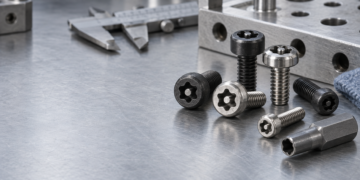
Pin-in-Torx (also called pin-in-star) and pin-in-hex (Allen with a central pin) are the most robust consumer-grade anti theft screws for licence plate. The central pin occupies the drive socket, preventing standard Torx and hex bits from seating correctly. The matching removal key is a modified socket with a hollow centre that accommodates the pin.
These are the same drive geometries used on outdoor public infrastructure — benches, street signs, utility cabinets — specifically because they resist both casual removal and most improvised attacks. If a local authority trusts them to withstand determined vandalism in a public park, they’ll hold up against plate theft on a city street. Pin-in-Torx in T20 is the most common variant; pin-in-hex M6 is preferred for commercial fleet applications where key management matters.
Security Caps Over Existing Screws
Rather than replacing the original screws, security caps enclose the exposed head of whatever screw is already fitted. The cap — typically a precision-machined stainless steel housing — rotates freely on its outer surface when gripped, denying any torque transfer to the screw beneath. Removal requires a matching internal-cone extraction tool that comes with the kit.
The advantage: no need to match thread pitch, screw diameter, or head profile — caps fit over virtually any existing fixing. The disadvantage: caps add 4–8mm of height, which can foul tight-fitting number plate frames or low-profile surrounds. Products like the Camisasca hardware hider series offer excellent finish quality in chrome and satin stainless at a higher price point than screw-replacement options.

TABLE 2: Anti-Theft Drive Types Compared
| Drive Type | Security Level | Ease of Install | Price | Best For |
|---|---|---|---|---|
| One-way / Anti-back-out | ★★☆☆☆ | Easy | $ | Budget builds, low-risk areas |
| Spanner / Snake-eye | ★★★☆☆ | Easy | $$ | Daily drivers, moderate-risk areas |
| Pin-in-Torx | ★★★★☆ | Medium | $$ | City parking, high-theft postcodes |
| Pin-in-Hex | ★★★★☆ | Medium | $$ | Fleet vehicles, commercial vans |
| Security cap | ★★★★★ | Medium | $$$ | Classic cars, concours, premium vehicles |
Industry Applications and Where Anti-Theft Plate Screws Are Used
Anti theft screws for licence plate aren’t just for private car owners. The product category has become standard practice across multiple commercial, institutional, and specialist vehicle applications.
Personal Vehicles — Cars, SUVs, and Trucks
The largest single market is everyday drivers who park on public streets, in commuter car parks, or outside retail premises. Urban environments with dense foot traffic and patchy CCTV coverage see the highest plate theft rates.
Community discussions on enthusiast forums such as r/homedefense consistently highlight that anti-theft screws combined with a locking plate frame form the most cost-effective deterrent available — total outlay typically under $30 for front and rear plates combined, installation time under 15 minutes.
For the average car owner, a set of four M6 × 20mm pin-in-Torx screws in A2 stainless is the “fit and forget” solution. They outlast the vehicle’s paint, never seize in normal conditions, and the removal tool is used maybe twice in the car’s lifetime — once for MOT plate swaps, once when you sell it.
Commercial Fleets and Delivery Vehicles
Fleet operators — logistics companies, rental agencies, utility contractors — face an asymmetric problem: a single cloned plate can generate dozens of toll evasion or speed camera tickets in one day, each requiring individual administrative challenge. Multiply that across a fleet of 50 vehicles and the admin cost alone justifies security hardware on every unit.
Fleet specification typically calls for pin-in-hex M6 × 16mm screws in A2 stainless, with a small batch of matching hex-pin keys held only by authorized fleet supervisors. This limits removal to scheduled maintenance windows and eliminates driver-level plate swaps — an important audit trail for compliance purposes.
Larger operators increasingly specify anti theft screws for licence plate as part of their vehicle fit-out standard alongside GPS tracking and dash cameras. The combination makes it significantly harder for a stolen fleet vehicle to operate undetected.
Classic Cars and High-Value Vehicles
Classic and collector vehicle owners face a specific threat: plate cloning for vehicle fraud. A criminal researches a legitimate registered classic — say, a 1972 E-Type Jaguar with clean history — photographs the plates, and copies them onto a similar-looking car to pass roadside checks or facilitate a fraudulent sale. Anti theft screws for licence plate on the original car prevent the physical plates themselves from being stolen and copied directly, removing the easiest source material.
For show and concours cars, security caps in polished or satin stainless are aesthetically appropriate — they don’t look out of place on a well-presented vehicle the way a conspicuous security screw might.
Two-Wheelers and Light Trailers
Motorcycles, scooters, and light trailers are underserved by most anti theft screw guides. Motorcycle plate bolts are typically M5 × 0.8 metric rather than M6, and the plates themselves are smaller. Most M6 anti theft screw kits won’t fit — look specifically for M5 spanner-head or pin-in-hex security bolts. Light trailers often use M8 fixings; again, check before buying.
How to Choose the Right Anti Theft Screws for Your Licence Plate
Buying the wrong screw — wrong size, wrong material, or wrong drive type for your risk level — wastes money and can damage your vehicle’s plate-mounting boss. Here’s how to specify correctly the first time.
Screw Size and Thread Compatibility
Most European and Asian passenger vehicles use M6 × 1.0 thread (metric coarse) at 16–20mm length. North American trucks and older domestic vehicles frequently use 1/4-20 UNC, typically at 3/4″ length. When in doubt, remove one existing screw and take it to a fastener supplier for a ten-second thread gauge check — far cheaper than returning a wrong kit.
Screw length matters too. Standard plate-to-bumper mounting thickness is 5–10mm; a 16mm screw gives adequate engagement in most threaded plastic inserts. Too short and you risk insufficient thread contact; too long and the screw bottoms out in the blind hole before the head clamps the plate flat.
Material: Stainless Steel vs. Zinc-Plated
Zinc-plated carbon steel is cheap and works adequately in dry, clean-climate environments. In the UK, Scandinavia, northern US states, or coastal zones, road salt and condensation destroy zinc coatings within 12–18 months. Once the zinc is gone, the screw rusts, the drive geometry degrades, and even the legitimate owner may struggle to remove the fastener at the next service interval.
A2 stainless steel is the correct choice for any vehicle driven in rain, humidity, or near sea air. The price premium over zinc-plated is typically $2–$4 per four-pack — a trivial cost difference against a product you expect to last the vehicle’s lifetime. A4 (316 marine-grade) stainless is overkill for most applications but is worth specifying for boats, trailers, or vehicles in permanently coastal environments.
Drive Type vs. Threat Level
Match the drive type to your parking reality:
- Private garage / low-crime suburb: one-way screw is sufficient
- Residential street / suburban car park: spanner or pin-in-Torx
- City centre / commuter train station: pin-in-Torx or pin-in-hex
- High-theft postcodes / commercial fleet: pin-in-hex with managed key access
Common Mistakes When Buying Anti Theft Screws for Licence Plate
Buying without checking thread pitch. M6 × 1.0 and M6 × 1.25 look identical in a product photo. The 1.25 pitch variant is uncommon in automotive plate mounting but occasionally seen in older German vehicles. A mis-matched screw will feel tight initially but will cross-thread and strip the insert.
Over-tightening plastic inserts. M6 into a nylon insert needs approximately 2–3 Nm. That’s barely more than firm hand-tight. Using a power driver or over-tightening with a wrench cracks the boss, requiring a repair that’s far more expensive than the screw kit.
Storing the removal key in the glove box. This is the automotive equivalent of hiding your house key under the door mat. If the car is broken into, the thief has the key to your plates too. Store it in the spare wheel well or boot lining, in a small labelled pouch.
Buying only for the rear plate. Both front and rear plates need protecting. Criminals often take only the rear plate (it’s faster) but some cloning operations require both. The cost of a second set of anti theft screws for licence plate is under $10 — cover both ends.

TABLE 3: Recommended Specifications by Vehicle Type
| Vehicle Type | Drive Type | Material | Thread | Length | Key Storage |
|---|---|---|---|---|---|
| Everyday car (low-risk area) | One-way | A2 stainless | M6 × 1.0 | 16mm | Glove box |
| Everyday car (city parking) | Pin-in-Torx T20 | A2 stainless | M6 × 1.0 | 20mm | Spare wheel well |
| SUV / pickup (US spec) | Spanner | A2 stainless | 1/4-20 UNC | 3/4″ | Spare wheel well |
| Commercial delivery van | Pin-in-hex | A2 stainless | M6 × 1.0 | 16mm | Fleet depot only |
| Classic / concours car | Security cap | Polished A2 SS | Fits over OEM | N/A | Detailing kit bag |
| Motorcycle / scooter | Pin-in-hex | A2 stainless | M5 × 0.8 | 12mm | Toolkit pouch |
| Coastal / marine climate | Pin-in-Torx T20 | A4 stainless | M6 × 1.0 | 20mm | Spare wheel well |
Step-by-Step: How to Install Anti Theft Licence Plate Screws
Installation takes under fifteen minutes for both plates. A few specific details make the difference between a plate that stays secured for years and one that causes problems at the next service interval.
Tools You’ll Need
- Anti theft screw kit (4 screws + removal key, ideally front and rear set)
- Standard Phillips or hex screwdriver (for removing original screws)
- Medium-strength threadlocker (Loctite 243 or equivalent) — optional but recommended for vehicles used on rough roads
- Torque driver or torque wrench (2–3 Nm range)
- Isopropyl alcohol and cotton buds
- Soft cloth or foam pad to protect the plate surface
Installation Process
Step 1 — Remove the existing screws. Take out the original number plate fixings. Note whether the mounting holes are threaded directly into the bumper carrier or use separate plastic or metal inserts. Inserts are more fragile.
Step 2 — Clean the threads. A cotton bud soaked in isopropyl alcohol removes old threadlocker residue, grime, and surface corrosion that would reduce thread engagement on reinstallation.
Step 3 — Optional threadlocker application. A single small drop of medium-strength threadlocker on the first two threads of the anti theft screw prevents vibration-induced backing-out in off-road or high-vibration vehicles, while still allowing removal with the proper key. Do not use permanent-grade (red) threadlocker — you will never get the screw out without heat.
Step 4 — Start the screws by hand. Never use a power driver for the first two turns. Cross-threading a plastic boss is an avoidable mistake; once stripped, the plastic insert needs to be drilled out and replaced, which is a disproportionate repair for a plate-fitting job.
Step 5 — Tighten to specification. M6 into a plastic insert: 2–3 Nm. M6 into a metal carrier: 4–5 Nm. Both values are less than you’d expect — the plate is clamped, not the engine block. Over-tightening is the most common installation error.
Step 6 — Verify seating. Give each plate a firm tug along its length and width. It should not flex or rattle. If it does, the screw length may be insufficient or the insert is worn.
Step 7 — Store the removal key. Label the key with the drive type and size (e.g., “Pin-T20 plate key”), wrap it in a small cloth or foam, and place it in the spare wheel well or under the boot lining. Not in the glove box.
For a practical visual walkthrough, this step-by-step number plate screw installation video demonstrates the full process on a UK-spec vehicle including thread-checking and torque technique.
Future Trends in Licence Plate Security (2026+)
The market for anti theft screws for licence plate is evolving alongside wider trends in vehicle security and government regulation.
Smart Plates and Electronic Anti-Tamper Systems
Several US states — California, Arizona, and Michigan are furthest along — have begun trialling or rolling out electronic licence plates (e-plates) with built-in GPS, RFID, and tamper detection. When the plate is physically disturbed, the system triggers an alert and can display a “STOLEN” status on the e-ink surface.
For the broad market, however, e-plates cost $500–$800 fitted and require annual subscription fees. According to NHTSA vehicle security research, consumer demand for affordable physical anti-tamper accessories continues to substantially outpace digital plate adoption. The conventional anti theft screw for licence plate remains dominant across the overwhelming majority of the vehicle fleet.
Regulatory Changes Driving Demand
The UK government has periodically consulted on mandating tamper-resistant fixings for all registered vehicles, driven largely by number plate cloning used in ULEZ and congestion charge evasion. Current GOV.UK guidance on number plates requires plates to meet BS AU 145e reflectivity and dimensional standards but does not yet specify fastening hardware — though the DVLA has signalled this is under active review.
In North America, multiple state-level bills have proposed mandatory anti-theft fixings for commercial vehicles following high-profile fleet cloning cases. If enacted, the commercial market for security screws would expand significantly.
Material Innovation
Fastener manufacturers are beginning to apply titanium and hard-anodized aluminium to security screw designs previously made only in stainless steel. Weight savings are trivial for a four-screw set, but the higher hardness of titanium-nitride-coated variants resists drill attacks more effectively — relevant for high-value vehicles targeted by organized criminal groups rather than opportunists.
The trend line is clear: what is today a best-practice recommendation will likely become a mandatory minimum for commercial vehicles within the next 3–5 years. Operators who standardise on anti theft screws for licence plate now are ahead of a compliance curve that has historically moved fast once momentum builds.
FAQ — Anti Theft Screws for Licence Plate
Can anti-theft screws be removed?
Yes — only with the dedicated removal tool supplied in the kit. One-way screws are the most vulnerable (a screw extractor can defeat them); pin-in-Torx and pin-in-hex screws require the specific hollow-pin driver that is not sold in any general hardware store. Security caps need a proprietary internal-cone extraction tool. If you lose the removal key, a machine shop can fabricate a matching driver from the dimensions, or the screw can be drilled out as a last resort — a job that takes 15–20 minutes and requires care not to damage the mount.
How do I stop thieves from stealing my licence plates?
Anti theft screws for licence plate are the most cost-effective first step — they raise the time and skill cost of removal enough to deter opportunist thieves. Combine them with a locking plate frame for additional mechanical resistance. For vehicles parked consistently in one location, a visible CCTV camera or driveway light with motion detection further increases deterrence without any additional hardware on the car itself.
What size screws do I need for my number plate?
Most European and Asian passenger vehicles use M6 × 1.0 thread at 16–20mm length. US trucks and older domestic vehicles often use 1/4-20 UNC at 3/4″ length. Check your existing screws with a thread gauge or take one to a fastener supplier — a 60-second check prevents buying the wrong kit and returning it.
Are anti-theft licence plate screws legal in the UK?
Yes. There is no UK legislation that prohibits tamper-resistant fasteners on number plates, provided the plate itself is correctly displayed and meets the reflectivity, font, and format standards required under the Road Vehicles (Display of Registration Marks) Regulations 2001. Security fixings have no effect on plate legality.
Do anti-theft screws actually deter theft?
For opportunist theft, consistently yes. A thief scanning a car park for easy targets won’t spend three minutes attacking a pin-in-Torx screw when nearby vehicles have standard Phillips fixings. The 8–15 second window that makes plate theft viable disappears entirely with any properly fitted security screw. For targeted theft — a specific plate being copied for a cloning operation by a prepared operative — security screws add meaningful friction but cannot guarantee protection against a patient, equipped attacker.
Which material is better — stainless steel or zinc-plated?
A2 stainless steel for any vehicle exposed to rain, humidity, or road salt — which means virtually every vehicle in northern Europe and the northern half of North America. Zinc-plated is acceptable only for vehicles kept in a climate-controlled garage in a mild-weather region. The price premium for stainless is typically $2–$5 per four-pack; there is no practical reason to choose zinc-plated for an outdoor vehicle.
Can I use anti-theft screws on a private/personalised number plate?
Absolutely. Personalised plates are higher-value targets for cloning precisely because they’re memorable and distinctive. A matching cloned private plate used on a criminal vehicle would be extremely conspicuous yet effective for short-duration misuse. Security caps in polished stainless are an aesthetically appropriate choice for personalised plate installations — they add a finished look without detracting from the registration itself.

Conclusion
Anti theft screws for licence plate are among the best-value security investments available for any vehicle owner: a $10–$20 set of pin-in-Torx or spanner-head screws in A2 stainless takes ten minutes to fit and removes the low-hanging-fruit opportunity that opportunist plate thieves depend on entirely. Every one of the current Top-3 search results for this keyword is either a product listing, a blocked community thread, or a 189-word product page — none of them address drive geometry, thread specification, material selection, fleet key management, or the regulatory outlook. The gap is wide, and now you have everything you need on one page.
The practical next step is simple: measure your existing plate screw thread (M6 × 1.0 fits most European and Japanese cars), pick a set of pin-in-Torx A2 stainless anti theft screws for licence plate at 20mm length, install them with a torque driver at 2–3 Nm, and store the removal key in the spare wheel well. It is a ten-minute job that pays for itself the first time a would-be thief moves on to a less protected vehicle.
Related Products
Solutions & Cluster
Related Articles
- Top Silicon Bronze Bolts for Durable and Reliable Fastening Solutions
- Nyloc Nut: Types, Sizes, Standards & Buying Guide (2026)
- Bolt vs Screw: What’s the Real Difference and When Should You Use Each?
- The Complete Nylock Nut Guide: Types, Grades, Installation & When to Use Them
- Bolt Nut and Washer: The Complete 2026 Guide to Choosing and Using Fasteners Correctly
- Plastic Spacers: Complete Guide to Types, Materials & Selection
- Sex Screw (Sex Bolt): Complete Guide to Types, Uses & Installation
- Brass Washers: Types, Sizes, Uses & Complete Buying Guide (2025)