 English
  German
  Spanish
  Portuguese
  French
  Japanese
  Arabic
  Korean
  Vietnamese
  Russian
 You’ve just finished assembling a server rack. You start removing an access panel for routine maintenance — and a screw drops, disappears into the chassis, and vanishes somewhere near a live circuit board. Thirty minutes later, you’re still searching. Sound familiar? That’s exactly the problem captive bolts were designed to eliminate. One design change. Problem gone.
Captive bolts (also called captive screws or captive fasteners) are fasteners that remain permanently attached to a panel or housing even when fully disengaged. They don’t fall. They don’t get lost. And in high-stakes environments — aerospace, medical equipment, military electronics — that’s not a convenience feature. It’s a safety requirement. This guide covers everything you need to make the right choice: what captive bolts are, how the major types work, which industries rely on them and why, how to select the right one for your application, and where the technology is heading.
What Are Captive Bolts — and Why Do They Exist?
A captive bolt is a fastener engineered to stay physically retained in its host panel or component after being loosened, so it cannot be separated or dropped during assembly or maintenance. The core mechanism varies by type — some use a retaining washer, some are press-fitted with a clinching feature, others use a spring-loaded collar — but the goal is always the same: keep the fastener captive even when it isn’t actively fastening anything.globalspec+1
The problem they solve is straightforward. In any assembly that requires repeated access — removable panels, service covers, inspection hatches, equipment trays — loose screws create real risks. In electronics manufacturing, a dropped screw landing on a PCB can short a circuit. In aerospace, loose hardware inside an engine bay can cause Foreign Object Debris (FOD) incidents that cost hundreds of thousands of dollars to investigate and remediate. In food processing equipment, a missing fastener means a contamination risk and a potential recall.
Captive bolts eliminate this entire category of failure by making separation physically impossible. Once installed, the fastener stays with the panel — period.accu
How Captive Bolts Work: The Retention Mechanism Explained
Understanding what makes a captive bolt “captive” is crucial before you can choose the right one. The retention mechanism isn’t cosmetic — it directly affects installation method, load capacity, and panel compatibility.
The Retaining Feature
Most captive bolts feature one of three retention methods:
Relief cut in threads: A groove machined into the screw shaft that engages a retaining ring or press-fitted collar, stopping the screw from pulling through. Simple, reliable, low-cost.nbk1560
Clinching shank: The screw or nut has a serrated or knurled shank that, when pressed into a panel hole, permanently deforms to grip the panel material from inside. This is the self-clinching design.fivetk
Flared ferrule: A tubular component surrounding the screw shank is deformed during installation, creating an expanded lip that physically locks the assembly to the panel — useful when the panel material is too soft or brittle for self-clinching.designworldonline
Assembly Behavior
When a captive bolt is loosened, the screw disengages from the mating threaded hole but the retaining mechanism holds it against the panel. The screw can spin freely — allowing it to retract — but cannot drop away. This means a single technician can remove an access panel one-handed without needing to catch hardware, and reinstallation is equally fast because the fastener is already positioned and waiting.fivetk
Types of Captive Bolts: A Practical Breakdown
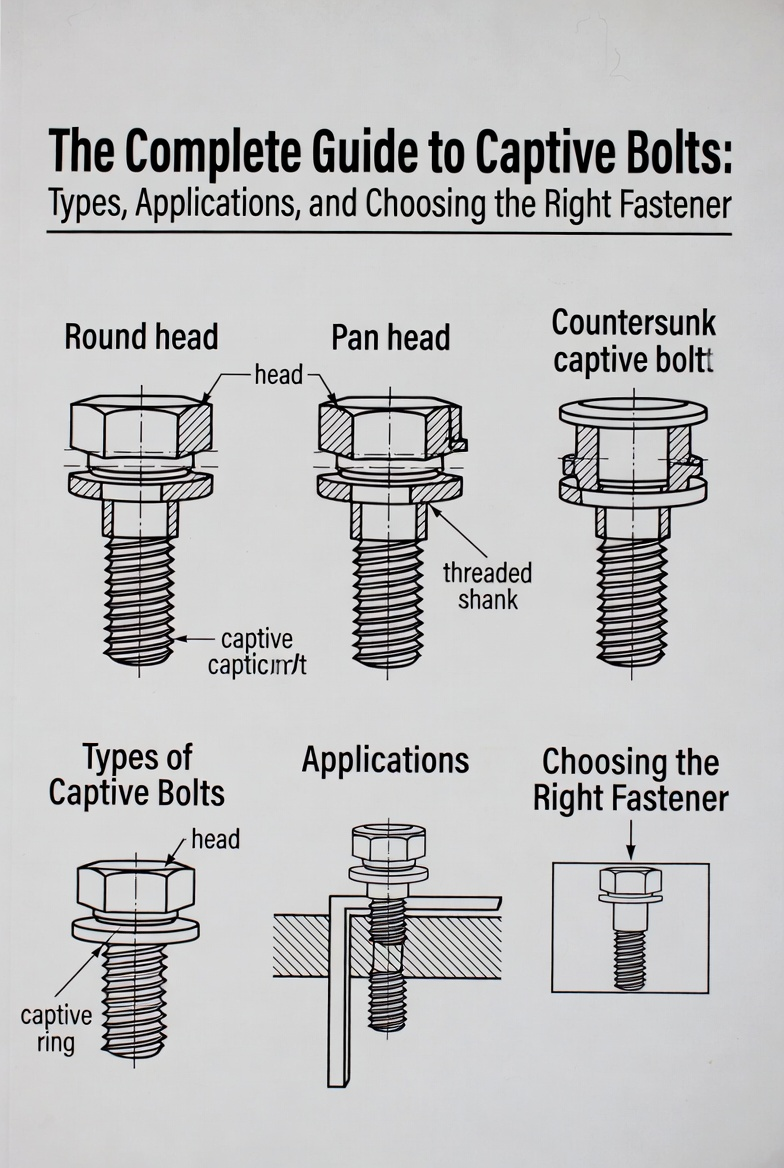
Not all captive bolts are interchangeable. The type you need depends on your panel material, access requirements, vibration exposure, and production volume. Here’s how the major categories compare.
Table 1: Captive Bolt Types and Their Core Characteristics
Self-Clinching Captive Screws
The most widely used type in metal fabrication. The screw’s knurled or serrated shank is pressed into a pre-drilled hole in the panel using a standard installation press. The metal panel material flows into the clinching feature and locks permanently around it. PEM® brand self-clinching fasteners represent the industry standard here — they permanently captivate into sheets as thin as 0.040 inches (1.02mm) and are available in carbon steel and stainless steel.hoidan+1
One important caveat: the fastener’s hardness must exceed the hardness of the panel material. If you’re working with hardened steel panels, self-clinching won’t work — the panel won’t deform around the fastener. That’s when you switch to flare-in designs.globalspec
Spring-Loaded Captive Screws
These are the go-to for high-cycle access applications. A spring mechanism inside the assembly holds the screw in a retracted position when disengaged, keeping it clear of the panel surface and preventing snagging. When the panel needs to close, the technician positions it, then drives the screw down through the spring tension and into the mating thread. The PEM PFC2™ and PFS2™ series are industry-standard examples of spring-loaded captive panel screws used extensively in server infrastructure and telecom equipment.pemnet
Flare-In Captive Screws
Where self-clinching fails — thin materials, close edge distances, hard or painted panels — flare-in captive screws step in. A conical hole is created in the panel, the ferrule is inserted, and a press operation expands the ferrule to grip the panel’s interior walls. Because the installation force goes into the ferrule rather than into the panel itself, there’s no risk of damaging painted surfaces or deforming thin substrates.designworldonline+1
Captive Bolts vs. Standard Fasteners: When the Upgrade Is Worth It
Switching from standard loose hardware to captive bolts has upfront costs — the fasteners themselves cost more, and installation requires either a press or specific tooling. So when does the math actually justify the change?
Table 2: Captive Bolts vs. Standard Fasteners — Practical Tradeoffs
accu+2
The break-even calculation is usually straightforward. If an assembly will be opened more than a handful of times over its service life, and if a dropped fastener carries any meaningful consequence (damage to components, contamination risk, FOD), captive bolts almost always pay for themselves in reduced maintenance labor and eliminated incident costs alone.
For assemblies that will never be serviced — welded enclosures, potted electronics, sealed units — captive bolts add cost with no benefit. That’s the boundary. Don’t cross it.
Industry Applications: Where Captive Bolts Are Non-Negotiable
Captive bolts appear across nearly every sector that involves precision equipment, repeated access, or environments where lost hardware is genuinely dangerous. These aren’t just preferred solutions — in many cases, they’re specification requirements.tsfasteners
Aerospace and Defense
Aerospace is where captive bolt requirements are most strictly enforced. Foreign Object Debris protocols mandate that any fastener in an aircraft assembly that could potentially enter a critical zone must either be captive or tracked with redundant documentation. Captive nuts used in aerospace — such as PEM CFX and CFS series — must remain securely in place during both assembly and maintenance operations, and compliance with AS9100 standards requires traceability of every fastener used.alibaba
Military ground vehicles and defense electronics face similar requirements. Equipment deployed in field conditions may be serviced in poor lighting, under time pressure, by personnel who can’t afford to search for dropped hardware. Captive bolts remove that variable entirely.
Server and Data Center Infrastructure
Server rack design has been standardized around captive panel fasteners for decades — and for obvious reasons. A data center technician may service dozens of units per shift. Dropped screws onto live circuit boards cause failures that result in downtime measured in thousands of dollars per minute.pemnet
PEM’s SCBR™ and SCB™ series captive panel screws are found in virtually every major server chassis manufacturer’s designs. They install permanently into sheets as thin as 1.02mm and are available with self-retracting, axial float, or jacking features depending on the panel design requirements.pemnet
Medical Device Manufacturing
Surgical instruments, diagnostic imaging equipment, and laboratory devices all require frequent disassembly for sterilization and calibration. Captive bolts eliminate the risk of a fastener entering a patient area or contaminating a sterile field — a consequence that has regulatory and liability implications far beyond a simple maintenance error. Medical-grade captive fasteners are typically manufactured in 316L stainless steel with passivated surfaces to meet cleanroom and autoclave compatibility requirements.
Industrial Automation and Control Panels
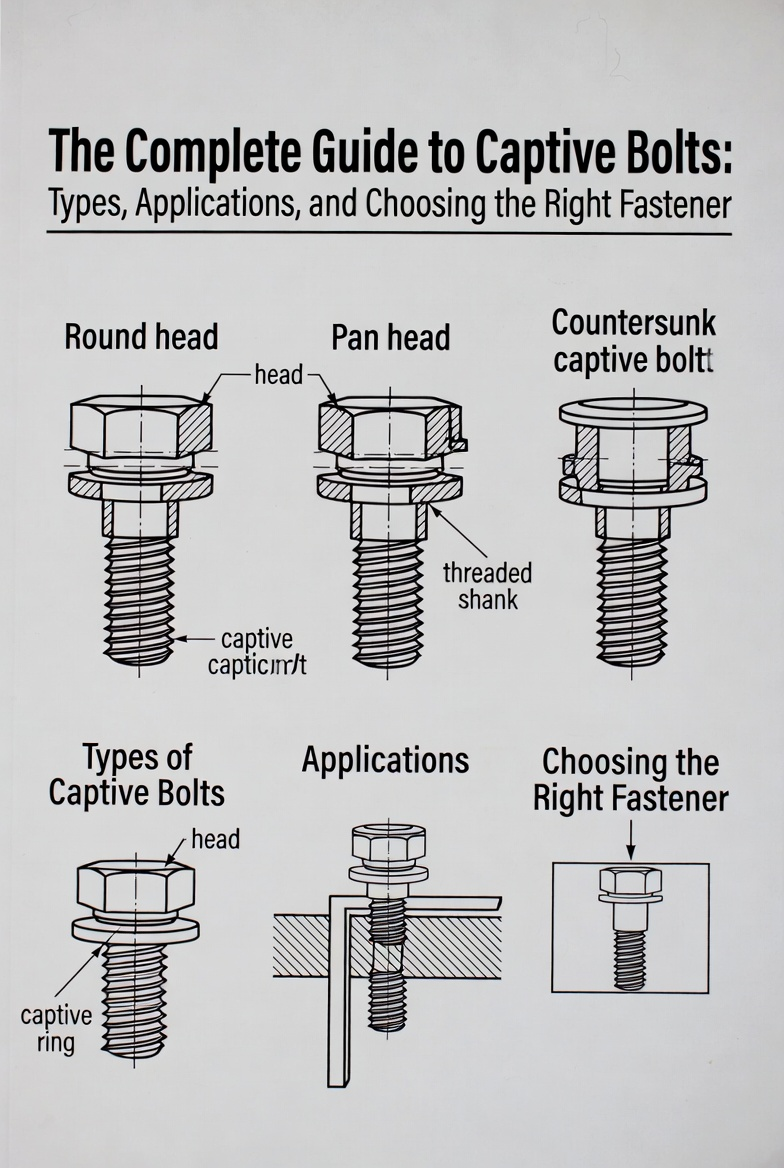
Industrial machinery control panels are opened regularly for inspection, wiring modification, and component replacement. In a factory environment with floor vibration, dropped hardware into machinery can cause jams, damage, or injury. Captive bolts are standard in machine guard assemblies, motor housings, and modular control panels — particularly in environments where ISO 13849 machine safety standards govern design requirements.accu
Electronics enclosures and PCB assemblies use broaching captive nuts pressed into drilled holes in the board, providing reliable thread engagement in blind locations without requiring access to the back of the board.hoidan
How to Select the Right Captive Bolt: A Decision Framework
Walk through these questions before committing to a captive bolt specification. Getting this right upfront prevents costly redesigns and installation failures.
Step 1 — What is your panel material and thickness?
Self-clinching captive bolts require ductile metals (steel, aluminum) and minimum panel thickness — typically 0.040″ for standard designs. Hard panels, painted surfaces, or non-metals require flare-in designs.designworldonline
Step 2 — How often will the assembly be accessed?
Occasional access (annual maintenance): a simple retaining washer or thread-relief captive screw is sufficient. Frequent access (weekly or more, or high-cycle environments): spring-loaded designs that retract and resist vibration loosening are worth the premium.
Step 3 — Is tool-free access required?
Thumb screws with captive retention allow hand operation — critical in applications where tools may not be available or practical. For secure fastening that requires deliberate tool engagement, Phillips, hex, or Torx drive captive screws are appropriate.tsfasteners
Step 4 — What are the vibration and environmental conditions?
High-vibration environments — transportation, heavy machinery, rotating equipment — need captive bolts with thread-locking features or torque-limiting designs to prevent back-out. Outdoor or corrosive environments require stainless steel (typically 18/8 or 316) or appropriately plated carbon steel.
Step 5 — What are your production volume and installation resources?
Self-clinching captive bolts require a press — a capital investment that’s easily justified at production volumes. Low-volume or prototyping environments may favor flare-in or weld-nut alternatives that need less specialized tooling.
Table 3: Captive Bolt Selection Matrix
somgle+3
For comprehensive fastener selection resources covering captive bolts, standard screws, nuts, and specialty hardware, Fastenright: Fasteners, Screws, Nuts & Bolts provides detailed technical specifications and selection support across industrial and commercial applications.
Common Mistakes When Using Captive Bolts
These are real failure patterns — the kind that show up in returned components and rework orders.
Mismatching hardness: Installing a self-clinching captive bolt into a panel that’s too hard results in the fastener sitting loosely rather than clinching permanently. The panel material needs to be softer than the fastener. Every time.globalspec
Under-specifying for vibration: A basic thread-relief captive screw in a high-vibration environment will hold the fastener to the panel, but won’t prevent the screw from backing out of the mating thread. The screw stays attached — but the joint fails. Vibration environments need purpose-designed captive bolts with locking features or appropriate thread-locking compounds.
Ignoring minimum edge distance: Self-clinching captive bolts require a minimum distance from the screw centerline to the panel edge — typically specified by the manufacturer. Violating this dimension causes panel deformation during installation. Flare-in designs handle close-edge-distance applications cleanly.designworldonline
Over-torquing during installation press: The press force required to install self-clinching captive bolts is specific — too little and the fastener isn’t fully seated, too much and the panel deforms or the clinching feature damages. PEM and similar manufacturers publish exact installation force specifications for every product — use them.
Using captive bolts where standard hardware is sufficient: Over-engineering an assembly that will never be serviced adds cost with no value. Captive bolts are a maintenance and safety solution. If neither of those apply, standard fasteners are the correct answer.
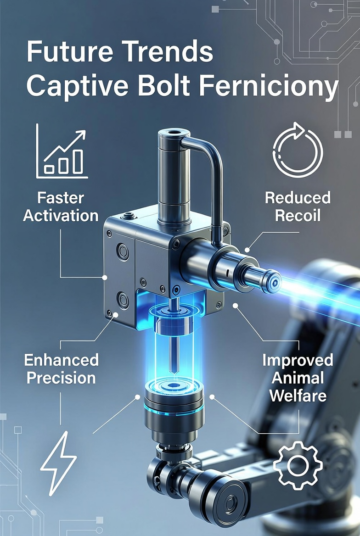
Future Trends in Captive Bolt Technology
The captive fastener market isn’t standing still. Several developments are reshaping what captive bolts can do and where they can be used.
Miniaturization for Next-Generation Electronics
As consumer electronics, wearables, and medical implants continue shrinking, captive fastener manufacturers are engineering smaller retention mechanisms than were previously considered practical. Micro captive screws for use in thread sizes smaller than M2 are in active development, driven primarily by demand from medical device and consumer electronics sectors.globalspec
Additive Manufacturing Compatibility
Traditional self-clinching captive bolts rely on press installation into ductile metal panels. 3D-printed components — increasingly used in aerospace, automotive prototyping, and industrial production — often use materials that don’t deform predictably enough for clinching. Insert-style captive fastener systems compatible with additive manufacturing substrates (SLA resins, nylon, PEEK) are an area of active product development.designworldonline
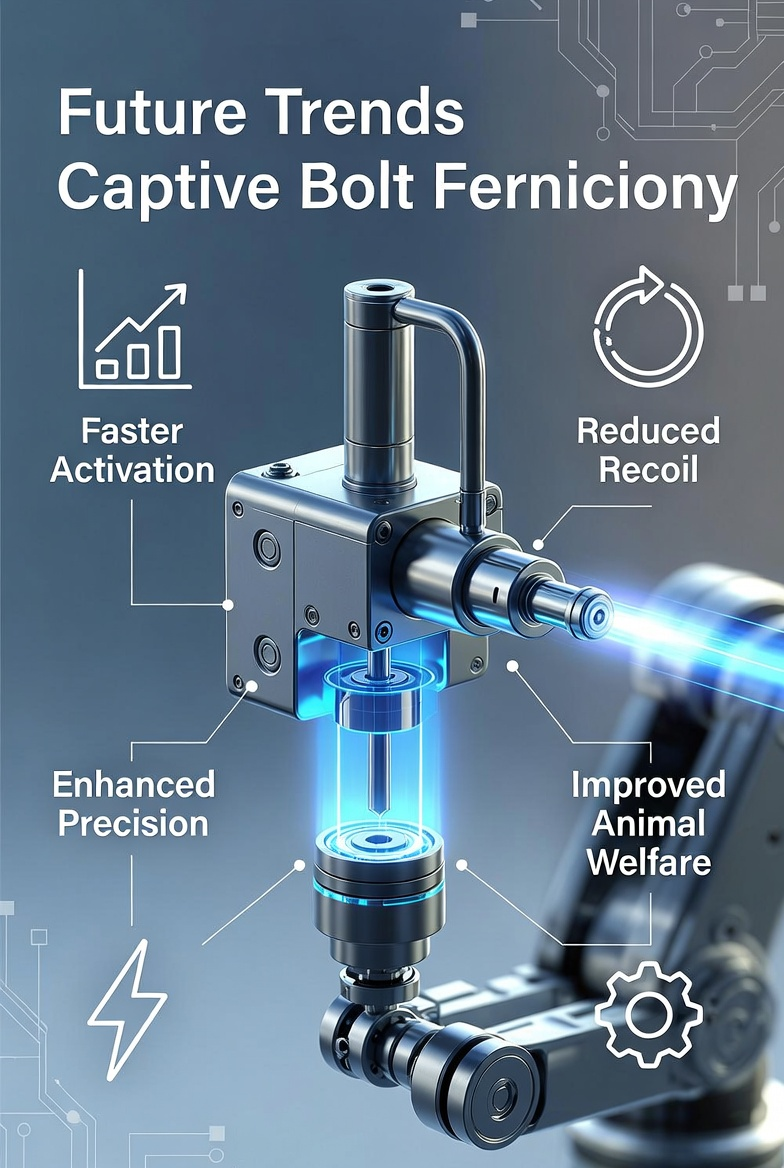
The broader fastener industry is seeing growing interest in “smart” fasteners equipped with torque sensors or conductive elements that confirm installation status electronically. For captive bolts used in critical assemblies, the ability to verify that a panel is properly closed and fastened — not just that the hardware is present — adds a new dimension of safety validation. Early implementations have appeared in aerospace maintenance systems and are beginning to appear in high-end industrial equipment.
Sustainable Material Development
The push toward sustainability in manufacturing is reaching the fastener supply chain. Captive bolt manufacturers are evaluating alternative coatings that eliminate hexavalent chromium (RoHS compliance), bio-based lubricant-impregnated threads that reduce installation torque while maintaining retention, and recycled-content stainless steel that meets ASTM standards. These aren’t marketing additions — they’re increasingly driven by OEM procurement requirements from automotive and electronics customers operating under strict supply chain sustainability frameworks.emerald
Integrated Captive Assemblies in Modular Design
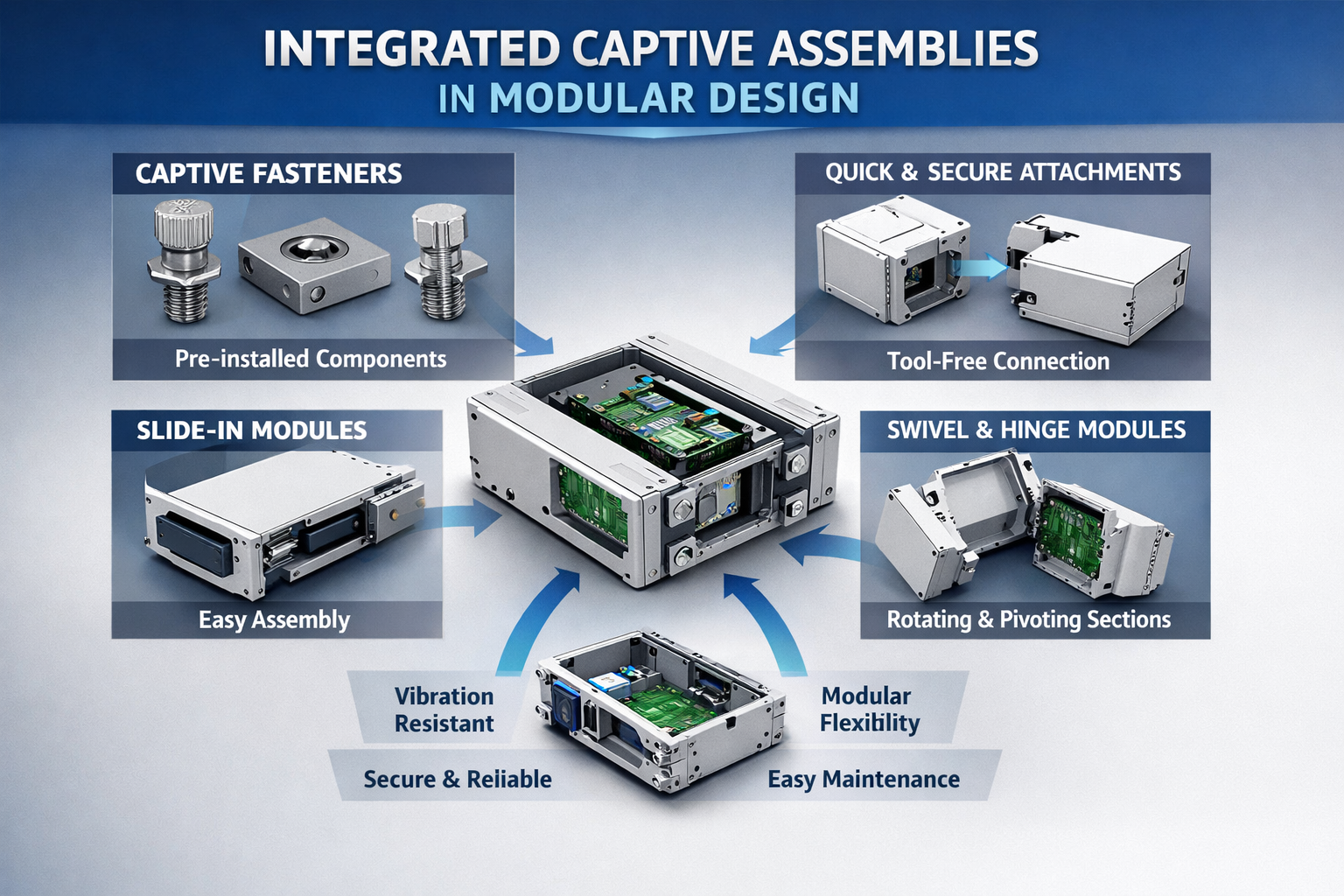
The trend toward modular, field-serviceable product design — visible in everything from server infrastructure to electric vehicles — is driving demand for captive fastener systems that are pre-integrated into sub-assemblies at the factory level. Rather than specifying individual captive bolts, design engineers are increasingly working with fastener suppliers to develop panel-fastener sub-assemblies that ship ready to install, reducing production steps and ensuring consistent positioning.clarendonsf+1
The principle behind captive bolts is almost embarrassingly simple: keep the fastener with the panel. But the engineering behind doing that reliably, across every material, every environment, and every access frequency requirement, turns out to be surprisingly nuanced. Getting the type right, the installation method right, and the material selection right means the difference between a fastener that stays where it belongs for the life of the product and one that fails the first time a maintenance tech applies real torque.
For procurement, sourcing, and detailed product specifications across captive bolt types, Fastenright: Fasteners, Screws, Nuts & Bolts offers comprehensive technical support for industrial fastener selection.
Authority References: