 English
  German
  Spanish
  Portuguese
  French
  Japanese
  Arabic
  Korean
  Vietnamese
  Russian
 If you’ve ever cracked open a laptop, assembled a 3D printer, or worked on a medical device, you’ve almost certainly encountered m2 screws — even if you didn’t know what to call them. These small-but-mighty fasteners are everywhere, and yet most people treat them as an afterthought until the wrong one strips a thread or simply won’t fit. This guide is built for engineers, hobbyists, procurement managers, and anyone who wants to stop guessing and start choosing the right m2 screw with confidence
What Exactly Are M2 Screws?
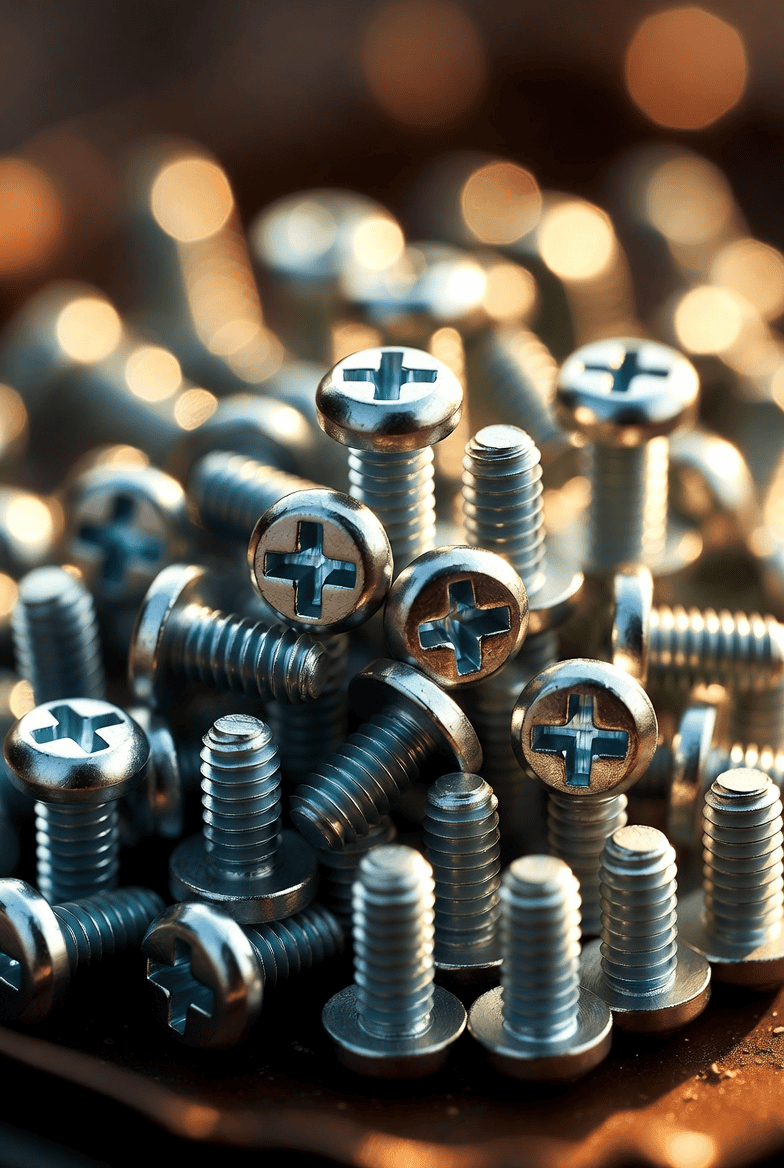
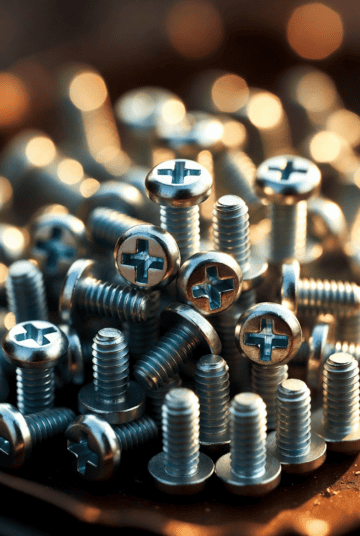
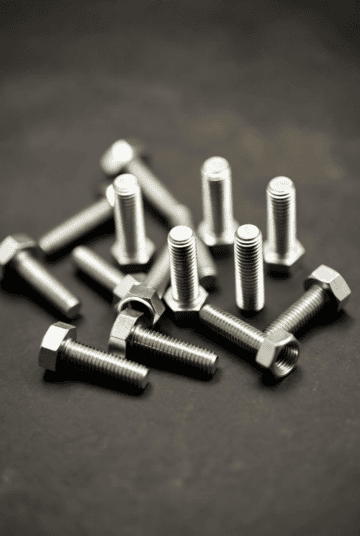
The “M” in m2 screws stands for “metric,” and the “2” refers to the nominal outer thread diameter: 2 millimeters. That’s roughly the width of a toothpick. Don’t let the size fool you — these are precision-engineered fasteners built to ISO and DIN standards, which means their thread geometry, pitch, and tolerances are tightly controlled across manufacturers worldwide.reddit+1
The standard thread pitch for m2 screws is 0.4 mm (coarse pitch), meaning the threads are spaced 0.4 mm apart. In practical terms, one full rotation of an m2 screw advances it exactly 0.4 mm into the material. Length ranges typically run from 2 mm up to 50 mm, though custom lengths are readily available for specialized applications. The head sits above the measurement — so an M2 × 8 means the shank beneath the head is 8 mm long.accu+1
Here’s the core dimensional data at a glance:
Table 1: M2 Screw Standard Dimensions (ISO/Metric Coarse)
| Parameter | Standard Value | Notes |
|---|---|---|
| Nominal Diameter | 2.0 mm | Major diameter (max) |
| Thread Pitch (Coarse) | 0.4 mm | Standard for most applications |
| Minor Diameter (d3) | 1.509 mm | Root of thread |
| Pitch Diameter (d2) | 1.74 mm | Effective engagement diameter |
| Tap Drill Size | 1.6 mm | For creating a tapped hole |
| Head Diameter (Pan/Hex) | ~3.8–4.3 mm | Varies by head type |
| Typical Length Range | 2 mm – 50 mm | Custom lengths available |
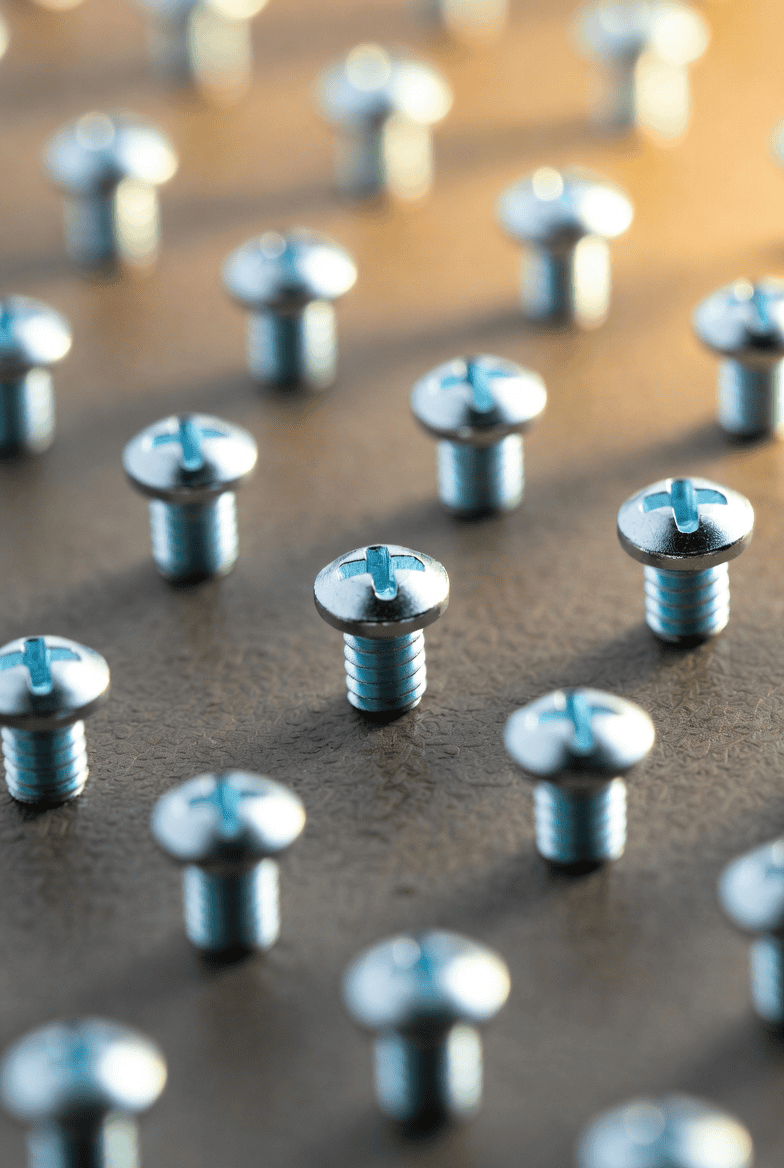
One thing worth knowing from hands-on experience: m2 screws are often confused with M2.5 screws at a glance. The 0.5 mm diameter difference feels negligible in your hand, but force an M2.5 into an M2-threaded hole and you’ll cross-thread it — sometimes silently, sometimes catastrophically. Always verify before you drive.[ascentoptics]
Types of M2 Screws: Head Styles and Drive Types
Not all m2 screws are the same. The head geometry and drive type determine how the screw sits in an assembly, how much torque you can apply, and whether a standard tool in your kit will even work. Getting this wrong is a common — and avoidable — mistake.
Head Types
Pan Head — Slightly domed, flat underneath. The most versatile option and the default choice for PCB and electronics assemblies. Provides a wide bearing surface without protruding excessively.
Flat/Countersunk Head — Sits flush with the surface when installed in a countersunk hole. Essential for applications where a protruding head would interfere with mating parts.
Button Head — Low-profile dome shape. Often used in consumer electronics where aesthetics matter as much as function.
Socket Cap (Hex Socket) — Cylindrical with a hex drive recess. Allows high torque in tight spaces — common in robotics and precision machinery.
Wafer Head — Ultra-thin profile. Preferred in SSD mounting applications on modern motherboards.
Drive Types
Phillips (PH0/PH00) — Still common, but the small size of m2 screws makes cam-out a real risk. A worn or mismatched bit strips these quickly.
Hex (Allen) Socket — Better torque control, less cam-out. Preferred by engineers for repeated assembly/disassembly cycles.
Torx (T5/T6) — Increasingly popular in consumer electronics and medical devices. Excellent torque transfer with minimal driver slippage.
Slotted — Largely obsolete in modern assemblies, still found in legacy equipment.
Table 2: M2 Screw Head Types and Recommended Use Cases
| Head Type | Profile Height | Drive Options | Best Suited For |
|---|---|---|---|
| Pan Head | Medium | Phillips, Torx, Hex | PCBs, enclosures, general electronics |
| Flat/Countersunk | Flush | Phillips, Torx | Panels, flush-mount assemblies |
| Button Head | Low | Hex Socket | Consumer devices, aesthetic surfaces |
| Socket Cap | Tall/Narrow | Hex Socket | High-torque, robotics, precision tools |
| Wafer Head | Very Low | Phillips, Torx | M.2 SSD mounting, thin assemblies |
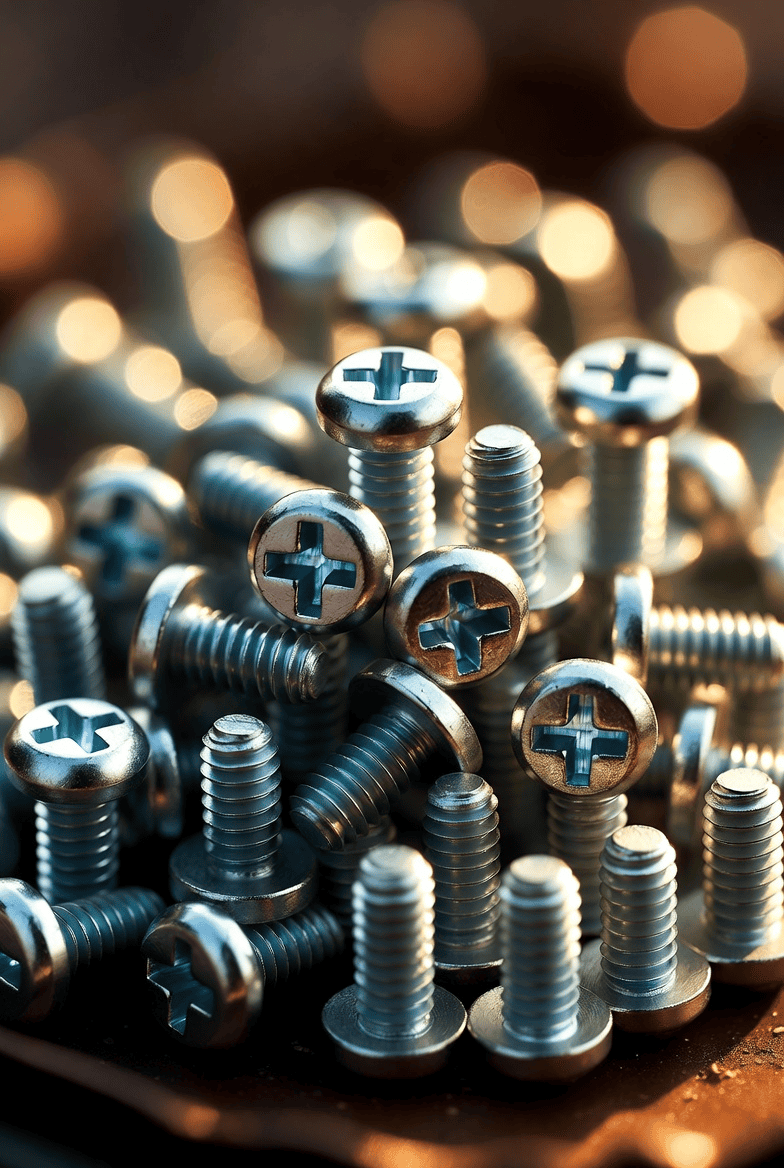
A practical note: if you’re mounting an M.2 SSD, you’re almost certainly working with a wafer-head m2 screw paired with a standoff already threaded into your motherboard. The screw itself is usually M2 × 3 mm. Many builders lose this tiny piece during upgrades — keep a spare kit on hand.blissits+1
Materials and Coatings: What’s Your M2 Screw Actually Made Of?
The material choice for m2 screws isn’t just a spec-sheet detail — it directly affects corrosion resistance, weight, biocompatibility, and whether the screw will survive its operating environment for 6 months or 20 years.
Stainless Steel (A2 / A4)
The go-to material for most m2 screws. A2 stainless (304 grade) handles indoor and mild outdoor environments well. A4 stainless (316 grade) adds molybdenum for superior resistance to chloride environments — important in marine or coastal applications. Both grades are non-magnetic, which matters in some electronics contexts.[fastenright]
Titanium
Titanium m2 screws weigh roughly 40% less than their steel equivalents while maintaining comparable tensile strength. The aerospace and medical industries prize this combination. They’re also inherently biocompatible — meaning they can remain in contact with human tissue without adverse reaction, which is why titanium m2 screws appear in implantable medical devices. The trade-off is cost: titanium fasteners typically run 5–10× the price of equivalent stainless options.[wisdomtitanium]
Carbon Steel (Zinc-Plated or Black Oxide)
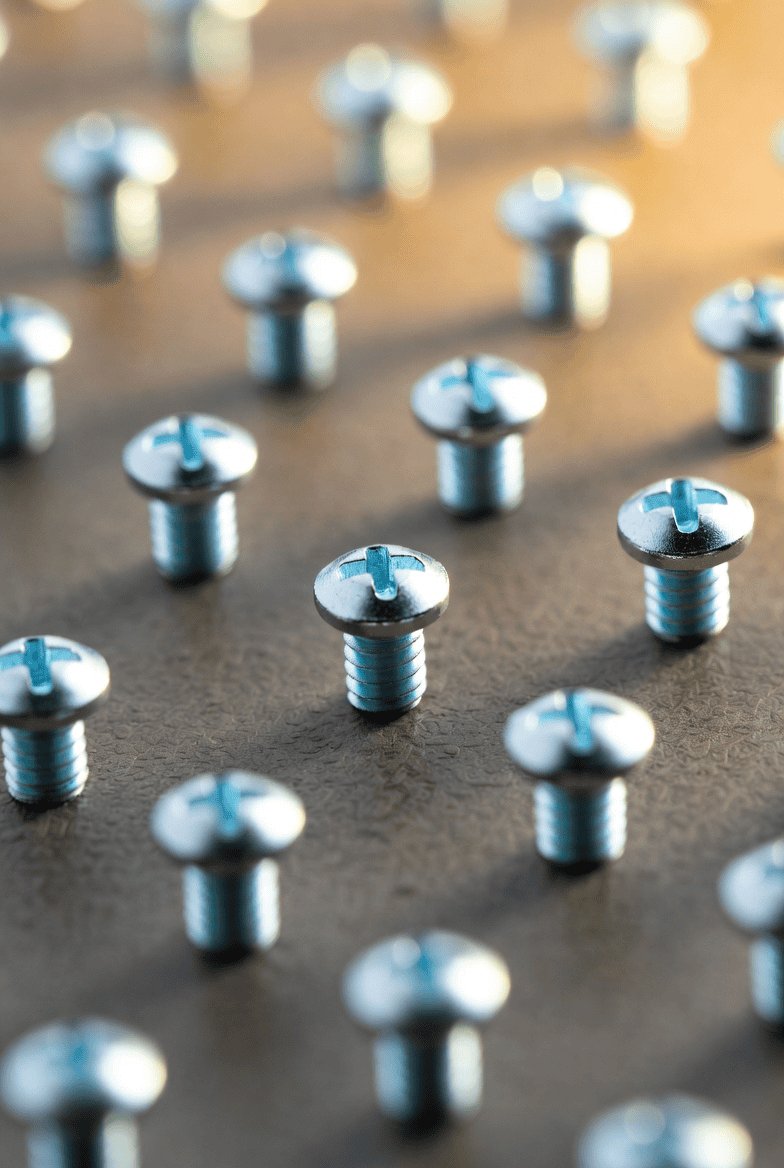
Where corrosion isn’t a concern and budget is, carbon steel m2 screws with zinc plating or black oxide finish are a reliable choice. Common in electronics assembly, 3D printer frames, and internal automotive components. Black oxide provides minimal corrosion protection but reduces light reflection in optical assemblies.foreman.hms.harvard+1
Nylon / Plastic
Non-conductive and lightweight, nylon m2 screws are used where electrical isolation is critical — think circuit board standoffs, battery terminals, or any area where a metal fastener could create a short circuit. They’re obviously not load-bearing but serve important functional roles.[ascentoptics]
Industry Applications: Where M2 Screws Actually Show Up
This is where understanding m2 screws really pays off. Each industry has its own conventions, tolerances, and preferred variants — knowing the context helps you spec correctly from the start.[foreman.hms.harvard]
Electronics and Computing
The highest-volume use case for m2 screws by far. They secure PCBs to chassis, fasten SSD modules to motherboards, hold heat sinks in position, and assemble everything from budget Android tablets to professional-grade servers. The M.2 SSD form factor was literally named after the screw standard it relies on. In this context, m2 screws are almost always M2 × 3 mm wafer-head, with a Torx or Phillips drive.[youtube][fivetk]
Aerospace and Defense
In aerospace, weight saving is engineering. Titanium m2 screws are used in interior panels, avionics housings, and instrument mounting — anywhere that a lighter fastener delivers measurable performance gains without sacrificing structural integrity. Aerospace-grade m2 screws are subject to traceability requirements: every batch has documentation confirming material certifications and lot numbers.[wisdomtitanium]
Medical Devices
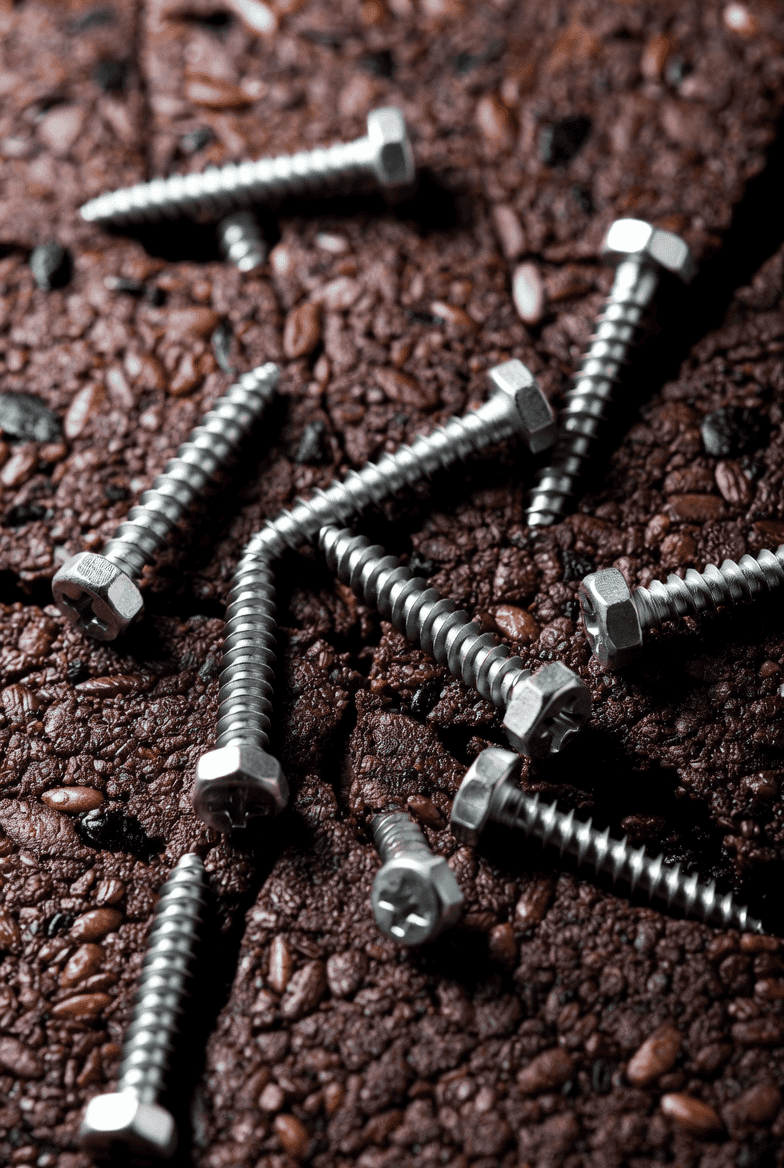
Surgical instruments, diagnostic equipment, and implantable devices all rely on precision fasteners. M2 screws in this category must meet ISO 13485 manufacturing standards and are typically made from medical-grade titanium or A4 stainless. Surface finish tolerances are tighter than industrial equivalents, and lots are smaller — often custom-produced for specific device configurations.wisdomtitanium+1
Automotive
Dashboard electronics, engine management sensors, fuel injector assemblies — modern vehicles contain thousands of small fasteners, and m2 screws appear wherever compact electronic modules need secure mounting. Zinc-plated carbon steel is the norm here, with stainless reserved for under-hood locations exposed to engine fluids or heat cycling.[foreman.hms.harvard]
Precision Instruments and Horology
Watchmakers have used metric miniature screws for generations. A mechanical watch movement may contain m2 screws — or even smaller — holding jewel bearings, springs, and movement plates in position. The tolerances here are extraordinary: a screw that’s 0.05 mm too long will jam a movement. Custom lengths and ultra-fine pitches are common in this application.fastenright+1
3D Printing and Maker Community
Open-source printers like the Prusa i3 architecture use m2 screws extensively in extruder assemblies, bearing mounts, and electronics housings. The maker community has contributed significantly to the awareness of m2 screws as a standardized fastener — online guides, BOM files, and community support have made correct specification more accessible than ever.oreateai+1
Table 3: M2 Screw Applications by Industry
| Industry | Typical Application | Preferred Material | Common Head Type |
|---|---|---|---|
| Electronics / Computing | PCB mounting, SSD installation | A2 Stainless, Carbon Steel | Wafer, Pan |
| Aerospace | Avionics panels, instrument racks | Titanium Grade 5 | Socket Cap, Pan |
| Medical Devices | Implants, surgical tools | Titanium, A4 Stainless | Pan, Flat |
| Automotive | Sensor modules, ECU housings | Zinc-plated Carbon Steel | Pan, Button |
| Horology / Instruments | Watch movements, precision optics | A2 Stainless, Brass | Slotted, Pan |
| 3D Printing / Maker | Printer frames, extruder assemblies | A2 Stainless | Socket Cap, Pan |
How to Choose the Right M2 Screw: A Practical Decision Framework
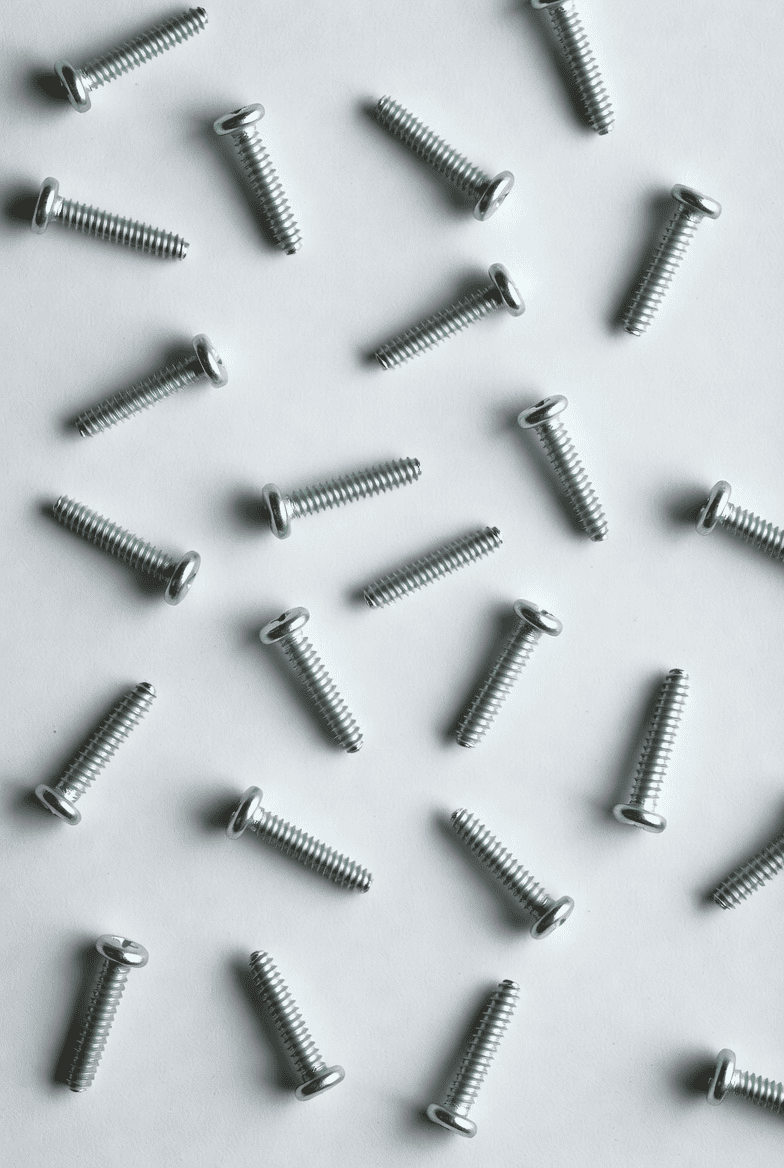
Selecting m2 screws correctly isn’t just about matching a thread size. Here’s a structured way to think through the decision — the kind of process that prevents a reorder three weeks into production.[ascentoptics]
Step 1 — Confirm the thread engagement depth. A minimum of 1.5× the screw diameter (so 3 mm for an M2) is the general rule for metal-to-metal engagement. For plastic, bump that to 3× (6 mm) to compensate for lower shear strength.
Step 2 — Assess the environment. Indoor electronics assembly? Standard A2 stainless or zinc-plated carbon steel works fine. Coastal, marine, or medical? Upgrade to A4 stainless or titanium. Temperature cycling above 250°C? Check your material’s thermal expansion coefficient against the substrate.
Step 3 — Select the head type based on assembly access. If you have direct vertical access, any head type works. Restricted angles, tight cavities, or torque-sensitive assemblies favor socket cap or Torx drives to prevent cam-out.
Step 4 — Verify the drive tool. An m2 screw with a PH00 Phillips drive requires a PH00 bit — not a PH0, and definitely not a PH1. Using an oversized driver on a small m2 screw destroys the recess on first contact. This sounds obvious; it accounts for a significant percentage of “stripped screw” complaints in electronics forums.
Step 5 — Check the surface coating compatibility. Zinc-plated m2 screws can cause galvanic corrosion when mated directly with bare aluminum. Use stainless or add an insulating washer if the assembly requires dissimilar metals in contact.
Step 6 — Source with traceability if required. For aerospace, medical, or defense applications, ensure your supplier provides material certificates (e.g., EN 10204 3.1 or equivalent). Generic hardware-store m2 screws typically lack this documentation.wisdomtitanium+1
Common Mistakes and How to Avoid Them
Experience teaches you things that spec sheets don’t. Here are the most frequent errors encountered with m2 screws in real assemblies — and straightforward ways to prevent them.
Confusing M2 with M2.5. The size difference is 0.5 mm. They won’t fit each other’s threads. Always physically verify with a thread gauge or caliper before committing to a torque.
Over-tightening in plastic enclosures. An m2 screw driven into thermoplastic at full driver torque will strip the receiving boss immediately. Use a torque-limiting driver set to 0.1–0.15 N·m for most plastics, or insert brass heat-set inserts for high-cycle applications.
Using the wrong length on SSD installations. An M2 × 3 mm is standard for M.2 2280 SSD mounting. Using an M2 × 5 mm here will bottom out on the board’s PCB layer and potentially damage the SSD connector.fivetk+1
Mixing drive standards mid-assembly. If half your m2 screws are Phillips and half are Torx, every disassembly becomes a tool hunt. Standardize drive types across a design where possible.
Ignoring hydrogen embrittlement on plated screws. High-strength carbon steel m2 screws with electroplated zinc coatings can experience hydrogen embrittlement during the plating process. For structural or high-torque applications, specify screws that have received a baking treatment post-plating to drive out absorbed hydrogen.
Future Trends in M2 Screw Technology
The m2 screw hasn’t fundamentally changed in decades — but the industries it serves are evolving rapidly, and that’s driving meaningful innovation in fastener technology at this scale.ascentoptics+1
Advanced alloys and composites. Titanium remains the premium option, but new titanium alloys (Ti-6Al-4V ELI for medical, Ti-3Al-2.5V for aerospace tubing) are being specified at the M2 scale to meet increasingly specific performance targets. Nickel-titanium (Nitinol) m2 screws are emerging in shape-memory medical applications.
Tool-less and clip-based alternatives. Motherboard manufacturers are increasingly shipping tool-less M.2 retention systems that replace the traditional m2 screw with a plastic clip mechanism. This reduces assembly time in high-volume PC builds, though screws remain the preferred solution for server and industrial environments where vibration resistance is non-negotiable.[fivetk]
Tighter surface finish standards for medical. As implantable device form factors shrink, the surface roughness specifications for m2 screws in medical applications are tightening. Ra values below 0.4 μm are being demanded for contact surfaces to reduce bacterial adhesion in implantable assemblies.
Sustainability and material traceability. The EU’s upcoming supply chain due-diligence regulations are pushing fastener manufacturers to document the provenance of raw materials — including titanium and stainless steel used in m2 screws. Expect this to become a standard procurement requirement, not just an aerospace niche, by 2027–2028.
Micro-coatings for extreme environments. DLC (Diamond-Like Carbon) coatings are being applied to miniature fasteners including m2 screws for applications in harsh chemical environments, semiconductor manufacturing, and high-vacuum systems. These coatings add minimal dimensional change (typically < 1 μm) while dramatically improving surface hardness and chemical resistance.[wisdomtitanium]
FAQ: M2 Screws Answered Directly
What does “M2” mean on a screw?
“M” indicates the ISO metric thread standard; “2” is the nominal outer diameter in millimeters. An M2 screw has a 2 mm thread diameter and a standard coarse pitch of 0.4 mm.reddit+1
Are M2 screws the same as M.2 SSD screws?
Yes — the M.2 SSD form factor uses standard m2 screws (typically M2 × 3 mm wafer head) to secure the drive to the motherboard standoff. The name “M.2” for the SSD standard was derived from the screw specification.crucial+1
What tool do I need to drive M2 screws?
It depends on the drive type. Phillips-drive m2 screws require a PH00 (or PH000 for the smallest variants) screwdriver. Hex-socket types need a 1.5 mm Allen key. Torx variants use T5 or T6 bits. Using the wrong tool size is the primary cause of stripped m2 screw heads.fivetk+1
What’s the difference between M2 and M2.5 screws?
M2 has a 2 mm diameter and 0.4 mm pitch. M2.5 has a 2.5 mm diameter and 0.45 mm pitch. They are not interchangeable — their threads have different pitches and diameters. M2.5 provides slightly more load-bearing capacity; M2 is preferred where space is most constrained.[ascentoptics]
Can M2 screws be used outdoors?
Zinc-plated carbon steel m2 screws are not recommended for outdoor use — the coating offers limited corrosion resistance in wet conditions. A2 stainless steel m2 screws are appropriate for most outdoor applications; A4 stainless is recommended for marine or high-salt environments.[fastenright]
Where can I buy M2 screws?
M2 screws are available from specialist fastener suppliers such as Fastenright, MonsterBolts, and RS Components, as well as online marketplaces. For aerospace, medical, or defense applications, source from certified distributors who can provide material traceability documentation.rs-online+2
Authoritative External Resources
For further reading and technical verification on m2 screws and related fastener standards, the following high-authority sources are recommended:
RS Components — A Complete Guide to Machine Screws — Comprehensive technical overview of machine screw standards, materials, and applications. (DA 70+)[uk.rs-online]
Fastenright — M2 Screws Product & Specification Guide — Detailed dimensional data, pitch specifications, and application guidance from a UK specialist fastener supplier. (DA 40+)[fastenright]
MonsterBolts — Common M2 Fastener Screw and Bolt Sizes — Practical size reference including DIN/ISO numbers, head diameter, and drive size data. (DA 45+)[monsterbolts]
Get It Made — M2 Metric Thread Dimensions and Pitch — Engineering-grade thread geometry reference including tap drill sizes and tolerance data. (DA 50+)[get-it-made.co]
Crucial — About M.2 SSD Screws — Consumer-facing but authoritative guide to M.2 SSD screw specifications from a leading memory manufacturer. (DA 80+)[crucial]