 English
  German
  Spanish
  Portuguese
  French
  Japanese
  Arabic
  Korean
  Vietnamese
  Russian
 Introduction: The Screw That Refuses to Come Out
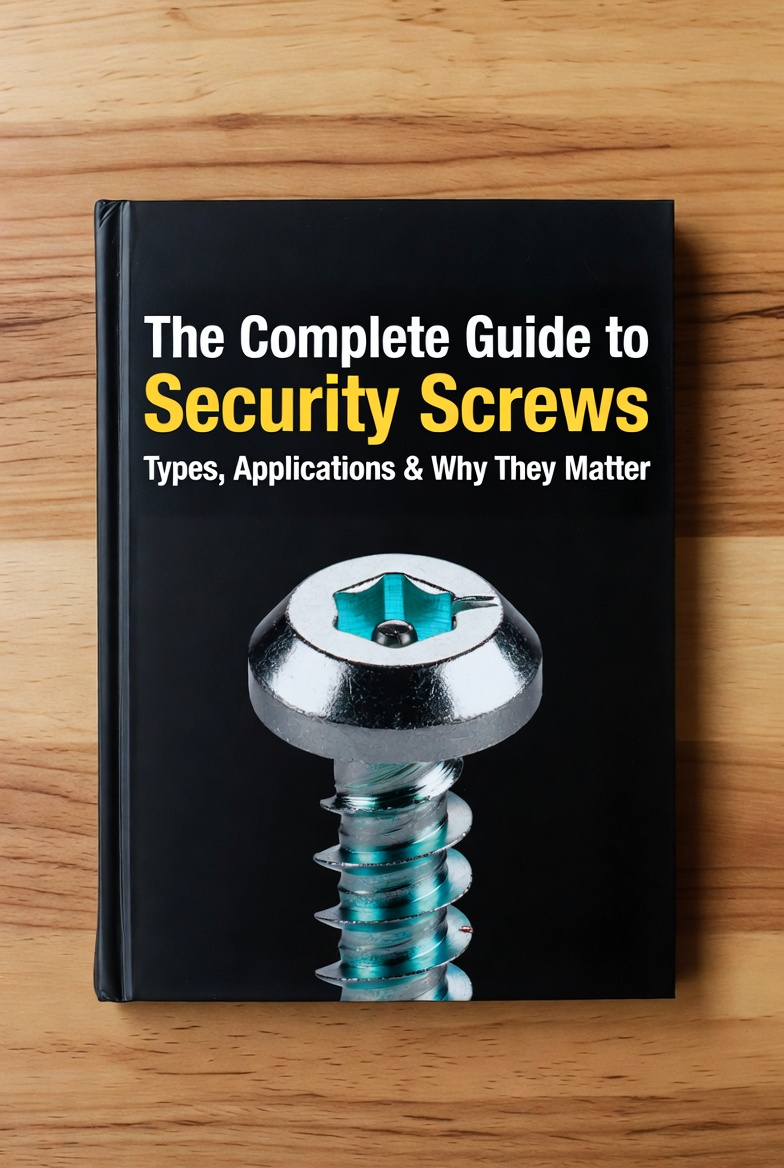
Most people don’t think about screws until something goes wrong. A panel gets pried open. A public fixture gets vandalized overnight. A product warranty gets voided because someone took it apart with a standard Phillips head driver they found in their kitchen drawer.
That’s where security screws step in.
Security screws — also called tamper-proof screws, tamper-resistant screws, or anti-tamper fasteners — are specially engineered fasteners designed with drive heads that cannot be turned using standard, off-the-shelf tools. They are one of the simplest, most cost-effective ways to prevent unauthorized access, protect equipment, deter theft, and maintain safety compliance across a wide range of industries.fmwfasteners+1
This guide walks you through everything: what security screws are, the major types and how they differ, how to match the right screw to your application, and where the industry is heading in 2025 and beyond. Whether you’re securing a server rack, a public restroom fixture, or a consumer electronics enclosure, you’ll leave here knowing exactly what to use — and why.
What Are Security Screws?
At the most basic level, a security screw is a fastener that requires a non-standard, specialized tool to install or remove. The head geometry — the part your driver makes contact with — is either:[fastenright]
Modified from a standard pattern (e.g., a Torx with a pin in the center)
Asymmetrical so it resists counter-rotation (e.g., one-way screws)
Completely proprietary, available only to authorized users or manufacturers[brycefastener]
The security level ranges from deterrence (slowing down a casual tinkerer) to true prevention (requiring a coded tool that only the manufacturer controls). That spectrum matters: not every application needs the same protection level, and choosing the wrong screw — one that’s either too easy to defeat or unnecessarily expensive — is a common and costly mistake.[fastenright]
Security Screws vs. Standard Screws: Key Differences
| Feature | Standard Screws | Security Screws |
|---|---|---|
| Drive type | Phillips, flathead, hex | Pin Torx, Spanner, One-Way, Penta, etc. |
| Tool availability | Widely available | Limited or proprietary |
| Removal ease | Easy | Difficult to impossible |
| Primary purpose | Fastening | Fastening + access control |
| Typical industries | General construction | Electronics, infrastructure, public spaces, defense |
| Cost per unit | Lower | Slightly to significantly higher |
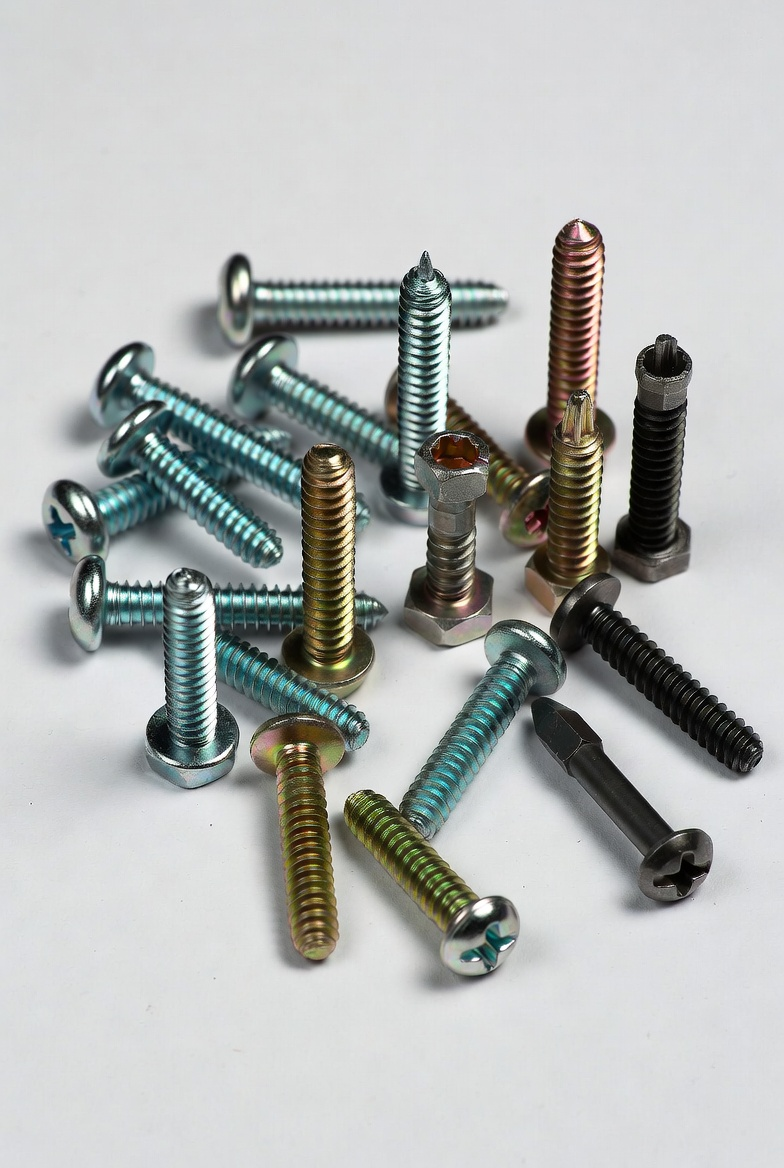
The 8 Most Common Types of Security Screws
Understanding the differences between security screw types is where most buyers get confused. The naming isn’t always consistent across suppliers, and the same head style can go by three different names depending on where you’re buying. Here’s a clear breakdown.
1. Pin Torx (Security Torx) Screws
The Torx head already has a six-point star geometry that resists cam-out better than Phillips. The security version adds a small central pin — also called a post — in the middle of the recess. That pin blocks any standard Torx bit from engaging. You need a matching “pin Torx” or “Torx Plus” bit, which is far less common.[oukailuo]
Best for: Consumer electronics, automotive panels, appliance enclosures, CCTV housings.
2. Spanner (Snake Eye) Screws
Spanner screws have two small round holes in the head instead of any traditional drive recess. You need a matching two-pronged spanner driver to engage them. Because the tool geometry is so unusual, they offer strong deterrence against casual tampering. These are sometimes called “snake eye” screws in the field.[oukailuo]
Best for: Elevator control panels, public bathroom hardware, outdoor signage, utility enclosures.
3. One-Way Screws
One-way screws use a ratchet-like head geometry that allows the driver to engage during installation but slips free during any attempt to reverse. Once tightened, they cannot be removed without drilling out or using specialized extraction tools. They are, by design, a permanent fixing.[insight-security]
Best for: Street furniture, public benches, manhole access plates, permanent signage.
4. Pin Hex (Pin Allen) Screws
A standard hex socket with a pin in the center — same concept as pin Torx, but for hex (Allen key) drives. Common in mid-range security applications. Note that while slightly more secure than plain hex, pin hex drivers are now available in many hardware stores, making them better suited for deterrence than high-security use.[oukailuo]
Best for: Light fixtures, access panels, equipment racks, furniture assembly in public spaces.
5. Clutch Head Screws
Clutch head screws have a bow-tie shaped slot that accepts a standard flat blade driver going in (clockwise), but the reverse profile is milled away so the driver simply slips off when reversed. They’re easy to install with tools you already have and provide permanent, one-way security once tightened.[insight-security]
Best for: Older building hardware, window restrictors, basic access control.
6. Tri-Wing Screws
Tri-Wing screws have three asymmetric wings in a Y-shaped pattern. They’re commonly found in Nintendo game consoles, older Apple devices, and aerospace equipment. The unusual geometry strongly resists improvised removal attempts.[vampiretools]
Best for: Consumer electronics, aerospace, proprietary product enclosures.
7. Penta (Five-Point) Screws
Penta screws feature a five-pointed recess, a drive geometry almost exclusively manufactured and supplied by Bryce Fastener in the U.S. The driver bits are either exclusive to the buyer or controlled by the manufacturer, making these one of the highest-security commercial options available for non-government applications. Utility companies use them to protect manhole covers, meter boxes, and infrastructure access points.brycefastener+1
Best for: Utility infrastructure, military equipment cases, critical access control, retail product displays.
8. Sentinel (One-Way Posidrive) Screws
Sentinel screws are installed using a standard Philips (cross-head) screwdriver, which makes installation fast and cheap. But the head is shaped so once the screw is seated, reverse rotation causes the driver to cam out. A useful hybrid: easy install, permanent fix.[insight-security]
Best for: Installations where speed of installation matters but removal should be difficult — signs, internal fixtures, panel covers.
How to Choose the Right Security Screw
This is the step most guides skip. Picking a type is only part of the decision. Here’s the actual decision framework used in practice:
Step 1: Define Your Security Level
Ask honestly: who are you defending against?
Opportunistic tampering (curious kids, casual vandals) → Deterrence screws like clutch head, sentinel, or pin hex are sufficient
Determined theft or sabotage → Proprietary drives like Penta or custom Bryce systems are warranted[brycefastener]
Critical infrastructure → Permanent one-way or coded proprietary systems[brycefastener]
Step 2: Decide Removability
| Scenario | Recommended Drive Type |
|---|---|
| Permanent install, never remove | One-way, clutch head, sentinel |
| Maintenance access for authorized staff only | Pin Torx, pin hex, spanner |
| High-security controlled access | Penta, proprietary coded drivers |
| Periodic inspection needed | Pin Torx with issued driver set |
Step 3: Match Material to Environment
Security screws are available in multiple materials, each suited to different exposure levels:[albanycountyfasteners]
Type 304 stainless steel — General outdoor and marine use, good corrosion resistance
Type 410 stainless steel — Harder, better for high-torque applications
Black oxide carbon steel — Indoor use, cost-effective, low corrosion resistance
18-8 stainless — All-purpose, good balance of strength and corrosion resistance
Coastal environments, food processing facilities, and chemical plants always warrant stainless. Don’t use carbon steel outdoors in humid climates — the screws will seize before they provide any security.
Step 4: Check Head Style vs. Application Surface
Security screws — like standard screws — come in multiple head profiles:[uk.rs-online]
Button head — Low profile, finished appearance, commonly used in electronics and consumer goods
Pan head — Broader bearing surface, better for thin materials and panels
Countersunk (flat head) — Sits flush, ideal for high-traffic surfaces or anywhere a raised head creates a snag risk
Flanged button head — Extra grip on soft or thin materials
Industry Applications: Where Security Screws Are Used
Security screws are not niche. They appear in industries that seem completely unrelated, which is part of what makes them worth understanding in depth.
Electronics & Consumer Devices
Smartphones, gaming consoles, laptops, and home appliances all use security screws to prevent unauthorized self-repair (which voids warranties), protect proprietary internal components, and reduce liability exposure. Apple notably uses Pentalobe screws in its iPhone and MacBook lines — a proprietary five-point design.[oukailuo]
Public Infrastructure & Facilities
Anywhere the public has unsupervised access is a candidate for security fasteners:[albanycountyfasteners]
Restrooms — Toilet fixtures, grab bars, mirror brackets
Playgrounds — Climbing frames, slides, safety rails
Transport hubs — Benches, information panels, locker units
Street furniture — Signage, litter bins, bollard anchor bolts
Vandalism isn’t always about theft. Sometimes it’s about damage, curiosity, or disruption. A standard Philips screw in a park bench invites removal; a clutch head or spanner screw ends that conversation quickly.
Automotive
Vehicle manufacturers use security screws for license plate surrounds, interior trim panels, ECU covers, and emissions equipment. Beyond OEM use, aftermarket security screws are popular for protecting catalytic converters — a specific theft problem that surged globally in the early 2020s and remains significant today.[oukailuo]
Utilities & Critical Infrastructure
Bryce Fastener’s own documentation highlights utility companies using Penta bolts to protect manhole covers, electrical junction boxes, and copper cable access points against theft. In the U.S. alone, copper theft from utility infrastructure costs hundreds of millions of dollars annually. Security fasteners form the first and often most cost-effective line of defense.[brycefastener]
Medical & Pharmaceutical Equipment
Sensitive diagnostic equipment, drug dispensing cabinets, and medical device enclosures use security screws to prevent unauthorized access — both for patient safety and regulatory compliance. The FDA and CE marking frameworks increasingly treat tamper evidence as a product requirement rather than a nice-to-have.[fastenright]
Defense & Military
Military applications — weapons storage cases, vehicle panels, communications hardware — often require coded proprietary security fasteners where the matching driver tool is controlled and logged. This isn’t just deterrence; it’s an auditable access control system.[brycefastener]
Retail & Loss Prevention
Retail display units use security screws to keep expensive merchandise secured to fixtures without requiring constant staff oversight. In high-value retail (electronics, jewelry, sporting goods), the cost of a case of security screws is trivial compared to the inventory value they protect.[albanycountyfasteners]
Common Mistakes When Specifying Security Screws
Even experienced buyers get this wrong. Here are the most frequent errors — and they tend to be expensive.
1. Assuming “tamper-resistant” means “tamper-proof”
These are genuinely different things. Tamper-resistant screws slow unauthorized removal; tamper-proof screws prevent it. Specifying tamper-resistant screws in a high-theft environment is the same as locking a door but leaving the key in the lock.[fmwfasteners]
2. Choosing based on appearance rather than threat model
A button-head pin hex looks great on an equipment panel. But if pin hex drivers are sold in the local hardware store, you’ve achieved nothing. Match the obscurity of the drive to your actual threat level.
3. Ignoring material compatibility
Carbon steel security screws in outdoor or coastal environments seize within months. When a security screw corrodes in place, it becomes effectively one-way — but unintentionally so, and it makes legitimate maintenance a nightmare. Always spec the material for the environment.[albanycountyfasteners]
4. Not training maintenance staff
If your maintenance team can’t remove security screws during a legitimate repair window because nobody knows where the bits are — or nobody was told these screws exist — you’ve created an operational problem, not a security solution. Driver bit sets should be logged, stored, and assigned like any other access credential.
Security Screws vs. Other Anti-Tamper Methods
Security screws are not the only way to prevent tampering. Understanding where they fit in the broader anti-tamper toolkit matters:
| Method | Security Level | Reversibility | Cost | Best Use |
|---|---|---|---|---|
| Security screws | Medium–High | Depends on type | Low–Medium | Equipment panels, fixtures, hardware |
| Tamper-evident seals | Low (evidence only) | One-time | Very low | Packaging, inspection records |
| Locked enclosures | High | Full (with key) | Medium–High | Server rooms, junction boxes |
| Epoxy/adhesive fills | Very high (permanent) | None | Very low | One-time, no-maintenance situations |
| Welding | Absolute | None | High | Structural applications |
Security screws fill the gap between flimsy seals and expensive enclosures. They’re the right tool when you need recurring maintenance access for authorized personnel, but zero access for everyone else.[fmwfasteners]
Future Trends in Security Fasteners (2025 and Beyond)
The security fastener industry isn’t static. Several shifts are underway that will reshape how specifiers select and manage security screws over the next five to ten years.
Smart Tamper Detection Integration
Emerging systems embed RFID tags or micro-sensors into fasteners or their surrounding panels, triggering alerts when torque changes are detected. This moves security from passive prevention to active monitoring — particularly relevant for critical infrastructure and data center hardware.
Sustainable Materials and Coatings
Environmental regulations — especially in the EU — are pushing fastener manufacturers to replace cadmium and hexavalent chromium coatings with greener alternatives. Stainless steel with ceramic coatings and zinc-nickel plating are gaining ground as compliant, high-performance options.[albanycountyfasteners]
Additive Manufacturing (3D Printing) Risks
The growing accessibility of metal 3D printing means that proprietary drive profiles — once safe because they were impossible to replicate at home — can increasingly be reverse-engineered and printed. This is pushing the industry toward digitally coded drivers (where the bit is paired to a specific key register) and cryptographic tamper evidence as the next generation of high-security fastening.
Supply Chain Traceability
Manufacturers of critical equipment are increasingly requiring full material traceability on fasteners — proof of alloy composition, batch testing, and chain of custody documentation. This is already standard in aerospace and defense; it’s moving into medical devices and high-value electronics.
Standardization Pressure
Currently, security screw nomenclature is inconsistent across suppliers and regions. Industry bodies and procurement platforms are pushing for standardized naming conventions, which would simplify specification but potentially reduce security through name recognition. The tension between standardization and obscurity is a real design challenge for the industry going forward.
Authoritative External Resources
For deeper technical research and procurement due diligence, the following sources are widely cited and carry strong domain authority in the fastener and engineering sectors:
RS Components – A Complete Guide to Security Screws
https://uk.rs-online.com/web/content/discovery/ideas-and-advice/security-screws-guide[uk.rs-online]Insight Security – Security Screw Types: What They Are and How They Work
https://www.insight-security.com/types-of-security-screws[insight-security]Bryce Fastener – Security Set Screws & Proprietary Drive Systems
https://www.brycefastener.com/security-set-screws.html[brycefastener]FMW Fasteners – A Guide to Tamper Proof Screws: Types, Uses & More
https://www.fmwfasteners.com/blogs/blog/a-guide-to-tamper-proof-screws-types-uses-more[fmwfasteners]Albany County Fasteners – Tamper Proof Security Screws & Nuts
https://www.albanycountyfasteners.com/Tamper-Proof-Security-Screws[albanycountyfasteners]
Final Thoughts
Security screws solve a problem that most people don’t think about until they’ve already experienced it. Once you’ve had a piece of equipment opened by someone who shouldn’t have touched it, the calculus changes immediately.
The good news: this is a solved problem, and it’s inexpensive to solve correctly. The key is matching the right drive type to the actual threat in front of you — not just reaching for the first tamper-resistant option in a catalog. Know your material environment. Train the people who need legitimate access. And understand the difference between a screw that makes tampering harder and one that makes it genuinely impossible.
Security screws are small. Their impact — on safety, on liability, on operational continuity — is not.