 English
  German
  Spanish
  Portuguese
  French
  Japanese
  Arabic
  Korean
  Vietnamese
  Russian
 If you’ve ever looked underneath a truck, traced a piping system through a factory, or inspected a marine vessel, you’ve almost certainly encountered a u bolt — probably without noticing it. That’s the thing about this fastener: it does its job so quietly and so reliably that most people never give it a second thought. Until something goes wrong.
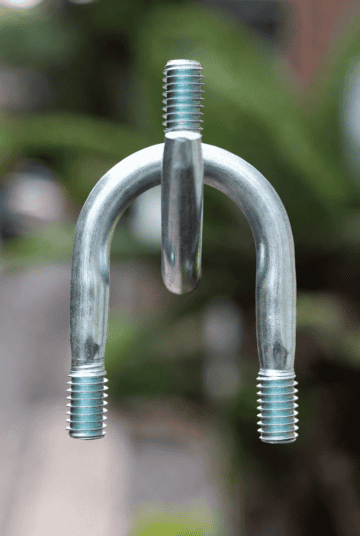
A u bolt is a rod-shaped fastener bent into the shape of the letter “U,” with threads on both ends that accept nuts to lock a component firmly in place. Simple in form. Remarkable in application. And — when specified or installed incorrectly — a surprisingly common source of structural failure. This guide covers everything that actually matters: the types, the materials, the sizing logic, the real-world industry uses, and the mistakes that professionals still make in 2026.[nutty]
What Exactly Is a U Bolt?
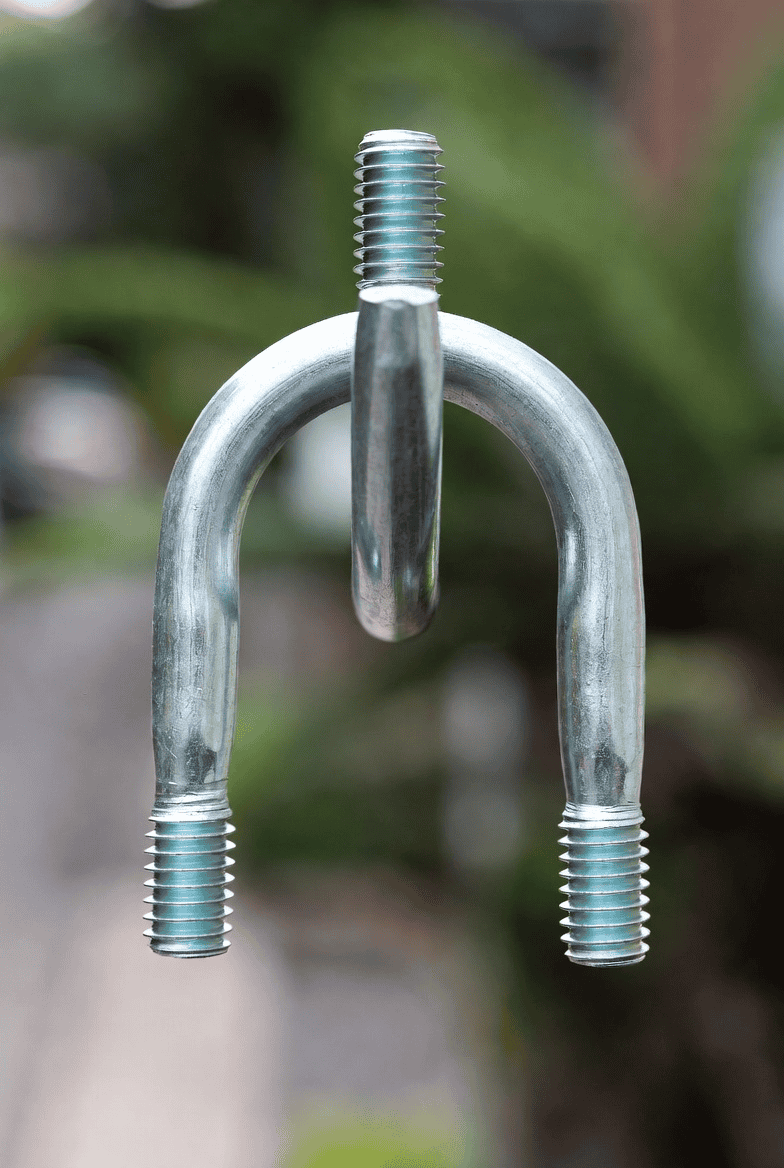
A u bolt consists of three elements working as one: the curved base (the “U”), two parallel threaded legs extending from that base, and the nuts and washers or bearing plates that clamp against whatever it’s securing. The design is older than most people realize — the basic concept dates back to early industrial piping systems — but it remains structurally elegant precisely because it hasn’t changed much.[fastenright]
The mechanical logic is worth understanding, because it’s what separates good specification from guesswork.
When you tighten the nuts on a u bolt, the curved base presses around the circumference of the pipe, rod, or structural member being clamped. The force is distributed across the arc of contact — not concentrated at a single point — which is why a properly fitted u bolt can hold cylindrical objects without crushing or deforming them. A u bolt that’s even slightly too large creates a pivot point instead of distributed clamping. A u bolt that’s too small simply won’t seat correctly.[nutty]
That curvature-to-diameter match is the first thing any competent engineer checks. Everything else flows from there.
Types of U Bolts: Shapes, Bends, and When to Use Each
Not every u bolt is the same shape, and those differences are not cosmetic. The bend geometry directly affects how load transfers between the fastener and the clamped object.
Round Bend U Bolts
The most common configuration. The curved section forms a true semicircle, making round bend u bolts the default choice for securing cylindrical pipes, tubes, and conduit. The consistent arc provides even contact pressure around the pipe’s perimeter, which is critical in applications involving vibration — exhaust systems, hydraulic lines, and machinery mounts.[albanycountyfasteners]
Round bend u bolts are specified by inside diameter (the space between the legs at the bend) to match the outer diameter of the pipe being clamped. Standard sizes run from as small as 5/16″ diameter up to 3/4″ rod diameter, with inside widths from 1-1/4″ to 4″ and leg lengths varying from 2″ to over 18″.[bds-suspension]
Square Bend U Bolts
Where round bends curve, square bends make right-angle corners. This geometry is designed for rectangular and square cross-section materials: steel beams, structural channels, equipment frames, and lumber. Square bends prevent rotational movement — a round u bolt on a square beam can spin under lateral loading, while a square bend locks the geometry in place.[nutty]
Construction framing, agricultural equipment mounting, and architectural metalwork are the primary domains here.
Custom and Specialty U Bolts
Standard configurations cover most scenarios, but not all. Specialty u bolts include:
Forged eye u bolts — for load-bearing attachment points requiring high tensile ratings
Long-leg u bolts — for thick-wall pipe or deep mounting assemblies
Offset u bolts — for eccentric or non-standard pipe configurations
J-bolts — technically a half-U, used for concrete anchoring and post bases[albanycountyfasteners]
Custom bends are fabricated to exact specifications for applications where off-the-shelf u bolts simply don’t fit. Dimensional accuracy here is non-negotiable: even a 2mm deviation in leg spacing can prevent proper nut engagement under load.
U Bolt Materials: Matching Metal to Environment
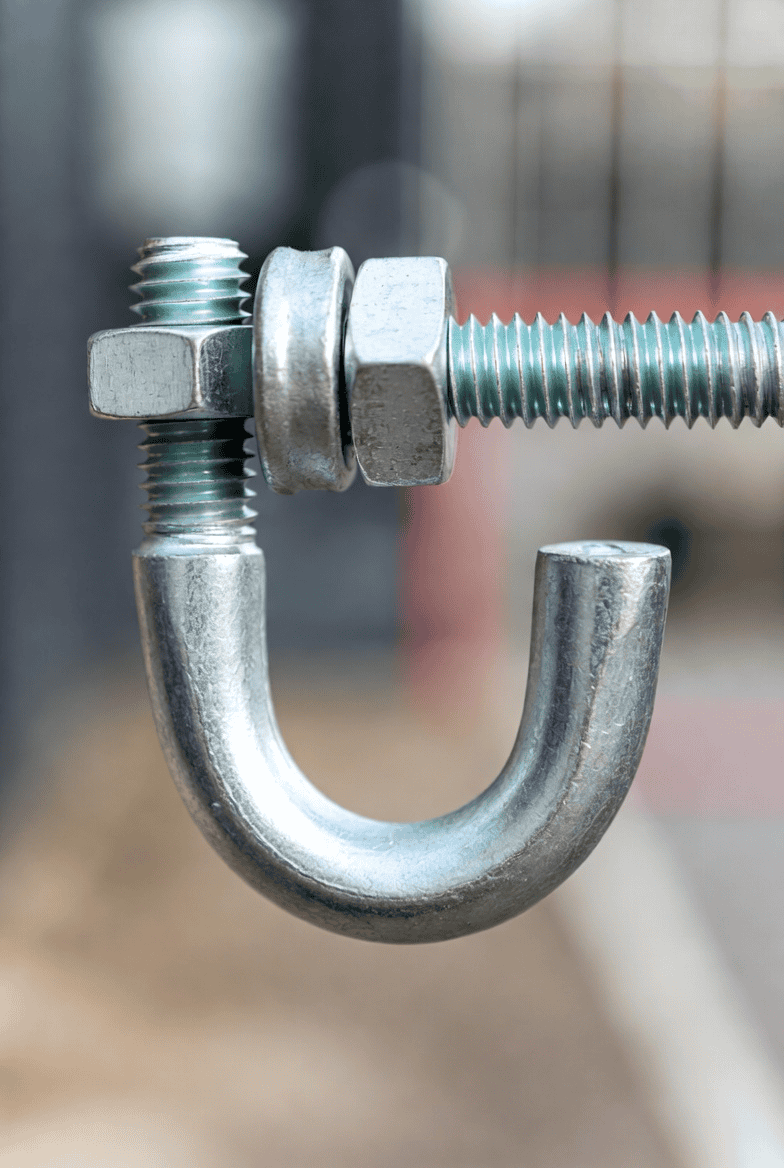
Material selection is where most specification errors happen. The right material for one environment is actively wrong for another.
| Material | Corrosion Resistance | Strength | Best Use |
|---|---|---|---|
| Carbon Steel (Plain) | Low — surface rust within months if exposed | High | Dry, indoor, non-corrosive environments |
| Zinc-Plated Steel | Moderate — suitable for light moisture | High | Indoor with humidity, HVAC, light outdoor |
| Hot-Dip Galvanized | High — 50–75µm zinc layer | High | Outdoor, construction, water treatment |
| Grade 304 Stainless Steel | Very high — resists most oxidizing environments | High | Food processing, pharmaceutical, coastal |
| Grade 316 Stainless Steel | Excellent — chloride resistant | High | Marine, chemical processing, offshore |
| Alloy Steel | Low (unless coated) | Very High | Heavy-duty load-bearing, high-stress joints |
| Aluminum | Good | Moderate | Weight-critical aerospace, lightweight structures |
californiafastener+1
A few things worth knowing that product spec sheets often omit:
On thread rolling vs. thread cutting: Thread-rolled u bolts are stronger. Rolling work-hardens the metal surface and produces compressive residual stresses that resist fatigue cracking. Thread-cut u bolts are cheaper and easier to produce in custom lengths, but the machining removes material and can introduce stress concentrations. In high-vibration applications — automotive springs, suspension systems, heavy machinery — always specify thread-rolled.[nutty]
On galvanizing and thread fit: Hot-dip galvanizing adds approximately 50–75µm of zinc to every surface, including the threads. This often requires over-tapping the nuts to ensure they will engage post-coating. If you’re ordering hot-dip galvanized u bolts and standard nuts, check the thread fit before installation — it’s a common procurement mismatch that shows up only at assembly time.
On stainless steel galling: Grade 316 is excellent for marine environments, but stainless steel threads gall easily under friction. Always apply anti-seize compound to stainless u bolt threads before assembly. Without it, the nut can cold-weld to the thread and become impossible to remove without destruction.
How to Measure and Size a U Bolt Correctly
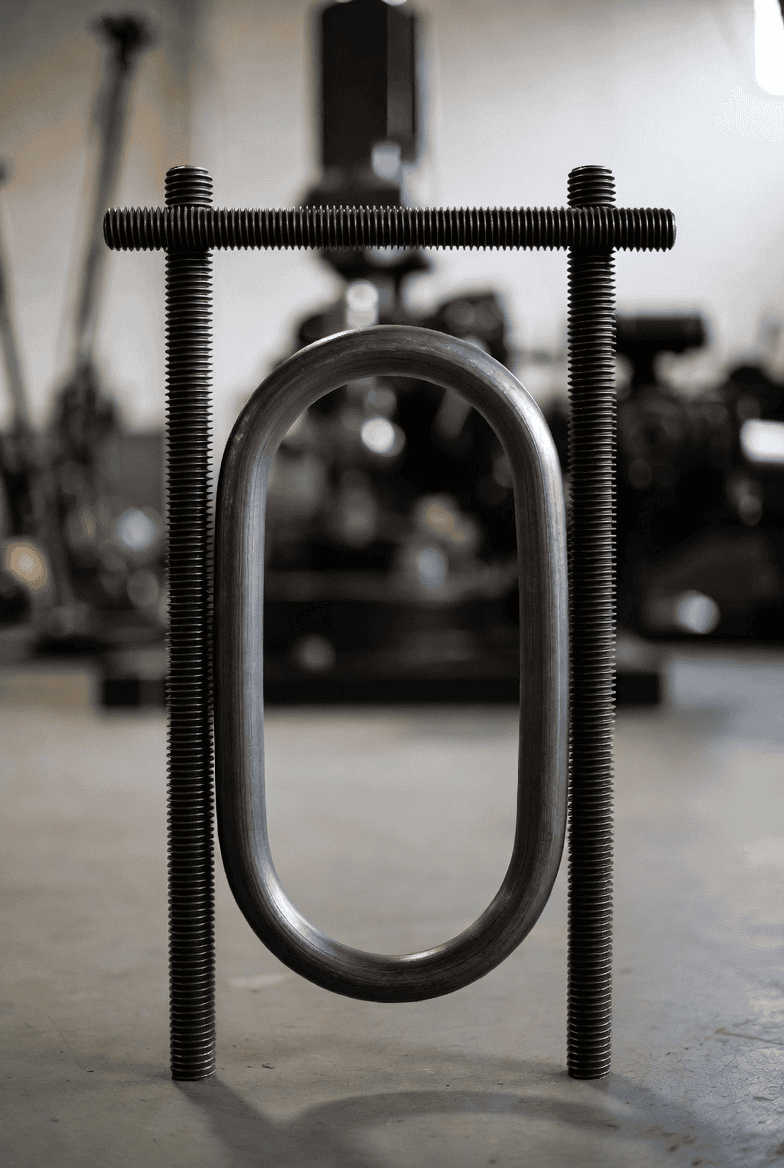
The u bolt sizing question is where even experienced tradespeople make avoidable mistakes. A u bolt is defined by four dimensions — and all four need to match the application.
| Dimension | What It Measures | Why It Matters |
|---|---|---|
| Inside Diameter (Width) | Distance between the inner faces of the two legs at the bend | Must match the outer diameter of the pipe or component being clamped |
| Leg Length | Distance from the bend to the end of the thread | Must be long enough to pass through the mounting plate and allow full nut engagement (at least 1.5× thread diameter of thread engagement) |
| Rod Diameter | Thickness of the steel rod used to form the u bolt | Determines load capacity; heavier pipes and higher loads need larger rod diameters |
| Thread Length | Length of the threaded portion on each leg | Must be sufficient for nut engagement plus a safety margin; minimum 6 full thread engagements recommended |
[bhamfast]
The most common sizing mistake: specifying inside diameter to match nominal pipe size (NPS) rather than actual outer diameter. Nominal pipe sizes are not outer diameters. A 2″ NPS pipe has an actual outer diameter of 2.375″. Spec a u bolt for 2″ and you’re creating a loose, rocking fit that will fail under vibration. Always work from actual measured OD.
The second most common mistake: forgetting to account for pipe insulation. If the pipe being clamped has thermal insulation — common in HVAC, process piping, and plumbing — the u bolt inside diameter must be sized over the insulation, not the bare pipe.
Industry Applications: Where U Bolts Actually Work
The reason u bolts appear in virtually every industry is that their core function — securing a cylindrical or structural object to a flat surface without welding — is required in almost every built environment.
Automotive and Suspension Systems
The most mechanically demanding u bolt application is leaf spring clamping in truck and trailer suspension systems. Here, a u bolt wraps around the axle housing and clamps the leaf spring pack, transmitting the entire weight of the vehicle plus dynamic road loading through four threaded contacts.[californiafastener]
Grade 8 (SAE) or Class 10.9 (metric) alloy steel u bolts are standard in this application. They are typically torqued to specification and then re-torqued after an initial break-in period as the components seat. Fatigue failure in suspension u bolts is almost always a consequence of under-torquing, not over-torquing — a loose u bolt cycles through its full load range with every road bump rather than maintaining a preloaded, static condition.
Plumbing and Process Piping
U bolts are the primary fastener for pipe support systems in commercial and industrial buildings. They secure pipes to structural steel, walls, pipe racks, and ceiling hangers, preventing sagging, vibration transmission, and thermal expansion movement.pipingnow+1
The choice of u bolt material here directly affects maintenance costs over the life of the building. Carbon steel u bolts on chilled water lines regularly fail within 10 years in humid environments. The same application in 316 stainless or hot-dip galvanized will outlast the piping system itself.
In expansion-critical piping systems, u bolt clamps are sometimes installed deliberately loose to act as guides — allowing axial pipe movement from thermal expansion while preventing lateral displacement. This is a precise engineering decision, not an installation error.[appmfg]
Construction and Structural Steel
U bolts secure conduit, cable trays, safety barriers, and mechanical systems to steel framing in commercial construction. Square bend u bolts are standard here, sized to wrap around flanges and structural members. Hot-dip galvanized is the default specification for exterior applications and anywhere moisture contact is likely.
Marine and Offshore
Marine environments eat carbon steel. Grade 316 stainless steel is the minimum acceptable specification for any u bolt in direct saltwater exposure — deck hardware, rigging attachment, through-hull fittings, and equipment mounting. In splash zones or submerged applications, duplex stainless or titanium may be required.[nutty]
Agriculture and Heavy Equipment
Farming machinery runs hard, runs dirty, and runs with minimal maintenance intervals. U bolts in agricultural applications face mud, fertilizer chemicals, mechanical shock, and wide temperature cycling. Hot-dip galvanized carbon steel is typically the cost-performance optimum — cheap enough to replace at service intervals, tough enough to last a full growing season.[californiafastener]
Electrical and Cable Management
U bolts support electrical conduit systems — the tubes that protect wiring in commercial and industrial buildings. Zinc-plated or stainless configurations are standard depending on whether the installation is wet-location rated. Installers often underspecify these, using plain carbon steel in locations that will see condensation or wash-down. The consequence isn’t structural failure; it’s rust staining, corroded threads, and conduit supports that become impossible to service five years later.
Installation: What Most Guides Skip
Most u bolt guides stop at “tighten the nuts.” That’s not enough.
Torque spec is not optional. Every u bolt application has a torque specification based on rod diameter, thread pitch, and material. Under-torquing allows movement; over-torquing can yield the rod or strip the thread. For critical applications — suspension systems, high-pressure piping, structural support — torque to specification with a calibrated wrench. For general maintenance applications, “snug plus a half turn” is a reasonable rule of thumb for moderate-diameter u bolts.[nutty]
Flat bearing surface matters. The nuts on a u bolt should bear against a flat plate or channel, not directly against a curved or angled surface. Without a flat bearing plate, the nut cocks under load, concentrating stress on two or three thread contacts instead of distributing it across the full engagement. This is one of the most commonly overlooked installation details.
Re-torque after load cycling. New u bolt installations settle as surfaces mate and thread contacts bed in. In automotive applications, re-torque after the first 500 miles. In structural applications, inspect torque after the first significant load event. This is standard practice in critical applications but is frequently omitted in general installation.
Never modify a u bolt. Cutting threads longer, bending to a slightly different radius, or welding additions to the rod introduces stress concentrations and voids the load rating. If the standard size doesn’t fit, order to specification — custom u bolts are not expensive compared to the risk of field modification.[nutty]
Future Trends: How U Bolt Technology Is Evolving
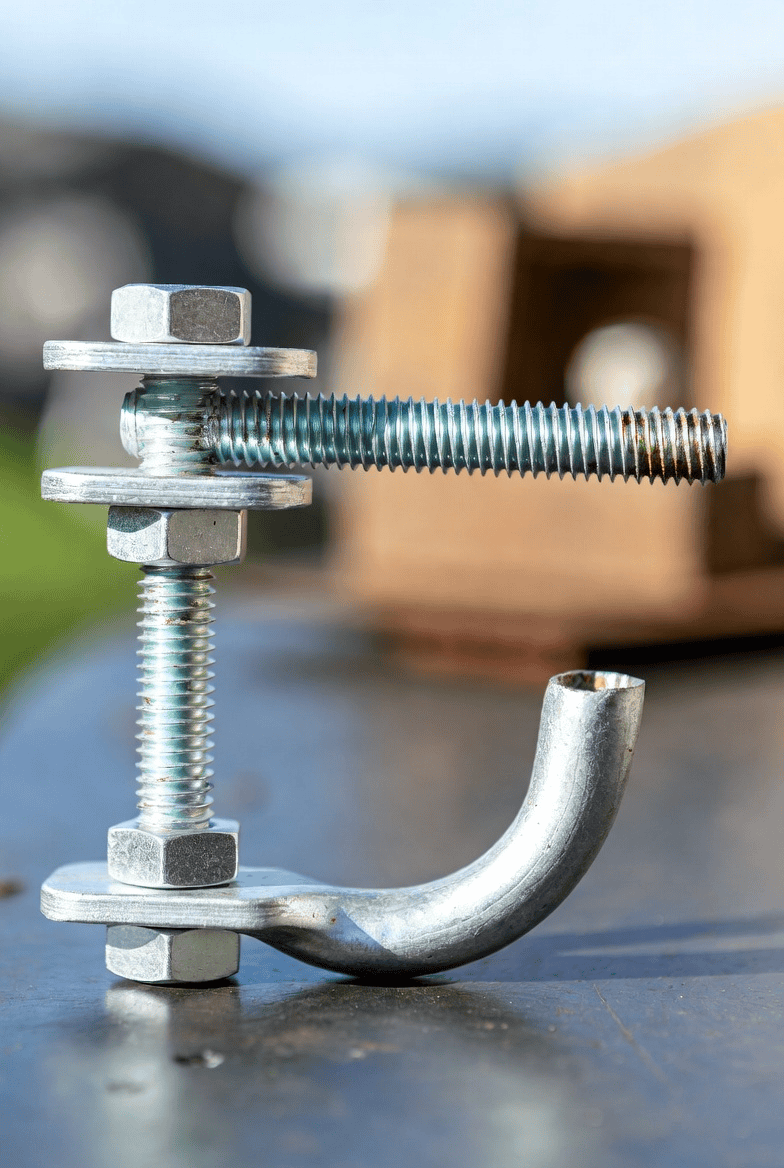
The u bolt is not a static product. 2025 and 2026 are bringing meaningful changes to how u bolts are specified, manufactured, and monitored.
Smart monitoring integration is the most significant structural shift. Research published in IEEE explored ring-type passive sensors that can replace conventional washers in bolted joints, passively detecting bolt looseness through waveguide resonance frequency changes — no power supply required at the sensor itself. The same principle is being developed for u bolt applications in critical infrastructure: bridges, offshore platforms, and industrial piping. The ability to continuously monitor clamping force without manual inspection will reduce maintenance costs and improve safety margins significantly.[ieeexplore.ieee]
Ultrasonic stress monitoring is moving from laboratory to field. Studies have demonstrated that piezoelectric micromachined ultrasonic transducers (PMUTs) can monitor axial stress in bolts as small as 6mm diameter with accuracy under 3%. Applied to u bolts in suspension systems or process piping, this technology allows real-time detection of loosening events before they become failures.[ieeexplore.ieee]
Advanced coatings and composite materials are expanding u bolt performance envelopes. Ceramic-reinforced zinc coatings now provide corrosion protection exceeding hot-dip galvanizing at lower thickness. PEEK-coated stainless u bolts are emerging in pharmaceutical and food processing applications where metal contamination and chemical resistance are equally critical concerns.
Standardization and digital documentation are tightening. ISO and ASTM standards for u bolt specifications are being updated to include traceability requirements — manufacturers must document material heat, processing parameters, and dimensional verification. For procurement teams, this means u bolts in critical applications increasingly require material test reports (MTRs) as a standard deliverable.
Sustainable manufacturing is influencing material selection. Thread rolling rather than cutting reduces material waste. Zinc recycling programs for galvanizing processes are improving the environmental profile of galvanized u bolts. Some manufacturers are offering u bolts in recycled-content carbon steel that meets ASTM A36 strength requirements.
Frequently Asked Questions About U Bolts
What is the difference between a u bolt and a J bolt?
A u bolt forms a complete “U” with two threaded legs. A J bolt has one straight leg and one curved leg — resembling the letter “J.” J bolts are used primarily for concrete anchoring and post bases, where one end is embedded and only one nut is required at the surface.[albanycountyfasteners]
How do I know if my u bolt is too loose?
Physical movement is the obvious sign, but vibration-induced loosening often occurs before visible gap develops. Check for wear patterns (bright metal) on the mating surfaces adjacent to the bolt, rust streaking from the nut/washer contact area, and — in pipe applications — any lateral movement of the pipe when pushed by hand.
Can a u bolt be reused after removal?
Generally yes, if the rod shows no cracking, the threads engage cleanly, and there’s no visible corrosion pitting or bend deformation. In safety-critical applications (suspension systems, structural supports), replacement is the professional standard regardless of visual condition.
What’s the best u bolt material for outdoor use in a coastal area?
Grade 316 stainless steel for any application in direct saltwater spray or immersion. Hot-dip galvanized is acceptable for atmospheric coastal exposure (not direct splash), with an expected service life of 15–20 years depending on zinc thickness.
Do u bolts need to be torqued in a specific sequence?
Yes. When using two nuts (one on each leg) with a bearing plate, alternate between the two sides in increments — similar to torquing lug nuts on a wheel. This ensures the bearing plate seats evenly and prevents the clamped object from being pulled to one side during tightening.