 English
  German
  Spanish
  Portuguese
  French
  Japanese
  Arabic
  Korean
  Vietnamese
  Russian
 A security bit is a specialized screwdriver bit engineered to drive tamper-resistant fasteners that standard tools cannot turn.

You’ve hit that moment. A screw is right in front of you — on your laptop’s battery cover, a public restroom fixture, inside a game console you legally own — and every screwdriver in your drawer is useless. That’s a security bit doing its job: keeping unauthorized hands off critical fasteners.
Whether you’re an electronics repair technician cracking open Apple hardware, a maintenance professional servicing public infrastructure, or a DIYer who refuses to be locked out of gear you purchased, understanding security bits is the first step to being genuinely tool-ready. This guide covers every major security bit type, where each one is used, how to select the right set, and what the next generation of tamper-resistant fastening looks like.
What Is a Security Bit?
A security bit is a screwdriver bit designed with a modified drive profile that engages only with tamper-resistant fastener heads — and is deliberately incompatible with every standard tool in a general toolbox.
The tamper-resistant fastener market was valued at approximately $11.5 billion in 2023 and is projected to reach $19.8 billion by 2032 at a 6.1% compound annual growth rate, according to industry analysis from OpenPR. That growth reflects a simple reality: the more connected and critical a device or installation becomes, the more manufacturers want controlled access to its internals.
How Security Bits Differ from Standard Bits
The core mechanism is intentional incompatibility. A standard Phillips or Torx driver fits thousands of commodity fasteners. A security bit fits only a narrow family of tamper-resistant heads where access is restricted by design.
The most common engineering modification is a center post — a hardened pin that protrudes from the center of the bit’s socket. Standard Torx and hex drivers have a solid female socket, so the center pin physically blocks them. A security Torx bit, by contrast, has a corresponding hole drilled through its tip that accepts the pin and seats fully into the fastener head.
Other security drive profiles take a different approach: asymmetric lobe geometry that no flat or Pozidriv can engage, rotating pin designs that spin freely under lateral torque, or custom polygon counts (five-sided, seven-sided) that simply don’t match any mass-produced tool.
As the Wikipedia entry on tamper-resistant screws notes, most security configurations rely on the common unavailability of matching drivers rather than the physical impossibility of defeating the fastener — which is why owning a comprehensive security bit set matters.
The Drive Profile Is the Product
When you buy a security bit, you’re buying access to a protocol. The bit’s geometry is a key; the fastener head is the lock. Different manufacturers and industries adopted different “lock” standards over decades, which is exactly why a complete security bit set contains 30 or more distinct profiles rather than a single “tamper-proof” shape.
Types of Security Bits — A Full Breakdown
The List of Screw Drives on Wikipedia catalogs over 40 distinct drive systems. Not all are security-focused, but the following types are the ones you’ll encounter most frequently in the field — and the ones your kit must include.

Security Torx (Tamper-Resistant Star) Bits
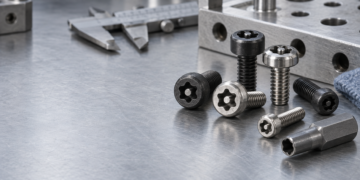
Security Torx bits are the most widely used security bit type in modern manufacturing. Also called TR-bits or star security bits, they look identical to standard Torx drivers from the side but have a small hole bored through the center tip to accommodate the anti-tamper pin inside the fastener head.
Torx was developed by Textron Camcar in 1967 as described in the Torx Wikipedia article. The six-pointed star geometry provides excellent torque transfer — far better than Phillips — which is why the security variant became the go-to for electronics, automotive, and aerospace OEMs.
Common sizes: T6, T8, T10, T15, T20, T25, T27, T30. The T8 and T10 are critical for Microsoft Surface tablets and Xbox consoles; T5 and T6 appear throughout Apple’s MacBook lineup before the switch to Pentalobe; T25 is standard across many automotive ECU covers.
In practice, security Torx is the bit you’ll reach for most often. Any comprehensive security bit set should include the full T6–T30 range in the tamper-resistant (TR) variant.
| Torx TR Size | Common Application |
|---|---|
| TR6 / TR8 | Consumer electronics, game controllers |
| TR10 / TR15 | Xbox, Wii, power adapters |
| TR20 / TR25 | Automotive trim, ECU covers |
| TR27 / TR30 | HVAC equipment, industrial panels |
Security Hex (Ball-End Pin) Bits
Security hex bits add a center pin to the familiar six-sided hex (Allen) socket, blocking standard Allen wrenches from seating. You’ll find security hex fasteners in gym equipment, playground hardware, and hospital furniture — anywhere public access meets mechanical adjustment.
Metric sizes 2 mm, 2.5 mm, 3 mm, 4 mm, and 5 mm cover the vast majority of security hex fasteners encountered in the field. SAE sizes (5/64″, 3/32″, 1/8″) appear in older US-made equipment.
A subtle distinction: some “security hex” bits have a hole in the tip rather than a protruding center post, because the fastener carries the post rather than the bit. Know your fastener before assuming which variant you need.
Spanner (Snake-Eye) Security Bits
Spanner bits engage two small round holes positioned opposite each other in the fastener head — a drive pattern that no flat or cross-head screwdriver can engage. The Snake-Eyes trademark from Bryce Fastener is the most recognized brand, and you’ll see spanner fasteners on public escalators, elevator control panels, gas meter housings, and pay-phone chassis.
Standard spanner sizes: #4, #6, #8, #10 (by hole-center spacing). The #6 is nearly universal for US utility hardware. These bits look almost like a two-tine fork and feel unusual in the hand; the engagement is surprisingly positive once seated correctly.
Tri-Wing Security Bits
Tri-wing bits have three asymmetric, offset wings that bear no resemblance to a Phillips head despite looking superficially similar in worn photos. Nintendo chose tri-wing fasteners for the original Game Boy, Game Boy Advance cartridges, and Wii battery compartments — making tri-wing bits nearly mandatory for vintage gaming repair work.
Sizes: #0, #1, #2, #3. The #1 covers most Nintendo cartridges; the #2 handles Wii battery covers and early DS hinges.
Wiha’s Screw Profile Guide illustrates why tri-wing requires its own bit family — there is no cross-compatibility with any standard drive, and forcing a Phillips will strip the fastener immediately.
Pentalobe Security Bits
Pentalobe bits were developed specifically for Apple devices and feature five symmetrically spaced lobes with a flower-petal cross section. Apple introduced pentalobe fasteners on the iPhone 4 in 2011 and later adopted them across MacBook Air and MacBook Pro bottom panels.
Three pentalobe sizes matter in practice:
– P2 (0.8 mm) — iPhone 4 through current models, exterior bottom screws
– P5 (1.2 mm) — MacBook Air (pre-2012)
– P6 (1.5 mm) — MacBook Pro Retina, MacBook Air (2012+)
Pentalobe bits are not interchangeable between sizes — attempting to use a P5 on a P2 fastener will strip the tiny lobe walls within one or two turns. If you service Apple hardware regularly, invest in a dedicated pentalobe set rather than relying on the single P2 that comes in a generic security bit assortment.
One-Way (Clutch) Screws
One-way screws can be driven inward with a slotted driver but are designed to cam out when reversed. They’re not removed with a “security bit” in the conventional sense; removal requires either a dedicated one-way removal bit (which grips the cam-out shoulder) or a locking plier set.
You’ll find one-way screws on US license plate frames (anti-theft), bathroom stall door hinges in schools, and on outdoor electrical box covers in public parks.
Other Specialty Security Bit Types
| Type | Profile | Typical Use |
|---|---|---|
| Pentagon (5-sided) | Five equal flat faces | US parking meters, fire hydrant caps |
| Torq-Set | Offset cross, 4 wings | US military aircraft, aerospace fasteners |
| Bristol (4-wing pin-in) | Cross with center pin | Electronics, power supply covers |
| Polydrive (12-lobe) | External star socket | Automotive drivetrain bolts |
| Line Head / Kinmon | 4 lobes, slanted | Japanese automotive |
Industry Applications of Security Bits
Security bits are required wherever controlled access to fasteners is an engineering or safety requirement, not a convenience preference.
Electronics and Consumer Device Repair
This is where most technicians first encounter a security bit — specifically, when they discover their standard Torx driver won’t seat because the fastener has a center pin. Apple, Microsoft, Sony, Nintendo, and Samsung all use proprietary or security-modified drive profiles across their product lines.
- Apple: iPhone bottom screws use P2 pentalobe; internal components use Phillips #000 and Torx T3–T5 standard (not security) — but you need the pentalobe bit just to open the case.
- Microsoft Surface: Security Torx T3 and T4 for screen bezel screws; T5 and T6 for internal components.
- Xbox and PlayStation: Security Torx T8 and T10 are the primary external fasteners on most game console generations.
In practice, a repair technician working across multiple brands needs security Torx (T3–T30 TR), pentalobe (P2, P5, P6), tri-wing (#0–#3), and security hex (2–5 mm) to cover the most common device families.
Public Infrastructure, Utilities, and Vandal-Proofing
Security fasteners protect public-facing hardware from tampering, theft, and vandalism. Electrical fittings in public buildings commonly use security screws by code in many jurisdictions — the idea being that a vandal with a Phillips screwdriver can’t easily access live wiring.
- Restroom hardware: Security hex and spanner fasteners on grab bars, toilet-paper holders, and partitions.
- Elevator control panels: Spanner (#6 and #8) for button covers and inspection plates.
- Street furniture: Pentagon and one-way screws on park benches, bus shelters, parking meters.
- Electrical enclosures: Security Torx TR25 on outdoor breaker panels and utility junction boxes.
Maintenance crews servicing municipal infrastructure need a full spanner set, pentagon bits, and security Torx — and they need them rated for high-torque impact drivers, not just hand screwdrivers.
Automotive, Aerospace, and Defense
Security Torx fasteners appear throughout modern vehicles — ECU access covers, seat belt anchor covers, airbag module housings, and emission sensor guards all use TR25–TR50 in most European and Asian manufacturers. American OEMs lean toward Torq-Set in safety-critical aerospace assemblies.
The aerospace and defense segment is the fastest-growing end-use market for tamper-resistant fasteners, driven by both security requirements and the high cost of in-service tampering on flight hardware. A single mis-driven fastener on a flight-critical assembly is a serious safety event.
How to Choose the Right Security Bit Set
The right security bit set covers the fasteners you actually encounter without wasting money on 200-piece assortments full of sizes you’ll never use.

Match Bit Type to Your Primary Use Case
Start by identifying your primary work context:
| Work Context | Must-Have Bit Types |
|---|---|
| Consumer electronics repair | Security Torx T3–T20 TR, Pentalobe P2/P5/P6, Tri-Wing #0–#3 |
| Automotive maintenance | Security Torx TR20–TR50, Security Hex 4–8 mm |
| Public/municipal maintenance | Spanner #4–#10, Pentagon, One-Way removal bits |
| General DIY / all-purpose | Security Torx T6–T30 TR, Security Hex 2–6 mm, Spanner #6/#8 |
A 32-piece security bit set covering security Torx, hex, spanner, tri-wing, and pentalobe handles the vast majority of consumer and light industrial scenarios. For dedicated electronics work, a more targeted 16-piece kit focused on TR and pentalobe sizes outperforms a large generic set in usability.
Material and Coating: Chrome-Vanadium vs. S2 Steel
Standard chrome-vanadium (Cr-V) steel is adequate for hand-driver use in light applications. For impact driver use — which generates torsional shock loads far beyond hand-driving — you need S2 modified steel or equivalent. Milwaukee’s SHOCKWAVE bits and DeWalt MAXFIT bits are both S2-grade and rated for impact use.
Bit coatings matter for longevity:
– Black oxide — minimal coating, reduces surface rust, adequate for occasional use
– Titanium nitride (TiN) — harder surface, extends bit life on high-torque applications
– ACR (Anti-Cam-Out Relief) — Phillips-specific geometry that reduces strip-out, though not relevant to security bit profiles
For security bits used daily in a shop or on a service truck, S2 steel with a titanium nitride or black phosphate coating is the sensible choice. A $12 chrome-vanadium bit set from a hardware store will last a hobbyist for years; it will round out in a week under daily professional use.
Impact-Rated vs. Standard Bits
Most security bit sets are designed for hand drivers or low-torque electric screwdrivers. If you drive security Torx fasteners with a 500 in-lb impact driver, verify the bits are impact-rated. Standard CRV bits can shatter under impact torsional loads — throwing metal fragments in the process.
Impact-rated security bits have a torsion zone — a narrowed section between the shank and tip that absorbs and dissipates shock energy rather than transmitting it straight to the bit tip. This is the single most important construction feature for impact-use security bits, and it’s visually identifiable: the narrowing is visible by eye on quality impact bits.
Shank Compatibility
Most security bits use the universal 1/4″ hex shank, compatible with every cordless drill, impact driver, and bit holder on the market. Some specialty long-reach security bits use a 3/8″ square drive for integration with ratchet sets — useful in automotive work where depth access is needed. Verify shank format before purchasing a set if you’re integrating with existing tooling.
Future Trends in Security Fastening (2026 and Beyond)
The next generation of security fastening is moving from passive incompatibility to active monitoring. Two specific trends will redefine what a “security bit” means within a decade.
Smart Fasteners and Digital Tamper Detection
Emerging smart fasteners embed RFID micro-sensors into the fastener body or the panel surrounding it. When a fastener is driven or removed, the torque change alters the sensor’s field, triggering an alert to a monitoring system. This is particularly relevant in:
- Data center hardware — server rack covers, networking chassis, power distribution units
- Critical infrastructure — transformer enclosures, water treatment control panels
- Medical devices — implant charging units, clinical monitoring equipment
For the security bit user, this means that in the near future, merely owning the correct bit geometry won’t be sufficient for authorized access — you’ll also need a cryptographic credential or documented work order that the smart fastener’s system can verify.
3D Printing and the Next-Generation Drive Profile
The growing accessibility of metal 3D printing creates a well-documented vulnerability: obscure security drive profiles that once required industrial tooling to replicate can now be printed in hardened steel by any well-equipped shop. Several proprietary drive profiles developed before 2010 are already openly available as printable STL files online.
Industry response is moving toward digitally coded drivers — bit shanks that carry an RFID signature the fastener reads before allowing engagement — and cryptographic tamper evidence, where the fastener records a time-stamped hash of its installation state that can be verified against a ledger.
These developments don’t make your current security Torx and pentalobe bits obsolete. Consumer electronics and municipal hardware will continue using existing profiles for decades. But at the critical infrastructure and defense tier, the definition of “security bit” is expanding from a geometry problem to an authentication problem.
FAQ: Security Bits
What is a security bit used for?
A security bit drives tamper-resistant fasteners that block standard screwdrivers. Applications range from consumer electronics (iPhone pentalobe, Xbox security Torx) to public infrastructure (elevator spanner screws, park bench pentagon bolts) to automotive (ECU cover TR25, seat belt anchor TR30).
How do you get around a security bit fastener without the correct bit?
In most cases, you use the correct bit — there’s no reliable shortcut. For security Torx, attempting to use a standard Torx bit will jam on the center pin and potentially damage the fastener head. For stripped pentalobe fasteners, a small flat blade can sometimes engage, but this destroys the head. The practical answer is: buy the correct bit. A complete 32-piece security set costs $15–$40 and prevents hours of frustration.
Why do manufacturers use security screws?
Security screws prevent unauthorized access, accidental tampering, and warranty circumvention. Apple uses pentalobe to reduce self-repair attempts; Nintendo used tri-wing on cartridges to prevent piracy hardware installation; municipalities use spanner screws on utility hardware to prevent vandalism. The goal is always access control — keeping unskilled or unauthorized hands away from sensitive internals.
What is the most common security bit type?
Security Torx (tamper-resistant star) is the most widely used security bit type globally. Its six-lobe geometry provides excellent torque transfer, and the center-pin modification is simple to manufacture, making it the default choice across electronics, automotive, and light industrial applications.
Are security bits and tamper-proof bits the same thing?
Yes — “security bit,” “tamper-proof bit,” and “tamper-resistant bit” all refer to the same category of specialized screwdriver bit. The terminology varies by region and industry. “Security bit” is the most common US term; “tamper-resistant bit” is preferred in standards documentation; “tamper-proof” is technically a misnomer (no fastener is truly proof against a determined, equipped person) but is widely used in retail product descriptions.
What size security Torx do I need for an iPhone?
iPhones use P2 pentalobe bits for the two external bottom screws, not Torx. Internal iPhone components use standard Phillips #000 and Torx T3/T4 (non-security). To open any iPhone from the iPhone 4 onward, start with a P2 pentalobe bit — you cannot use Torx here.
Can security bits be used with an impact driver?
Only if the bits are specifically rated for impact use. Standard chrome-vanadium security bits can shatter under impact torsional loads. Look for bits labeled “impact-rated,” “impact-duty,” or “shock” — these use S2 modified steel with a torsion zone in the shank that absorbs the shock energy. Milwaukee SHOCKWAVE and DeWalt MAXFIT are well-regarded impact-rated security bit lines.

Conclusion
A security bit is not a niche specialty tool — it’s a fundamental part of any complete toolkit. The top 3 SERP results for this keyword are all product listing pages. In contrast, this article is the editorial resource that answers why security bits exist, which types you need for which job, and how to choose quality bits that won’t fail mid-repair.
The practical takeaways: start with a security Torx set covering T6–T30 TR. Add pentalobe P2/P5/P6 if you work on Apple products. Layer in spanner, tri-wing, and hex security bits as your work demands. Choose S2 steel if you drive with an impact driver. The investment in a proper security bit set pays for itself the first time you open a device that would otherwise require a $150 shop visit.
For everything related to production-grade screws, fasteners, and specialty hardware, explore the full catalog at productionscrews.com.
Related Products
Solutions & Cluster
Related Articles
- Captive Screws: Complete Guide to Types, Applications & Selection (2026)
- Decorative Screws: Types, Finishes, Materials & Buying Guide
- Bolt Screw Guide: Types, Differences, Sizes, and Industrial Applications
- The Complete Guide to Locking Nuts: Types, How They Work, and Choosing the Right One
- Vehicle Threads Explained: A Complete Guide to Automotive Fastener Thread Types, Standards, and Selection
- Through Bolts: Complete Guide to Types, Uses, and Installation
- Nylon Insert Lock Nuts: Complete Guide to Types, Sizes & Installation
- Nylock Nuts: The Complete Guide to Nylon Insert Lock Nuts