 English
  German
  Spanish
  Portuguese
  French
  Japanese
  Arabic
  Korean
  Vietnamese
  Russian
 Metal fasteners are mechanical components — screws, bolts, nuts, and rivets — that join two or more materials by generating clamping force through threaded engagement or material deformation.

Walk into any manufacturing facility, construction site, or automotive plant, and one thing is constant: metal fasteners hold everything together. Literally. A single commercial aircraft relies on over 1 million individual fasteners. A mid-size sedan uses between 3,000 and 4,000. Without a sound understanding of metal fasteners — their types, materials, grades, and proper selection — even the most precisely engineered structure can fail under load, vibration, or environmental stress.
This guide covers every dimension of metal fasteners that engineers, procurement managers, and contractors need: what they are, how each type works, which materials match which environments, how to read grade markings, and how to avoid the selection mistakes that lead to joint failure in the field.
What Are Metal Fasteners?
Metal fasteners are discrete mechanical devices designed to join two or more components into a stable assembly — either permanently or in a way that allows later disassembly.
They work by one of three mechanisms:
- Threaded engagement — the fastener’s helical thread bites into mating threads (or cuts them on installation), converting rotational torque into axial clamping force. Screws, bolts, and nuts all operate this way.
- Deformation — a portion of the fastener is physically deformed during installation to create a mechanical interlock. Rivets and swage-type fasteners work this way.
- Friction and spring tension — retaining rings, clips, and cotter pins hold components via spring force or interference fit.
The clamping force generated by a threaded metal fastener is the entire point. When you tighten a bolt to a specified torque, you’re stretching the bolt shank slightly — it behaves like a tensioned spring, pulling the joint faces together and creating friction that resists shear loads and vibration loosening.
According to Wikipedia’s reference article on fasteners, the category encompasses thousands of discrete product forms across international standards, each optimized for a specific combination of load type, installation method, and service environment.
Key Fastener Geometry Terms
| Term | Definition | Why It Matters |
|---|---|---|
| Thread pitch | Distance between adjacent thread crests (mm or TPI) | Determines engagement strength and torque sensitivity |
| Shank diameter | Outer diameter of the unthreaded body | Sets the shear-carrying cross section |
| Head style | Profile of the drive end (hex, pan, flat, oval, etc.) | Determines tool clearance and bearing surface area |
| Thread engagement length | How much thread is in contact with the nut or tapped hole | Must be ≥1× shank diameter in steel; ≥2× in aluminum |
| Grip length | Unthreaded shank spanning the joint thickness | Should match the total clamped stack |
Getting these parameters wrong is the single most common source of premature fastener failure in the field — more common than specifying the wrong grade.
The 7 Main Types of Metal Fasteners
There are seven primary families of metal fasteners, each suited to a different combination of load, access, and disassembly requirement.

1. Screws
Screws are externally threaded metal fasteners designed to be driven directly into a substrate — either by cutting their own threads (self-tapping) or engaging pre-cut internal threads. They are the most versatile category of metal fasteners by volume.
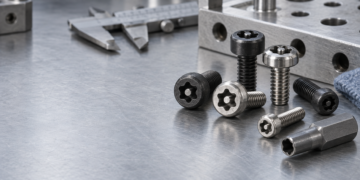
Sub-types by drive style: Phillips, Torx (hexalobular), slotted, hex socket (Allen), square (Robertson), combination. Torx is now the dominant drive style in automotive and electronics assembly because it allows high torque without cam-out, even on automated assembly lines.
Sub-types by thread form:
– Machine screws — fine thread, engage pre-tapped or nut-threaded holes
– Sheet metal screws — sharp thread cuts into thin metal panels (24–12 gauge typical range)
– Self-drilling screws — drill point eliminates separate pre-drilling step; widely used in steel framing and roofing
– Wood screws — coarse thread, wide pitch; not designed for metal-to-metal joints
Pro tip: For sheet metal joints under vibration, a Torx-drive self-tapping screw with a neoprene bonded washer head outperforms a standard pan-head Phillips screw in pull-out retention by 35–50% in controlled testing.
2. Bolts
A bolt is a threaded fastener intended to pass fully through a clearance hole and be secured by a nut on the opposite side. The distinction from a screw matters for structural calculations: bolts develop clamping force across the full grip length; screws rely on thread engagement in a tapped hole.
Common bolt families:
– Hex bolts (fully and partially threaded) — the workhorse of structural steel connections
– Carriage bolts — round head with a square neck that locks into wood; used in timber framing
– Flange bolts — built-in washer-flange distributes load; used in automotive exhaust systems and flanged pipe joints
– Eye bolts, hook bolts — lifting and rigging applications
– U-bolts, J-bolts — pipe clamps and anchor bolts in concrete
3. Nuts
Nuts provide the mating internal thread for bolts. The choice of nut type directly affects whether a joint stays tight under dynamic loading.
- Hex nuts — standard; pair with flat washer when bearing surface is soft
- Nylon insert lock nuts (Nyloc) — the nylon collar creates interference drag that resists vibration loosening; not reusable after 3–4 cycles
- All-metal prevailing torque nuts (Stover, Elliptical) — deformed thread form; suitable for elevated temperature where nylon degrades (>120°C)
- Flange nuts — serrated bearing face grips workpiece; often replaces separate washer
- Acorn (cap) nuts — cover exposed thread for aesthetics and safety
4. Washers
Washers protect bearing surfaces, distribute load, and — when selected correctly — add to vibration resistance.
- Flat washers — spread the bearing load of a nut or screw head over a larger area; mandatory when fastening into soft aluminum or composite panels
- Split lock washers — provide spring tension; debated effectiveness under dynamic load; the Junker vibration test shows they lose clamping force faster than other methods
- Nord-Lock wedge-lock washers — proven vibration resistance via cam angle geometry; used on rail, mining, and wind turbine applications
- Fender washers — large-OD flat washers for oversized holes or delicate surfaces
5. Rivets
Rivets are permanent metal fasteners installed through a pre-drilled hole. Once set, the tail deforms to lock the fastener in place — the joint cannot be disassembled without drilling out the rivet.
- Solid rivets — the original and strongest; installed by bucking or pressing; used in aircraft fuselage and structural bridge work
- Blind rivets (pop rivets) — installed from one side only; the mandrel stem is pulled, expanding the tail; the dominant choice where back-side access is impossible
- Structural blind rivets (LockBolt, Huck BOM) — exceed the tensile strength of solid rivets; used in heavy truck chassis and rail cars
- Drive rivets — struck with a hammer to expand; simple, low-cost; limited to thin panels
6. Anchors
Expansion anchors and chemical anchors secure metal fasteners into concrete, masonry, or stone where threading into the substrate isn’t possible.
- Wedge anchors — expand mechanically when the nut is torqued; rated for sustained tension and shear loads in solid concrete
- Sleeve anchors — lighter-duty; suit concrete block and brick
- Drop-in anchors — female-thread insert; flush when set; used for overhead concrete attachments
- Chemical anchors (epoxy, vinylester) — adhesive bonds metal fastener into a drilled hole; highest load capacity in cracked concrete; require cure time
7. Retaining Rings and Clips
These metal fasteners hold shafts, pins, or components in bores through spring tension rather than threads.
- External circlips (E-rings, snap rings) — seat in a groove on a shaft
- Internal retaining rings — seat in a bore groove
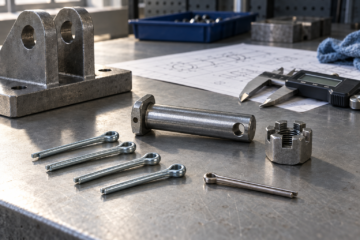
- Cotter pins — through a drilled hole; secondary retention for castellated nuts
- Spring pins (roll pins) — interference fit in a hole; shear-loaded applications
| Fastener Type | Disassembly | Best for | Avoid When |
|---|---|---|---|
| Screw | Yes | Quick assembly, thin panels | High vibration without thread-lock |
| Bolt + nut | Yes | Structural joints, through holes | Space is too tight for a nut |
| Rivet (blind) | No (drill out) | One-side access, high volume | Joint needs periodic maintenance |
| Anchor (wedge) | No (destroy) | Concrete attachment | Cracked or hollow masonry |
| Retaining ring | Yes | Shaft/bore retention | Frequent disassembly |
Metal Fastener Materials and Corrosion Resistance
The base material of a metal fastener determines its strength, corrosion resistance, weight, and cost — and these properties rarely all peak in the same alloy.
Carbon Steel
The most common metal fastener material. Low-carbon steel (Grade 2/4.6) is cheap and easy to form. Medium-to-high carbon steel, heat-treated to Grade 8 (SAE) or 10.9/12.9 (ISO), delivers tensile strengths exceeding 1,200 MPa — stronger than most aluminum alloys the fastener might connect.
Weakness: Carbon steel rusts rapidly. A bare Grade 5 bolt will show red corrosion within 24–48 hours in a coastal salt environment. Coating is mandatory for any outdoor or wet service.
Stainless Steel
Stainless metal fasteners — grades 18-8 (304), 316, 316L, and duplex 2205 — resist corrosion through passive oxide film formation. They are not rust-proof; they are rust-resistant.
- 304 stainless — adequate for indoor-outdoor use away from chloride environments; most common stainless fastener grade
- 316 stainless — adds molybdenum for pitting corrosion resistance; the correct choice for marine, coastal, and chemical environments; 60–80% price premium over 304
- Duplex 2205 — twice the yield strength of 316, better stress-corrosion cracking resistance; used in offshore oil and chemical processing
A significant limitation of stainless metal fasteners: galling. When stainless threads slide against stainless threads under load, the oxide film breaks down and the surfaces weld together. Always use anti-seize compound (copper-based, or Molykote 1000) when assembling stainless bolt-to-nut pairs.
Aluminum
Aluminum metal fasteners (typically 2024-T4 or 7075-T73) are 65% lighter than steel equivalents. They are standard in aerospace panel attachment and consumer electronics enclosures. Tensile strength tops out around 480 MPa — adequate for many structural joints but far below hardened steel.
Galvanic corrosion risk: If aluminum metal fasteners contact carbon steel or copper-alloy components in the presence of moisture, galvanic corrosion will attack the aluminum preferentially. Always use an insulating washer or dielectric coating when mixing metals.
Titanium
Grade 2 (commercially pure) and Grade 5 (Ti-6Al-4V) titanium metal fasteners offer the best strength-to-weight ratio of any structural fastener material — roughly equal to Grade 8 steel at 43% of the weight. Cost is 10–20× that of carbon steel; use is justified in aerospace, high-performance motorsports, and medical implants.
Brass and Copper-Based Alloys
Brass (copper-zinc) metal fasteners are non-magnetic, spark-resistant, and excellent conductors. Applications include electrical panel grounding screws, explosive-atmosphere equipment, and decorative hardware. Tensile strength is low (250–450 MPa); not structural.
Material Selection Summary
| Material | Tensile Strength | Corrosion Resistance | Relative Cost | Primary Use |
|---|---|---|---|---|
| Carbon steel Gr. 8 / 10.9 | ~1,040 MPa | Poor (bare) | 1× | Structural, automotive, general |
| Stainless 304 | ~520 MPa | Good | 3–4× | Food, light outdoor, general |
| Stainless 316 | ~540 MPa | Excellent | 5–7× | Marine, chemical, coastal |
| Aluminum 7075 | ~480 MPa | Moderate (anodized) | 4–6× | Aerospace, electronics |
| Titanium Ti-6Al-4V | ~950 MPa | Excellent | 15–20× | Aerospace, motorsport, medical |
| Brass | ~380 MPa | Good | 4–5× | Electrical, decorative, spark-free |
Surface Coatings and Finishes for Metal Fasteners
When the base material alone can’t deliver the required corrosion or wear protection, surface treatment bridges the gap.
Electroplated zinc (clear, yellow, black chromate) is the most common coating on carbon steel metal fasteners. It provides moderate corrosion protection — typically 72–120 hours salt spray per ASTM B117. The chromate conversion layer adds another 24–72 hours and can be tinted yellow for identification purposes.
Hot-dip galvanizing (HDG) applies a thick (45–86 μm) zinc-iron alloy coating. Per ASTM A153, HDG fasteners can achieve 1,500+ hours salt spray resistance. The coating is thick enough to require re-tapping of nuts after galvanizing — order the matching nut oversize.
Dacromet and Geomet are water-based zinc-flake coatings with no hydrogen embrittlement risk (critical for Grade 12.9 bolts, which can crack from hydrogen embrittlement introduced by acid pickling in electroplating). They are used on high-strength automotive chassis bolts, brake calipers, and wheel fasteners.
Black oxide is a chemical conversion coating that provides mild corrosion protection (8–24 hours salt spray) and reduces light reflection. It’s primarily aesthetic; always follow with an oil or wax sealant for meaningful outdoor use.
PTFE (Teflon) coatings on threaded fasteners reduce friction coefficient, improving torque-to-clamp-force consistency during assembly. Common in precision aerospace and electronics assembly.
How to Select the Right Metal Fastener for Your Application

Selecting the correct metal fastener requires answering six questions in order. Skip one and you risk over-specifying (wasting cost) or under-specifying (risking failure).
According to the Engineering ToolBox’s bolt/fastener design references, the six critical selection factors are:
1. What Load Type Will the Fastener See?
- Tensile (axial pull) — bolt must resist being pulled apart; thread engagement length is critical
- Shear (transverse) — bolt resists sliding; shank diameter and material strength are critical; use close-tolerance bolts for precision shear joints
- Combined tension + shear — common in bracket mounting; requires interaction equation checks
- Fatigue — cyclic loading (engines, vibrating structures); require rolled threads (not cut), fine thread engagement, and proper preload
2. What Is the Service Environment?
- Indoor, climate-controlled → carbon steel with zinc plating is adequate
- Outdoor, moderate climate → zinc plating minimum; hot-dip galvanizing preferred for long life
- Marine or coastal (chloride-rich air) → 316 stainless or HDG minimum; consider Geomet
- Chemical exposure → evaluate specific chemical compatibility; consult material compatibility charts
- High temperature (>300°C) → austenitic stainless (A4/316) or Inconel; avoid cadmium or zinc coatings which volatilize and are toxic
3. What Material Are You Fastening Into?
- Steel into steel — direct thread engagement; confirm thread pitch match
- Steel into aluminum — risk of galvanic corrosion; use stainless or anodized aluminum fasteners; insert a thread insert (Heli-Coil or Keensert) to handle repeated disassembly
- Fasteners into concrete — use rated anchor system; check edge distance and embedment depth per ACI 318 or ETAG 001
- Fasteners through composites (CFRP) — avoid aluminum fasteners (galvanic); use titanium or Inconel; never over-torque — composite crushes under bearing load
4. What Is the Required Strength Grade?
Refer to the grade marking system:
– SAE J429: Grade 2 (proof load 55 ksi), Grade 5 (85 ksi), Grade 8 (120 ksi)
– ISO 898-1: 4.6, 5.8, 8.8, 10.9, 12.9 (the two digits encode ultimate/yield ratios × 10)
– ASTM A307, A325, A490 — structural steel; specified by building codes
For most general-purpose structural applications, Grade 5/8.8 is the sweet spot. Grade 8/10.9 is for high-load applications; 12.9 is for precision, compact, high-stress assemblies (and requires care to avoid hydrogen embrittlement in the coating process).
5. Do You Need Permanent or Removable Fastening?
If the joint will never need to be opened (seam welding isn’t practical), consider rivets — they are faster to install at volume and have no torque sensitivity. If maintenance access is needed, use a threaded metal fastener with a locking element (Nyloc nut, thread-lock adhesive, or Nord-Lock washer).
6. What Are Your Installation Constraints?
- One-sided access → blind rivet or blind bolt
- No power tools → slotted or hex drive
- Automated assembly → Torx (minimizes cam-out, allows high RPM driving)
- Food/pharma (hygiene) → recessed-head screws trap contamination; use button-head or pan-head with smooth underside; 316 stainless only
Metal Fastener Standards and Grades
International standards bodies publish detailed mechanical and dimensional requirements for metal fasteners — these are not optional guidelines. Specifying “M10 bolt” without a grade is an incomplete specification.
The ISO 898-1 standard defines property classes for metric bolts and screws. The first number × 100 = minimum tensile strength in MPa; the product of both numbers × 10 = minimum yield stress in MPa. So a 10.9 bolt has 1,000 MPa tensile strength and 900 MPa yield — clear without memorization.
ASTM International publishes the authoritative specifications for inch-series fasteners widely used in North American construction and manufacturing. Key specifications:
- ASTM A307 — low-carbon steel bolts; general purpose, low-strength applications
- ASTM A325 — medium-strength structural bolts for steel construction; 120 ksi tensile
- ASTM A490 — high-strength alloy steel structural bolts; 150 ksi tensile
- ASTM F1554 — anchor bolts for structural steel; grades 36, 55, 105
- ASTM A193 — alloy steel bolting for high-temperature or pressure service (e.g., flanged pressure vessels)
SAE J429 covers inch-series fasteners in automotive and general industrial contexts. Grade markings appear as radial lines on the bolt head: no lines = Grade 2, three lines = Grade 5, six lines = Grade 8.
DIN and ISO metric grades appear stamped on the head: “8.8”, “10.9”, “12.9”. The manufacturer’s identification mark also appears as required by standard.
One critical point: counterfeit and substandard metal fasteners are a documented problem in global supply chains. Always source from certified distributors who can provide mill test reports (MTRs) or certificates of conformance (CoCs). The OSHA standard 29 CFR 1926.752 requires certified material for structural steel connections in construction — if you can’t trace the paperwork, you can’t use it on a regulated job site.
Industry Applications of Metal Fasteners
Metal fasteners are so fundamental that every major industry has evolved specialized fastener variants tailored to its unique loading, environmental, and assembly constraints.
Automotive
A modern passenger vehicle uses between 3,000 and 4,000 metal fasteners across powertrain, chassis, body, and interior. The trend toward multi-material vehicle bodies (mixing aluminum, advanced high-strength steel, and carbon fiber) has driven adoption of self-piercing rivets (SPR) and flow-drill screws — fasteners that join dissimilar sheet materials without pre-drilling. The shift to electric vehicles is pushing demand for low-magnetic stainless fasteners in battery enclosures and motor assemblies.
Aerospace and Defense
Aerospace metal fasteners must meet the tightest dimensional tolerances (typically ±0.001 inch on shank diameter) and the most demanding documentation requirements of any industry. Boeing and Airbus each specify thousands of proprietary fastener part numbers. Hi-Lok and Hi-Lite pins (interference-fit, pin-and-collar style) dominate primary structure. Titanium and Inconel are common in hot sections (near engines). Every fastener is serialized or traceable to its production lot.
Construction and Structural Steel
The construction industry relies on ASTM A325 and A490 heavy hex bolts for steel moment frames, shear connections, and base plates. High-strength structural bolting is performed by one of three AISC-recognized methods: turn-of-nut, tension-indicating washers (DTI), or calibrated wrench. All require specific inspection and documentation per AISC 360.
Electronics and Consumer Products
Electronics assembly uses the smallest metal fasteners — M2 and M2.5 machine screws in stainless or zinc alloy, torqued to 0.05–0.20 N·m on automated assembly lines. ESD-safe coatings and non-magnetic materials are specified where magnetic interference would affect sensor accuracy. The consumer electronics industry has driven the adoption of Torx Plus (IP drives) that resist reverse-drive tool access for tamper resistance.
Marine and Offshore
Salt water is the most aggressive common environment for metal fasteners. Grade 316 or 316L stainless is the minimum specification for marine fasteners. Fasteners in splash zones or fully submerged in seawater may require super-duplex (2507) or titanium, with cathodic protection systems covering the fasteners. Silicon bronze metal fasteners are used in wooden boat construction — they resist corrosion without galvanic attack on the surrounding copper-alloy hardware.
Future Trends in Metal Fastener Technology (2026+)
The metal fastener industry is evolving faster in the next decade than in the previous five — driven by lightweighting demands, sustainability mandates, and digital supply-chain requirements.
Smart and Sensor-Embedded Fasteners
Several Tier-1 automotive and aerospace suppliers have begun field-trialing bolts with integrated piezoelectric sensors that transmit real-time clamp force data wirelessly. Rather than periodic torque audits, a bolted joint becomes continuously monitored. By 2027, these sensor-embedded metal fasteners are expected in bridge monitoring, wind turbine tower connections, and high-value industrial equipment. The global IoT fastener market is projected to reach USD 580 million by 2028, per recent industry forecasting.
Hydrogen-Ready and Sustainability Standards
Green hydrogen infrastructure requires metal fasteners rated for high-pressure hydrogen service — hydrogen embrittlement (HE) is a critical failure mode when high-strength steel bolts are exposed to hydrogen gas. This is driving development of new stainless alloys and coatings that resist HE at Gr. 10.9 strength levels. Concurrently, the European REACH regulation and upcoming US EPA guidance are accelerating the phase-out of hexavalent chromium coatings (yellow chromate), pushing the industry toward trivalent chromium and zinc-flake alternatives.
Additive Manufacturing (3D-Printed) Fastener Tooling
While 3D-printed metal fasteners in production volumes remain niche (cost-prohibitive vs. cold-heading), additive manufacturing is transforming the tooling and prototyping side. Custom drive bits, thread gages, and installation fixtures can now be printed overnight. For low-volume aerospace prototyping, 3D-printed titanium specialty fasteners are already in limited use.
Sustainable Packaging and Traceability
Tier-1 OEMs are requiring full traceability from fastener manufacturer to vehicle assembly, including lot-coded packaging, QR-linked certificates of conformance, and digital material passports. Metal fastener manufacturers that cannot provide digital traceability are increasingly locked out of OEM direct supply channels. This trend mirrors what happened in the semiconductor industry a decade ago.
Frequently Asked Questions About Metal Fasteners
What is the difference between a bolt and a screw?
A bolt passes through clearance holes and is secured by a nut; a screw engages internal threads in the mating component. In practice the line blurs — some hex-head fasteners are called “bolts” when fully threaded and driven without a nut. The structural distinction: bolts clamp through their grip length; screws depend on thread engagement in the substrate.
How do I prevent metal fasteners from loosening under vibration?
Use a prevailing-torque nut (Nyloc for temperatures below 120°C, all-metal Stover or Elliptical nut above 120°C), apply medium-strength thread-locking adhesive (Loctite 243 is the industry workhorse), or use wedge-lock washer pairs (Nord-Lock style). Simply adding a split lock washer does not reliably prevent loosening under the Junker transverse vibration test — the prevailing-torque or adhesive methods are proven.
What grade of metal fastener should I use for structural applications?
For standard structural steel connections: ASTM A325 (Grade 8 inch-series equivalent) as a minimum. High-strength connections per AISC 360: ASTM A490. For metric structural: ISO 8.8 minimum, 10.9 for compact high-load joints. Never mix bolt grades in a connection group — the stiffer bolts attract disproportionate load and can fail first.
Can I reuse metal fasteners after they’ve been torqued?
Grade 8 and 10.9+ bolts should not be reused after reaching proof load — they may have yielded, which reduces clamping force on reinstallation. Nyloc nuts lose insert effectiveness after 3–4 cycles. Grade 5/8.8 bolts in lower-stress applications can often be reused once if they show no thread damage, but inspect carefully. Aerospace practice is to replace all fasteners removed during overhaul.
What metal fasteners work best for outdoor wood construction?
Hot-dip galvanized (HDG) fasteners (ASTM A153) are the traditional choice; they resist the alkaline environment of treated lumber and provide long-term corrosion protection. Type 316 stainless is the premium option, required for high-exposure coastal or chemically treated lumber (ACQ treatment is corrosive to G90 zinc-plated fasteners). Never use electroplated zinc (zinc-plated) fasteners with modern pressure-treated lumber — the coating is too thin to last.
How do I read the grade markings on a metric bolt head?
The two numbers separated by a decimal (e.g., “8.8”, “10.9”, “12.9”) encode strength directly per ISO 898-1. First number × 100 = minimum tensile strength in MPa. Product of both numbers × 10 = minimum yield stress in MPa. So a 10.9 bolt = 1,000 MPa tensile, 900 MPa yield. The manufacturer’s identification mark (a letter or symbol) also appears on the head as required by the standard.
What causes metal fasteners to corrode, and how do I prevent it?
Three conditions must coexist for electrochemical corrosion: a metal surface, moisture, and an electrolyte (dissolved salt, acid). Removing any one prevents corrosion. Practical prevention strategies: select stainless or galvanized metal fasteners matched to the service environment, coat exposed carbon steel fasteners with a zinc-rich primer or paint, use isolation washers to prevent galvanic coupling between dissimilar metals, and apply sealant under fastener heads in immersion or ponding-water locations.

Conclusion
Metal fasteners are the invisible infrastructure of every built object — easy to overlook until one fails, at which point the consequences range from annoying to catastrophic. The key takeaways: match your fastener type to your load direction and access constraints, select material based on the service environment rather than up-front cost alone, always specify a strength grade (not just a size), and source from traceable suppliers who can provide documentation.
For production environments, standardizing on a core set of metal fastener types — and engineering out the edge cases that require specialty items — dramatically reduces inventory complexity and the risk of wrong-fastener installations. Every engineering decision you make upstream about joint design either multiplies or reduces the downstream fastener-related maintenance burden.
If you have questions about selecting metal fasteners for a specific application, or need help specifying the right screw, bolt, or rivet for your production run, our team at Production Screws is ready to help.
Sources: Wikipedia — Fastener · ASTM International A153 Specification · ISO 898-1 Mechanical Properties of Fasteners · Engineering ToolBox — Fasteners · OSHA 29 CFR 1926.752 — Structural Bolting
Related Products
Solutions & Cluster
Related Articles
- Screw Definition: What It Is, How It Works, and Why It Matters More Than You Think
- Decorative Screws: Types, Finishes, Materials & Buying Guide
- Captive Screws: Complete Guide to Types, Applications & Selection (2026)
- What Is a Screw? The Complete Guide to Types, Uses & Selection for Production
- Nut vs Bolt: Complete Comparison Guide and Industry Applications (2026 Edition)
- A2-70 Bolt: Complete Guide to Grade, Strength, and Applications
- What Is a Screw and Nut — and Why Does the Pairing Matter
- The Ultimate Guide to Double End Threaded Stud Screw Bolt Applications