 English
  German
  Spanish
  Portuguese
  French
  Japanese
  Arabic
  Korean
  Vietnamese
  Russian
 Security bolts are tamper-resistant fasteners with specialized drive heads that require unique tools to install or remove, making them highly resistant to unauthorized removal or theft.

You install a standard bolt and two days later it’s gone. Whether you’re securing outdoor signage, a utility panel, or a piece of public street furniture, a conventional hex bolt is an open invitation — anyone with a trip to the hardware store can undo it in seconds. Security bolts close that door.
This guide covers every major type of security bolt on the market today, the materials and finishes that determine long-term field performance, specific industry applications, and a practical decision framework for selecting the right fastener for your project. Whether you’re protecting a single vehicle, a building facade, or a network of public infrastructure, the right security bolt specification starts here.
What Are Security Bolts?
Security bolts are fasteners engineered so their drive heads cannot be operated with standard tools — requiring proprietary or specialty bits available only through controlled channels.
Unlike ordinary bolts that any socket set or screwdriver can undo, security bolts resist unauthorized removal through three primary mechanisms:
- Drive geometry — the recess or external profile on the head doesn’t correspond to any off-the-shelf tool
- One-way mechanics — the drive accepts installation torque but cams out or slips under reversal attempts
- Proprietary tooling supply chains — matching driver bits are sold only by the manufacturer or authorized distributors, making it difficult to source the correct tool without official access
According to Wikipedia’s overview of tamperproofing, devices with non-standard fasteners represent one of the oldest and most effective forms of physical access control — a principle that applies equally to consumer electronics, transit infrastructure, and industrial machinery.
The terms security bolt, anti-theft bolt, tamper-proof bolt, and tamper-resistant bolt are used interchangeably across the industry, but a meaningful distinction exists in practice:
- Tamper-resistant means the fastener significantly raises the difficulty bar for removal. A determined person with the correct specialty tool can still remove it — but casual and opportunistic tampering is completely blocked.
- Tamper-proof means removal without destruction is effectively impossible, even with specialized equipment. These are permanent-installation fasteners.
No bolt is truly indestructible against a grinder or drill press. But for the overwhelming majority of theft and vandalism scenarios, the right security bolt specification eliminates the threat entirely by raising the effort threshold above what an opportunist is willing to invest.
TABLE 1: Security Bolts vs. Standard Bolts — Quick Reference
| Feature | Standard Bolt | Tamper-Resistant Bolt | Tamper-Proof Bolt |
|---|---|---|---|
| Required tool | Hex, Phillips, flat | Specialty bit | Proprietary-only bit |
| Off-the-shelf tools work? | Yes | No | No |
| Reversibility | Fully reversible | Difficult | Destructive removal only |
| Best suited for | General assembly | Semi-public access areas | Permanent / high-value assets |
| Typical cost premium | Baseline | 2–5× | 5–20× |
| Common drive examples | Hex, Phillips, Torx | Torx-pin, Spanner, Hex-pin | One-way clutch, Key-Rex® |
Types of Security Bolt Head Drives
Security bolt drives fall into two families: modified-recess types (a standard socket with a center post added) and specialty external profiles that no standard socket can grip.
Knowing the drive types is essential — different geometries provide different levels of security, handle different torque ranges, and serve different application environments. Here’s what’s available and where each type performs best.

Pin-in-Torx (Torx Security / TR-Series)
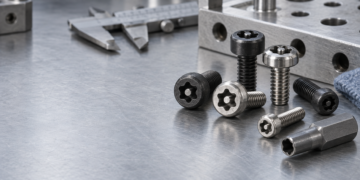
The most widely deployed security bolt drive variant. A standard Torx six-lobe recess has a small center post added — a single modification that blocks every standard Torx driver. The matching tamper-resistant Torx bit (TR-series) is available at most hardware stores and online, which places this firmly in the tamper-resistant category rather than tamper-proof. That said, it eliminates 100% of casual removal attempts.
Pin-in-Torx security bolts handle high-torque applications well — the six-lobe geometry distributes load evenly — making them suitable for electronics enclosures, commercial signage mounts, appliance panels, and OEM automotive assembly lines. Common sizes run T8 through T40.
Spanner (Snake Eye / Pig-Nose) Head
Spanner drive security bolts have two circular holes positioned diametrically across the face. A two-pin spanner bit is required. Also called snake-eye or pig-nose heads, they’re visually distinctive and widely deployed in public restroom fixtures, outdoor benches, elevator interior panels, and transit seating.
Per NBK America’s technical reference on tamper-resistant screws, spanner bits are “not sold in general stores,” which keeps them meaningfully more secure than pin-Torx in real-world conditions. The limitation: with only two contact points, spanner drives have a smaller bearing surface than six-lobe drives — they’re best suited to light-to-medium torque applications.
One-Way Clutch Drive
One-way security bolts use an angled cam geometry that accepts a standard flat-head screwdriver for installation only. Under counter-clockwise rotation (loosening), the cam faces slip — the tool spins without gripping. Once installed, the only removal options are drilling out the head or using a specialized screw extractor.
This is the true tamper-proof end of the spectrum. One-way clutch security bolts are specified for permanent installations: drain grates, sewer access covers, critical utility fixtures, and public street furniture intended to never be removed by anyone other than a maintenance team with an extractor. The trade-off is that authorized removal also requires destructive extraction — so these are reserved for truly permanent applications.
Penta (Five-Point) Head
Pentagon-shaped external security bolts have a five-sided star profile on the outside of the head. A standard six-socket or twelve-point socket doesn’t engage the five-sided geometry. Penta-Plus designs add precisely controlled tolerances between bit and bolt, so only the exact matched socket achieves the tight fit needed to apply torque.
Common on outdoor electrical distribution transformers, telecommunications switching cabinets, and transit infrastructure, the unusual geometry deters most opportunists on sight. A standard socket set simply won’t work, and the matching tools are not available through normal retail channels.
Tri-Wing and Tri-Groove
Tri-wing security bolts have a Y-shaped recess with three asymmetric wings. Originally developed for aerospace, they remain in active use in consumer electronics (notably historical Nintendo cartridges and certain Apple device assemblies). The asymmetric geometry means standard Phillips and cross drivers cam out immediately. Tri-groove uses three smooth curved slots that accept only the matching driver.
Hex Pin (Allen Pin) Head
Hex-pin security bolts add a center pin to a standard internal hex (Allen) recess, blocking all hex keys and Allen wrenches. They’re the mid-tier workhorse for industrial panels, machinery guards, HVAC equipment covers, and data center enclosures — applications where the risk profile doesn’t justify fully proprietary tooling but standard hex is unacceptably easy to defeat.
TABLE 2: Security Bolt Drive Type Comparison
| Drive Type | Security Level | Max Torque Rating | Typical Applications | Tool Availability |
|---|---|---|---|---|
| Torx Plus Pin | Medium | High | Electronics, signage, automotive | Hardware stores (TR bits) |
| Spanner / Snake Eye | Medium-High | Medium | Restrooms, transit fixtures | Specialty distributors |
| One-Way Clutch | Very High (permanent) | Low-Medium | Drain covers, permanent fixtures | Destructive removal only |
| Penta / Five-Point | High | High | Utility cabinets, infrastructure | Manufacturer-only |
| Tri-Wing | Medium | Low-Medium | Consumer electronics, aerospace | Rare, online specialty |
| Hex Pin | Medium | High | Industrial panels, HVAC, data centers | Specialty distributors |
Security Bolt Materials and Finishes
Match material to environment first: stainless steel for outdoor and wet settings, hardened alloy steel for high-load structural work, zinc-plated carbon steel for controlled indoor environments.
Drive geometry determines how hard a security bolt is to remove. Material selection determines whether it’s still removable — legitimately — five years after installation. This is the specification decision where most buyers make costly mistakes.
The NIST Fastener Quality Act compliance guide identifies material traceability and documentation as core requirements for safety-critical fastener applications — a standard worth applying even to non-regulated installations where long-term performance matters.
Stainless Steel (Grade 18-8 / 316)
18-8 (304) stainless steel handles the majority of outdoor environments: parking lots, exterior signage, urban street furniture, and above-waterline marine applications. The passive oxide layer self-repairs when scratched, providing continuous corrosion protection without maintenance. For saltwater exposure, coastal installations, pool decks, or chemical environments, step up to 316 stainless — the added molybdenum significantly improves chloride resistance.
Stainless security bolts carry a 3–5× price premium over carbon steel equivalents. In outdoor applications, the math is straightforward: stainless bolts last decades; zinc-plated carbon steel fails in 12–18 months, and the replacement labor typically costs far more than the upgrade.
Alloy Steel (Grade 8 / Class 10.9)
When tensile strength is the priority — structural connection points, engine mounts, heavy machinery guards, load-bearing frames — high-strength alloy steel is the correct choice. These can be zinc-plated or black oxide coated for moderate environmental protection. A Grade 8 security bolt combines physical tamper resistance with the structural reliability needed for safety-critical applications.
Zinc-Plated Carbon Steel
The standard specification for indoor, dry, temperature-controlled environments: interior panels, equipment enclosures, data center cabinets, indoor furniture. Zinc plating provides adequate corrosion protection in controlled settings at the lowest cost point. Do not specify outdoors — zinc plating degrades within one to two seasons of UV and moisture exposure, leading to seized fasteners that are difficult to remove even with the correct security driver.
Titanium
Specialty applications only — aerospace fixtures, high-end cycling components, and marine hardware where both low weight and superior corrosion resistance are required simultaneously. The cost premium is significant and justified only where the application genuinely demands both properties.
Key Applications for Security Bolts
Security bolts are used wherever standard fasteners create an unacceptable risk of unauthorized removal, theft, or tampering — across public infrastructure, utilities, automotive, electronics, and commercial facilities.
Public Infrastructure and Transit
The highest-volume application category globally. Bus shelters, subway handrails, park benches, public restroom fixtures, playground equipment, and street furniture all require fasteners that resist vandalism, theft, and unauthorized structural disassembly. Spanner-head and penta-head security bolts dominate in this sector — they resist removal by almost any tool a vandal is likely to carry.
In practice, transit authorities that switch from standard hex bolts to security bolts across their fleet of outdoor fixtures report a significant drop in replacement calls within the first year. Not because the bolts are indestructible, but because the effort threshold exceeds what an opportunist is willing to invest.
Utility and Electrical Infrastructure
Outdoor electrical distribution equipment, telecommunications cabinets, utility meter enclosures, and water infrastructure access covers rely on security bolts to prevent unauthorized entry — both for public safety (live electrical components) and for theft prevention (copper wiring, equipment). Penta-head and proprietary-drive security bolts are standard here. Many utility companies operate controlled tooling programs, issuing matching driver bits only to licensed contractors and tracking them through a personnel database.
Automotive and Vehicle Security
Aftermarket wheel security bolts — typically called locking lug nuts or locking lug bolts — are the most visible automotive security fastener application. Each set includes one proprietary socket matched to the unique external drive profile. According to FMW Fasteners’ guide to tamper-proof screws, security fasteners are “ideal for automobiles, signs, infrastructure, electronics and securing manufacturer product enclosures.”
For vehicle body panels, underbody components, and catalytic converter mounting (a high-theft target), Torx-pin and spanner-head security bolts are increasingly specified at both OEM and aftermarket levels.
Electronics and Consumer Devices
Manufacturers use security screws and bolts to protect proprietary components, enforce warranty terms, and prevent counterfeit repair using non-certified parts. Tri-wing, pentalobe, and hex-pin drives appear extensively in consumer electronics. This is primarily a deterrence and warranty-enforcement play — the goal is to redirect most repair attempts to authorized service centers, not to create an impenetrable physical barrier.
Commercial and Residential Door Hardware
Security bolts for doors serve a specific structural reinforcement function: they secure hinge plates and strike plate backing to framing members with fasteners that resist prying and forced-entry attacks. These security bolts work in combination with reinforced strike plates and security hinge systems, not as a standalone measure. Stainless steel security bolts with spanner or hex-pin drives are typical in this application.

How to Choose the Right Security Bolt
Match the security level to the realistic threat, the material to the environment, and the drive geometry to the torque requirement — then source the matching tool before installation.
The most common specification mistake is over-engineering security for the application. A fully proprietary, manufacturer-only drive bolt on a fixture that needs quarterly maintenance creates an operational problem: every service call requires contacting the manufacturer for the tool. Match security level to the actual threat profile.
Step 1: Define the threat model
- Casual opportunist (most public settings) → Medium security: Torx-pin, hex-pin, spanner-head security bolts
- Organized theft or persistent tampering → High security: penta-head, proprietary-drive security bolts
- No authorized removal after installation → Very high: one-way clutch or permanent-installation security bolts
Step 2: Assess the environmental conditions
- Indoor, climate-controlled → zinc-plated carbon steel
- Outdoor, temperate climate → 18-8 stainless steel
- Marine, coastal, chemical, or pool environments → 316 stainless steel or titanium
- High-load structural applications → Grade 8 alloy steel with appropriate protective coating
Step 3: Verify torque requirements
Security bolt drives vary significantly in the torque they can handle before the drive interface strips or deforms. One-way clutch security bolts are not appropriate for high-torque structural applications. For high-torque needs, Torx-pin or penta-head security bolts provide better load capacity. Always review the manufacturer’s torque specification before committing to a drive type.
Step 4: Source the matching tool before ordering the bolts
This is the step that most frequently creates problems in the field. Order the proprietary driver bits at the same time as the security bolts. Keep them under controlled access — issued only to authorized personnel, tracked by name — but document their location clearly. Losing the only matching driver means destructive removal later, which is expensive and inconvenient.
Step 5: Evaluate ongoing access requirements
If the fixture requires regular maintenance access, avoid one-way clutch and permanent-installation security bolt designs. Tamper-resistant drives (Torx-pin, spanner, hex-pin) allow legitimate removal for authorized personnel with the correct bit without any destructive operation — making them the right choice for most recurring-maintenance scenarios.
Installation Tips and Required Tools
Security bolts install identically to standard fasteners with the matching driver — but stainless variants require anti-seize compound and reduced torque to prevent galling, and all security drives require proper bit seating before applying power.
Torque Management
Security bolt drive interfaces are often precision-tolerance fits. Overtightening can damage the drive geometry — making the fastener harder to remove even with the correct tool. Follow the manufacturer’s torque specification. For most M6–M12 security bolts in typical applications, standard fastener torque values apply. For stainless-to-stainless contact, reduce torque by 20–30% and apply anti-seize compound before installation. Stainless fasteners are prone to galling — a cold-welding effect under high torque — which can make removal impossible without destruction even with the correct security driver.
Bit Engagement and Power Tools
Several security drive types require full bit seating before applying torque. With spanner drives and pin-in-Torx security bolts, shallow engagement causes cam-out and damages the head geometry. Hand-start the fastener with the correct bit, confirm full seating, then apply torque. Torque-limited power drivers work well for production installation volumes, but impact drivers can strip security heads — use a hex-chuck power driver with an appropriate clutch setting, not an impact wrench.
Anti-Theft Covers and Caps
For hex-headed security bolts in visible locations, bolt caps provide an additional deterrence layer and a finished appearance — they look like smooth domes from the outside, concealing the drive geometry entirely. Common in exterior architectural cladding, decorative metal panels, and commercial facades.
Future Trends in Security Fasteners (2026+)
Security bolt technology is advancing toward embedded authentication, smarter materials, and tighter ecosystem control of matching tooling — with 3D printing emerging as both a threat and an opportunity.
Smart Fasteners and Embedded Authentication
Next-generation security bolts are being developed with embedded NFC chips and RFID tags that log installation events and detect disturbance. When a security bolt is moved or tampered with, it signals a monitoring system — converting a passive mechanical deterrent into an active security element. Field trials are underway in European and North American infrastructure monitoring programs, with commercial availability expected within the next two to three years.
Advanced Material Development
Manufacturers are introducing ultra-high-strength low-weight alloys and composite-core bolt designs that combine the drive-geometry security of conventional security bolts with enhanced resistance to drilling and grinding attacks. As Wikipedia’s reference on screw drive types documents, security drive development is a continuous response to advances in available consumer-grade extraction tools — a dynamic that is pushing drive geometry toward fundamentally harder-to-defeat profiles.
TABLE 3: Security Bolt Technology Trends 2025–2028
| Trend | Current Status (2026) | Expected Impact | Primary Adoption Sector |
|---|---|---|---|
| Embedded NFC/RFID in fasteners | Field trials | High — real-time tamper alerting | Infrastructure, utilities |
| Controlled tooling ecosystems | Established practice | High — systematic access control | All sectors |
| Anti-drill alloy composites | Emerging | Medium — resists physical attacks | High-value assets |
| Digital twin integration | Concept phase | Medium — maintenance event logging | Industrial, aerospace |
| Consumer-grade 3D-printed bit copies | Emerging threat | Negative — lowers attack barrier | Countermeasure required |
The 3D-printing threat deserves specific attention. As desktop 3D printers reach sufficient resolution to produce functional driver bits from stolen geometry, the security value of any drive that relies solely on obscurity — rather than precision tolerance or proprietary metal alloys — will erode. The industry response is moving toward tighter tolerance fits (where a 3D-printed bit simply isn’t strong enough to transfer torque) and controlled-access tooling programs where the matching bit is as controlled as the bolt itself.
Frequently Asked Questions About Security Bolts

Q: Can security bolts be removed?
Yes — with the correct tool. Security bolts are designed to resist removal without the matching driver bit, not to make removal impossible for authorized personnel. With the correct proprietary or specialty bit, security bolts remove exactly like any standard fastener. Only one-way clutch-type security bolts are designed for permanent installation, requiring destructive removal methods regardless of what tool is used.
Q: What makes a bolt a security bolt?
A security bolt has a drive head — recessed socket or external profile — that does not match any standard tool. The defining feature is controlled tooling: the matching driver is either specialty (rare through retail channels), proprietary (available only from the manufacturer), or one-directional (works only for installation). The combination of geometry and tool scarcity is what gives security bolts their deterrent value.
Q: Are anti-theft screws worth it?
For public-facing or high-theft-risk applications, yes — consistently. Security bolts are a low-cost, one-time upgrade that eliminates casual and opportunistic removal entirely. The ROI calculation is straightforward: one prevented theft or vandalism event typically covers the cost premium of upgrading an entire installation to security bolts. For controlled-access indoor applications where standard fasteners already face no realistic threat, the premium may not be justified.
Q: What is the difference between tamper-resistant and tamper-proof bolts?
Tamper-resistant security bolts significantly raise the difficulty of unauthorized removal — a determined person with the correct specialty tool can still remove them, but the bar is high enough to deter all casual attempts. Tamper-proof security bolts (like one-way clutch designs) require destructive methods for removal even with specialized tools. For most public-setting applications, tamper-resistant is the practical choice; tamper-proof is reserved for permanent, high-value, or safety-critical fixtures.
Q: What tools are needed to remove security bolts?
It depends on the drive type. Torx-pin security bolts require a tamper-resistant Torx (TR) bit, available at most hardware stores. Spanner head security bolts require a two-pin spanner bit from specialty distributors. Penta-head and fully proprietary security bolts require the manufacturer’s specific tool, sold only to authorized customers. One-way clutch security bolts require a screw extractor or drill.
Q: Which security bolts work best outdoors?
316 stainless steel in a penta-head or spanner-head drive is the best combination for marine and coastal environments. For standard outdoor exposure, 18-8 stainless steel in any security drive performs well. Avoid zinc-plated carbon steel security bolts outdoors — the plating degrades within 12–18 months, leading to corrosion-seized fasteners that are difficult to remove even with the correct driver.
Q: How many security bolts are needed per fixture?
For theft deterrence on outdoor signage or street furniture, replacing the most accessible standard bolt with a security bolt per mounting point is the minimum effective specification. For structural security against forced removal, all mounting bolts should be security bolts. For critical infrastructure and utilities, every fastener position should use a security bolt to eliminate the option of partial disassembly.
Conclusion
Security bolts solve one specific, high-value problem: keeping fastened assemblies in place, accessible only to people authorized to access them. The right specification comes down to three decisions — matching the security level to your actual threat model (tamper-resistant for deterrence, tamper-proof for permanence), matching the material to the operating environment (stainless for outdoors, alloy for high loads), and securing the matching tool before a single bolt goes in.
For facility managers, contractors, and engineers specifying fasteners for public or high-value applications, the upgrade cost from standard to security bolts runs roughly $0.50–$5.00 per bolt position. The cost of a single replacement or repair event from theft or vandalism typically exceeds that by an order of magnitude. Security bolts are among the highest-ROI risk-mitigation investments available in any fastener specification.
Browse our complete range of security bolts and tamper-resistant fasteners at ProductionScrews.com — including stainless steel, alloy steel, and zinc-plated options across all major drive types, with matching driver bits available.
Related Products
Solutions & Cluster
Related Articles
- Top Sealed Rivet Nut Fast Delivery: Quality Inserts for Quick Projects
- Define Screw: The Complete Engineering & Application Guide
- Anti Theft License Plate Screws: The Complete Buyer’s Guide (2026)
- Essential Screws: Choosing the Right Fasteners for Your Projects
- Vehicle Threads Explained: A Complete Guide to Automotive Fastener Thread Types, Standards, and Selection
- Metal Fasteners: Types, Materials, and How to Choose the Right One
- Brass Washers: Types, Sizes, Uses & Complete Buying Guide (2025)
- Metric Thread: Sizes, Pitch, Standards, and Selection Guide for 2026