 English
  German
  Spanish
  Portuguese
  French
  Japanese
  Arabic
  Korean
  Vietnamese
  Russian
 The Complete Guide to Stainless Fixings: Grades, Types, and How to Choose Right (2026)
Stainless fixings are corrosion-resistant fasteners — screws, bolts, nuts, and anchors made from stainless steel alloys — used wherever rust, moisture, or chemicals would destroy ordinary steel hardware.

Walk into any marina boatyard and you’ll spot the difference instantly. The dock cleats fastened with ordinary steel bolts are streaked orange-brown. The neighboring fittings held in place with stainless fixings look the same as the day they were installed — five years later. That’s the core promise of stainless: a passive chromium-oxide layer that heals itself when scratched, resisting moisture, salt, and mild acids without needing paint, plating, or annual replacement.
But not all stainless fixings perform the same way. A grade 304 screw that lasts decades in an interior office environment can pit and corrode within two years at a coastal installation. Choose the wrong type and you’ll also run into galvanic corrosion — an electrochemical reaction that eats through your fixing even if the stainless itself is fine. This guide walks through every variable: grades, types, environments, and the selection mistakes that cost builders and engineers time and money.
What Are Stainless Fixings?
Stainless fixings are fasteners manufactured from stainless steel — an iron-based alloy containing at minimum 10.5% chromium by mass. That chromium threshold is what separates stainless steel from ordinary alloy steel. At 10.5%+, the chromium reacts with atmospheric oxygen to form a thin, transparent chromium oxide film on the surface. This passive layer is the entire reason stainless fixings resist corrosion: it stops oxygen and water from reaching the iron underneath.
What makes the passive layer special is that it is self-repairing. Scratch through it and it reforms within minutes, assuming the surface is clean and exposed to oxygen. In sealed, oxygen-depleted environments — gaps, crevices, submerged spots — the layer can break down. This is called crevice corrosion, and it’s one of the two failure modes every specifier of stainless fixings must understand.
The Terminology: “Fixings” vs “Fasteners”
In British English and across much of Europe and Australia, the generic term is fixings — encompassing screws, bolts, nuts, washers, anchors, and everything else that joins materials together. In North American English, the same category is called fasteners. Both terms refer to the same hardware. You’ll see both used on packaging and data sheets, particularly from manufacturers who sell globally.
For stainless steel specifically, the British Standard BS EN ISO 3506 and the American ASTM F593 govern mechanical properties. The grade designations are harmonized: 304, 316, and duplex appear on both sides of the Atlantic. As ISO’s standards catalogue on mechanical fasteners makes clear, international harmonization of these grades simplifies global supply chains considerably.
Stainless Steel Grades for Fixings: The Core Comparison
Grade selection is the single most important decision when specifying stainless fixings. The table below compares the grades you’ll encounter most frequently in fastener applications.
Table 1: Stainless Fixing Grade Comparison
| Grade | Composition | Corrosion Resistance | Typical Applications | Notes |
|---|---|---|---|---|
| 304 (A2) | 18% Cr, 8% Ni | Good — general atmospheric, freshwater | Interior, dry exterior, light-duty outdoor | Most common; “18-8 stainless” is 304 |
| 316 (A4) | 16% Cr, 10% Ni, 2% Mo | Excellent — chlorides, salt, mild acids | Marine, coastal, chemical plant, pools | Molybdenum is the key differentiator |
| 410 (martensitic) | 12% Cr | Moderate | Self-drilling screws, structural rivets | Magnetic; hardenable; lower corrosion than austenitic |
| 430 (ferritic) | 17% Cr, no Ni | Good — mild environments | Decorative trim, interior fittings | Magnetic; no nickel (lower cost) |
| Duplex 2205 | 22% Cr, 5% Ni, 3% Mo | Superior — pitting, crevice, stress | Offshore, chemical, desalination | ~2× strength of 304; premium cost |
According to World Stainless, austenitic grades (304 and 316) account for roughly 70% of all stainless steel produced globally — which explains why they dominate the stainless fixings market. Grade 316’s molybdenum addition is specifically what improves resistance to chloride pitting, the failure mode that makes 304 inadequate at the seashore.
Types of Stainless Fixings
Stainless fixings is a broad category. The base material is stainless steel, but the form varies enormously — each type designed for a specific load profile, substrate, or installation method.
Screws and Self-Tappers
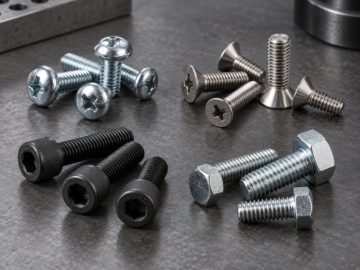
Screws make up the bulk of stainless fixings used in construction and manufacturing. The category breaks down by drive type (Phillips, Torx, hex socket), head style (pan, countersunk, button), and thread form (coarse, fine, self-tapping).
Wood screws with a coarse thread are the most common stainless fixing on construction sites. A grade A2/304 twin-thread wood screw handles deck boards, cladding, and treated timber in most climates. Move to within 300 meters of the coast or into permanently wet conditions and the specification jumps to A4/316 immediately.
Self-drilling (TEK) screws in stainless are trickier. Most self-drilling points require a martensitic tip (grade 410 or similar) for sufficient hardness to drill through steel. This creates a mixed-metal situation right at the point — an engineering compromise that works but needs the user to understand the corrosion implications.
Machine screws (metric or UNC/UNF) pair with threaded inserts, nuts, or tapped holes for structural connections. In stainless fixings, machine screws are almost always specified with matching stainless nuts and washers to avoid the galvanic differential that would occur with zinc-plated hardware.
Bolts, Nuts, and Washers
Structural stainless bolts follow the same grade system. A2-70 designates a 304-equivalent bolt with 700 MPa minimum ultimate tensile strength. A4-80 designates a 316-equivalent at 800 MPa. The numeric suffix matters — plain “A2 stainless” could be A2-50 (500 MPa), which is approximately half the strength of a structural-grade bolt.
One issue that catches installers repeatedly: stainless fixings can gall. Galling (also called cold welding) occurs when two pieces of stainless steel in contact seize together under pressure and rotation. The passive films abrade off, the metals bond, and you can destroy the bolt and nut trying to tighten them. The fix is straightforward — apply an anti-seize lubricant (molybdenum disulfide paste, beeswax, or specific stainless anti-seize compounds) to the threads before assembly. This is standard practice in marine and industrial contexts, but routinely ignored on construction sites where workers assume stainless is “better” than zinc-plated hardware.
Anchors, Clips, and Specialized Fixings
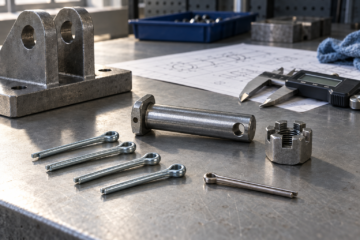
Beyond threaded fasteners, the stainless fixings category includes:
- Expansion anchors: Used in masonry and concrete. Available in 304 and 316 for façade cladding systems, balustrades, and any external concrete application.
- Roofing clips and brackets: Stainless steel standing-seam roof clips must match the cladding panel alloy to avoid galvanic corrosion (see Phase 4 below for detail on this).
- Hose clamps and worm-drive clips: A4/316 for marine and chemical use; A2/304 for general automotive and HVAC.
- Spring steel fixings: Stainless spring clips for push-fit connections in instrumentation and electrical panels.
- Cable ties: 316 stainless cable ties are the standard for outdoor, marine, and industrial cable management where polymer ties would degrade under UV or chemical exposure.

Table 2: Application vs Recommended Stainless Fixing Type
| Application | Recommended Type | Grade | Notes |
|---|---|---|---|
| Softwood deck boards | Twin-thread wood screw | A2 (interior); A4 (coastal) | Pre-drill hardwoods to reduce head snapping |
| Steel-to-steel cladding | Self-drilling TEK screw | A2-70 or A4-70 | Check tip hardness vs substrate |
| Structural bolted connection | Hex bolt + nut + washer | A4-80 | Use anti-seize; match washer grade |
| Masonry façade fixing | Expansion anchor | A4 316 | Allow for thermal movement |
| Marine through-hull fitting | Hex bolt + nyloc nut | A4-80 duplex recommended | Check galvanic compatibility with bronze |
| Concrete balustrade post | Chemical anchor stud | 316 duplex | Base plate weld quality critical |
| Cable bundle, outdoor rooftop | Stainless cable tie | A4 316 | UV and ozone resistance |
Industry Applications for Stainless Fixings
Stainless fixings appear wherever the environment degrades conventional carbon steel hardware within an acceptable service life. Three industries drive the majority of volume.
Marine and Coastal Construction
This is the environment that defines the upper boundary of stainless performance. Salt spray, splash zones, and immersion all attack steel. Grade 316 stainless fixings are the minimum specified for any installation within 1 km of the coast; within 200 meters of open seawater, many specifiers move to duplex 2205 for primary structural connections.
Real-world failure data is instructive. A 304 stainless screw in a tidal splash zone can develop visible surface pitting within 18 months. The same connection made with 316 shows only minor surface discoloration after five years. Duplex 2205 stainless fixings in the same location test essentially unchanged at the five-year mark.
In marine environments, stainless fixings must also coexist with other metals. Aluminum hull fittings, bronze valves, and copper antifouling paint all generate galvanic potential differences. The correct specification always includes an assessment of which metals are in contact or in the same electrolyte (seawater).
Food Processing and Healthcare
Grade 316 stainless fixings are standard throughout food production environments. The reasoning is hygiene as much as corrosion resistance: stainless surfaces are easy to clean, non-porous, and resistant to the caustic cleaning agents (sodium hydroxide, phosphoric acid) used in CIP (clean-in-place) systems. According to ASTM International’s standards on corrosion-resistant alloys, the molybdenum in 316 provides critical resistance to the chloride-containing sanitizers widely used in food processing.
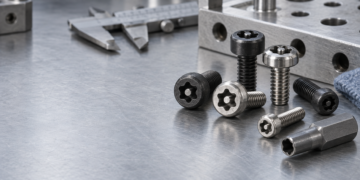
Low-profile button-head or socket-head cap screws in 316 are preferred because they minimize food trap points. Any hex socket must be filled or capped in direct-food-contact applications — bacteria colonize threaded recesses effectively. Torx drive profiles are gaining popularity because they have fewer sharp internal corners.
Outdoor Architecture and Infrastructure
Street furniture, handrails, playground equipment, façade cladding systems, and public signage all rely on stainless fixings for a maintenance-free service life. A typical specification for urban stainless fixings calls for A2-70 (304) in inland city environments where atmospheric pollution (not chlorides) is the main corrosive agent, upgrading to A4-70 or A4-80 (316) in coastal cities or industrial atmospheres.
One underspecified sector is photovoltaic (PV) solar array mounting systems. Aluminum racking systems for rooftop solar use stainless fixings extensively — but grade selection here is often dictated by which metals are in direct contact. Stainless steel in contact with aluminum in a wet environment generates a galvanic potential that accelerates aluminum corrosion. The answer is to ensure the stainless fixing is isolated from the aluminum frame wherever possible, or to use appropriately sized isolation washers.
How to Choose the Right Stainless Fixing
The right stainless fixing is the one that matches the corrosion environment, the load requirement, and the adjacent materials — all three simultaneously. Most selection errors arise from optimizing for just one of these.
Match the Grade to the Corrosion Environment
The environment classification system used across European standards defines five categories:
- C1: Dry interiors. Any stainless grade works; 304 is cost-effective.
- C2: Interior with condensation or mild exterior (inland, low pollution). 304 (A2) is fine.
- C3: Urban and industrial exterior; moderate humidity. 304 (A2) at minimum; 316 (A4) preferred for longevity.
- C4: High-salinity industrial or coastal. 316 (A4) mandatory. 304 will pit within years.
- C5: Aggressive — offshore, chemical processing, constant immersion. Duplex 2205 or 316L as a minimum.
This five-level framework, harmonized under EN ISO 12944 for protective coatings, provides a structured decision path that removes the guesswork from grade selection. Print it out. Put it near your project specification sheet.
Avoiding Galvanic Corrosion
When two dissimilar metals are in electrical contact in the presence of an electrolyte (moisture), galvanic corrosion occurs. The less noble metal (the anode) corrodes preferentially. Stainless steel is relatively noble. This is good news when carbon steel is the other metal — the carbon steel corrodes instead of the stainless fixing. It’s bad news when stainless is the less noble metal in the pairing.
Common problem pairings with stainless fixings:
- Stainless screw into aluminum: Aluminum is significantly less noble. The aluminum corrodes around the fixing hole, eventually loosening the connection. Use isolating sleeves or choose aluminum pop rivets for aluminum-to-aluminum connections.
- Stainless bolt through carbon fiber composite: Galvanic potential can be high depending on carbon fiber layup. Use isolating bushings.
- 304 stainless next to 316 stainless: The potential difference is small enough that galvanic effects are negligible in most environments.
As the Engineering ToolBox’s galvanic series reference shows, even small differences in electrode potential become significant over long service periods in wet or submerged environments.

Common Selection Mistakes
Mistake 1: Specifying 304 within sight of the sea.
The chromium in 304 provides solid general corrosion resistance, but the lack of molybdenum leaves it vulnerable to chloride pitting. The beach looks far away on a planning map. In practice, 300 meters from tidal water is enough for chloride deposition to cause premature failure. Default to 316 for any exterior coastal work.
Mistake 2: Ignoring the length-to-diameter ratio for screws.
A long, thin stainless fixing into dense hardwood generates enormous torsional stress during installation. Grade A4 stainless screws in small diameters (3–4 mm) are more prone to snapping than an equivalent zinc screw because stainless is harder and less ductile. Pre-drilling and using a torque limiter driver prevents this.
Mistake 3: Mixing stainless grades without thinking about galvanic consequences.
Using a 316 screw with a 304 washer is fine — the potential difference is negligible. Using a 316 stainless screw with a zinc-plated washer is problematic in wet environments — the zinc washer corrodes rapidly and loses its function. All components in a joint should match in both material and grade.
Mistake 4: Forgetting anti-seize on stainless bolt/nut assemblies.
Thread galling is not a defect in the fixing — it’s a predictable physics outcome of assembling two similar stainless surfaces under rotational load. Anti-seize paste is the standard solution. Do not substitute oil or grease — they wash out under wet conditions.
Mistake 5: Assuming “stainless” on the label means the whole fixing is stainless.
Some economy-grade stainless fixings have a stainless screw body but a hardened carbon steel point. The point rusts. Staining then tracks up the fixing and stains the adjacent surface. Check the product specification for whether the tip grade matches the body grade, especially in self-drilling types.
Future Trends in Stainless Fixings (2026+)
Stainless fixings development is driven by three intersecting forces: sustainability pressure on nickel and chromium mining, demand for higher-strength grades in lightweight design, and the growth of infrastructure investment in corrosive environments.
Low-Nickel and High-Recycled-Content Grades
Nickel is the cost driver in austenitic stainless steel. At roughly $13,000–$16,000 per metric ton for primary nickel (LME 2025 pricing), every point of nickel in the alloy adds to fastener cost. Two trends are running in parallel:
- Lean austenitic grades (200-series, using manganese as partial nickel substitute) are gaining traction in non-structural fixings. Corrosion resistance is lower than 304, but in appropriate environments the cost savings are real.
- Recycled-content mandates are becoming part of infrastructure project specifications in the EU and UK. Since stainless steel is infinitely recyclable without property degradation, the recycled-content story for stainless fixings is strong. According to the World Stainless Association’s sustainability data, the average recycled content of stainless steel in Europe exceeds 80% for flat products, and fastener manufacturers are increasingly publishing product-specific Environmental Product Declarations (EPDs) to document this.
Coatings and Hybrid Technologies
The performance ceiling of 316 stainless in aggressive marine applications has prompted development of enhanced surface treatments:
- Electropolishing removes the surface layer of the metal and enriches the chromium-oxide film, improving corrosion resistance by 30–40% over a machined surface finish. Electropolished stainless fixings are standard specification in pharmaceutical clean rooms and desalination plants.
- PVD (Physical Vapour Deposition) coatings apply ultra-hard nitride coatings to stainless fixings for applications combining corrosion and wear resistance — common in automotive and aerospace fixings.
- Duplex stainless adoption is growing in renewable energy infrastructure. Offshore wind turbine monopile connections, wave energy converters, and tidal barrage fixings are increasingly specified in duplex 2205 or super-duplex 2507 because the service life target (25–40 years) exceeds what 316 can reliably deliver in constant immersion.
Table 3: Stainless Fixings Market Outlook (2026–2030)
| Driver | Impact on Stainless Fixings | Trend |
|---|---|---|
| Offshore wind expansion | Higher duplex 2205/2507 demand | ↑ Strong growth |
| EU Green Deal procurement rules | EPD requirements, recycled-content preference | ↑ Documentation burden |
| Nickel price volatility | Lean austenitic 200-series gains share in light-duty segments | ↑ Cost-driven substitution |
| Lightweight construction | Thinner profiles, tighter torque tolerances, smaller M-sizes | ↑ Precision engineering demand |
| Construction labor costs | Push toward self-drilling, pre-assembled fixing systems | ↑ Value-added system sales |
FAQ: Stainless Fixings
When should I use stainless steel fixings?
Use stainless fixings whenever corrosion would compromise the connection’s service life before the structure’s design life — outdoors, in damp conditions, in contact with treated timber (ACQ/CA preservatives aggressively corrode zinc-plated fixings), near saltwater, or in food-contact environments. For purely interior, dry applications, zinc-plated hardware is often more cost-effective; stainless is not always necessary.
What is the difference between A2 and A4 stainless fixings?
A2 corresponds to grade 304 stainless steel (18% chromium, 8% nickel). A4 corresponds to grade 316 (16% chromium, 10% nickel, 2% molybdenum). The added molybdenum in A4 provides significantly better resistance to chloride pitting — the failure mode that defines coastal and marine environments. For most inland exterior applications, A2 is adequate. Within 1 km of the coast or in contact with pool water, A4 is the correct choice.
Can stainless fixings rust?
Yes — in the wrong environment or wrong grade, stainless fixings can and do corrode. Common modes include: surface tea-staining (cosmetic only, from airborne particles), crevice corrosion (oxygen depletion in tight gaps), chloride pitting (especially in 304-grade near seawater), and galvanic corrosion when paired with less noble metals. Selecting the correct grade for the environment eliminates the vast majority of these failure modes.
Are stainless fixings stronger than zinc-plated steel?
Not necessarily. The tensile strength is grade-dependent on both sides. A high-tensile zinc-plated bolt (grade 8.8 or 10.9) is significantly stronger than an A2-50 stainless bolt. A4-80 stainless matches a grade 8.8 carbon steel bolt in tensile strength while adding corrosion resistance. For structural connections, always check the mechanical property designation, not just the material.
What causes stainless fixings to seize up during installation?
Galling — a form of cold welding that occurs when two stainless steel surfaces (screw and nut, or screw and tapped hole) generate friction under torque, strip away each other’s passive layer, and bond together. Prevention: use anti-seize lubricant on threads, install at a controlled torque (not overtightened with impact driver), and consider coated stainless nuts (PTFE or wax coating reduces galling significantly).
Do stainless fixings work with pressure-treated timber?
Yes, and they are often code-mandated for ACQ (alkaline copper quat) and CA (copper azole) treated timber. Modern preservative treatments are highly corrosive to zinc-plated and hot-dip galvanized hardware. For exterior treated-timber applications, the recommendation is A2 or better for low-exposure environments and A4 for any coastal or high-moisture installation. Check the timber treatment product data sheet — most manufacturers now specify minimum fastener grade by treatment type.
What grade of stainless fixings for swimming pool environments?
Grade 316 (A4) as the absolute minimum; many aquatic facility engineers prefer duplex 2205. Pool water chemistry — typically pH 7.2–7.8, chlorine 1–3 ppm, and periodic shocking to 10+ ppm — creates a chloride-rich, oxidizing environment that causes 304 stainless to fail by crevice corrosion in cracks and crevices, sometimes within a single season. Stainless fixings around the pool shell, ladders, gratings, and pump room brackets should all be 316 or better.

Conclusion
Stainless fixings solve one specific problem exceptionally well: connecting materials in environments where conventional steel hardware would corrode. Done correctly — right grade, right type, right installation practice — a set of stainless fixings will outlast the structure they hold together.
The two decisions that matter most are grade selection and galvanic compatibility. Get those right and the rest is detail. For most exterior construction work in non-coastal environments, A2 (304) stainless fixings provide decades of reliable service at a competitive cost. Add molybdenum (A4/316) the moment chlorides enter the picture. Step up to duplex grades when the environment is aggressive and the service life expectation is 25+ years.
If you’re specifying stainless fixings for a project on productionscrews.com, the product pages include grade designation, mechanical properties, and corrosion environment guidance for each product line — use those data sheets alongside this guide for confident, defensible specifications.
Related Products
Solutions & Cluster
Related Articles
- Thru Bolt: Complete Guide to Types, Sizes, and Installation (2026)
- Top Silicon Bronze Bolts for Durable and Reliable Fastening Solutions
- What Is a Screw? The Complete Guide to Types, Uses & Selection for Production
- Nylock Nuts: The Complete Guide to Nylon Insert Lock Nuts
- M2 Screws: The Complete Guide to Specifications, Types, and Applications
- ASTM A193: Complete Guide to High-Strength Bolting Grades and Specifications
- Plastic Washers: The Complete Guide to Materials, Types, and Choosing the Right One
- A2-70 Bolt: Complete Guide to Grade, Strength, and Applications