 English
  German
  Spanish
  Portuguese
  French
  Japanese
  Arabic
  Korean
  Vietnamese
  Russian
 A stainless steel bolt resists corrosion through a self-repairing chromium-oxide passive layer, making it the go-to fastener for marine, outdoor, food-grade, and chemical-processing applications where carbon steel would rust through within months.
You’ve ordered the wrong bolt before. Maybe it was the marine dock project where the “regular” hex bolts turned orange in six months. Or the food-processing equipment where the procurement spec just said “stainless” — no grade specified — and the maintenance crew ended up replacing them every season. The stainless steel bolt category looks deceptively simple from the outside: shiny, corrosion-resistant, done. In practice, picking the wrong grade, the wrong head geometry, or the wrong mating material costs real money and real downtime.
This guide covers everything you actually need to make a correct selection: grade chemistry and what the numbers mean, mechanical properties and where stainless falls short against carbon steel, the failure modes manufacturers don’t put in brochures, and application-specific decision trees for marine, structural, food-grade, and industrial environments.

What Is a Stainless Steel Bolt?
A stainless steel bolt is a threaded fastener machined from stainless steel alloy — a family of iron-based alloys containing a minimum of 10.5% chromium by mass. That chromium threshold is where the magic happens. According to Wikipedia’s overview of stainless steel, the chromium reacts with atmospheric oxygen to form a thin, stable chromium-oxide film on the surface. This passive layer is self-repairing: scratch through it, and it rebuilds within seconds if oxygen is present.
A standard carbon steel bolt exposed to moisture and oxygen simply rusts. A stainless steel bolt, under the same conditions, maintains its integrity for decades. That’s the core value proposition — though, as we’ll see, it comes with tradeoffs in tensile strength, galling risk, and cost.
How the Passive Layer Works
The passive layer isn’t a coating applied at a factory. It forms spontaneously during the alloy’s exposure to air, and it’s only 1–3 nanometers thick — invisible to the naked eye. That thinness is what makes it so effective: it’s chemically inert, hard, and self-restoring.
Disrupt the layer’s chemistry, however, and you lose the protection fast. That’s why stainless steel bolts fail in highly acidic environments (pH below 4), in chloride-heavy marine splash zones with poor drainage, and in contact with specific incompatible metals. The passive layer is robust in dry, aerated conditions. It’s more fragile than people assume when conditions shift.
Passivation treatments (acid baths post-machining, per ASTM A380) can improve layer quality and remove surface iron contamination from manufacturing. For critical applications — medical devices, pharmaceutical equipment, high-grade marine hardware — specifying passivated bolts is worth the added cost.
ASTM F593 — The Governing Specification
In the United States, stainless steel bolts for general use are specified under ASTM F593, which covers stainless steel bolts, hex cap screws, and studs from ¼” to 1½” nominal diameter. The specification groups alloys into groups based on composition and heat treatment, with Group 1 (austenitic 304/316) being the most common in commercial procurement.
When a purchase order just says “stainless steel bolt,” ASTM F593 Group 1, Condition CW (cold worked) is usually what ships. Know what you’re actually getting before assuming.
Table 1: Common Stainless Steel Bolt Grades — At a Glance
| Grade | Chromium % | Nickel % | Molybdenum % | Min Tensile (psi) | Best For |
|---|---|---|---|---|---|
| 304 (18-8) | 18 | 8 | — | 75,000 | General purpose, indoor/outdoor |
| 316 | 16 | 10 | 2 | 75,000 | Marine, chemical, chloride environments |
| 316L | 16 | 12 | 2 | 70,000 | Welded assemblies, high-heat cycling |
| 410 | 11.5 | — | — | 100,000+ | High-strength, moderate corrosion |
| 18-8 | 17–19 | 8–10 | — | 75,000 | Commercial generic (usually 304 alloy) |
Types of Stainless Steel Bolt Grades
Not all stainless steel bolts are the same alloy, and the differences matter enormously for service life. The grade you specify determines corrosion resistance, strength ceiling, magnetic behavior, and price point.

Austenitic Grades — 304, 316, and 316L
Austenitic stainless steels make up roughly 70% of all stainless steel bolt production. They’re non-magnetic (useful in electronics and MRI environments), highly formable, and weldable without special precautions.
Grade 304 is the workhorse. The “18-8” designation you see on fastener packaging refers to its nominal composition: 18% chromium, 8% nickel. It handles most atmospheric corrosion, humidity, and mild chemical exposure without issue. If you’re bolting outdoor furniture, mounting hardware on a building facade, or assembling food-service equipment in a dry environment, 304 covers you at the lowest cost.
Grade 316 adds 2% molybdenum to the formula. That molybdenum is the critical differentiator. It fills electronic-level gaps in the passive layer, specifically improving resistance to chloride pitting — the mechanism by which salt water destroys unprotected fasteners. In marine environments, at swimming pools, in chemical plants handling hydrochloric or sulfuric acid, and in any coastal installation where salt spray is present, 316 is not optional. It’s the minimum spec.
Grade 316L is the low-carbon variant of 316, limiting carbon content to 0.03% versus 316’s 0.08% maximum. Why care about carbon content in a fastener? In welded assemblies, carbon can precipitate as chromium carbides at grain boundaries during the heat-affected zone, depleting local chromium and creating sensitized zones vulnerable to intergranular corrosion. 316L avoids this. For most bolted (not welded) applications, standard 316 is fine. For heat-cycling environments or bolts that become part of a welded structure, 316L is the right call.
Martensitic and Ferritic Grades — 410 and 430
Martensitic stainless steels like Grade 410 break from the austenitic pattern in one important way: they can be hardened by heat treatment. That means a 410 stainless steel bolt can hit tensile strengths of 110,000–125,000 psi — well above the 75,000 psi ceiling of standard 304/316. The trade-off is corrosion resistance. Grade 410 contains only about 12% chromium and no nickel, making it suitable for mildly corrosive environments but problematic in anything coastal or chemically aggressive.
When would you use a 410 stainless steel bolt? In applications where you need high strength and some corrosion resistance, but not full marine-grade performance: automotive components in non-coastal regions, certain valve and pump applications, and industrial machinery in sheltered environments.
Grade 430 (ferritic) is cost-competitive and magnetic, used in decorative applications and mild indoor service. It rarely shows up in structural fastener applications.
International Designations — A2 and A4
If you’re sourcing metric bolts from European or Asian suppliers, you’ll encounter the ISO/DIN property class system rather than ASTM grade designations.
- A2 stainless = austenitic 304 family. A2-70 means the fastener meets 700 MPa tensile, cold-worked.
- A4 stainless = austenitic 316 family. A4-80 means 800 MPa tensile, cold-worked.
- The number suffix (70, 80) indicates the strength class in units of 10 MPa.
Table 2: A2 vs A4 Mechanical Properties (Metric)
| Property Class | Alloy | Min Tensile (MPa) | Min Yield (MPa) | Hardness (HV max) | Elongation (%) |
|---|---|---|---|---|---|
| A2-70 | 304 | 700 | 450 | 220 | 20 |
| A2-80 | 304 CW | 800 | 600 | 250 | 12 |
| A4-70 | 316 | 700 | 450 | 220 | 20 |
| A4-80 | 316 CW | 800 | 600 | 250 | 12 |
| A4-100 | 316 CW (high-str) | 1000 | 800 | 320 | 8 |
CW = cold-worked condition. “Cold-worked” means the fastener was drawn or rolled at room temperature to increase strength, at the cost of reduced ductility. For most bolt applications, the A-70 or A-80 classes are appropriate; A-100 is reserved for high-load structural joints.
Industry Applications for Stainless Steel Bolts
A stainless steel bolt earns its price premium in environments where carbon steel would fail within a service cycle. Here are the three sectors where stainless specification is effectively non-negotiable.
Marine and Coastal Construction
Saltwater is one of the most aggressive corrosion environments on the planet. The chloride ion (Cl⁻) in seawater actively attacks the passive layer on the passive layer of 304 stainless, causing pitting — tiny, deep craters that concentrate stress and accelerate failure. In marine environments — boat hardware, dock construction, offshore equipment, coastal building facades — 316 stainless steel bolts are the baseline specification.
In practice, we’ve seen boat owners discover that their “stainless” deck hardware was 304, not 316. Five years of marine exposure produced surface rust, cracking around fastener holes, and ultimately a failed through-bolt on a sailboat chainplate — a potentially dangerous failure point. The cost difference between 304 and 316 bolts is typically 20–40%. The cost of finding out you spec’d the wrong grade at sea is considerably higher.
Beyond grade, thread geometry matters in marine applications. Coarse-thread bolts (UNC / metric with standard pitch) are preferred over fine-thread in assemblies exposed to vibration and salt spray — fine threads are harder to clean, trap debris, and can seize more readily.
Food Processing and Medical Equipment
The food and pharmaceutical industries require fasteners that won’t contaminate the product, can withstand repeated high-temperature washdowns (CIP/SIP cleaning cycles), and resist pitting under mildly acidic food contact. 316L stainless steel bolts are the standard here, for three reasons:
- The molybdenum in 316 resists chloride pitting from cleaning chemicals (NaOCl, HCl-based sanitizers).
- The low-carbon 316L formulation prevents carbide sensitization during steam sterilization.
- Smooth surface finishes (typically Ra ≤ 0.8 µm for food contact surfaces per FDA 21 CFR) minimize bacterial adhesion — and a smooth fastener head contributes to sanitary assembly design.
For medical implants or surgical instruments requiring direct body contact, higher-purity grades (316LVM — vacuum-melted) are used, but that’s outside the scope of standard structural bolting.
Chemical Processing and Industrial Environments
Chemical plants, water treatment facilities, and pulp-and-paper mills present a wide spectrum of corrosion challenges — not just moisture, but specific chemical exposures. Grade selection here requires knowing which chemicals, their concentration, and temperature range.
316 stainless handles dilute sulfuric acid, phosphoric acid, and most organic acids well. It’s inadequate for strong oxidizing acids (concentrated nitric), hydrofluoric acid, or high-concentration chloride solutions above 60°C. In those service environments, you’d be looking at duplex grades (2205), super-austenitic grades (904L, 6Mo), or non-stainless specialty alloys entirely.
For water treatment — pumps, flanges, valve bodies, pipe connections — 316 stainless steel bolts are standard issue. They handle the chloramine and chlorine residuals in treated water without sensitization issues.
How to Select the Right Stainless Steel Bolt
Choosing a stainless steel bolt should follow a structured decision process, not just defaulting to “shiny” or “marine grade.”
The Grade Decision Tree (304 vs 316 vs 410)
Start with environment, then move to strength requirements:
- Saltwater / chloride exposure? → Grade 316. No exceptions.
- Indoor / dry / non-corrosive? → Grade 304 is sufficient and costs less.
- Outdoor / humidity / rain? → Grade 304 handles most outdoor atmospheric applications.
- High strength required (> 75,000 psi tensile)? → Grade 410 or consider alloy steel with protective coating.
- Welded into assembly? → Grade 316L to prevent sensitization.
- Food/pharma contact? → Grade 316L, passivated, specified surface finish.
Pro tip: “18-8” on a fastener box is a composition description, not a material standard. Two bolts both labeled 18-8 can have different microstructure, heat treatment, and mechanical properties. When specification matters, buy to ASTM F593 or ISO 3506 property class — not just composition.
Head Type and Drive System Selection
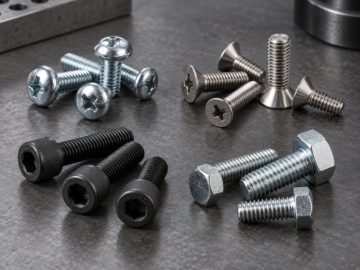
The stainless steel bolt category covers many head configurations, each suited to different assembly geometries and torque requirements:
- Hex head bolts — The workhorse for structural and industrial applications. Maximum wrench access, high torque capacity.
- Carriage bolts — Round head with a square neck that locks into wood or composite panels. Common in dock construction and wooden structures. The round head prevents wrenching for tamper resistance.
- Socket head cap screws (SHCSs) — Allen/hex drive for tight clearances. Popular in machinery and equipment. 316 socket head cap screws are ubiquitous in marine equipment and pump assemblies.
- Lag bolts — Large, coarse-threaded bolts that self-thread into wood. 316 stainless lag bolts are standard for decking and marine structure attachment.
- Eye bolts and J-bolts — Specialty configurations for rigging, cable attachment, and anchor applications.
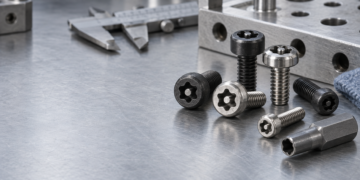
Drive system affects installation: hex drive requires open clearance, socket requires limited torque in small heads, Torx/star drive reduces cam-out in automated assembly. For high-volume production assembly, Torx-drive stainless steel bolts reduce stripped head failures significantly.
Avoiding Galling — The Silent Failure Mode
This is the section most fastener catalogs skip. Galling is a form of severe adhesive wear that causes stainless steel bolt threads to seize, weld together, and break during installation. According to Wikipedia’s overview of galling, it occurs when metal surfaces under sliding contact adhere at a microscopic level — and austenitic stainless steel is particularly susceptible because its passive layer wears away under thread friction before it can rebuild.
In practice: you’re torquing a 316 stainless hex bolt into a 316 stainless nut, everything feels fine, and at 85% of target torque the bolt simply snaps. Or worse — it doesn’t snap, but you can’t remove it without destruction. Galling is most common in stainless-on-stainless thread pairs.

How to prevent galling in stainless steel bolt applications:
- Use anti-seize compound. Molybdenum disulfide or nickel-based anti-seize (e.g., Never-Seez) applied to threads reduces friction dramatically. Reduce target torque by 25–30% when using anti-seize — the lower friction transmits more clamping force per unit of applied torque.
- Pair different stainless grades. A 304 bolt with a 316 nut, or vice versa, significantly reduces galling risk compared to same-grade pairs.
- Control surface finish. Electropolished or well-finished thread surfaces gall less than rough, as-machined threads.
- Slow installation speed. Galling is friction-heat dependent. Slow, controlled installation — especially hand-tightening the first few turns — reduces the heat buildup that triggers adhesion.
- Use wax or PTFE thread tape for low-torque connections. Not suitable for structural joints, but effective for plumbing and hydraulic fittings where thread loads are moderate.
Stainless Steel Bolt vs Other Bolt Materials
A stainless steel bolt is not always the right tool for the job. Understanding how it compares to carbon steel, zinc-plated, and other corrosion-resistant alternatives prevents both under-specification and costly over-specification.
Table 3: Stainless Steel Bolt vs Competing Fastener Materials
| Material | Min Tensile (psi) | Corrosion Resistance | Best Environment | Rough Cost Index | Galling Risk |
|---|---|---|---|---|---|
| Grade 304 stainless | 75,000 | Good — outdoor, general | Indoor, outdoor, dry/humid | 1.0× | Medium-High |
| Grade 316 stainless | 75,000 | Excellent — chloride resistance | Marine, chemical, food | 1.4× | Medium-High |
| Grade 8 carbon steel | 150,000 | Poor (coating only) | High-load, dry/sheltered | 0.5× | Low |
| Grade 5 carbon steel | 120,000 | Poor (coating only) | General structural, dry | 0.35× | Low |
| Hot-dip galvanized | 120,000 | Good — outdoor | Structural, concrete anchors | 0.6× | Low |
| Silicon bronze | 60,000 | Excellent — seawater | Marine, electrical, artistic | 2.0× | Very Low |
| Titanium (Gr 5) | 130,000 | Exceptional | Aerospace, medical, exotic | 8× | Very Low |
Stainless Steel vs Grade 8 Carbon Steel
The comparison buyers get wrong most often. According to data from Portland Bolt’s fastener reference, standard 304/316 stainless steel bolts have a minimum tensile strength of 75,000 psi. Grade 8 alloy steel bolts spec at 150,000 psi minimum — exactly double. The yield strength gap is proportionally similar.
This means a stainless steel bolt handling a structural load needs to be oversized — roughly 40% larger cross-section — to carry the same safe working load as a Grade 8 bolt. In space-constrained, high-load joints, stainless may simply not fit. A 5/8″ Grade 8 bolt can be replaced by a 3/4″ or 7/8″ 304 stainless bolt for equivalent load capacity, but that changes the joint geometry.
The Engineering Toolbox’s tensile strength specifications confirm that even the highest-strength standard stainless grade (410, fully hardened) reaches only about 125,000 psi — still below the Grade 8 baseline.
When stainless wins over Grade 8: corrosion is the primary failure risk, strength requirements are moderate, and service access for re-tightening or replacement is difficult (buried bolts, underwater, behind panels).
When Grade 8 wins: high cyclic loads, space-constrained joints, vibration environments with precision preloads, or low-corrosion indoor environments. Grade 8 coated with zinc + a beeswax lubricant outperforms stainless at a quarter of the cost in most sheltered structural applications.
Galvanic Corrosion — What Metals Pair Safely with Stainless
Stainless steel sits high on the galvanic series — it’s electrochemically “noble.” When a stainless steel bolt contacts a less noble metal (aluminum, zinc, carbon steel) in the presence of an electrolyte (moisture, saltwater), the less noble metal corrodes preferentially. This galvanic corrosion can destroy aluminum structures, zinc-coated surfaces, and carbon steel components while the stainless bolt itself remains pristine.
Dangerous pairings in outdoor/marine assemblies:
- Stainless bolts in aluminum — classic problem in boat fittings. The aluminum corrodes around the fastener hole, causing loosening and structural degradation. Use isolation bushings or plastic washers to break the galvanic cell.
- Stainless bolts in carbon steel — the carbon steel corrodes; the bolt stays clean. Often overlooked in mixed-material fabrications.
- Stainless bolts in zinc-coated (galvanized) surfaces — the zinc coating sacrifices rapidly near the fastener. Acceptable in low-moisture environments; poor performance in wet exposure.
Safe pairings: stainless with stainless (galling risk — manage per above), stainless with silicon bronze (close galvanic potential), stainless with Monel, stainless with titanium.
Future Trends in Stainless Steel Bolt Technology (2026+)
The stainless steel bolt market is evolving. According to the global fastener industry analysis, the market for corrosion-resistant fasteners is projected to grow at approximately 4.8% CAGR through 2030, driven by offshore wind energy construction, semiconductor plant expansions, and aging infrastructure replacement programs.
Duplex and Super-Duplex Grades
Duplex stainless steels (2205, 2507) are gaining adoption in high-performance fastener applications. A duplex stainless steel bolt combines austenitic and ferritic microstructure, producing tensile strengths of 100,000–125,000 psi alongside corrosion resistance equal to or exceeding 316. The duplex grades are particularly resistant to chloride stress corrosion cracking — a failure mode that affects austenitic grades under simultaneous tensile stress and chloride exposure, like tightened bolts on a marine structure in warm saltwater.
For offshore oil and gas, desalination plants, and long-span bridge projects, duplex bolts are increasingly the specified standard rather than the exception.
Anti-Galling Surface Treatments
The fastener industry is responding to the galling problem with purpose-designed surface treatments. Teflon (PTFE) dry-film coatings reduce thread friction coefficients to below 0.08 — far lower than untreated stainless-on-stainless (0.15–0.30). These coatings eliminate the need for field-applied anti-seize in many applications, reducing variability in torque-tension relationships and simplifying quality control on production assembly lines.
Electroless nickel plating and hard chrome alternatives are also seeing renewed interest as ASTM develops updated anti-galling test standards (ASTM G98-23, ASTM G196), allowing buyers to specify galling resistance by test data rather than empirical experience.
FAQ — Stainless Steel Bolts

Q: Is stainless steel good for bolts?
Yes — stainless steel bolts are excellent for corrosion-resistance in moisture, chemical, and marine environments. The caveat is strength: at 75,000 psi minimum tensile (for 304/316), they’re roughly half the strength of Grade 8 carbon steel bolts. Correct application means choosing stainless where corrosion is the dominant failure risk and load requirements are moderate.
Q: When should you NOT use stainless steel bolts?
Avoid stainless steel bolts in: high-load structural joints where Grade 8 or alloy steel is sized to minimum-diameter specifications; applications requiring repeated torque cycling with stainless nuts (galling risk); direct coupling to aluminum in saltwater without galvanic isolation; and concentrated acid environments above the passive layer’s resistance ceiling.
Q: What are the disadvantages of stainless steel bolts?
Three principal disadvantages: (1) Lower tensile strength than alloy steel grades at equivalent diameter. (2) Galling risk — same-grade stainless threads seize under high torque or vibration without anti-seize treatment. (3) Cost — 304 costs roughly double grade-5 equivalents; 316 costs nearly triple.
Q: Are stainless steel bolts as strong as Grade 8?
No. Standard 304/316 stainless bolts spec at 75,000 psi minimum tensile versus Grade 8’s 150,000 psi — exactly half. Even Grade 410 martensitic stainless, fully hardened, tops out around 125,000 psi, still below the Grade 8 baseline. If you need Grade 8 strength with corrosion resistance, the closest alternatives are duplex stainless grades or alloy steel with specialty coating.
Q: What’s the difference between 304 and 316 stainless steel bolts?
Grade 316 adds 2% molybdenum to the 304 base composition, which dramatically improves resistance to chloride pitting. In marine splash zones, chemical plants, and swimming pools, 316 resists corrosion that would pit through 304 within a season. In dry or lightly humid indoor environments, 304 performs equivalently at 20–40% lower cost.
Q: How do I stop stainless steel bolts from seizing?
Apply a thin, even coat of anti-seize compound (molybdenum disulfide or nickel-based) to the threads before installation. Reduce target torque by 25–30% to compensate for lower friction. Consider pairing different grades (304 bolt, 316 nut) to reduce the adhesion tendency of identical alloy surfaces.
Q: What does “A2-70” mean on a metric stainless steel bolt?
“A2” identifies the alloy family (304/austenitic stainless); “70” identifies the strength class in 10-MPa units, meaning minimum 700 MPa tensile strength. A2-80 is the same alloy, cold-worked to higher strength (800 MPa). A4-70 and A4-80 are the equivalent 316-family grades under ISO 3506.
Conclusion
The stainless steel bolt is one of the most widely misspecified fasteners in construction and manufacturing. Defaulting to “stainless” without specifying grade, surface treatment, and mating material is how projects end up with 304 in marine applications (corrodes), wrong-grade bolts in food equipment (fails FDA audit), or seized fasteners that require destructive removal during first servicing.
The framework is straightforward: match grade to corrosion environment (304 for general, 316 for chloride, 410 for high-strength moderate-corrosion), address galling with anti-seize and grade pairing before installation, check galvanic compatibility with adjacent materials, and confirm your mechanical property requirements against the 75,000 psi ceiling that standard stainless imposes.
For complex applications — offshore, chemical processing, high-load structural — the duplex grades and specialty coatings available today close most of the gap between corrosion resistance and strength that has historically pushed engineers toward compromise. Get the specification right from the start, and a stainless steel bolt is genuinely a set-and-forget fastener for the life of the structure.
For more on fastener selection, explore our guides on flange bolt specifications and torque specifications for metric bolts.
Related Products
Solutions & Cluster
Related Articles
- Male to Female Hex Spacer: The Complete Guide to Types, Materials, Specs, and Industrial Applications
- Top Silicon Bronze Bolts for Durable and Reliable Fastening Solutions
- Anodised Screws & Fasteners: The Complete Guide to Anodising
- Nylon Spacers: The Complete Guide to Types, Sizes, and Applications
- Nylon Insert Lock Nuts: Complete Guide to Types, Sizes & Installation
- Security Bolts: Complete Guide to Types, Applications & Choosing the Right Fastener
- Anti Theft License Plate Screws: The Complete Buyer’s Guide (2026)
- The Complete Guide to Locking Nuts: Types, How They Work, and Choosing the Right One