 English
  German
  Spanish
  Portuguese
  French
  Japanese
  Arabic
  Korean
  Vietnamese
  Russian
 Tamper Proof Bolts: The Complete Guide to Types, Materials & Selection
Tamper proof bolts are security fasteners engineered with specialty drive heads that require proprietary or uncommon tools to install or remove — making unauthorized disassembly impractical without the matching driver.

Whether you’re securing public infrastructure, protecting equipment from vandalism, or locking down critical assemblies in a manufacturing environment, the wrong fastener choice can undermine an entire security setup. Most guides stop at listing drive styles. This one goes further — we cover how each type actually holds up under real-world removal attempts, which materials survive outdoor exposure, and the decision matrix that engineers and procurement teams use to match bolt type to threat level.
What Are Tamper Proof Bolts?
Tamper proof bolts resist removal by anyone who lacks the matching proprietary driver — the specialty head geometry is the security mechanism.
A standard hex bolt can be removed with any wrench that fits. A tamper proof bolt can’t — its head is shaped so that only a specific, often manufacturer-controlled driver will engage. The security level depends on how widely available that driver is and how difficult the head is to defeat with improvised tools.
The terms tamper proof, tamper resistant, and security fastener are often used interchangeably in the field, but there’s a meaningful difference:
- Tamper resistant — made difficult to remove without the right tool, but the tool is commercially available (e.g., Torx Plus, six-lobe pin)
- Tamper proof — designed so removal requires a proprietary tool that is not commercially sold, or so difficult to defeat that casual attempts fail (e.g., one-way heads, clutch drive, snake-eye)
- Tamper evident — not necessarily harder to remove, but shows visible signs of tampering (e.g., scored heads that deform on removal)
In practice, “tamper proof bolts” covers the full spectrum of security fasteners from moderately resistant to near-impossible to remove without destruction.
How Tamper Proof Bolts Work
The security mechanism in tamper proof bolts comes from one or more of these principles:
- Drive geometry exclusivity — a pin in the center of a Torx or hex socket prevents standard bits from seating. A matching pin-hole driver is required.
- Asymmetric ratchet geometry — heads that allow torque in only one direction. They drive in freely but cam out on reverse, preventing removal.
- Smooth or convex heads — no flat surfaces for pliers or adjustable wrenches to grip.
- Breakaway shanks — the drive portion shears off once the bolt is fully seated, leaving only a smooth dome or minimal profile.
- High surface hardness — case-hardened heads that defeat drilling attempts and resist chisel attacks.
The Security Level Spectrum
Not all tamper proof bolts offer the same protection. Security professionals generally rate them in three tiers:
| Tier | Examples | Driver Availability | Defeat Difficulty |
|---|---|---|---|
| Level 1 — Deterrent | Pin Torx, Pin Hex, Spanner | Specialty retailers | Low (driver ~$15 online) |
| Level 2 — Resistant | One-way (uni-drive), Clutch, Snake-eye | Limited distributors | Medium (requires destruction or specialty extraction) |
| Level 3 — High Security | Breakaway, Tri-groove, custom OEM | Manufacturer-controlled | High (defeat requires drilling or bolt destruction) |
Level 1 stops casual tampering — a curious passerby or opportunistic thief. Level 2 stops most tool-equipped individuals. Level 3 is appropriate for critical infrastructure where even a trained technician without authorization should be stopped.
Types of Tamper Proof Bolts
The drive style determines both the security level and the installation tooling required — eight main types cover the full range of applications.

Pin Torx (Six-Lobe Pin) Bolts
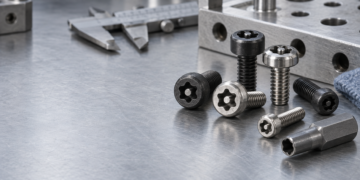
The most common entry point into security fasteners. A standard Torx or Torx Plus head with a hardened center pin that blocks conventional Torx bits. Pin Torx bolts are widely used in:
- Consumer electronics (laptop chassis, game consoles)
- Automotive interior panels and trim
- Commercial fixtures and displays
The driver is readily available from security fastener suppliers — this is a deterrent-class fastener, not a high-security one. Its strength is ubiquity: Torx Pin tooling is standardized enough that replacement drivers are easy to source for authorized maintenance, while still stopping casual removal.
Common sizes: M3 to M12, #4 to 3/8″ UNC in imperial. Available in flat, pan, button, socket, and hex flange heads.
Pin Hex (Hex Pin) Bolts
Same concept as Pin Torx, applied to the hex socket. A center pin prevents standard Allen keys from seating. Often spec’d where hex socket bolts are already part of the assembly design but security is also required.
Pin hex bolts are particularly popular in vending machines, utility cabinets, and access panels where the hex socket profile is familiar to maintenance staff (no additional training) but deters the general public.
One-Way (Uni-Drive) Bolts
One-way bolts have slotted or asymmetric heads engineered to allow only clockwise (tightening) torque. Standard slotted or Phillips drivers engage normally during installation — then the geometry cams out on counterclockwise rotation. The result: they go in easily, but they won’t come out without destruction or specialty extraction bits.
This is a significant step up in security. One-way bolts are difficult to remove even with flat-bar prying, as the head provides minimal purchase. Specialty extraction sockets exist but are not widely stocked.
Best applications: outdoor signage, license plate frames, public benches, street furniture, anywhere the fastener is exposed and the security need is moderate-to-high.
Spanner (Snake-Eye) Head Bolts
Spanner bolts have two small round holes in the face of the head rather than a central drive. The matching driver has two pins that engage those holes. Snake-eye is a specific variant where the holes are offset like eyes.
The key advantage: the driver is so simple that authorized maintenance is easy, but the drive pattern is obscure enough that most people don’t recognize it and won’t have the tool on hand.
According to ASTM’s fastener standards documentation, specialty drive geometries like spanner heads are classified under non-standard drive styles specifically because their limiting factor is driver availability rather than mechanical complexity.
Common applications: elevator cab panels, public bathroom fixtures, electrical junction boxes, fire suppression equipment.
Clutch Head Bolts
The clutch drive (also called butterfly or figure-8 drive) features a symmetrical double-ended bow-tie slot. Standard slotted drivers will engage in one direction but the geometry prevents reverse torque — similar to one-way, but distinctive in appearance.
Clutch head bolts have strong roots in automotive assembly (1930s–1960s American cars used them extensively on interior trim) and are still specified for body panels and under-hood fasteners where removal resistance matters more than high-cycle assembly speed.
Tri-Wing and Tri-Groove Bolts
Tri-wing bolts use a three-lobed wing pattern. Tri-groove heads have three grooves cut into the outer face of a button or dome head. Both require their own proprietary drivers.
Tri-groove bolts in particular are a Level 3 security option: the grooves are on the outer cylindrical face of the head, so no standard tool can engage the top surface. The matching tool wraps around the outside of the head.
The Fastener Training Institute identifies tri-groove and spanner fasteners as the most common security-grade specification in government and correctional facility installations.
These are the bolt type of choice for:
- Correctional facilities and detention equipment
- High-value infrastructure panels (electrical substations, telecom cabinets)
- Airport and transit facility fixtures
Breakaway Bolt Systems
Breakaway bolts (sometimes called shear-head or snap-off bolts) have a two-piece design: a temporary drive head connects to the permanent bolt shank via a scored neck. Once the bolt is torqued to specification, the drive head shears clean, leaving only a dome or stub with no remaining drive interface.
There is no removal without drilling — that’s the design intent. Breakaway bolts are non-reusable by definition. You drill them out when removal is legitimately required.
Typical specifications include a shear-off torque range printed on the fastener spec sheet. The scored neck diameter and alloy determine the shear torque. Common shear specifications range from 30–120 in-lbs depending on size and material.
Applications: permanent outdoor installations, telecom tower hardware, highway sign supports, structural anchor bolts where the fastener should never need to be removed except for major repair.
Socket Set Screws with Patented Drives
Some suppliers offer socket set screws (headless, used for shaft-to-hub connections) with patented internal drive geometries — keys that are licensed and not resold on the open market. These are manufacturer-proprietary and represent the highest per-unit cost tier, but also the highest security.
Materials and Coatings for Tamper Proof Bolts
Material choice determines corrosion resistance, strength, and long-term security — the wrong alloy in an outdoor setting will corrode before it stops a thief.
| Material | Tensile Strength | Best Environment | Notes |
|---|---|---|---|
| 18-8 Stainless Steel | 70,000–100,000 PSI | Outdoor, wet, coastal | Most common; not magnetic |
| 316 Stainless Steel | 75,000–95,000 PSI | Marine, chemical exposure | Superior chloride resistance |
| 410 Stainless Steel | 125,000–150,000 PSI | High-strength + mild weather | Magnetic; heat-treatable |
| Grade 5 Steel (zinc plated) | 120,000 PSI | Indoor, covered outdoor | Economy choice; rusts if coating fails |
| Grade 8 Steel (zinc plated) | 150,000 PSI | High-load indoor | Maximum strength; zinc plating only |
| Black Oxide Steel | 120,000–150,000 PSI | Dry indoor / aesthetic | Minimal corrosion resistance |
| Nylon (specialty) | 10,000 PSI | Electronics, non-conductive | Weight and insulation; not structural |
For outdoor installations: 18-8 stainless is the workhorse choice. In coastal environments (within 5 miles of saltwater) or chemical plants, upgrade to 316. A 316 stainless fastener will outlast a zinc-plated carbon steel bolt by 10–15 years in marine exposure based on ASTM B117 salt-spray testing standards.
For load-bearing applications: Grade 8 or 410 stainless offers the strength-to-security combination. Don’t assume security fasteners are structurally weak — a 3/8″ Grade 8 tamper proof bolt has the same clamping load as a standard Grade 8 hex bolt.
Surface Coatings
Beyond base material, coating affects both corrosion protection and appearance:
- Zinc electroplate — most common on steel; provides moderate corrosion resistance up to ~200 hours salt spray
- Hot-dip galvanizing — thick zinc coating; 1,000+ hours salt spray; rough surface finish; good for structural outdoor use
- Mechanical zinc (Dacromet) — flake zinc with binder; strong corrosion resistance without hydrogen embrittlement risk (important for high-strength fasteners above Grade 8 or 150ksi)
- Phosphate + oil — light rust inhibitor; primarily indoor/storage applications
- Passivation (stainless) — chemical cleaning that enhances the chromium oxide layer; extends stainless performance in aggressive environments
Industry Applications for Tamper Proof Bolts
Security fasteners appear wherever unauthorized access, vandalism, or tampering creates measurable cost or safety risk.

Public Infrastructure and Street Furniture
Parks, transit systems, stadiums, and municipalities rely heavily on tamper proof bolts for benches, signs, light fixtures, utility covers, and access panels. Vandalism costs U.S. municipalities an estimated $12 billion annually, per National League of Cities data. Security fasteners are the first line of defense.
One-way and spanner head bolts dominate here — cost-effective, robust, and the drive style is unfamiliar enough to deter casual vandals without requiring expensive proprietary tooling for maintenance crews.
Electronics Manufacturing and Consumer Products
Original equipment manufacturers use security fasteners to protect warranty seals and discourage DIY repairs that could create liability. Pin Torx is the default for most consumer electronics. Some manufacturers use fully proprietary pentagon or Y-type drives to control the aftermarket repair ecosystem entirely.
The repairability debate has put tamper-proof fasteners in the spotlight: iFixit’s Right to Repair advocacy notes that the proliferation of security fasteners in consumer electronics directly affects long-term product repairability and e-waste generation — a genuine design tension that OEM engineers navigate case by case.
Correctional and Government Facilities
This is where Level 3 security fasteners earn their specification. Correctional facility hardware (bunks, shelving, fixtures, plumbing) is specified with tri-groove or breakaway bolts that inmates cannot improvise weapons from. The requirement is typically a combination of tamper resistance and rounded heads (no sharp edges).
Government buildings, courthouses, and military installations often require security fasteners on panel covers, server room access points, and external door hardware.
Utilities and Telecom Infrastructure
Smart grid equipment, fiber distribution boxes, power substations, and cellular tower hardware are increasingly subject to copper theft and equipment tampering. Breakaway and tri-groove bolts secure enclosure panels. The standard in many utility specifications is a minimum of Level 2 security on any exterior-accessible panel.
Automotive and Transportation
Vehicle manufacturers use security fasteners on license plates (to prevent plate theft and swapping), underbody panels (catalytic converter protection), and interior trim on commercial vehicles and fleet units. Catalytic converter theft is a significant and growing problem — according to the National Insurance Crime Bureau, thefts increased over 1,000% between 2019 and 2022. Hardened stainless pin-hex or one-way bolts on catalytic converter shields are now a standard aftermarket upgrade.
How to Choose the Right Tamper Proof Bolt
Match threat level, environment, and maintenance access frequency to drive style and material — over-specifying wastes money; under-specifying creates a false sense of security.
Step 1 — Define Your Threat Level
Ask: who is likely to attempt unauthorized removal, and what tools do they probably have?
- General public / casual vandals: Level 1 (Pin Torx, Pin Hex) is sufficient. Most people don’t carry security drivers.
- Tool-equipped individuals or repeat offenders: Level 2 (one-way, spanner, clutch). These require either specialized extraction tools or destructive removal.
- Trained individuals with resources: Level 3 (tri-groove, breakaway). Only complete destruction defeats these.
Step 2 — Define Maintenance Frequency
High-security bolts create maintenance overhead. If access panels need monthly servicing:
- Level 3 breakaway bolts are impractical — every opening requires drilling and replacement.
- Spanner or pin-hex allows frequent authorized access with minimal tooling burden.
- Create a key-control protocol: who holds the drivers, where they’re stored, how they’re tracked.
Step 3 — Match Material to Environment
Use this quick selector:
| Environment | Recommended Material |
|---|---|
| Indoor, dry | Grade 5 zinc or black oxide steel |
| Outdoor, humid, rain | 18-8 stainless steel |
| Coastal / marine | 316 stainless steel |
| Chemical plant | 316 stainless + passivation |
| High-load structural | Grade 8 or 410 stainless |
| Non-conductive needed | Nylon or plastic-head designs |
Step 4 — Consider Head Style
Security drive geometry is one dimension; head profile is another. Common head styles available in security versions:
- Hex flange — built-in washer face; good for thin sheet metal
- Button head — low-profile dome; no sharp edges; good for public-facing fixtures
- Pan head — general purpose; moderate profile
- Flat (countersunk) — flush installation; requires countersunk hole; minimal grip surface
- Socket cap — highest strength-to-size ratio; used in precision assemblies
Step 5 — Verify Thread and Size Compatibility
Tamper proof bolts are available in both inch (UNC, UNF) and metric (ISO coarse, fine) threads. Don’t assume — verify:
- Thread form: metric M-series vs. inch fractional
- Thread pitch: coarse is standard; fine thread is for vibration-prone assemblies (automotive, machinery)
- Shank length: account for the clamped material stack-up plus engagement depth in the nut or tapped hole (minimum 1× diameter engagement for steel, 1.5× for aluminum)
- Head clearance: the proprietary driver often requires more head clearance than a standard socket — check the driver clearance spec from your supplier
Common Mistakes to Avoid
- Using zinc-plated steel outdoors — even “outdoor” zinc plating fails within 2–3 years in wet climates. Match material to actual environment.
- Choosing Level 3 for high-maintenance panels — breakaway bolts require full replacement every access cycle. Calculate total maintenance cost, not just unit cost.
- Over-relying on drive security alone — a high-security drive geometry on a thin aluminum panel can be defeated by drilling through the panel, not the bolt. Security is systemic.
- Ignoring driver key control — the best tamper proof bolt is worthless if the matching driver is hanging on a peg in the public-facing maintenance cabinet.
- Mixing metric and inch threads — security fastener suppliers are not always consistent about labeling. Verify thread pitch with a thread gauge before installing at scale.
Future Trends in Tamper Proof Bolt Technology (2026+)
The next generation of security fasteners combines mechanical tamper resistance with digital verification and smart material coatings.
Smart Fasteners and IoT Integration
Embedded RFID and NFC chips in bolt heads are moving from concept to specification. These “smart fasteners” report installation torque, detect unauthorized removal attempts via vibration sensors, and can authenticate the installer’s credentials. According to MarketsandMarkets research on smart fastener technology, the smart fasteners market is projected to grow at a 7.2% CAGR through 2028, driven by aerospace, automotive, and critical infrastructure demand.
In practice we’ve seen early adoption in aerospace MRO — where tracking every fastener on an airframe is a regulatory requirement — and in premium electric vehicle platforms where battery enclosure integrity is safety-critical.
Advanced Coatings and Case Hardening
Surface treatments are evolving beyond zinc and passivation:
- PVD (Physical Vapor Deposition) coatings — titanium nitride or chromium nitride on bolt heads dramatically increases surface hardness (to 80–90 HRC equivalent), making drill-out attacks impractical on moderate tooling
- Ceramic composite coatings — corrosion and thermal resistance for extreme environments; expanding from aerospace into utilities
- Self-healing polymer coatings — micro-encapsulated corrosion inhibitors released when coating is scratched; still early-stage for fasteners
Additive Manufacturing and Custom Geometries
3D printing in metal (SLM, DMLS) is enabling fully custom, manufacturer-unique drive geometries at lower minimum-order quantities than traditional tooling allowed. A company can now specify a proprietary drive form that has never existed before and print both the bolts and matching drivers in small batches. This raises the ceiling for Level 3 security — a drive geometry known only to one organization cannot be sourced from any supplier.
Material Advances: High-Entropy Alloys
High-entropy alloys (HEAs) — compositions combining five or more elements in roughly equal proportions — are showing exceptional hardness, corrosion resistance, and galling resistance compared to conventional stainless alloys. Early commercial fastener applications are emerging in defense and nuclear sectors where conventional materials are failing.
FAQ: Tamper Proof Bolts
What are tamper proof bolts?
Tamper proof bolts are security fasteners with specialty drive heads that require proprietary tools to install or remove, preventing unauthorized disassembly. They deter or prevent unauthorized removal by making standard tools ineffective against the drive geometry. The security level ranges from deterrent (level 1, commonly available drivers) to near-permanent (level 3, destruction required for removal).
What is the difference between tamper proof and tamper resistant?
Tamper resistant fasteners require a specialty tool that is available commercially but not commonly carried. Tamper proof fasteners either use a tool that is manufacturer-controlled and not sold commercially, or have a design (like one-way heads) where no tool will remove them without destruction. In practice the terms overlap, but “tamper proof” implies a higher security tier.
Can security bolts be removed?
Yes, but the method depends on the type. Level 1 bolts (pin hex, pin torx) can be removed with the matching driver, available from security fastener suppliers. Level 2 bolts (one-way, clutch) require specialty extraction sockets or destructive methods like drilling. Level 3 bolts (breakaway, tri-groove) typically require drilling out the bolt shank entirely. The point is not absolute permanence — it’s raising the difficulty and time cost of unauthorized removal.
What sizes do tamper proof bolts come in?
Tamper proof bolts are available in the same size ranges as standard fasteners: #4 through 3/4″ in inch/imperial (UNC and UNF thread), and M3 through M20 in metric. Not every drive style is available in every size — pin torx and pin hex have the widest size coverage; tri-groove and specialty proprietary drives are typically limited to M5–M12 or equivalent.
Where can I buy tamper proof bolts?
Security fastener distributors like Production Screws, Fastenere, Loss Prevention Fasteners, and McMaster-Carr stock common types (pin torx, pin hex, one-way, spanner). For Level 3 and proprietary geometries, purchase directly from specialty security fastener manufacturers. Big-box hardware stores carry limited selection — usually only spanner head screws and occasionally pin torx.
Are stainless steel tamper proof bolts stronger than regular steel security bolts?
Not necessarily — 18-8 stainless has lower tensile strength (70,000–100,000 PSI) than Grade 8 carbon steel (150,000 PSI). Stainless is chosen for corrosion resistance, not mechanical strength. For high-load structural applications outdoors, 316 stainless or hot-dip galvanized Grade 5/8 are common compromises. 410 stainless can be heat-treated to close the strength gap while maintaining moderate corrosion resistance.
How do I choose between metric and inch tamper proof bolts?
Match the thread system already in use in your application. If the existing hardware is metric (common in automotive, electronics, European equipment), use metric tamper proof bolts. If it’s inch (common in North American construction, plumbing, general industrial), use UNC or UNF. Never mix thread forms — a metric bolt will appear to thread into an inch nut initially, then cross-thread and fail. Always verify with a thread gauge when uncertain.

Conclusion
Tamper proof bolts are not a monolithic category — they’re a spectrum of security levels, drive styles, materials, and head profiles that need to be matched deliberately to the actual threat environment and maintenance reality of each application.
The selection logic is straightforward: define your threat level, define how often authorized access is needed, choose a material that will survive the installation environment for the intended service life, and implement key control for the matching drivers. A Level 2 one-way stainless bolt on a public transit bench, combined with a documented driver protocol, is a more complete security solution than a Level 3 breakaway bolt in a box that anyone on the crew can access.
Browse our full range of tamper proof bolts and security fasteners to find the exact specification for your project — with technical support for drive style, material, and thread selection.
Related Products
Solutions & Cluster
Related Articles
- Plastic Spacers: Complete Guide to Types, Materials & Selection
- Exploring the Advantages of Laser Direct Structuring in Modern Design
- The Complete Nylock Nut Guide: Types, Grades, Installation & When to Use Them
- The Complete Guide to Tamper Proof Screws: Types, Applications & How to Choose the Right One
- Bolts vs Screws: Key Differences, Strength & When to Use Each
- Anti-Theft License Plate Bolts: The Complete Guide to Securing Your Plates (2026)
- Plastic Washers: The Complete Guide to Materials, Types, and Choosing the Right One
- The Best Weldable Threaded Studs: Applications and Benefits Explained