 English
  German
  Spanish
  Portuguese
  French
  Japanese
  Arabic
  Korean
  Vietnamese
  Russian
 Anti-theft license plate bolts are tamper-resistant fasteners that replace standard screws, requiring a proprietary or specialized removal tool — making license plate theft significantly harder for opportunistic thieves.
Your license plates are attached to your car with four ordinary screws. Right now. A thief with a $4 screwdriver from a gas station convenience store can remove both plates in under 30 seconds. In 2024, the NICB (National Insurance Crime Bureau) tracked over 128,000 license plate theft incidents in the US — a number that has climbed steadily as stolen plates fuel toll fraud, gas drive-offs, and hit-and-run cover-ups. Anti-theft license plate bolts exist to close that 30-second window entirely. This guide covers every type available, how to pick the right one for your vehicle, and how to install them yourself in under 15 minutes.

What Are Anti-Theft License Plate Bolts?
Anti-theft license plate bolts are security fasteners engineered with non-standard drive recesses, one-way ratchet profiles, or locking mechanisms that prevent removal without a matching proprietary tool. Standard license plate screws use Phillips or hex drives — any hardware store carries the bits. Anti-theft variants replace that drive geometry with something a casual thief won’t carry.
The concept is borrowed from tamper-evident fastener engineering used in electronics enclosures, electrical panels, and transit infrastructure. Applied to automotive license plates, the principle is the same: raise the effort threshold high enough that the attacker moves on to an easier target.
How They Work
Most anti-theft license plate bolts fall into one of two functional categories:
- Passive resistance — the drive geometry (spline, snake-eye, tri-groove) simply can’t be turned by standard bits. A thief using a flat-head or Phillips will strip out before disengaging the fastener.
- Active locking — the bolt uses a threaded insert or cap that physically locks the screw head. Removal requires both the correct driver and a specific rotation sequence or a capping tool.
The key engineering constraint is thread compatibility: virtually all passenger car license plate holes use either M6 × 1.0 metric threads (most imports and newer domestics) or 1/4-20 UNC threads (older US-spec vehicles). Anti-theft bolts must match this threading while adding the security element to the head.
What They Are Not
Anti-theft bolts are not impenetrable. A thief with 20 minutes, a drill, and a grinding wheel can defeat any fastener. The security model is deterrence, not absolute prevention — and against the vast majority of opportunistic plate thieves (grab-and-go in a parking lot), raising removal time from 30 seconds to 5+ minutes is effectively 100% effective. Organized theft rings targeting specific plates are a different threat model entirely.
Thread Sizes and Compatibility
| Vehicle Type | Thread Standard | Common Bolt Length |
|---|---|---|
| Most Japanese/Korean imports (Toyota, Honda, Hyundai) | M6 × 1.0 | 16–20 mm |
| Most European cars (BMW, VW, Mercedes) | M6 × 1.0 | 16–20 mm |
| US-spec trucks and older domestic cars | 1/4-20 UNC | 5/8–3/4 inch |
| Motorcycles (varies widely) | M5 × 0.8 or M6 × 1.0 | 12–16 mm |
When in doubt, remove one of your existing plate screws and bring it to a hardware store for thread matching before purchasing anti-theft bolts. Installing the wrong thread pitch risks cross-threading the car’s bumper mounting hole — an expensive repair that costs far more than the plates themselves.
Types of Anti-Theft License Plate Bolts
The market offers roughly six distinct drive security approaches. Each has different tradeoffs in security level, tool availability (how easy is it for a thief to buy the right bit?), and installation convenience.

1. One-Way (Ratchet) Screws
The simplest and most widely available anti-theft option. One-way screws have a modified Phillips or slotted head with angled flanges: a standard screwdriver can turn them clockwise (installation) but the flanges skip under counterclockwise (removal) torque. There’s no special tool required to install, but a flat-head screw extractor can still remove them if someone knows the trick.
Best for: Budget-conscious owners, renters who can’t drill holes, light-duty protection.
Weakness: Experienced thieves know about the screw extractor workaround. Not suitable for high-theft areas.
2. Spline Drive (Torx Pin / Pin-in-Hex) Screws
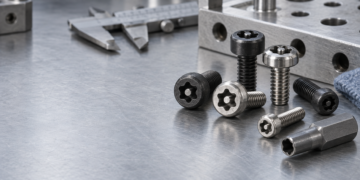
A standard Torx or hex socket with a pin in the center that blocks conventional bits. The matching driver is a Torx-plus or hollow hex bit with a central hole. These are common on electronics and appliances, which means the bits are available at major hardware chains — but not at every gas station or dollar store. Removal time for a typical thief rises from seconds to “I need to go buy something specific first.”
Best for: Most passenger cars. Excellent balance of security and value ($8–$18 for a 4-pack with driver).
3. Snake Eye / Pig Nose Screws
Two circular holes instead of a drive recess. Requires a forked driver that engages both holes simultaneously. These bits are genuinely uncommon — not carried at most hardware stores. The downside is that the holes can be defeated with a small punch and hammer, turning the fastener into something removable with an adjustable wrench.
Best for: High-visibility deterrence; the unusual appearance alone discourages casual thieves.
Weakness: Punch-and-turn attack is a known defeat method.
4. Tri-Groove (3-Prong) Bolts
Three radiused grooves arranged symmetrically around a center pin. The matching driver is a proprietary three-pronged tool. Tri-groove fasteners are genuinely difficult to source removal tools for on short notice — and the grooves are too shallow to grab with pliers without stripping. This is the format used by McGard (a division of Illinois Tool Works) in their license plate security systems.
Best for: Maximum deterrence short of a locking cap system. Moderately priced ($15–$30 per set).
5. Spanner / Two-Hole Screws
Similar to snake-eye but with elongated oval drive holes. Require a spanner driver. These are more common in commercial applications (restroom hardware, signage) which means the bits are easier to find at large hardware retailers. Still significantly more secure than standard Phillips or hex.
6. Locking Cap Bolts
A separate threaded aluminum or zinc alloy cap threads over the installed bolt, covering the head entirely and introducing a second locking step. Some systems (like the Cruiser Accessories “McGard Locks”) use a keyed cap that can only be removed with the matching key socket. This is the highest-security format — and the most expensive ($25–$50 per set).
Best for: Owners in high-theft metro areas, commercial vehicles, fleet operations.
Note: The key socket should be stored separately from the vehicle — not in the glovebox.
| Type | Security Level | Tool Availability | Price (4-bolt set) | DIY Install |
|---|---|---|---|---|
| One-way ratchet | ★★☆☆☆ | No tool needed | $5–$12 | Yes |
| Spline / Pin-in-Hex | ★★★☆☆ | Hardware chain | $8–$18 | Yes |
| Snake eye / Pig nose | ★★★☆☆ | Specialty order | $8–$16 | Yes |
| Tri-groove | ★★★★☆ | Specialty/OEM | $15–$30 | Yes |
| Spanner two-hole | ★★★☆☆ | Hardware chain | $8–$20 | Yes |
| Locking cap (keyed) | ★★★★★ | Proprietary key | $25–$50 | Yes |
Why License Plate Theft Happens — and Why It Matters
Understanding the threat model helps you choose the right security level. Stolen plates are almost never used by collectors. They’re working tools for crime.
The Common Uses for Stolen Plates
Toll fraud is the most common driver. A stolen plate is photographed by EZ-Pass cameras, toll plazas, and license readers. The resulting fines go to the registered owner of the stolen plate — not the thief. According to the AAMVA (American Association of Motor Vehicle Administrators), toll-linked plate theft incidents increased 34% between 2021 and 2024 as cashless tolling expanded nationally.
Gas drive-offs rank second. A plate from a different state or county is hard to quickly verify at the pump. Thieves steal a plate, fill up, and swap back or ditch it.
Hit-and-run cover. A stolen plate on a vehicle involved in a collision redirects police to the wrong registered owner. Investigators typically figure this out eventually, but it costs the innocent owner weeks of legal stress and potential insurance complications.
Vehicle cloning is the most serious scenario. Thieves steal plates matching a specific make/model/color, attach them to an unregistered clone vehicle, and use it for anything from running red lights to serious crimes. The registered owner gets the citations — and sometimes worse.
Your Legal Exposure as the Victim
Here’s what most plate-theft guides miss: you can still get fined even after reporting the plates stolen. If a toll-booth camera photographs your stolen plate before you’ve filed a police report and notified the relevant toll authority, you’ll receive a bill. The dispute process works, but it takes time, paperwork, and follow-up calls. Insurance policies vary on whether they cover the administrative costs.
The moment you notice a stolen plate, call local police and file a report — the report number is your primary defense document. Then call your state DMV and any toll agencies active in your area.
Replacement Costs
Replacing stolen plates costs between $15 and $35 for the plates themselves (DMV fee) plus any required sticker fees. That doesn’t count your time, the police report filing, or potential toll dispute paperwork. A $15 set of anti-theft bolts pays for itself the first time it discourages a theft attempt.
How to Choose the Right Anti-Theft License Plate Bolts
Not all bolts work on all vehicles. Here’s a systematic way to pick the right set.
Step 1: Match Your Thread
Use the table above. If you’re unsure, remove one existing plate screw and take it to a hardware store for thread gauging. Most automotive applications are M6 × 1.0 or 1/4-20.
Step 2: Pick Your Security Level Based on Your Risk Profile
- Suburban/low-crime area, one vehicle: Spline drive (pin-in-hex) is a good default. Cheap, effective against opportunistic theft, standard installation.
- Urban area or known high-theft zip code: Tri-groove or locking cap. The extra few dollars is worth having the highest deterrence per fastener.
- Fleet or commercial vehicles (multiple plates): Keyed cap systems where one key works all your fleet vehicles reduce operational complexity.
- Motorcycle: Confirm thread size carefully — motorcycles use M5 more often than M6. Consider a locking frame system in addition to security bolts.
Step 3: Check the Material
| Material | Corrosion Resistance | Hardness | Best For |
|---|---|---|---|
| 304 Stainless Steel | Excellent | Moderate | Most climates |
| 316 Stainless Steel | Superior (marine/road salt) | Moderate | Coastal / rust-belt regions |
| Zinc-plated steel | Fair (surface only) | High | Dry climates, short-term |
| Zinc alloy (die-cast) | Fair | Low | Budget, light duty |
| Case-hardened steel | Poor unless coated | Very high | Maximum drill resistance |
For most North American owners, 304 stainless is the correct default. It resists road salt, doesn’t corrode at the fastener-plate interface, and is harder than the zinc alloys used in low-end products. According to the SAE International Automotive Fastener Standard J429, stainless fasteners in outdoor automotive applications should meet a minimum 65,000 psi tensile strength — verify this in product listings when possible.
Step 4: Consider the Washer
A good anti-theft bolt set includes a nylon-backed stainless washer. The nylon prevents the metal washer from scratching your bumper finish and adds a small friction element that resists vibration loosening. Sets without washers often develop slight plate rattle within a year of installation.
Step-by-Step Installation Guide
Installing anti-theft license plate bolts is straightforward and requires no special automotive skill. Total time: 10–15 minutes for both front and rear plates.

What You’ll Need
- Anti-theft license plate bolt set (4 bolts minimum, 8 if doing front + rear on a US vehicle that uses 2 bolts per plate)
- Included proprietary driver bit
- Standard screwdriver or drill with bit adapter
- Torque specification: hand-tight + 1/4 turn (do not over-torque — you risk cracking the bumper mounting boss)
The Process
1. Remove the existing screws. Use a standard Phillips or hex screwdriver. If screws are rusted in place, apply penetrating oil (PB Blaster or similar) and let it soak for 5 minutes before attempting removal. Do not force corroded fasteners — you risk cracking the plastic bumper cover.
2. Inspect the mounting holes. Look for cracks, stripped threads, or debris. A cracked mounting boss will allow the new bolts to spin without gripping. If threads are stripped, a thread-repair insert (Helicoil) costs under $10 at an auto parts store and takes 5 minutes to install.
3. Thread the new bolts by hand first. Anti-theft bolts can cross-thread if started with a power driver. Always engage 2–3 full turns by hand before switching to the driver.
4. Drive to hand-tight + 1/4 turn. Most plate mounting holes are in plastic or soft aluminum. Over-torquing is the number one cause of installation failure. The bolt should feel snug with slight resistance at the end of the 1/4 turn — not strained.
5. Store the proprietary driver safely. Do NOT store the removal driver in your glovebox. If your car is broken into, the thief now has both the plates and the tool to steal them cleanly. Keep the driver with your spare key or at home.
6. Test fit and plate alignment. Plates should sit flush without bowing at the corners. If a corner lifts slightly, check that the mounting boss isn’t cracked or that the plate frame isn’t warped.
Installing on Plastic vs. Metal Bumpers
Most modern vehicles have plastic bumper covers over a steel beam. The plate mounts to the plastic cover, not the steel beam — meaning the thread is in a plastic threaded insert or a spring nut. These are more fragile than metal threaded holes:
- Use hand torque only. No impact drivers.
- If the insert spins, it’s already stripped. Repair with a snap-in nylon rivet nut before installing the new bolt.
- For plastic-threaded applications, consider a slightly larger diameter washer to distribute load and prevent pull-through.
Common Mistakes to Avoid
- Using thread-lock compound (Loctite): Counterproductive for license plates. If you ever need to remove the plate for a valid reason (renewal sticker, state inspection in some states), Loctite can make removal genuinely destructive.
- Installing without washers: The metal fastener head will eventually mar the plate frame and potentially scratch the paint around the mounting hole.
- Over-tightening: The most common error. Plastic mounting inserts crack silently — you won’t know until the plate rattles loose three months later.
Future of License Plate Security (2026+)
License plate security is evolving faster than most drivers realize, driven by the expansion of automated license plate readers (ALPRs) and digital plate technology.
Digital License Plates and New Theft Vectors
California, Michigan, Arizona, and several other states now permit digital e-plates — electronic display plates linked to a cloud system. Reviver, the primary manufacturer, reports their plates include GPS tracking and can be remotely reported stolen, displaying “STOLEN” on the plate face when flagged. As of Q1 2026, approximately 65,000 digital plates are registered in the US, according to the AAMVA’s annual digital plate adoption report.
Physical anti-theft bolts remain relevant even for digital plates: the bolt mounting pattern is identical, the physical theft scenario is unchanged, and removing a digital plate for use on a crime vehicle defeats the GPS tracking if the thief knows to destroy the electronics.
AI-Powered ALPR Expansion
The International Association of Chiefs of Police (IACP) estimates that by 2027, over 80% of US patrol vehicles will be equipped with ALPR cameras capturing plates at highway speed. This expansion actually increases the value of stolen plates for sophisticated criminals — a plate linked to a legitimate registered owner will pass automated scans that a clone or fake plate won’t. This may drive a secondary increase in plate theft even as overall crime deterrence improves.
RFID Embedded Plates
Several states are piloting embedded RFID chips in physical plates that can be read by fixed infrastructure sensors. Unlike visual ALPRs, RFID readers detect the chip ID regardless of plate condition (bent, dirty, partially obscured). If adopted nationally, this would reduce the utility of stolen plates significantly — the stolen plate’s chip ID would be flagged immediately on any RFID reader.
| Technology | Theft Deterrent Effect | Timeline |
|---|---|---|
| Standard ALPR (visual) | Low (stolen plate passes scan) | Current, widespread |
| Digital e-plates with GPS | High (plate flags itself as stolen) | Current, limited states |
| RFID-embedded physical plates | High (chip ID tracks separately from visual) | Pilot phase, 2026–2028 |
| Blockchain-linked plate registry | Moderate (chain of custody verification) | Experimental, 2027+ |
The practical takeaway: physical anti-theft bolts remain the most cost-effective protection layer available to individual owners today, and they’ll continue to be relevant regardless of the digital technology overlay. A stolen plate is a stolen plate — the extra step of needing a special tool before the theft is still valuable.
FAQ: Anti-Theft License Plate Bolts
Are there anti-theft license plate screws that actually work?
Yes — they work well against opportunistic theft. Pin-in-hex, tri-groove, and keyed cap designs raise removal time from 30 seconds to several minutes for anyone without the correct tool. No fastener is invulnerable to a determined attacker with power tools, but most license plate theft is opportunistic (parking lots, quick grabs), and raising the time threshold is highly effective for that threat model.
How do you remove anti-theft license plate screws once installed?
Use the proprietary driver bit that comes with the set. For pin-in-hex, that’s a hollow hex bit (Torx Plus for Torx-pin variants). For snake-eye, a forked spanner driver. For keyed cap systems, insert the key socket, turn counterclockwise. If you’ve lost your driver, the manufacturer’s part number (often printed on the packaging) can be ordered from the manufacturer directly or from specialty fastener suppliers. As a last resort, a screw extractor and left-hand drill bit will remove most hex-body anti-theft bolts, though this risks damaging the mounting hole.
What thread size do I need for my car?
Most Japanese, Korean, and European vehicles use M6 × 1.0 bolts. Most older US-spec vehicles (pre-2000 domestics) use 1/4-20 UNC. When unsure, remove an existing plate screw and bring it to a hardware store for thread matching. Installing the wrong size cross-threads the mounting hole — a repair that costs significantly more than new bolts.
How to stop thieves from stealing license plates effectively?
The most effective combination: anti-theft bolts (tri-groove or keyed cap type) + a license plate frame with integrated anti-theft tabs that cover the bolt heads. The frame provides visual obscuring of the bolt type, and the bolts prevent removal of both the frame and the plate together. For maximum deterrence, park in well-lit, camera-covered areas when possible — plate theft is almost exclusively a crime of opportunity.
Do anti-theft license plate bolts work on motorcycles?
Yes, but verify thread compatibility before purchasing — motorcycles commonly use M5 × 0.8 rather than M6 × 1.0. Many dedicated motorcycle security screw sets specify M5. The installation principle is identical, but torque values should be lower to protect lighter-gauge fender mounting points.
Can I install anti-theft license plate bolts myself?
Yes — no special tools or automotive skill required. The process is: remove existing screws, thread new bolts by hand, drive to hand-tight plus 1/4 turn with the included bit. Takes 10–15 minutes for both plates. The most common error is over-torquing into plastic bumper mounting inserts; always stop at hand-tight plus 1/4 turn.
Are anti-theft license plate bolts legal?
Yes, universally in the US. There is no state regulation prohibiting the use of security fasteners on license plates. The plates themselves must remain clearly visible and unobstructed (per most state vehicle codes), but the fastener type is unregulated. In fact, several municipalities have added license plate theft advisories recommending security screws specifically. The National Highway Traffic Safety Administration (NHTSA) has no restrictions on fastener type for license plate mounting.

Conclusion
Anti-theft license plate bolts are a small investment — typically $8 to $30 — that closes one of the most exploited vulnerabilities on any vehicle. The threat is real: over 128,000 plate theft incidents in 2024 alone, with stolen plates enabling toll fraud, gas drive-offs, hit-and-run escapes, and vehicle cloning that redirects legal consequences to innocent registered owners.
The right bolt for most owners is a stainless steel pin-in-hex or tri-groove set matched to your vehicle’s thread size (M6 × 1.0 for most imports and newer vehicles; 1/4-20 for older US-spec). Install them with the included driver, hand-tight plus a quarter turn, and store the driver away from the vehicle. That 15-minute task raises the effort threshold from 30 seconds with a gas-station screwdriver to several minutes with a specialty tool — effectively eliminating the opportunistic theft window that accounts for the vast majority of incidents.
For high-theft urban areas or fleet applications, step up to a keyed cap locking system. The proprietary key socket provides the highest deterrence currently available in the physical fastener category, and the modest additional cost is justified by the administrative headache of a single stolen plate incident.
Related Products
Solutions & Cluster
Related Articles
- Decorative Screws: Types, Finishes, Materials & Buying Guide
- Nylon Screws: Complete Guide to Types, Sizes & Applications (2026)
- The Complete Guide to Stainless Fixings: Grades, Types, and How to Choose Right (2026)
- UNC Thread: Complete Guide to Unified National Coarse Thread Standards
- U-Bolt Fasteners: The Complete Guide to Types, Sizes & Applications
- Essential Screws: Choosing the Right Fasteners for Your Projects
- Nyloc Nut: Types, Sizes, Standards & Buying Guide (2026)
- Plastic Spacers: Complete Guide to Types, Materials & Selection