 English
  German
  Spanish
  Portuguese
  French
  Japanese
  Arabic
  Korean
  Vietnamese
  Russian
 A security screwdriver is a specialized tool engineered to drive tamper-resistant fasteners whose non-standard recess geometry—center pins, asymmetric lobes, or proprietary profiles—prevents engagement by ordinary screwdrivers.

Picture this: you’re servicing a commercial kiosk, disassembling a PS5 for a drive upgrade, or maintaining elevator control panels on a building retrofit. Your full kit of Phillips, flathead, and standard Torx drivers sits uselessly in the bag. The screw heads look like Torx—but there’s a small pin protruding from the center. That’s a security screw. And without the matching security screwdriver, you’re not getting past it.
Security screws appear in places most people never think about until they’re standing in front of one: consumer electronics, public restrooms, transit stations, under-hood automotive assemblies, and critical infrastructure panels. The drive types vary. The logic behind each varies. The right security screwdriver for one job is completely wrong for another.
This guide covers everything: the engineering behind tamper-resistant fasteners, a complete taxonomy of security drive types with their specific bit designations, real-world industry applications, a practical buying framework, and where smart-fastener technology is heading in 2026 and beyond. After reading, you’ll be able to identify any security screw you encounter and reach for the correct bit without guesswork.
What Is a Security Screwdriver?
A security screwdriver is a driver tool designed specifically to engage tamper-resistant fastener heads that standard screwdrivers cannot turn. The tamper-resistance originates from intentionally non-standard recess geometry — a center pin that obstructs standard bit seating, an asymmetric lobe profile with no standard equivalent, or a completely proprietary drive shape that simply doesn’t exist in ordinary tool kits.
The core insight: a fastener’s security is only as strong as the rarity of the tool that drives it. Security screws shift access control from physical locks to fastener geometry.
The Engineering Behind Tamper-Resistant Fasteners
Standard screws fail on one security dimension: universality. A Phillips head works with any matching driver. A flathead works with coins, butter knives, and anything with a flat edge. Security screws fix this by introducing a recess that requires a specific, non-trivial tool.
The most prevalent engineering approach is the center-pin obstruction: a raised post in the center of an otherwise standard Torx or hex recess. A standard Torx bit has a solid tip that tries to seat inside the recess — the center pin blocks it. The hollow-tip security Torx driver is machined with a bore through the center of the tip that accepts the pin, allowing full seating and torque transmission.
Other approaches include:
– Asymmetric geometry (one-way screws): the recess accepts forward torque but cams out under removal torque — the screw goes in easily but won’t come back out without specialized tools
– Novel profiles (pentalobe, tri-wing): completely proprietary drive shapes that don’t correspond to any standard tool in circulation
According to the ISO screw drive standards published by the International Organization for Standardization, standardized recess geometry — like the ISO 10664 hexalobular profile that defines the Torx shape — creates interoperability. Security variants deliberately diverge from interoperability. That divergence is the product.
The engineering trade-off is explicit: a security screwdriver sacrifices universality for access control. You decide who can open what — and the fastener enforces it.
Security Screwdrivers vs. Standard Drivers: Core Differences
The differences extend beyond the tip. Here’s what matters on a real job site:
| Feature | Standard Screwdriver | Security Screwdriver |
|---|---|---|
| Drive tip geometry | Phillips, flathead, Torx, hex | Hollow Torx, pentalobe, tri-wing, pin-spanner, Y-type |
| Accessibility | Universal — any matching bit works | Restricted — requires proprietary or specialty bit |
| Primary use | General assembly and disassembly | Controlled access to protected assemblies |
| Cam-out behavior | High (especially Phillips) | Low — most security profiles are cam-out resistant |
| Bit material | Carbon steel or chrome-vanadium | S2 alloy steel or hardened chrome-vanadium |
| Typical cost per driver | $1–$15 | $8–$45+ per specialty bit |
| Where you find them | Every hardware store | Specialty tool retailers, electronics suppliers |
One thing that table doesn’t capture: you often don’t know which security drive you’re facing until you’re in front of it. That’s why a comprehensive security bit set — covering the major drive types across multiple sizes — is more practical than buying individual specialty drivers one problem at a time.
The Complete Taxonomy of Security Screw Drives and Their Drivers
There are more than 20 distinct security screw drive types in commercial use globally. Understanding the categories — not just memorizing names — lets you identify an unfamiliar fastener in the field and pull the correct bit without second-guessing.
Pin-in-Torx and Security Torx Plus
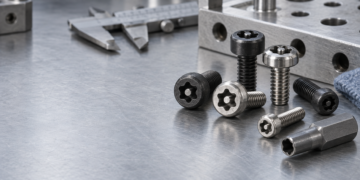
Security Torx (also called Torx with pin, designated as T__H, T__B, or TS depending on the manufacturer) is the single most common security drive type across industrial, automotive, and consumer electronics applications. The recess looks exactly like a standard Torx — six-lobe star profile — except a small cylindrical pin protrudes from the center, occupying the space a standard Torx tip needs to seat.
Without the hollow-tip security Torx driver, a standard T-bit makes contact with only the pin and cannot transfer torque. With the hollow-tip security driver, the pin slides into the bore, the lobes engage, and the fastener turns normally.
Practical size reference for security Torx:
– T6H, T8H: Consumer electronics — game controllers, earbuds, small laptop screws
– T10H, T15H: Gaming consoles (PS5 shell, Xbox internal brackets), appliances
– T20H, T25H: Automotive under-hood panels, industrial control enclosures
– T27H, T30H, T40H: EV battery management housing, heavy equipment, structural panels
Torx Plus TS (Tamper-Safe) uses the same pin-obstruction concept applied to the Torx Plus (IP) profile — an asymmetric seven-lobe variant that transmits 10–15% more torque at equivalent bit size compared to standard Torx. You find Torx Plus TS in medical device housings, defense electronics, and high-torque industrial assemblies.
In practice, stocking T6H, T8H, T10H, T15H, T20H, and T25H covers the vast majority of consumer electronics and light industrial security Torx encounters.
Pentalobe, Tri-Wing, and Y-Type Drives
These three drive types dominate consumer electronics — specifically Apple hardware and gaming equipment — and represent the category most first-time users of a security screwdriver are searching for.
Pentalobe is Apple’s proprietary five-lobe design, introduced in iPhone 4 hardware and extended to MacBook unibody cases. It has no ISO equivalent; Apple created it specifically to complicate third-party repair. Three practical sizes exist:
- P2 (also called TS1 or 0.8mm Pentalobe): The bottom screws on iPhone 4 through current iPhone models — this is the screw you hit before you can even open the device
- P5 (also called 1.2mm Pentalobe): MacBook Air unibody bottom panel screws
- P6 (also called 1.5mm Pentalobe): MacBook Pro Retina bottom panel screws — slightly larger than P5, not interchangeable
Tri-wing uses three asymmetric wings arranged at 120° intervals with no center pin. The asymmetric geometry prevents a flathead from engaging — rotating under flathead pressure immediately cams out. Common applications: older Nintendo Game Boy and DS cartridges, some HP laser printer assemblies, and a few legacy telecommunications housings. Key sizes: TW0 (smallest, cartridges), TW1 (larger assemblies).
Y-type (Y00, Y0, Y1) uses three symmetric lobes in a Y pattern — visually similar to tri-wing but with different angular geometry. The Y00 size appears inside the iPhone 7 and later models on the battery retention bracket screws. This is one of the most commonly missed drivers in electronics kits. Skip it and you cannot safely remove the battery without risking the battery ribbon cable. The Y0 and Y1 sizes appear in some Amazon Kindle models and budget Android tablets.
Hex Pin, Spanner Head, and One-Way Screws
This category covers drives designed for vandal resistance in public spaces and infrastructure — where the threat model is unauthorized tampering, not authorized service.
Hex pin (pin-in-hex): A standard hex socket with a center pin, requiring a hollow-tip hex driver. Sizes from 2mm to 10mm are common. Used in: public playground equipment (critical life-safety fasteners on climbing structures), elevator call panels, commercial HVAC unit housings, and utility meter enclosures. The hollow-tip hex drivers needed here are frequently confused with Allen keys — standard Allen keys won’t work.
Spanner head (two-hole / snake-eye): Two circular holes positioned diametrically opposite each other in the fastener head. Requires a spanner bit that bridges both holes simultaneously to transmit torque. Found in: public restroom toilet compartment hardware, ADA grab bars, commercial bathroom dispensers, prison cell hardware, and transit station seating. Sizes #4 through #12 are the practical range. A standard flathead drops into one hole but can’t engage the second — by design.
One-way screws: Designed with a forward-driving ramp and a reverse-camming ramp. A standard flathead (or in some designs, a specialty driver) drives the screw in — rotation is easy. Applying reverse torque causes the flat to cam out of the angled reverse face. These are removal-resistant, not access-controlled: once installed, extraction requires either a specialized one-way extractor bit, locking pliers on the head (if clearance exists), or a rotary cutting tool. Common in: street furniture, vehicle license plate frames (anti-theft), exterior door hinges in public buildings.
Here’s the full taxonomy for field reference:
| Drive Type | Key Identifier | Typical Application | Required Bit Designation |
|---|---|---|---|
| Security Torx T__H | 6-lobe Torx + center pin | Electronics, automotive, industrial | T6H through T40H (hollow-tip) |
| Torx Plus TS | Asymmetric 7-lobe + center pin | Medical, defense, aerospace | IP5TS through IP40TS |
| Pentalobe P2 | 5-lobe, 0.8mm | iPhone bottom screws (all modern models) | P2 / TS1 |
| Pentalobe P5 / P6 | 5-lobe, 1.2mm / 1.5mm | MacBook unibody bottom case | P5, P6 |
| Tri-wing | 3 asymmetric wings, no pin | Nintendo cartridges, HP printers | TW0, TW1 |
| Y-type Y00 | 3 symmetric Y-lobes, very small | iPhone 7+ battery bracket | Y00 |
| Hex pin | Hex recess + center pin | Playground, elevators, HVAC | HEX-P 2–10mm |
| Spanner / Snake-eye | Two circular holes | Restroom fixtures, transit, prison hardware | SP4 through SP12 |
| One-way | Angled ramp, reverse cams out | Street furniture, license plates, exterior doors | Extractor bit only |
| Security Robertson | Square recess + center pin | Canadian industrial / commercial | R1P, R2P, R3P |

Where Security Screwdrivers Are Used: Industry Applications
Security screwdrivers appear wherever fasteners are the primary defense against unauthorized access, tampering, or vandalism. The chosen drive type almost always maps to the threat model of the application.
Consumer Electronics and Gaming Consoles
Most people first encounter the need for a security screwdriver in electronics. Apple, Sony, Microsoft, and Nintendo all use proprietary or non-standard security drive types — partly for warranty and quality-control reasons, partly to steer users toward authorized service channels.
PlayStation 5 is the clearest example. The PS5 outer shell uses T8H (security Torx, size T8, with center pin) for the main panel screws. A standard T8 Torx driver cannot seat because the center pin blocks it. A T8H hollow-tip driver is the solution — it slides over the pin, engages the lobes, and allows normal removal. The internal storage expansion bracket uses T8H as well. The PS5 also uses T6H on certain internal ribbon cable brackets. Miss either driver and you’re done before you start.
iPhone models from the 4S onward use P2 pentalobe screws on the two bottom screws flanking the charging port — these are the first obstacle encountered in any iPhone teardown. The iFixit repair guide library documents teardown procedures for over 3,000 consumer devices; the iPhone repair section alone lists 14 separate screwdriver types used across the iPhone lineup, with pentalobe P2 appearing in every model after 2011.
iPhone 7 and later add the Y00 tri-point screw on the battery bracket. The bracket holds the battery connector ribbon in place. Attempt to pry the ribbon without loosening the Y00 screw and you risk tearing the connector — a repair-ending mistake. Y00 is not the same as a Phillips, a flathead, or a Torx — it needs its own specific bit.
MacBook Pro and MacBook Air models use P5 and P6 pentalobe screws on the bottom case, respectively. Torque spec matters here: the recommended installation torque for MacBook pentalobe screws is 0.3–0.4 N·m. Over-torquing rounds the lobe. A calibrated precision torque screwdriver or a quality ratchet with known tactile feedback prevents this.
The minimum electronics security screwdriver kit: P2, P5, T6H, T8H, T10H, Y00. That combination handles the majority of Apple, Sony PlayStation, and Microsoft Surface service scenarios without requiring multiple kit purchases.
Public Infrastructure, Utilities, and Transit
Here the threat model shifts from warranty protection to vandal resistance and theft prevention. Security drive types in infrastructure are selected for their resistance to improvised tools — someone with a flathead, a coin, or a pair of pliers should not be able to open a utility panel or strip a fixture.
Spanner-head (snake-eye) screws are ubiquitous in commercial restrooms. Toilet compartment hinges, paper towel and soap dispensers, grab-bar mounting hardware — all commonly use SP6 or SP8 spanner screws. Two-hole geometry defeats flatheads and most general bit sets that don’t specifically include spanner bits.
Hex-pin fasteners dominate elevator control panels, traffic signal cabinets, municipal utility enclosures, and rail transit equipment. Transit maintenance crews typically carry a dedicated hex-pin kit matched to their transit authority’s specified sizes rather than a general security set — the sizes are standardized within each transit system but differ between systems.
One commonly overlooked detail: outdoor municipal street furniture in most cities uses M8–M12 security hex-pin fasteners for bench legs, bollard bases, and public bike rack anchors. Replacement of a single vandalized park bench leg may require a 10mm hollow hex-pin driver unavailable at any retail hardware store — sourced only through specialized fastener distributors or municipal supply chains.
Automotive, Aerospace, and Industrial Equipment
Security Torx (T__H) drives dominate automotive applications where manufacturers want to discourage consumer-level disassembly of safety-critical components. Most common under-hood security Torx encounters:
- T20H: OBD-II port cover screws on select European models, airbag sensor bracket retention
- T25H: Airbag module housing screws (present in most major OEM platforms from 2015 onward)
- T27H: Battery management system enclosure screws on EV platforms including select BMW and Audi electric models
- T30H: Transfer case cover screws, differential inspection covers on 4WD trucks
The safety logic is explicit: airbag housings and HV battery enclosures carry genuine risk of injury if opened by unqualified technicians. Security Torx is one layer of protection — not a guarantee, but a meaningful deterrent.
In aerospace, fastener specifications fall under ASTM International standards covering structural bolt and fastener performance — including the AS9100 quality framework requirement for traceable fastener installation in aircraft assembly. Aerospace security fasteners are less about access control and more about preventing substitution: the wrong fastener grade in an airframe joint is a structural failure risk. Security drive types ensure that field substitution requires deliberate acquisition of the matching tool, reducing accidental interchange with off-spec hardware.
Industrial equipment — CNC machines, robotic assembly cells, industrial controller cabinets — typically uses Torx Plus TS (IP series, tamper-safe) in sizes IP10 through IP40. The Torx Plus profile transmits higher torque at equivalent bit size compared to standard Torx, reducing rounding risk in automated assembly. Servo motor covers, pneumatic manifold assemblies, and safety-rated controller housing panels in industrial settings commonly specify IP15TS or IP20TS for this reason.
How to Choose the Right Security Screwdriver or Bit Set
The buying decision comes down to three factors: drive-type coverage, bit quality, and handle ergonomics. Getting any one wrong costs real time the first job where the bit strips or the handle doesn’t give you enough torque.
Evaluating Bit Coverage and Drive-Type Range
For general-purpose security work, a quality set needs to cover at minimum six categories:
- Security Torx (T__H): T6H, T8H, T10H, T15H, T20H, T25H, T30H — these seven sizes cover electronics through heavy industrial
- Pentalobe: P2 (iPhone), P5 (MacBook Air), P6 (MacBook Pro) — all three are needed; none are interchangeable
- Tri-wing: TW0, TW1
- Y-type: Y00, Y0 — Y00 for iPhone battery screws specifically
- Spanner: SP6, SP8, SP10 — for restroom, transit, and public fixture hardware
- Hex pin: 2.5mm, 3mm, 4mm, 5mm, 6mm — for infrastructure and playground equipment
A set that genuinely covers all six categories with correct-size hollow-tip security Torx will handle the vast majority of consumer electronics, light industrial, and public infrastructure maintenance scenarios.
The key buying error with budget security screwdriver sets: many 40-piece or 60-piece sets marketed as “complete security screwdriver sets” include 15–20 redundant standard hex drivers and only 2–3 actual security Torx sizes. Read the bit inventory carefully. Look for the H suffix after the Torx size: T8H is security Torx with pin. T8 alone is standard Torx without pin — a completely different tool for this purpose.
Handle Design, Torque Capacity, and Build Quality
The driver handle affects both the work quality and the technician’s fatigue over a full day. Three specs worth checking before purchasing:
1. Handle diameter at grip point: 28–32mm diameter handles provide the leverage needed for industrial-size security Torx (T25H through T40H). Slim pencil-style handles in the 16–20mm range are adequate for precision electronics work (T6H, P2) where torque requirements are low and tactile feedback matters more than leverage. For a kit that crosses both domains, a handle with a large-diameter grip cap and a slim waist is the best compromise.
2. Bit steel specification: S2 steel (shock-resistant, Rockwell hardness C58–62) holds its edge longer than standard chrome-vanadium under regular torque cycling. For bits used constantly — T8H and T10H in an electronics repair shop — S2 is worth the cost premium. For occasional-use specialty bits (Y00, tri-wing TW0), standard CrV is adequate. Reputable brands (Wiha, Wera, Klein, iFixit Pro) publish the steel grade for their bit sets. If a set doesn’t mention steel grade, assume CrV at best.
3. Bit retention in handle: Magnetic bit retention works well for bench-top electronics work where bits are swapped frequently. Ball-detent retention prevents dropped bits in overhead work, confined-space maintenance, or any application where retrieving a dropped bit means disassembling something to get to it. For field technicians, ball-detent retention is worth seeking out.
Individual Drivers vs. Bit Sets: When Each Makes Sense
Most buying guides dodge this question. Here’s an honest breakdown.
Buy individual security screwdrivers when:
– You use one or two drive types constantly — a T10H precision driver with a dedicated handle outperforms a bit-in-holder for fine torque control on repeated electronics bench work
– You need a specific driver for a one-time field job and don’t want the overhead of a large kit
– Handle ergonomics genuinely matter for your daily use — dedicated handles are designed around one or two specific bit sizes, with better balance and grip for that work
Buy a comprehensive security bit set when:
– You service varied equipment and encounter different security drive types across different jobs
– Portability matters — one compact organized bit roll replaces twelve individual drivers
– Cost efficiency is a factor — a 40-piece quality bit set at $45–$80 costs substantially less than equivalent coverage in individual specialty drivers
The worst purchasing option: a cheap 100-piece bit set where the steel grade is unlabeled and the socket tolerances are loose. A loose-fitting security bit strips both itself and the fastener head. For tamper-resistant fasteners — especially pentalobe and tri-wing — a stripped screw head is extremely difficult to remove. The cost of one damaged fastener (requiring extraction tools, additional labor, possibly a replacement device housing) far exceeds the savings of a budget bit set. Quality matters more in security fastener work than in standard fastener work precisely because the screws are harder to recover from damage.

Future Trends in Tamper-Resistant Fastener Technology (2026 & Beyond)
The security screwdriver and tamper-resistant fastener categories are not static. Two developments are actively reshaping the field in 2026: tighter international standardization of existing security drives and the commercial emergence of smart fastener concepts previously limited to aerospace.
Emerging Security Screw Standards and Specifications
The ANSI and ISO technical fastener committees have been working through consolidation of the fragmented security screw taxonomy. Existing standards covering tamper-resistant fasteners (primarily under the ASME B18 series for fastener dimensions and performance) are being revised to include explicit performance benchmarks alongside geometry specifications.
What this means for procurement and specification in 2026–2027:
– Minimum cam-out torque thresholds before bit disengagement: currently not standardized, which means two “T10H” bits from different manufacturers can perform dramatically differently under high torque
– Pull-out resistance ratings for pin-obstructed drives: how much axial force is required to displace the bit from the recess — relevant for vibration-heavy industrial applications
– Lifecycle ratings — the number of drive-engage cycles before the security feature (the pin, the lobe geometry) degrades to the point of allowing standard-tool engagement
For infrastructure procurement teams specifying tamper-resistant fasteners on public projects, these incoming performance standards will simplify vendor qualification. You’ll specify a performance class rather than a specific brand’s proprietary drive designation.
Smart Fasteners and Digital Access Control
The concept of a smart fastener — one that records access events or requires digital authentication to allow engagement — has moved from aerospace laboratory prototypes into limited commercial production in 2026. Three categories of development are active:
RFID-embedded fastener heads: A small passive RFID tag molded into the screw head during manufacturing. An RFID reader built into the driver handle verifies authorization before the driver’s powered torque mode engages. Pilot deployments are active in high-value asset protection — server room rack equipment, medical imaging devices, and controlled pharmaceutical storage units.
Torque-logging smart drivers: Impact and precision drivers with embedded sensors that log each fastener installation event — timestamp, torque value, operator credential, GPS location. These are in active production for EV battery pack assembly lines where quality traceability is a regulatory and warranty requirement. ASTM International’s fastener quality standards increasingly reference electronic traceability in manufacturing contexts.
Digital-key drive profiles: A small electronic authentication chip embedded in both the driver handle and the fastener head. The fastener’s drive recess includes a mechanical locking element that stays engaged (preventing bit seating) until the paired driver’s chip transmits the correct authentication signal. Currently in R&D and limited-pilot deployment for critical infrastructure — utility substation panels, data center access points.
| Technology | Current Adoption Level | Projected Broad Deployment | Primary Application |
|---|---|---|---|
| RFID-embedded fastener | Aerospace, defense, medical devices | 2029–2031 | High-value asset protection |
| Torque-logging smart driver | EV battery pack assembly lines | 2026–2028 | Manufacturing quality traceability |
| Digital-key drive profile | R&D stage, limited pilots | 2030+ | Critical infrastructure panels |
| Standard security Torx (T__H) | Universal across all industries | Mature — present now | Electronics, automotive, general industrial |
| Pentalobe (Apple) | Consumer electronics (Apple ecosystem) | Mature — present now | iPhone, MacBook service access control |
The economics of smart fasteners remain the primary barrier. Cost per unit is currently 15–80× that of conventional security screws. But electronic component cost curves follow predictable trajectories — the same economic pattern that made RFID access cards mainstream in a decade.
Frequently Asked Questions About Security Screwdrivers
What is a security screwdriver used for?
A security screwdriver drives tamper-resistant screws that standard drivers cannot engage. It’s used for consumer electronics repair (iPhones, PS5, MacBooks), public infrastructure maintenance, automotive service on safety-critical components, and any application where fastener access must be restricted to specific tools or authorized personnel.
What security screwdriver do I need for a PS5?
The PS5 outer shell uses T8H security Torx screws — T8 size, with center pin. A standard T8 Torx will not seat because the pin blocks the solid tip. You need a T8H hollow-tip security driver. The internal storage expansion bracket also uses T8H, and the ribbon cable brackets use T6H. A two-piece T6H + T8H kit handles full PS5 disassembly.
What is the difference between Torx and security Torx?
Standard Torx (T designation: T6, T8, T10, etc.) uses a six-lobe star recess with a solid center. Security Torx (T__H designation: T6H, T8H, T10H) uses the identical six-lobe profile with a center pin protruding from the recess. The pin fills the void that a standard Torx tip requires to seat — making the standard bit non-functional. Security Torx requires a hollow-tip driver machined to accept the center pin through its bore.
Can a regular screwdriver open a security screw?
For most security drives: no. The center-pin obstruction in security Torx physically prevents standard bits from seating. Pentalobe and tri-wing profiles have no standard equivalent — a flathead or Phillips will cam out immediately and may damage the screw head. One-way screws technically accept a driver for installation but are designed to cam out under removal torque by geometry.
What security screwdriver bits are most commonly needed?
For electronics: T8H, T10H (gaming consoles and laptops), P2 pentalobe (iPhone), P5/P6 pentalobe (MacBook), Y00 tri-point (iPhone battery bracket). For public infrastructure: SP6, SP8 (spanner bits for bathroom fixtures and transit hardware), hex pin 4mm and 5mm. For automotive: T20H, T25H, T27H cover the most common under-hood security Torx applications.
Are security screwdriver sets available at Home Depot or Lowe’s?
Basic security Torx (T__H) and hex-pin bits are stocked at major hardware retailers. Specialty bits — pentalobe, tri-wing, and Y-type — are rarely available in-store. These are sourced through electronics tool suppliers, specialty online retailers, or the manufacturer’s own service kits. A comprehensive security screwdriver set covering all major drive types is typically purchased online for full coverage.
How do you remove a stripped security screw?
Options, in order of least to most invasive: (1) a rubber band or steel wool pressed against the recess increases friction — often enough to turn a lightly stripped security Torx; (2) a stripped-screw extraction bit set sized to the fastener diameter — these have left-hand spiral flutes that bite into the stripped recess under removal torque; (3) locking pliers on the head if clearance exists (only for pan or button heads, not countersunk); (4) rotary cutoff tool to create a flathead slot as a last resort. For pentalobe and tri-wing screws with damaged lobes, extraction bits designed for small electronics fasteners are the most viable path.

Conclusion
The security screwdriver category is broader than most technicians expect when they first encounter a fastener that won’t yield. The underlying principle is straightforward — non-standard geometry requires a matching tool — but the implementation spans more than 20 distinct drive types serving electronics, infrastructure, automotive, aerospace, and industrial applications, each with a different threat model and different tool requirement.
The practical framework: identify the drive type first (is there a center pin? how many lobes? is the profile symmetric?), then match the bit designation to what you’re looking at. Security Torx T__H covers most industrial and automotive encounters. Pentalobe P2/P5/P6, Y00, and tri-wing cover the Apple and gaming console territory. Spanner and hex-pin bits handle public infrastructure.
For purchasing, a quality security bit set with accurate coverage across the six main categories — paired with a quality ratcheting handle — outperforms a collection of individual specialty drivers for most use cases. Quality matters more here than in standard fastener work: stripped security screws are significantly harder to recover from than stripped Phillips heads.
Explore production-grade fastener solutions for industrial and commercial applications for sourcing security fasteners in volume, or continue with the resources below to deepen your knowledge of specific fastener categories.
Related Articles
- Tamper-Resistant Screws: Complete Guide to Types and Specifications
- Torx vs. Torx Plus: Drive Profile Comparison for Industrial Use
- Flange Screws and Their Applications in Structural Fastening
- How to Select the Right Fastener for Public Infrastructure Projects
- Security Fasteners for Transit and Utility Applications: Material and Grade Guide