 English
  German
  Spanish
  Portuguese
  French
  Japanese
  Arabic
  Korean
  Vietnamese
  Russian
 One-way screws are tamper-resistant fasteners that install with a standard driver but cannot be removed with conventional tools — making them the preferred choice for securing public fixtures, outdoor hardware, and any application where theft or vandalism is a persistent concern.
You’ve probably walked past thousands of them without noticing. The screws holding the mirror in a public restroom. The bolts anchoring a park bench to the ground. The fasteners keeping a license plate frame in place. These are one way screws — and their unremarkable appearance is entirely intentional.
Unlike specialty tamper-resistant screws that require exotic bit types, one way screws work through a deceptively simple mechanism: a head geometry that lets any standard driver push in, but slips harmlessly when turned in reverse. The result is a fastener that installs in seconds and resists unauthorized removal indefinitely.
This guide covers everything you need to know about one way screws: how they work, the main types available, where they’re deployed across industries, how to select the right specification, and — for the times you genuinely need to undo them — what removal methods actually work.

What Are One Way Screws?
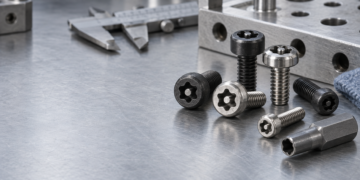
One way screws (also called one-way security screws or tamper-proof screws) are threaded fasteners engineered with an asymmetric head that allows installation in one direction only. The clockwise driving motion engages cleanly; the counterclockwise removal motion causes the bit to slip without gripping.
That single mechanical property — directional torque grip — changes the entire security equation for a fastener. According to Wikipedia’s overview of tamper-resistant fasteners, one-way screws represent one of the most cost-effective tamper-proofing strategies available because they require no special installation tooling and add minimal unit cost.
How One Way Screws Work
The mechanism behind one way screws is simple but precise. The head incorporates angled or curved driving surfaces — often called “cam-out ramps.” When a bit turns clockwise, it contacts the vertical face of each cam, generating full torque for installation. When the bit reverses, it rides up the angled ramp and exits the slot rather than engaging the fastener.
Different head designs achieve this in different ways:
- Slotted one-way heads: The slot walls are asymmetric. One side sits at 90° to the bit (grips on drive); the other is an angled ramp (slips on reverse). From above, the slot looks slightly wider on one side — the only visible tell.
- Spanner and snake-eye heads: Two small holes or pins accept a specialized driver, with no conventional slot or recess at all. Security here relies on obscurity rather than pure geometry, but the functional result is the same.
- One-way hex or socket heads: The driving recess is shaped so standard hex bits can drive in but strip out on reversal. Common in higher-security structural applications.
As documented in Engineering Toolbox’s fastener specifications, screw head geometry is the primary determinant of drive performance — and one-way designs deliberately exploit that geometry.
One Way Screws vs. Standard Screws
| Feature | Standard Screws | One Way Screws |
|---|---|---|
| Installation tool | Any matching driver | Standard flat, Phillips, or Torx |
| Removal tool | Any matching driver | Specialized extractor or none |
| Re-usability | Yes | No (intended as permanent) |
| Tamper resistance | None | High |
| Visual appearance | Conventional | Nearly identical to standard |
| Cost premium over standard | Baseline | Typically 2–4× |
| Common head styles | Phillips, Torx, slotted, hex | Slotted one-way, spanner, hex one-way |
The cost delta is real but often overstated. For most applications, one way screws represent a tiny fraction of total installation cost while providing long-term protection against expensive vandalism or theft. A single stolen public mirror ($80–400 replacement) costs far more than the incremental price of tamper-proof fasteners.
Types of One Way Screws
The category “one way screws” covers several distinct head designs, each with different strengths. Matching the right type to your application is the first specification decision to get right.
Slotted One-Way Screws
The most widely produced one way screws use a modified slotted head. To the naked eye, they’re nearly indistinguishable from conventional flat-head screws — a deliberate design choice that adds visual obscurity on top of the mechanical tamper resistance.
The functional difference is in the slot geometry. On a standard flat-head screw, both slot walls are vertical, allowing a flat driver to generate equal torque in both directions. On a slotted one-way screw, one wall is vertical (the drive face) and the other is a shallow ramp (the slip face). Clockwise: full engagement. Counterclockwise: the driver rides out.
These are the correct choice for:
– Public restroom hardware — mirrors, dispensers, partition mounting
– Outdoor signage and regulatory placards
– License plate security applications
– Any installation where nothing should visually stand out
Material availability: Slotted one-way screws are stocked in zinc-plated steel (#6 through 1/2″), stainless steel 304 and 316, and occasional brass for decorative applications.
Phillips One-Way Screws
A subset of one way screws uses a modified Phillips (cross) recess. These combine the universal familiarity of Phillips drive with one-way geometry. Electricians and contractors installing panels in semi-public spaces often prefer these because a Phillips appearance draws less curiosity than an unfamiliar head type.
The tradeoff is straightforward: a standard #2 Phillips driver installs them cleanly but cannot remove them. That is exactly the design intent.
Hex Socket and Spanner One-Way Screws
For higher-security targets — ATMs, utility enclosures, transit car interiors — hex socket one-way screws or spanner designs provide greater resistance. These are true security fasteners: the drive recess is either non-standard or designed to resist all conventional tools, not just reverse-drive attempts.
Spanner screws, in particular, have no flat surface at all. The two small holes accept only a matching spanner bit. Security here is behavioral — the deterrence lies in the unfamiliarity of the tool requirement, which accounts for the vast majority of casual tampering attempts.
One-Way Screw Head Type Comparison
| Type | Head Style | Drive Tool | Tamper Resistance | Best Application |
|---|---|---|---|---|
| Slotted one-way | Flat-head appearance | Flat driver | Medium | Restrooms, signage, public fixtures |
| Phillips one-way | Cross recess | Phillips #2 | Medium | Electrical panels, cabinets, frames |
| Spanner / snake-eye | Two-hole round | Spanner bit | Medium-high | Vandal-prone outdoor hardware |
| Hex one-way socket | Hex socket | Hex key (install only) | High | ATM panels, transit interiors |
| Tri-groove one-way | Three-groove recess | Tri-groove bit | Very high | Critical infrastructure, secure enclosures |

Industry Applications of One Way Screws
One way screws are specified across an enormous range of industries — wherever “installs once, must not be removed by the public” defines the requirement.
Public Infrastructure and Facilities
This is the largest application segment by volume. Facility managers at municipal buildings, schools, hospitals, and transportation hubs specify one way screws as standard for:
- Restroom hardware: mirrors, towel dispensers, toilet partitions, grab bars, and fixture mounting plates
- Signage: wayfinding signs, regulatory placards, and ADA-compliant signage hardware
- Utility covers: electrical junction boxes, HVAC grilles, and access panels in public corridors
- Fixed seating: benches, barrier railings, and accessibility ramp hardware
The economics are compelling at scale. A single restroom mirror costs $80–400 to replace, plus labor. One way screws at $0.30–1.50 each eliminate the economics of opportunistic theft entirely across a facility.
Outdoor Furniture and Fixtures
Outdoor hardware demands the most from one way screws: UV exposure, thermal cycling, moisture, and unmonitored access over years. One way screws specified for exterior use are almost always stainless steel 316 (marine grade) or hot-dip galvanized. Standard zinc plating degrades in 3–5 years of outdoor exposure in coastal or industrial environments.
Applications include:
– Park benches, picnic tables, and outdoor seating assemblies
– Playground equipment anchor points
– Skateboard deterrent hardware on urban infrastructure
– Exterior wayfinding signage on buildings and transit stops
– Bicycle rack mounting hardware in unmonitored areas
The material selection matters here more than in any other category. Research on 316-grade stainless steel confirms that the molybdenum content (2–3%) gives it approximately 40% better chloride resistance than standard 304 — critical for coastal applications, pool areas, and anywhere road salt is applied.
Commercial and Retail Security
Loss prevention professionals specify one way screws to secure:
- Point-of-sale equipment: card readers, kiosk side panels, and cable management hardware
- License plate frames: auto dealerships use them to prevent theft of branded frames
- Display fixtures: locked case frames and high-value merchandise holders
- Security camera housings and mounting brackets: prevents repositioning by deterring casual tampering
The goal in retail is not to make removal physically impossible — it’s to make removal slow, noisy, and visible. One way screws accomplish both: extracting them without purpose-built tools creates sparks, grinding noise, or visible debris in a monitored environment.
Elevator, Transit, and Transportation
Interior elevator panels, transit car interiors, and bus fixtures experience high-abuse service conditions. The American Public Transportation Association’s construction standards require tamper-resistant fasteners throughout public transit infrastructure. One way screws — typically nickel-plated or brushed stainless for appearance — are the baseline specification for panel mounting in subway cars, buses, and station fixtures.
How to Choose the Right One Way Screw
Correct specification is where most purchasing errors occur. Wrong material fails in three years. Wrong head type creates installation friction. Wrong size backs out under vibration.
Material Selection: Steel vs. Stainless vs. Brass
The three most common material choices for one way screws each suit a distinct deployment environment:
Zinc-plated carbon steel is the economy option — appropriate for indoor, climate-controlled environments without moisture exposure. The zinc coating (typically 5–8 microns on standard hardware) resists corrosion in dry indoor air but degrades quickly in humid, coastal, or outdoor conditions. Cost: $0.10–0.40 per screw.
Stainless steel 304 provides good general-purpose corrosion resistance and covers the majority of outdoor and semi-exposed applications. It handles moisture, mild chemicals, and temperature cycling without degradation. For outdoor signage in non-coastal locations, 304 stainless one way screws are the correct specification roughly 80% of the time. Cost: $0.40–1.20 per screw.
Stainless steel 316 is the marine and industrial grade. The molybdenum content provides substantially better chloride resistance — essential for coastal environments, pool areas, food service facilities (where caustic cleaning agents are routine), and industrial settings with exposure to salts, acids, or chlorine. If you’re specifying one way screws for a beach pier, a commercial kitchen, or a chemical processing facility, 316 is the non-negotiable choice. Cost: $0.70–2.00 per screw.
Brass is the niche option for decorative applications where aesthetics matter and structural loads are light. Used in custom woodworking, antique restoration, and premium decorative fixture work. Not appropriate for load-bearing applications.
| Material | Best Environment | Avoid When | Typical Cost/Unit |
|---|---|---|---|
| Zinc-plated steel | Indoor, dry, climate-controlled | Outdoors, humidity, chemicals | $0.10–0.40 |
| Stainless 304 | General outdoor, commercial | Coastal, pool, food service | $0.40–1.20 |
| Stainless 316 | Marine, coastal, chemical exposure | Budget is the primary constraint | $0.70–2.00 |
| Brass | Decorative, light-duty | Load-bearing, outdoor | $0.50–1.80 |
Sizing Guide for One Way Screws
One way screws follow the same sizing conventions as standard fasteners. The most commonly specified sizes for commercial and public-space applications:
- #8 × 3/4″: Light fixture plates, thin panel mounting, restroom accessory installation
- #10 × 1″: Standard hardware mounting, sign backing, most restroom and furniture applications
- #10 × 1-1/2″: Deeper substrate mounting, hardwood backing, heavy fixture installation
- 1/4″ × 1″: Structural applications, bench leg hardware, heavier assemblies
- 1/4″ × 1-1/2″ and 1/4″ × 2″: Long-reach applications, through-material mounting
The sizing mistake made most often: going too short in the receiving material. One way screws rely entirely on thread engagement for holding power because the head cannot be used for extraction torque. If thread engagement is insufficient, the screw may fail under side load or vibration. As a baseline rule, thread engagement should equal at least 1.5× the screw diameter. For a 1/4″ screw, that means 3/8″ minimum thread depth in the receiving material.
Common Mistakes When Installing One Way Screws
Wrong driver width on slotted heads: Slotted one-way screws require a flat driver matched to the slot width. An oversized blade slips before fully seating the screw; an undersized blade damages the driving face and creates burrs that compromise holding. Test-fit the driver before beginning installation.
Over-tightening: Once a one way screw is set, it cannot be backed out to relieve an overtightened clamp. Over-torquing strips the thread engagement or cracks brittle substrates (ceramic, glass, composite panels). Install to snug-plus-quarter-turn on non-structural applications.
Ignoring substrate thermal expansion: In outdoor applications, thermal cycling creates micro-movement that can stress the fastener-substrate joint. One way screws resist backing out — but they can crack a substrate under expansion stress. When mounting into materials with significant thermal movement (aluminum extrusions, PVC, glass), use a neoprene washer to absorb the movement.
Skipping thread-locking compound in vibration environments: In transit vehicles, machinery panels, or anywhere with continuous vibration, one way screws benefit from a low-strength thread locker applied at installation. Vibration doesn’t try to unscrew fasteners the way human hands do — it creates micro-oscillation that defeats thread friction without any single reversal attempt. Thread-locking compound eliminates this failure mode cleanly.

How to Install One Way Screws
One way screws install identically to conventional fasteners. There is no special technique. What matters is preparation, correct driver match, and sequence — because once the screw is set, adjustment is not available.
Tools You Need
- Flat-head screwdriver (blade width matched to slot): for slotted one-way screws
- Phillips #2 driver: for Phillips one-way screws
- Drill with correct pilot bit: size to screw diameter (see sizing table above)
- Thread locker (Loctite 243): for vibration environments — optional for static installations
- Torque driver: for structural applications where over-torque risk is real
Step-by-Step Installation
1. Prepare the substrate — drill a pilot hole at the correct diameter. For #10 screws in hardwood, use a 3/32″ pilot bit. In softwood, 5/64″. In metal, use a #23 drill bit for a tapping fit, or pre-tap with a 10-32 tap depending on thread specification.
2. Select the correct driver — match the blade width to the slot on slotted one-way screws. For Phillips one-way, use a #2 Phillips. Verify fit before starting — a poorly matched driver will slip during seating and scar the head.
3. Apply thread locker if required — for vibration environments, apply a small drop of medium-strength Loctite (blue, #243) to the first three threads. Do not use high-strength (red); removal becomes extremely difficult even with professional extraction tools.
4. Drive the screw — start straight, apply firm axial pressure, and drive clockwise at moderate speed. One way screws do not require excessive torque. Stop when the head contacts the surface or enters the countersink. There is no audible seating click as there is with some socket heads.
5. Verify seating — press firmly on the head. It should not wobble or move laterally. If it wobbles, the pilot hole diameter is too large or thread engagement is insufficient.
6. Test reversal — with the flat driver, attempt a counterclockwise turn. On a correctly installed slotted one-way screw, the driver slips off within 1/4 turn. If the driver grips cleanly in reverse, verify you purchased genuine one-way screws — standard flat-head screws do not have the cam-out geometry.
How to Remove One Way Screws
The standard answer to “are one-way screws truly permanent?” is: practically speaking, yes — for anyone without purpose-built tools and time. But legitimate removal scenarios exist: renovation, equipment replacement, or inheriting a building where previous contractors used one way screws where standard fasteners were appropriate.
Removal Methods That Actually Work
1. Locking pliers on the head: If the screw head protrudes above the surface (not countersunk), locking pliers or vise grips clamped tightly on the head can generate enough torque to back it out. This works reliably on screws with 1mm or more of head protrusion. It leaves cosmetic marks on the head but does not damage the substrate if applied carefully.
2. Screw extractor (spiral flute): A spiral-flute screw extractor drills a reverse-threaded bite into the fastener head, then backs it out. This is the approach used by renovation contractors and locksmiths. It requires a left-hand drill bit and extractor set. The technique destroys the fastener but leaves the substrate intact — which is usually the priority.
3. Dremel slot cutting: Cut a new slot across the existing head using a rotary tool and thin cutting wheel. The new slot has vertical walls that a standard flat driver can engage for conventional removal. This is the fastest method for exposed screws with accessible heads — 15–30 seconds per screw for an experienced operator. The community documentation in this HomeImprovement discussion confirms this as the most widely used DIY approach, with heat (propane torch for 30 seconds) improving success rates on corroded examples.
4. Drilling out: For deeply countersunk one way screws with no accessible head, drilling through the head with a bit slightly larger than the shaft removes the head while leaving the shaft. The clamped material releases; the remaining shank can be extracted with pliers or left in place if structurally acceptable. This is a destructive last resort.
Emergency Extraction
When you need immediate extraction and have no specialized tools: a hacksaw cuts a flat slot in an exposed head in about 60 seconds. A cold chisel and hammer breaks the head off a protruding screw in a single tap. Neither is elegant, but both solve the access problem when renovation schedules matter more than fastener preservation.
For a visual walkthrough of installation and removal techniques, this installation tutorial on YouTube covers the basic procedure clearly.
Future Trends in Security Fasteners (2026 and Beyond)
The one way screw market is evolving. Two developments are reshaping specification decisions in 2026.
Smart Embedded Fasteners
A growing niche in facility management combines the physical tamper resistance of one way screws with embedded RFID or NFC chips. Each fastener carries a unique identifier. Facilities scan fixtures to instantly confirm all fasteners are present and undisturbed — without visual inspection of each individual head. When a fastener is removed, the chip moves with it, creating a chain-of-custody audit trail.
Currently a premium product used in critical infrastructure — data centers, secure government facilities, and pharmaceutical supply chain equipment — volume pricing is expected to bring the technology into commercial construction by 2027–2028 as chip costs decline toward commodity levels.
Advanced Coating and Alloy Development
Standard stainless 316 has been the outdoor specification ceiling for decades. Newer surface treatments are extending service life in extreme environments. Physical vapor deposition (PVD) ceramic coatings and proprietary nickel-alloy treatments are now producing measurable improvements in accelerated salt-spray testing (ASTM B117). PVD-coated 304 stainless one way screws are outperforming uncoated 316 at comparable price points in controlled tests.
Black oxide and hot-dip zinc alloy treatments (Geomet, Dacromet) are gaining specification traction for high-visibility architectural hardware where appearance and corrosion resistance are both required. Increasingly common on outdoor architectural fixtures where the design language calls for a dark matte fastener rather than bright stainless.
| Trend | Maturity Stage | Expected Mainstream Adoption | Primary Benefit |
|---|---|---|---|
| RFID/NFC embedded fasteners | Early commercial | 2027–2028 | Tamper audit trail |
| PVD ceramic coatings | Growth phase | 2026–2027 | Corrosion resistance + aesthetics |
| Geomet/Dacromet zinc alloy | Mainstream EU, growing US | 2026 | Cost-effective outdoor durability |
| Biodegradable polymer variants | R&D stage | 2030+ | Sustainable construction specification |

FAQ
Are one way screws truly permanent?
In practical terms, yes — no standard screwdriver or driver bit can remove them. However, specialized tools (locking pliers, screw extractors, Dremel slot cutting, or drilling) can extract them when needed. They are accurately described as highly tamper-resistant rather than absolutely permanent. The goal in most applications is deterrence and delay, not physical impossibility of removal.
What’s the difference between one way screws and tamper-resistant screws?
One-way screws are a specific subset of the broader tamper-resistant fastener category. Tamper-resistant screws also include Torx-Plus, tri-wing, pentalobe, and other uncommon drive types that require specialty bits. One way screws specifically refers to fasteners with directional geometry — they can only be driven in one direction — rather than relying on drive-type obscurity.
Can I install one way screws with a regular screwdriver?
Yes. Slotted and Phillips one-way screws install with a standard flat-head or Phillips driver exactly like conventional screws. The one-way geometry only prevents reversal — it has no effect on the drive stroke. This is one of the design strengths: no special tooling is required for installation, only for removal.
What size one way screws should I use for restroom hardware?
The industry standard for restroom fixture mounting (soap dispensers, towel holders, grab bars) is #10 × 1″ or #10 × 1-1/2″ in stainless steel 304. For ADA-compliant grab bars, check the specific manufacturer spec — many require 1/4″-20 minimum thread engagement and a rated substrate backer.
Are one way screws suitable for outdoor use?
Yes, when the correct material is specified. Zinc-plated steel one way screws corrode outdoors within 3–5 years and should not be used for exterior applications. For standard outdoor use, specify 304 stainless. For coastal, pool, or industrial chemical environments, specify 316 stainless. Marine-grade 316 one way screws offer reliable service life exceeding 20 years in typical outdoor environments.
How do I verify I’m buying genuine one way screws and not mislabeled standard screws?
Look at the slot from above with a magnifier or phone camera. On a genuine slotted one-way screw, one wall of the slot is vertical and the other is angled (typically 10–30°). The slot appears slightly asymmetric. On a standard slotted screw, both walls are parallel and vertical. You can also test one with a flat driver: reversing should cause immediate cam-out and slipping within 1/4 turn. If the driver grips cleanly in both directions, the screw is not a genuine one-way fastener.
What’s the best one way screw specification for outdoor signage?
For outdoor signage in non-coastal locations, #10 × 1″ stainless 304 pan head one-way screws are the correct baseline specification. For coastal, pool, or industrial environments, upgrade to 316 stainless. For high-vandalism targets (transit stops, parking structures), add a low-strength thread locker at installation to resist vibration-induced loosening.
Conclusion
One way screws solve a specific and pervasive problem: the need to install hardware once and prevent unauthorized removal. Their mechanism is simple — a directional cam head that drives in and slips out — but the application details matter, and the installation decisions are permanent.
The key specification decisions are material first (zinc-plated for indoor dry environments, 304 stainless for standard outdoor, 316 for marine and chemical exposure), then size (thread engagement ≥ 1.5× screw diameter), then head type (slotted one-way for most applications, spanner or hex one-way for high-security targets). Get those three right before installation — because adjustment is not an option after the fact.
For project quantities or custom specifications, browse the full range of one way screws at Production Screws — including stainless, zinc-plated, and specialty head options in bulk and contractor packs.