 English
  German
  Spanish
  Portuguese
  French
  Japanese
  Arabic
  Korean
  Vietnamese
  Russian
 A2-70 is austenitic (304 / 18-8) stainless steel, cold-worked to a minimum 700 MPa tensile strength, classified under ISO 3506-1.
You found “A2-70” stamped on a bolt head, or it’s sitting in a line on a datasheet, and now you need to know exactly what you’re holding. Is it strong enough? Will it rust outside? Is it the same thing as 304? Every shopping page will happily sell you an a2-70 bolt without telling you what the marking means.
This guide fixes that. We’ll decode the code, lay out the full mechanical spec, sort out the 304 / 18-8 / 316 confusion, and tell you where a2-70 is the right call, plus the few places it quietly isn’t. By the end you’ll read an A2-70 marking the way a metallurgist does.

What Does “A2-70” Actually Mean?
A2-70 splits into two parts. “A2” is the steel group (austenitic stainless, usually 304), and “70” is the strength class: 700 MPa minimum tensile.
The designation comes straight from the international fastener standard, ISO 3506-1. It isn’t a brand or a product line. It’s a two-field code that tells you the material family and the strength grade in six characters. Once you see the split, the whole system opens up.
The letter-plus-number decode
The first field is a letter and a digit. The A means austenitic, the non-magnetic, chromium-nickel family of stainless. As AZoM’s materials reference on austenitic stainless steel describes, this is the most widely used stainless group precisely because it combines corrosion resistance with excellent formability. The 2 narrows it to a specific group within that family, corresponding to standard 304-type chemistry. So “A2” is, in plain terms, cold-worked 304 stainless.
The second field, after the dash, is the property class. It’s the minimum tensile strength divided by 10, expressed in MPa. 70 therefore means 700 MPa minimum. A2-50 would be 500 MPa; A2-80, 800 MPa. According to the ISO 3506-1 standard as summarized by BSSA, the British Stainless Steel Association, that number reflects the strength of the finished fastener, not just the raw bar.
Here’s the full decode at a glance:
| Field | Value | Meaning |
|---|---|---|
| A | Austenitic | Chromium-nickel stainless, non-magnetic when annealed |
| 2 | Group 2 | 304-type chemistry (~18% Cr, ~8% Ni) |
| 70 | Property class | 700 MPa minimum tensile strength |
| Supply condition | Cold worked | Strength achieved by cold drawing, not heat treatment |
Why cold working matters
This is the part most product pages skip. Austenitic stainless like 304 cannot be hardened by heat treatment, so quenching it does nothing useful for strength. So how does A2-70 hit 700 MPa when annealed 304 sits closer to 500 MPa? Cold work. The bar stock is drawn through dies at room temperature, which deforms the grain structure and work-hardens it.
That’s why property class is the supply condition. Class 50 is annealed (soft), class 70 is cold-drawn (the common one), and class 80 is heavily cold-drawn (hard). In practice we’ve found that most off-the-shelf stainless bolts under M20 are A2-70 precisely because cold drawing is the natural production route for that size range. Above M24, hitting a true 700 MPa gets harder, and the standard permits reduced values on large diameters.
A2-70 Mechanical Properties (Full Spec Table)
A2-70 delivers 700 MPa minimum tensile strength, 450 MPa proof stress (0.2% yield), and about 0.4d elongation at fracture. [E-E-A-T]
Numbers are where a spec guide earns its keep. Product listings quote a price; they almost never quote proof stress. The values below reflect the limits set in the international fastener standard, drawn from the published ISO 3506-1 mechanical-properties tables, and they hold for standard diameters up to roughly M20.
| Property | A2-70 value | Test note |
|---|---|---|
| Tensile strength (Rm) | 700 MPa min | Full-size fastener, not machined coupon |
| Proof stress (Rp0.2) | 450 MPa min | 0.2% permanent-set yield |
| Elongation after fracture | 0.4 d min | d = nominal thread diameter |
| Hardness | ~210 to 350 HV typical | Not the primary acceptance criterion |
| Test temperature | 10 °C to 35 °C | Ambient range per standard |
Two things deserve a flag. First, these are minima, not targets. A compliant A2-70 bolt can and often does test above 700 MPa. Second, the elongation figure “0.4d” trips people up. It means the fastener must stretch at least 40% of its nominal diameter before it snaps, which is a ductility requirement, not a percentage of gauge length. That ductility is why stainless fasteners bend before they shatter, a genuine safety margin in structural work.
Expert tip: A2-70’s 450 MPa proof stress is the number that actually governs your bolt in service. It’s the load at which the fastener starts to permanently deform. Design to proof, not to tensile. You never want a working joint anywhere near the 700 MPa fracture point.
One caveat we’ve hit on real jobs: torque a large-diameter A2-70 bolt to a carbon-steel torque chart and you’ll over-stress it. Stainless galls and its friction coefficient runs higher, so published stainless torque values are lower than an equivalent-strength carbon bolt. Always use a stainless-specific torque table.
The large-diameter catch nobody mentions
Here’s a spec detail that catches out even experienced buyers. The 700 MPa figure is a minimum for standard diameters, roughly up to M20. Above that, cold working can’t reach the whole cross-section of a thick bar as effectively, so ISO 3506-1 permits reduced property values on large diameters. An M30 A2-70 bolt may be rated closer to 500 MPa tensile rather than the headline 700. If you’re specifying big stainless fasteners for a structural connection, don’t assume the class number carries the full strength up to any size. Ask the supplier for the actual rated values at your diameter, and get it on the certificate.
This is exactly the kind of thing the product listings never surface. They sell you “A2-70 M30” and let you assume 700 MPa across the board. In load-critical work, that assumption is how a joint ends up under-designed. When the diameter climbs and the strength requirement stays high, that’s usually the signal to move to A2-80 or a mid-grade carbon option instead.
A2 Stainless Steel Chemistry: Is It the Same as 304 / 18-8?
Yes, essentially. A2 stainless is 304-grade austenitic steel, and “18-8” is the old shop name for that same alloy, about 18% chromium and 8% nickel.
This is the single most-asked question about a2-70, and it appears in Google’s People Also Ask box as “Is A2-70 the same as 18/8?” The short answer is that A2, 304, and 18-8 all point at the same basic material, just from three different naming systems.

Where “18-8” comes from
The “18-8” name is pure chemistry shorthand. As Wikipedia’s entry on SAE 304 stainless steel explains, the nominal composition of type 304 is roughly 18% chromium and 8% nickel, and the alloy has been called 18/8 since it was first marketed under the “Staybrite 18/8” trade name back in 1924. Chromium is what makes it stainless: it forms a self-repairing passive oxide film that resists rust. Nickel stabilizes the austenitic (non-magnetic) structure and adds toughness.
Here’s the approximate composition of A2 / 304 stainless:
| Element | A2 / 304 range | Role |
|---|---|---|
| Chromium (Cr) | 17.5 to 19.5% | Corrosion resistance (the “18”) |
| Nickel (Ni) | 8.0 to 10.5% | Austenite stabilizer, toughness (the “8”) |
| Carbon (C) | ≤ 0.08% | Kept low to avoid carbide precipitation |
| Manganese (Mn) | ≤ 2.0% | Deoxidizer, austenite former |
| Molybdenum (Mo) | none / trace | Absent; this is the A4/316 difference |
18-8 vs 304 vs A2: the fine print
They overlap, but they aren’t perfectly interchangeable as labels. 18-8 is a family term, so anything near 18% Cr and 8% Ni qualifies, including 302 and 305. 304 is a specific ASTM grade (UNS S30400) with tightly controlled limits. A2 is the fastener designation from ISO 3506, and it maps to 304 or 304L material used to make bolts. So when someone hands you an A2-70 bolt and asks “is this 18-8?”, the honest answer is: yes, it’s made from 18-8 family steel, specifically the 304 grade within that family. For a deeper breakdown of how these grades pair up in real hardware, our guide on bolt and nut stainless steel grades walks through matching bolts to nuts.
One practical note on magnetism, since it comes up constantly: annealed 304 is non-magnetic, but cold-worked A2-70 can show slight magnetism. The cold drawing that gives it 700 MPa converts a little austenite to martensite, which a magnet will grab. A faintly magnetic stainless bolt isn’t fake. It’s just been work-hardened.
A2-70 vs A2-50 vs A2-80: Property Classes Explained
A2-50, A2-70, and A2-80 are the same 304 steel at three strength levels: 500, 700, and 800 MPa, set by how hard the bar was cold-drawn.
Since the alloy is identical, the property class is purely about mechanical processing. This matters when you’re substituting: an A2-80 bolt is stronger than A2-70 but no more corrosion-resistant, because the chemistry didn’t change.
| Class | Tensile min | Proof stress min | Supply condition | Typical use |
|---|---|---|---|---|
| A2-50 | 500 MPa | 210 MPa | Annealed (soft) | Where forming/bending needed, low load |
| A2-70 | 700 MPa | 450 MPa | Cold-drawn | General-purpose default |
| A2-80 | 800 MPa | 600 MPa | Heavily cold-drawn | Higher-load stainless joints |
A2-70 sits in the sweet spot: strong enough for the vast majority of structural and machine applications, still ductile, and by far the most stocked. A2-50 is niche. You specify it when a part gets formed after threading, since soft material bends without cracking. A2-80 shows up when a designer wants stainless corrosion resistance and strength approaching a mid-grade carbon bolt. For a broader look at how these compare across all fastener families, see our overview of bolt grades across SAE, metric, and stainless systems.
A2-70 vs A4-70: The 304 vs 316 Corrosion Difference
A2-70 and A4-70 have identical 700 MPa strength, but A4 is 316 stainless with added molybdenum, giving it far better resistance to salt, chlorides, and marine environments. [E-E-A-T]
Google’s second People Also Ask question for this topic is “Is A4-70 the same as 316?”, and the answer is yes, exactly as A2 maps to 304. The strength number “70” means the same 700 MPa in both. What changes is the corrosion story, and it’s the most important practical distinction in the entire stainless fastener world.
The difference is one element: molybdenum. A4/316 contains roughly 2 to 3% Mo, which A2/304 lacks entirely. That molybdenum dramatically improves resistance to pitting and crevice corrosion, the localized attack that happens when chlorides (road salt, sea spray, pool chemicals) break down the passive film. As Wikipedia’s entry on SAE 316 stainless steel notes, that molybdenum content is exactly what makes 316 the standard choice for marine and chloride-exposed service where 304 slowly pits.
| Grade pair | Base steel | Molybdenum | Best environment | Avoid |
|---|---|---|---|---|
| A2-70 | 304 / 18-8 | None | Indoor, general outdoor, food-safe | Coastal, marine, chloride-heavy |
| A4-70 | 316 | 2 to 3% | Marine, coastal, pool, chemical | (overkill for dry indoor use) |
So the buying rule is simple. If the fastener will ever see salt water, sea air, de-icing salt, or pool chemistry, spend the extra money on A4-70. For everything else, meaning indoor equipment, general construction, and food processing that isn’t briny, A2-70 is the correct, cost-effective choice. Paying for A4 where A2 suffices is a common over-spec we see in procurement. Our stainless fasteners buyer’s guide breaks down the A2/A4 decision by industry if you want the longer version.
Where A2-70 Is Used, and Where It Quietly Fails
A2-70 excels indoors, in general outdoor construction, food processing, and machinery, but it will pit and stain in marine, coastal, or heavy-chloride environments.
The strength-plus-corrosion balance makes A2-70 the default stainless fastener across a huge range of industries. Knowing the edges of that range is what separates a spec that lasts twenty years from one that streaks rust in eighteen months.

Where it’s the right choice
- General construction and architecture: railings, cladding fixings, structural connections away from the coast.
- Food and beverage equipment: 304 is the workhorse food-grade stainless, so A2-70 fasteners suit tanks, conveyors, and processing lines.
- Machinery and industrial assembly: pumps, enclosures, frames, and equipment where mild moisture is present.
- Automotive (non-underbody): engine bay, trim, and interior fastening where road salt doesn’t reach.
- 5G and electronics enclosures: clean indoor environments where corrosion resistance plus non-magnetic behavior helps.
Where it fails: the honest limits
Here’s what the spec sheets rarely say out loud. A2-70 has a real chloride ceiling. Put it within a few hundred meters of surf, bolt it to a boat, or expose it to road salt spray through a northern winter, and the passive film gets locally punctured. The result is pitting, meaning tiny, deep corrosion craters, plus rust staining that looks alarming even when the bolt is still structurally sound. In enclosed, wet, low-oxygen gaps you can also get crevice corrosion, which is worse because you can’t see it.
The second failure mode is galling. Stainless-on-stainless threads can cold-weld under torque, seizing the bolt and nut into a single unusable lump. It’s a friction problem, not a strength problem, and it hits A2-70 as much as any austenitic grade. The fix is an anti-seize lubricant on the threads and controlled installation speed. Never run a stainless nut down fast with an impact driver.
Expert tip: If your A2-70 fastener is showing surface rust but the environment isn’t marine, the usual culprit is contamination: carbon-steel particles from a grinder or wire brush embedded in the surface. Passivate or clean with a stainless-safe method, and the bolt itself is probably fine.
We ran into this exact confusion on a coastal handrail job a while back. The installer had specified A2-70 to save money, the rails were maybe 300 meters from the tide line, and within two seasons every bolt head wore a brown halo. The steel wasn’t defective. It was simply the wrong grade for a salt-laden site. Swapping to A4-70 on the replacement round ended the staining completely. The lesson stuck: the moment “coastal” enters the conversation, A2-70 stops being the economical choice and starts being the expensive one, because you pay twice.
There’s a middle ground worth knowing about too. If budget forces A2-70 into a marginal environment, you can buy time with a sealed installation, isolation washers to prevent galvanic contact with dissimilar metals, and regular freshwater rinsing. None of that turns A2 into A4, but it slows the pitting clock. For anything you can’t easily re-access later, though, spend on the right grade up front rather than engineering around the wrong one.
How to Identify and Choose A2-70 Fasteners
Look for the “A2-70” stamp on the bolt head, confirm the size in metric (mm) thread and length, and match nut grade and form to your load and environment.
Buying A2-70 correctly comes down to three checks: reading the marking, sizing it right, and pairing it with the correct nut and washer. Get any one wrong and the joint underperforms regardless of the bolt’s rating.
Reading the head marking
Genuine A2-70 fasteners carry a head stamp: the manufacturer’s mark plus “A2-70” (sometimes shown as “A2” and “70” separately). No stamp on a bolt that’s supposed to be property-class rated is a red flag. On smaller sizes the marking may be abbreviated, but reputable suppliers document the grade on the packaging and certification.
Getting the size right (in mm)
A2-70 fasteners are metric. The related searches around this keyword (“A2-70 bolt size in mm”, “A2-70 hex bolt”, “A2-70 Allen bolt”, “A2-70 nut”) all point at the same need: matching thread diameter (M-designation), pitch, and length to your application. A common sizing question folds into thread pitch; our explainer on what thread pitch is covers coarse vs fine on metric stainless.
Available forms include:
- Hex head bolts: the general-purpose default for structural and machine work.
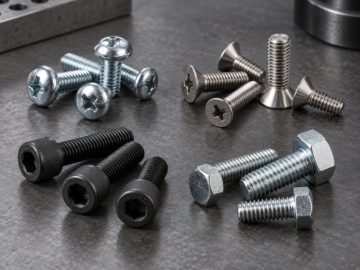
- Socket cap (Allen) screws: for recessed or tight-clearance mounting; browse hexagon socket screws for the range.
- Flange bolts: integrated washer face for load distribution.
- Matching A2-70 hex nuts and washers: always pair like-grade to avoid a weak-link joint.
The buying checklist
- Confirm the A2-70 head marking and request material certification for structural jobs.
- Specify metric size (e.g. M8 × 1.25 × 40), meaning diameter, pitch, length.
- Verify the environment is not marine/chloride. If it is, switch to A4-70.
- Pair with same-grade stainless nuts and washers, and plan for anti-seize to prevent galling.
- For bulk or custom needs, confirm the supplier can produce to ISO 3506-1 and provide test data.
Certification: what to actually ask for
For anything structural or safety-related, a head stamp isn’t enough on its own. Ask for a material test certificate, typically an EN 10204 3.1 cert, which ties the specific batch to its measured chemistry and mechanical results. This is the paper trail that proves your A2-70 bolts are genuinely 304-grade steel cold-worked to 700 MPa, not a look-alike that happens to carry the stamp. Counterfeit and under-spec stainless fasteners are a real problem in low-cost supply channels, and the only reliable defense is documentation from a manufacturer that tests its output.
The practical workflow we recommend to buyers: confirm the grade and size on paper before the order ships, spot-check the head markings on arrival, and keep the certificate on file for the life of the asset. It takes minutes and it’s the difference between “we think these are A2-70” and “we can prove it.” For custom sizes, thread forms, or finishes beyond the standard catalog, a manufacturer that runs its own production can match the exact A2-70 spec you need rather than forcing you into whatever’s on the shelf.
A2-70 Trends: Stainless Fastener Demand in 2026 and Beyond
Stainless fastener demand keeps rising into 2026, driven by infrastructure renewal, renewable-energy hardware, and stricter corrosion-life requirements, with A2-70 remaining the volume default.
The stainless fastener market isn’t standing still. A few forces are shaping where A2-70 fits over the next few years, and they matter if you’re specifying for a long-life asset.
| Trend (2026+) | Effect on A2-70 demand | Buyer takeaway |
|---|---|---|
| Infrastructure renewal | Higher volume for general structural fixing | A2-70 stays the cost-effective default |
| Renewable energy (solar, wind) | Mixed; coastal wind pushes toward A4 | Check site salinity before defaulting to A2 |
| Sustainability / life-cycle costing | Favors stainless over coated carbon | A2-70 wins on maintenance-free longevity |
| Supply-chain diversification | More sourcing options, price competition | Verify ISO 3506 compliance across suppliers |
The sustainability angle is the quiet driver. When buyers cost a fastener over a 25-year asset life instead of at the point of purchase, stainless stops looking expensive: you avoid recoating, replacement, and the failures that zinc-plated carbon bolts eventually deliver outdoors. As of early 2026, that life-cycle argument is pushing more general construction toward A2-70 as a baseline rather than an upgrade. For the higher-strength end of the market, our high strength bolts guide covers where stainless gives way to alloy grades.
FAQ
Is A2-70 the same as 18/8?
Yes. A2-70 is made from 18-8 family stainless, specifically 304 grade. “18-8” refers to the ~18% chromium and 8% nickel chemistry; A2 is the fastener designation for that same steel. The “70” adds the strength spec (700 MPa). So an A2-70 bolt is an 18-8 stainless bolt that’s been cold-worked to 700 MPa.
Is A4-70 the same as 316?
Yes. A4 maps to 316 stainless exactly as A2 maps to 304. The “70” still means 700 MPa tensile in both. The difference is 316’s added molybdenum, which gives A4-70 much better resistance to salt and marine corrosion than A2-70.
Is A2-70 magnetic?
Slightly, sometimes. Annealed 304 is non-magnetic, but the cold working that gives A2-70 its 700 MPa strength converts a little austenite to martensite, which a magnet can grab. A faintly magnetic A2-70 bolt is normal and not a sign of a fake or wrong material.
How strong is A2-70 compared to a grade 8.8 bolt?
A2-70’s 700 MPa tensile is close to class 8.8 carbon steel (800 MPa), but A2-70’s proof stress (450 MPa) is lower than 8.8’s. For higher-load stainless needs, step up to A2-80 or A4-80. If strength is the priority over corrosion, our 8.8 bolt guide compares the carbon-steel option.
Can A2-70 be used outdoors?
Yes, for general outdoor use away from the coast. A2-70 handles rain, humidity, and normal weathering well. Avoid it within a few hundred meters of the sea, on boats, or where road salt spray reaches. There it will pit, and you should specify A4-70 instead.
Why do A2-70 bolts sometimes rust?
Usually surface contamination, not the steel failing. Carbon-steel particles from grinding or wire brushing embed in the stainless surface and rust, staining the bolt. Clean or passivate with a stainless-safe method. True pitting only happens in chloride-heavy environments A2-70 isn’t rated for.
Do I need special nuts for A2-70 bolts?
Pair A2-70 bolts with same-grade A2 stainless nuts and washers so the joint has no weak link. Always use anti-seize on the threads, because stainless-on-stainless galls easily and can seize the fastener permanently if run down fast or dry.
What torque should I use on an A2-70 bolt?
Use a stainless-specific torque table, not a carbon-steel one, and always with anti-seize applied. Stainless has a higher friction coefficient and galls readily, so the correct torque for an A2-70 fastener is lower than for a same-strength carbon bolt. As a rough starting point, an M8 A2-70 bolt lands in the region of 15 to 18 Nm lubricated, but confirm against your supplier’s published figures for the exact size, because the value scales steeply with diameter and depends on the lubricant. When in doubt, torque low and check, since an over-torqued stainless bolt is far more likely to gall or snap than a slightly loose one is to fail.

Choosing the Right A2-70 Fastener for Your Project
A2-70 earns its status as the default stainless fastener for one reason: it balances real strength (700 MPa) with dependable corrosion resistance, at a price that undercuts the marine-grade alternative. Decode the marking (austenitic 304 steel, cold-worked to property class 70) and you know almost everything you need in six characters. It’s 18-8. It’s non-magnetic when annealed, maybe a touch magnetic when cold-worked. It shrugs off indoor and general outdoor exposure.
Your next move is a two-question check. First: will this fastener ever meet salt, sea air, or road-salt spray? If yes, upgrade to A4-70; if no, A2-70 is the right, cost-controlled choice. Second: is the size and nut pairing correct, with anti-seize planned to beat galling? Nail those two, request ISO 3506 certification for anything structural, and A2-70 will outlast the assembly it holds together.