 English
  German
  Spanish
  Portuguese
  French
  Japanese
  Arabic
  Korean
  Vietnamese
  Russian
 Grades of bolts classify fastener strength, material system, and service fit, so buyers can match load, corrosion risk, and standards to the joint.
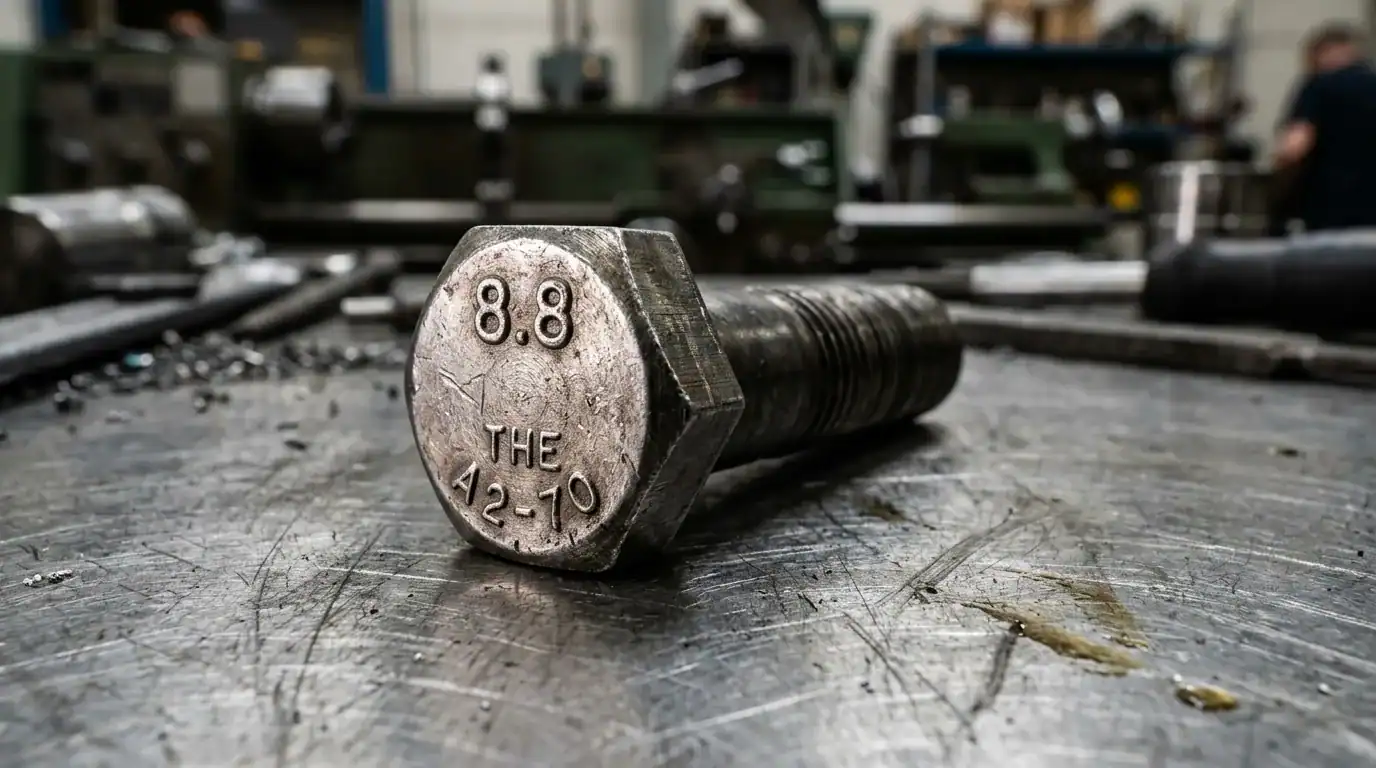
If you search for grades of bolts, you usually want one thing fast: a reliable way to tell whether a bolt is suitable for the joint in front of you. Not a vague chart. Not a retail product grid. Not a half-explained table that mixes metric property classes, SAE grades, and stainless labels as if they mean the same thing.
That is where most existing pages fall short. The current results for grades of bolts lean on simple marking charts, but they rarely explain how those markings affect clamp load, fatigue life, corrosion behavior, mating nut choice, coating limits, or sourcing decisions for production work. They also skip the practical questions buyers and engineers actually ask: when should Grade 8 replace Grade 5, when is class 10.9 unnecessary, when does stainless solve the wrong problem, and how do you prevent a mixed-grade assembly from failing first at the nut or washer?
This guide closes those gaps. It explains the main grades of bolts systems, how to read head markings, how to compare SAE, metric, and stainless classes, how to choose the right grade for industrial procurement, and how 2026 supply and traceability trends are changing buying decisions. It also answers the People Also Ask intent behind the keyword, including what different bolt grades mean and how to avoid common selection mistakes.
What are grades of bolts?
Grades of bolts are standardized labels that describe minimum mechanical properties and, in some systems, material family.
At the simplest level, grades of bolts tell you how strong the fastener is expected to be under standardized testing. That usually means minimum tensile strength, proof load, and sometimes yield strength. In practice, the label also tells you which standards ecosystem the fastener belongs to:
- SAE grades for common inch-series carbon and alloy steel bolts in North America
- Metric property classes for ISO fasteners used in global machinery and automotive supply chains
- Stainless designations such as A2-70 or A4-80 under ISO 3506 for corrosion-resistant fasteners
Most confusion around grades of bolts happens because buyers try to compare these systems as if they were direct translations. They are not. A metric class 8.8 bolt is not simply the metric version of every Grade 5 bolt. A stainless A2-70 bolt is not a stainless Grade 8. Those shortcuts lead to wrong substitutions.
In procurement, we treat grades of bolts as one layer of a five-part decision:
- 1. Required mechanical load
- 2. Thread standard and size
- 3. Corrosion environment
- 4. Joint design and mating hardware
- 5. Traceability, coating, and compliance requirements
Most guides stop at the first layer. That is why a shop can order “stronger bolts” and still get a bad outcome.
Grade is not the same as size
Grades of bolts describe strength class, not diameter, length, or thread pitch.
A 1/2″-13 SAE Grade 5 bolt and a 1/2″-13 SAE Grade 8 bolt can look nearly identical on the shelf, but their mechanical limits are very different. The same goes for an M10 class 8.8 and an M10 class 10.9. The geometry may match. The allowable stress does not.
This matters in the field because many failures are not caused by the wrong bolt size. They come from a bolt with the right size but the wrong grade. We have seen this repeatedly in machinery maintenance: the joint is dimensionally correct, the torque wrench clicks, the machine goes back into service, and a week later the joint loosens because the installed hardware lacked the proof load margin the original design assumed.
Grade is not the same as material
Grades of bolts do not replace material specification; they work alongside it.
For carbon steel and alloy steel fasteners, the grade often implies a heat-treatment condition and mechanical target. For stainless fasteners, the designation combines corrosion-resistant alloy family and strength class. Even then, the grade does not tell the whole story. Coating, hydrogen embrittlement risk, thread rolling quality, and nut compatibility still matter.
According to Portland Bolt’s SAE J429 summary, common inch-series grades include Grade 2, Grade 5, and Grade 8, with increasing mechanical strength as the grade rises. On the metric side, Wikipedia’s ISO 898 overview usefully summarizes how property classes like 8.8 and 10.9 encode tensile and yield relationships. For stainless hardware, the ISO 3506-1 standard overview is the right baseline because it separates corrosion-resistant families from carbon-steel property classes.
Main systems of grades of bolts
The main grades of bolts systems are SAE inch grades, ISO metric property classes, and ISO stainless fastener classes.
If you want to make better choices with grades of bolts, start by identifying which system the drawing, customer specification, or installed hardware already uses. That prevents the most common substitution error: comparing numbers that look familiar but mean different things.
SAE grades of bolts
SAE grades of bolts are inch-series mechanical grades identified by radial head markings.
In U.S.-style hardware, the most common grades of bolts are Grade 2, Grade 5, and Grade 8. Grade 2 is general-purpose low-strength hardware. Grade 5 covers many automotive and machinery joints. Grade 8 is for higher-stress applications where clamp load and strength margins matter more.
As The Home Depot’s grades of bolts overview notes, the common SAE grades are 2, 5, and 8, while the common metric classes are 5.8, 8.8, 10.9, and 12.9. That is basic. The more useful detail is what the markings mean in real work:
- No radial lines usually indicates Grade 2
- Three radial lines indicates Grade 5
- Six radial lines indicates Grade 8
The trap is assuming higher is always better. It is not. A harder, stronger bolt can be the wrong answer if the joint needs ductility, the nut is softer, the plating process raises embrittlement risk, or the connected parts cannot handle the added preload.
Metric property classes
Metric grades of bolts use property classes such as 4.8, 8.8, 10.9, and 12.9, stamped directly on the bolt head.
For metric grades of bolts, the first number represents nominal tensile strength in hundreds of MPa, and the second number indicates the ratio of yield to tensile strength. That makes class 8.8 the everyday workhorse for many industrial joints and class 10.9 or 12.9 the step up for higher clamp loads and more demanding machinery.
In practice, class 8.8 is often enough for brackets, machine frames, and general assemblies. Class 10.9 is common where the bolt must hold preload under vibration. Class 12.9 is usually reserved for socket head cap screws and compact high-load joints, but it is less forgiving of poor surface condition, improper torque, or plating-related process errors.
Most weak articles on grades of bolts stop at listing the classes. They do not explain how the joint changes. A class 12.9 bolt is not just “stronger.” It also narrows your margin for bad lubrication assumptions, poor washer selection, or reusing damaged hardware.
Stainless bolt classes
Stainless grades of bolts combine alloy family and strength level, such as A2-70 or A4-80.
When readers search grades of bolts, they often expect stainless to fit into the same ladder as carbon steel. It does not. Stainless bolt designations answer a different question first: corrosion performance. The strength number still matters, but the alloy family is the real fork in the road.
- A2-70 is the common 304-type stainless choice for general corrosion resistance
- A4-80 usually points toward 316-type chemistry with stronger marine and chemical resistance
- 410 stainless appears where hardness is needed, but corrosion performance is lower
This is where your internal links matter. If the project is exposed to washdown, outdoor humidity, or chloride splash, readers should also compare this guide with Stainless Steel Fasteners and A2-70 Bolt.
| System | Common marking | What it primarily tells you | Typical use |
|---|---|---|---|
| SAE inch | Grade 2 / 5 / 8 with radial lines | Strength level for inch-series carbon/alloy bolts | North American machinery, maintenance, automotive |
| ISO metric | 4.8 / 8.8 / 10.9 / 12.9 | Tensile and yield relationship in MPa classes | Global machinery, industrial equipment, automotive |
| ISO stainless | A2-70 / A4-80 | Stainless alloy family plus strength class | Corrosion-prone assemblies, food equipment, marine-adjacent service |
Quick comparison table for common grades of bolts
Common grades of bolts can be compared, but only carefully and by service conditions, not by number alone.
| Grade system | Common designation | Approx. minimum tensile strength | Best fit | Main caution |
|---|---|---|---|---|
| SAE | Grade 2 | 74 ksi class range | Light-duty, non-critical hardware | Too soft for fatigue-sensitive joints |
| SAE | Grade 5 | 120 ksi class range | General automotive and machinery | Do not mix with unknown nuts |
| SAE | Grade 8 | 150 ksi class range | High-load machinery, demanding service | Watch plating and embrittlement risk |
| Metric | 8.8 | 800 MPa | General industrial assemblies | Often over-tightened with lubricated threads |
| Metric | 10.9 | 1,000 MPa | Higher preload, vibration-prone joints | Requires better process discipline |
| Metric | 12.9 | 1,200 MPa+ | Compact high-strength applications | Less tolerant of poor installation practice |
| Stainless | A2-70 | 700 MPa | General corrosion-resistant use | Galling risk if dry-assembled |
| Stainless | A4-80 | 800 MPa | Marine or chloride exposure | Costlier and still weaker than many alloy steels |
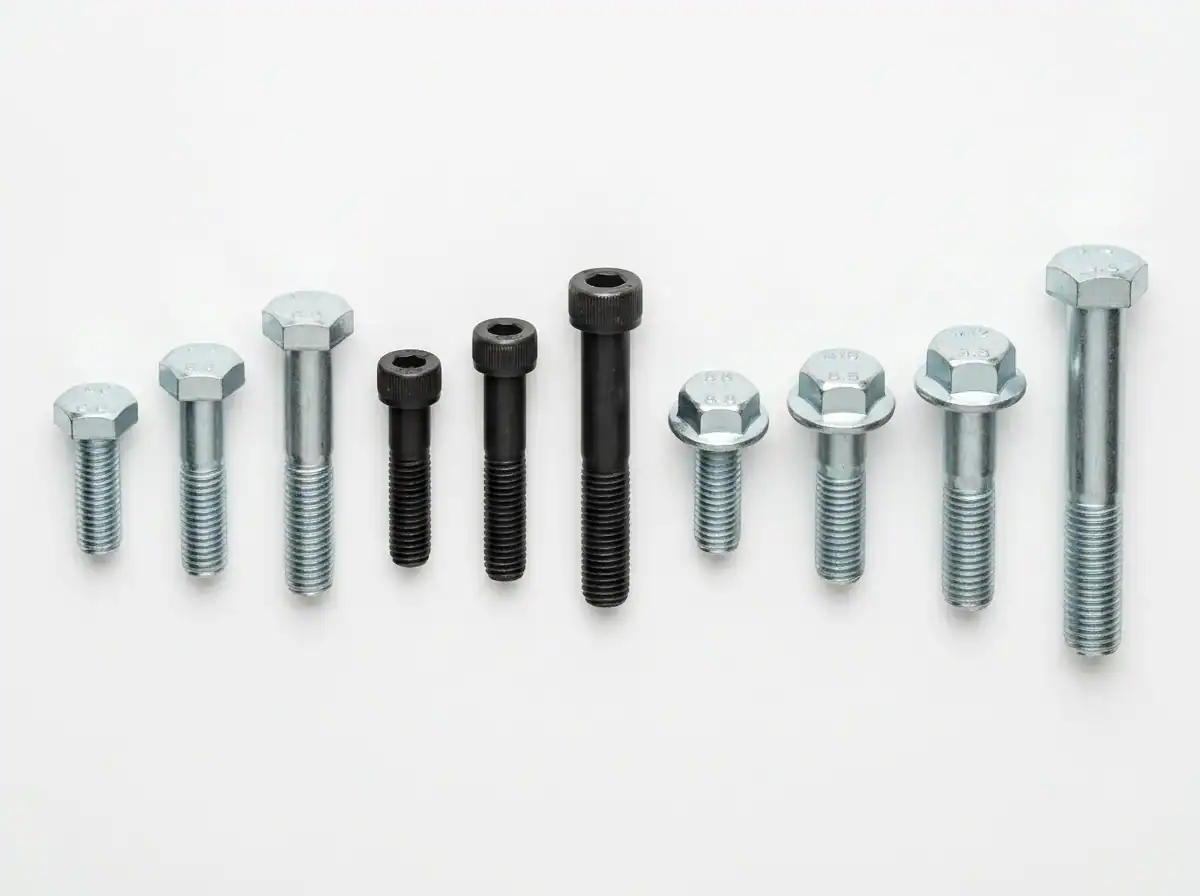
How to read grades of bolts from head markings and documents
You should verify grades of bolts from head markings first, then confirm them against the drawing, purchase order, and test documentation.
This sounds obvious. It still gets skipped. In real receiving inspections, the most common problem is not that the grade is unreadable. It is that someone trusts the bin label more than the head mark.
Field identification by markings
Head markings are the fastest way to separate common grades of bolts in the field.
For inch fasteners, count radial lines. For metric bolts, look for stamped property classes such as 8.8 or 10.9. For stainless, look for A2 or A4 with the strength suffix. If the bolt is unmarked where a marked fastener is expected, stop there. That is already a nonconformance until proven otherwise.
We use a simple rule in supplier audits: if the grade mark is missing, unclear, or inconsistent across the lot, the receiving team should hold the batch before the maintenance team “just uses it for now.” That single decision avoids a surprising number of traceability disputes later.
Receiving documents and certs
For production work, grades of bolts should also be verified from material certificates, lot traceability, and supplier labeling.
The head mark tells you what the fastener claims to be. The cert package tells you whether the lot was tested, heat treated, and documented as required. This becomes critical for structural assemblies, OEM supply, and any customer program where PPAP, IATF, or ISO traceability matters.
At minimum, check:
- Grade or property class on the packing label
- Heat or lot number
- Standard reference such as SAE J429, ISO 898-1, or ISO 3506-1
- Coating callout if present
- Matching nut class and washer specification
Grades of bolts and matching nuts
The correct grade means very little if the nut class is too weak for the bolt.
This is one of the least-covered topics in pages about grades of bolts, and it causes real failures. A high-grade bolt paired with a weak or counterfeit nut does not create a high-grade assembly. The assembly fails at its weakest threaded component.
For readers working through mixed fastener systems, Screw Bolt Guide and Screw Nut Bolt Guide are useful internal references because they explain thread families and joint forms beyond just the bolt itself.
| What to verify | Why it matters | Common failure if ignored |
|---|---|---|
| Head marking | Confirms claimed grade | Wrong strength installed |
| Nut class | Preserves proof load capacity | Nut stripping before bolt proof load |
| Washer hardness | Protects bearing surface under preload | Embedment loss and preload drop |
| Coating spec | Affects corrosion and torque behavior | Torque scatter, hydrogen embrittlement |
| Lot traceability | Supports quality control and claims | No root cause path after failure |
How to choose grades of bolts for industrial procurement
The right grades of bolts come from the joint’s load case, environment, and quality controls, not from choosing the highest number on the chart.
This is the section most competitor pages miss. Industrial buyers do not just compare charts. They need a repeatable filter that turns a keyword like grades of bolts into a specification decision.
Start with the real load path
Choose grades of bolts by the actual joint load, especially preload retention, vibration, and fatigue.
If the joint is mostly static and lightly loaded, a moderate grade may be enough. If the joint sees reversing load, vibration, or thermal cycling, preload retention becomes more important than raw tensile bragging rights.
In practice we see three recurring selection patterns:
- Static bracket joints often perform well with mid-grade hardware when installation quality is controlled
- Machinery joints with vibration often need stronger bolts plus hardened washers and better torque control
- Compact joints with limited engagement length may push toward higher classes, but only if the mating material and nut class support it
Most guides on grades of bolts do not say this plainly: a stronger bolt cannot rescue a poorly designed joint. It can only raise the ceiling of what the joint could achieve if the rest of the stack-up is correct.
Then check corrosion and temperature
Corrosion environment can change the best grades of bolts more than load does.
A coastal enclosure, food-processing frame, or chemical line support may not need the highest carbon-steel strength at all. It may need stainless or a coated alloy fastener with a more conservative preload target. If corrosion will destroy the threads or freeze the joint in service, the strongest dry-lab number on the data sheet is irrelevant.
That is why buyers comparing grades of bolts should never skip environment notes in the RFQ. If the drawing only says “bolt, grade 8 equivalent” without plating, salt exposure, or mating metal detail, the quote is incomplete.
Watch coatings, lubrication, and torque assumptions
Torque values are only meaningful when the grade, coating, and lubrication condition match the published table.
Here is where field problems multiply. A team upgrades from Grade 5 to Grade 8, keeps the same torque number, adds zinc flake coating, and assumes the joint is safer. Sometimes it is. Sometimes the preload jumps high enough to damage threads, crush a gasket, or overstress the connected part.
That is the nuance. Grades of bolts do not work alone. Installation friction matters. For high-strength metric hardware especially, the difference between dry and lubricated tightening can be the difference between correct preload and permanent stretch.
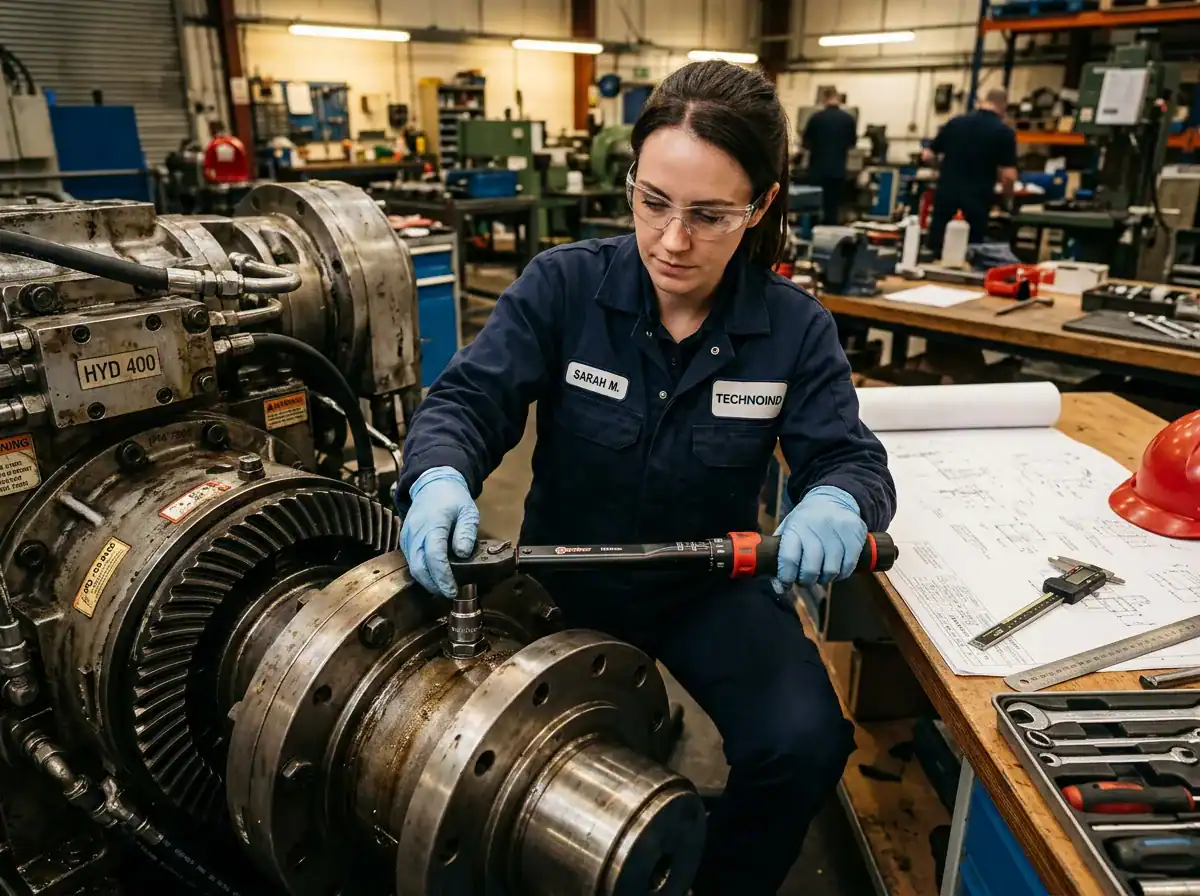
A practical selection flow
A practical grades of bolts decision should move from service need to standard, then to coating and documentation.
- 1. Define the thread system already required by the design.
- 2. Estimate actual service load, vibration, and safety margin.
- 3. Choose a mechanical grade or property class that meets preload needs.
- 4. Check corrosion exposure and temperature.
- 5. Match nut class, washer hardness, and surface treatment.
- 6. Confirm supplier traceability and test documentation.
This is also where product-family choices come in. If the assembly uses flange hardware, Flange Screws gives a useful reference point for integrated-bearing surfaces and common grade/material combinations.
Common mistakes when comparing grades of bolts
The biggest mistakes with grades of bolts are wrong substitutions, mixed hardware, and trusting labels over traceability.
Weak search results treat bolt grades as a classroom chart. Real failures are messier.
Mistake 1: Assuming “higher grade” is always safer
Higher grades of bolts can create new risks when the joint, coating, or mating hardware was designed for a lower class.
A stiffer bolt may reduce elasticity in the joint. A harder bolt may be less forgiving of nicks or installation abuse. A high-strength plated bolt may face stricter process controls to avoid hydrogen embrittlement. We have seen maintenance teams upgrade bolts during downtime without upgrading nuts or washers, then blame the supplier when the joint loses preload.
Mistake 2: Mixing standards in one assembly
Do not mix SAE, metric, and stainless grades of bolts casually, even when dimensions look close.
The thread fit may differ. The torque assumptions differ. The nut strength class differs. The documentation path differs. A bin-room substitution that looks harmless can break compliance on export machinery or customer-specified assemblies.
Mistake 3: Ignoring counterfeit or downgraded lots
Counterfeit or downgraded grades of bolts are a purchasing risk, especially in fragmented supply chains.
This matters more in 2026 because supply remains uneven across some alloy and coating categories. According to the OECD Steel Outlook 2025, China accounted for 46% of global steelmaking capacity in 2024, while Chinese steel exports reached 118.2 million metric tons in 2024. That scale helps availability, but it also means buyers must separate certified fastener supply from opportunistic trading stock.
The sourcing lesson is simple: when grades of bolts are critical to the function of the joint, ask for the certs before the emergency order, not after the failure.
Industry applications for different grades of bolts
Different grades of bolts fit different industries because each industry balances strength, corrosion resistance, inspection discipline, and cost differently.
Automotive and machinery
Automotive and machinery joints usually rely on mid- to high-strength grades of bolts with controlled preload.
This is where Grade 5, Grade 8, class 8.8, and class 10.9 show up constantly. The real selection issue is not whether the bolt is “strong.” It is whether the grade holds preload under vibration, thermal cycling, and repeated service. Many machinery buyers over-specify class 12.9 where class 10.9 would give better robustness and easier sourcing.
Structural and anchoring applications
Structural uses prioritize compliance to the specified fastener standard, not casual substitution based on a generic grades of bolts chart.
For structural steel, anchoring, and safety-critical supports, the grade decision should stay inside the governing structural specification. A generic internet table is not enough. What matters is the required standard, head marking, coating, and approved assembly procedure.
Outdoor, washdown, and corrosive service
Corrosive environments often shift the correct grades of bolts toward stainless or specialty coatings instead of maximum hardness.
This is where readers should compare carbon-steel strength against life-cycle cost. A high-strength carbon-steel bolt that rusts, seizes, or loses section in service is not the right choice just because the chart number is impressive. For many food, marine-adjacent, and electrical enclosures, stainless delivers the more durable answer even if the tensile class is lower than alloy steel alternatives.
Future trends in grades of bolts for 2026 and beyond
The next change in grades of bolts is not a new number on the head; it is tighter traceability, smarter coatings, and better sourcing discipline.
More traceability in ordinary hardware
Traceability is moving from premium requirement to standard expectation for many grades of bolts.
Buyers increasingly want lot identity, material certs, plating data, and consistency across repeated releases. That is partly customer pressure and partly supply-chain caution. If a shipment fails torque-audit or salt-spray checks, the cost of not having traceability is now higher than the paperwork burden of keeping it.
More realistic sourcing decisions
2026 sourcing decisions are forcing buyers to think about grades of bolts as a cost-risk tradeoff, not just a part number.
The World Steel Association’s 2024 global totals reported 1,882.6 million tonnes of world crude steel production in 2024. That scale keeps basic carbon-steel hardware available, but availability alone is not the same as certified availability in the exact coating, grade, and lot size needed. The spec sheets rarely mention this, but the hardest part of many bolt orders is not the bolt. It is the combination of grade, finish, and paperwork.
That is why the winning purchasing strategy for grades of bolts in 2026 is usually boring: fewer casual substitutions, earlier supplier confirmation, clearer drawings, and tighter receiving checks.
FAQ about grades of bolts
These are the most common questions behind the grades of bolts search, and each answer starts with the bottom line.
What are different grades of bolts?
Different grades of bolts are strength classes and material systems such as SAE Grade 2, 5, 8, metric 8.8, 10.9, 12.9, and stainless A2-70 or A4-80.
They are not all interchangeable. The correct choice depends on load, thread standard, corrosion, and mating hardware. Bottom line: identify the standard family before comparing the numbers.
Which is stronger, Grade 5 or Grade 8?
Grade 8 is stronger than Grade 5 in common SAE inch-series hardware.
Grade 8 bolts are generally used where higher preload and higher tensile capacity are needed. But stronger does not automatically mean better for every joint. Bottom line: upgrade only when the nut, washer, torque method, and connected parts are also suitable.
What does 8.8 mean on a bolt?
A class 8.8 bolt has a nominal minimum tensile strength of 800 MPa and a yield ratio of 0.8 of that value.
That makes class 8.8 one of the most common metric grades of bolts in machinery and industrial assemblies. Bottom line: 8.8 is often the standard starting point for metric carbon-steel joints.
Are stainless bolts stronger than Grade 8 bolts?
Most common stainless bolts are not stronger than SAE Grade 8 or metric 10.9 alloy-steel bolts.
Stainless usually wins on corrosion resistance, not maximum tensile strength. Bottom line: choose stainless for environment, not because you assume it is “premium” in every direction.
Can I replace a metric bolt with an SAE bolt?
You should not replace metric and SAE grades of bolts casually, even if the diameter seems close.
Thread pitch, nut fit, head marking system, and torque assumptions differ. Bottom line: match the original standard unless engineering approves a full substitution.
Why do bolts fail even when the grade looks correct?
Bolts often fail because the assembly, torque, coating, or mating hardware was wrong even when the marked grade was correct.
Common causes include under-tension, over-torque, nut stripping, corrosion, thread damage, and vibration loosening. Bottom line: verify the whole joint stack, not just the head mark.
What grades of bolts are best for outdoor use?
Outdoor applications usually favor corrosion-resistant grades of bolts such as stainless or properly coated alloy steel.
The best answer depends on chloride exposure, maintenance access, and required load. Bottom line: start with environment, then choose the lowest-risk strength class that still meets the load.
What are different grades of bolts?
Different grades of bolts are strength classes and material systems such as SAE Grade 2, 5, 8, metric 8.8, 10.9, 12.9, and stainless A2-70 or A4-80. The right choice depends on load, thread standard, corrosion, and mating hardware.
Which is stronger, Grade 5 or Grade 8?
Grade 8 is stronger than Grade 5 in common SAE inch-series hardware. Upgrade only when the nut, washer, torque method, and connected parts are also suitable.
What does 8.8 mean on a bolt?
A class 8.8 bolt has a nominal minimum tensile strength of 800 MPa and a yield ratio of 0.8 of that value. It is one of the most common metric grades for machinery and industrial assemblies.
Are stainless bolts stronger than Grade 8 bolts?
Most common stainless bolts are not stronger than SAE Grade 8 or metric 10.9 alloy-steel bolts. Stainless is usually selected for corrosion resistance rather than maximum tensile strength.
Can I replace a metric bolt with an SAE bolt?
You should not replace metric and SAE bolts casually, even if the diameter seems close. Thread pitch, nut fit, head marking system, and torque assumptions differ.
Why do bolts fail even when the grade looks correct?
Bolts often fail because the assembly, torque, coating, or mating hardware was wrong even when the marked grade was correct. Verify the whole joint stack, not just the head mark.
What grades of bolts are best for outdoor use?
Outdoor applications usually favor corrosion-resistant bolts such as stainless or properly coated alloy steel. Start with environment, then choose the lowest-risk strength class that still meets the load.
Conclusion
Grades of bolts are only useful when you read them in context.
That context includes the standards family, the real service load, the environment, the mating hardware, the coating, and the supplier’s traceability. If you remember one thing from this guide, make it this: the right bolt grade is not the highest number available. It is the grade that fits the whole joint without creating a new failure mode.
For most buyers, the practical next step is to tighten the specification process. State the thread system. State the grade or property class. State the finish. State the mating nut requirement. State the environment. Then verify the markings and certs when the lot arrives. That is how grades of bolts stop being a confusing keyword and become a repeatable purchasing decision.
Related Products
Solutions & Cluster
Related Articles
- Sex Screw (Sex Bolt): Complete Guide to Types, Uses & Installation
- Essential Guide to Triangle Bolt Applications and Removal Techniques
- Fasteners, Screws & Bolts: The Complete Selection Guide
- Essential Screws: Choosing the Right Fasteners for Your Projects
- Anodised Screws & Fasteners: The Complete Guide to Anodising
- Confirmat Screws: Complete Guide to Sizes, Uses & Installation
- ASTM A193: Complete Guide to High-Strength Bolting Grades and Specifications
- Screw Bolt Complete Guide: Types, Differences, Sizes & How to Choose (2026)