 English
  German
  Spanish
  Portuguese
  French
  Japanese
  Arabic
  Korean
  Vietnamese
  Russian
 Insert Nuts: What They Are, Types, Sizes, Installation and Material Selection Guide
Quick answer: An insert nut adds a reusable female thread to plastic, wood, light metal, composite material, or sheet material. It is used when the host material is difficult to tap directly or when a joint must be taken apart repeatedly. Common types include screw-in, self-tapping, press-in, heat or ultrasonic, self-clinching, and molded-in inserts.
Writing only “M4 insert nut” on a purchase request is rarely enough. The host material, thickness, insert length, installation method, hole size, and required pull-out or torque performance must also be defined. This guide explains how to choose the part and which information to put into an RFQ.
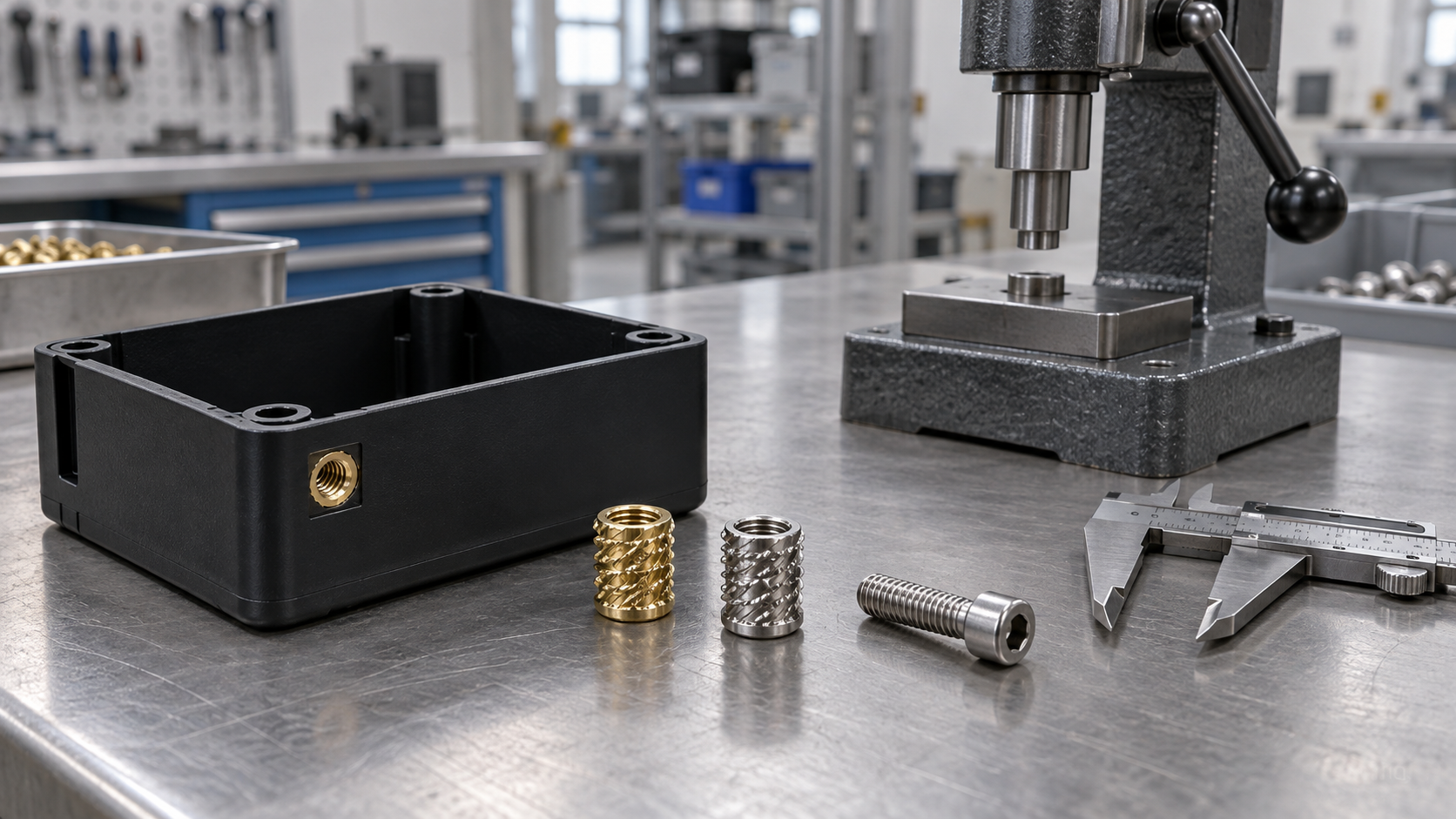
Insert nut selection in one view
| Item to confirm | Practical decision |
|---|---|
| Host material | Confirm whether the part is thermoplastic, thermoset plastic, wood, aluminum sheet, or steel sheet. |
| Installation method | Decide whether the insert will be screwed in, pressed in, heat inserted, ultrasonically installed, or clinched. |
| Thread size | Common metric callouts include M2, M2.5, M3, M4, M5, M6, M8, M10, and M12. Use the inch thread on the drawing when applicable. |
| Performance | State tightening torque, pull-out force, spin-out torque, reuse cycles, and service temperature with the test method. |
| RFQ package | Send a 2D drawing, host material, sheet thickness, installation process, quantity, and inspection requirements. |
What is an insert nut and when is it used?
A standard screw relies on the thread in the host material. Plastic and wood have lower shear stiffness than steel, and some plastics creep under long-term load. Repeated tightening can wear or loosen a directly formed thread. An insert nut fixes a separate metal or specified-material component inside the host and provides a dedicated female thread.
The insert therefore does more than add a nut. It creates a thread for repeated assembly and disassembly, transfers tightening torque through the insert-to-host interface, and adds a fastening point where the back of the assembly cannot be reached to hold a conventional nut.
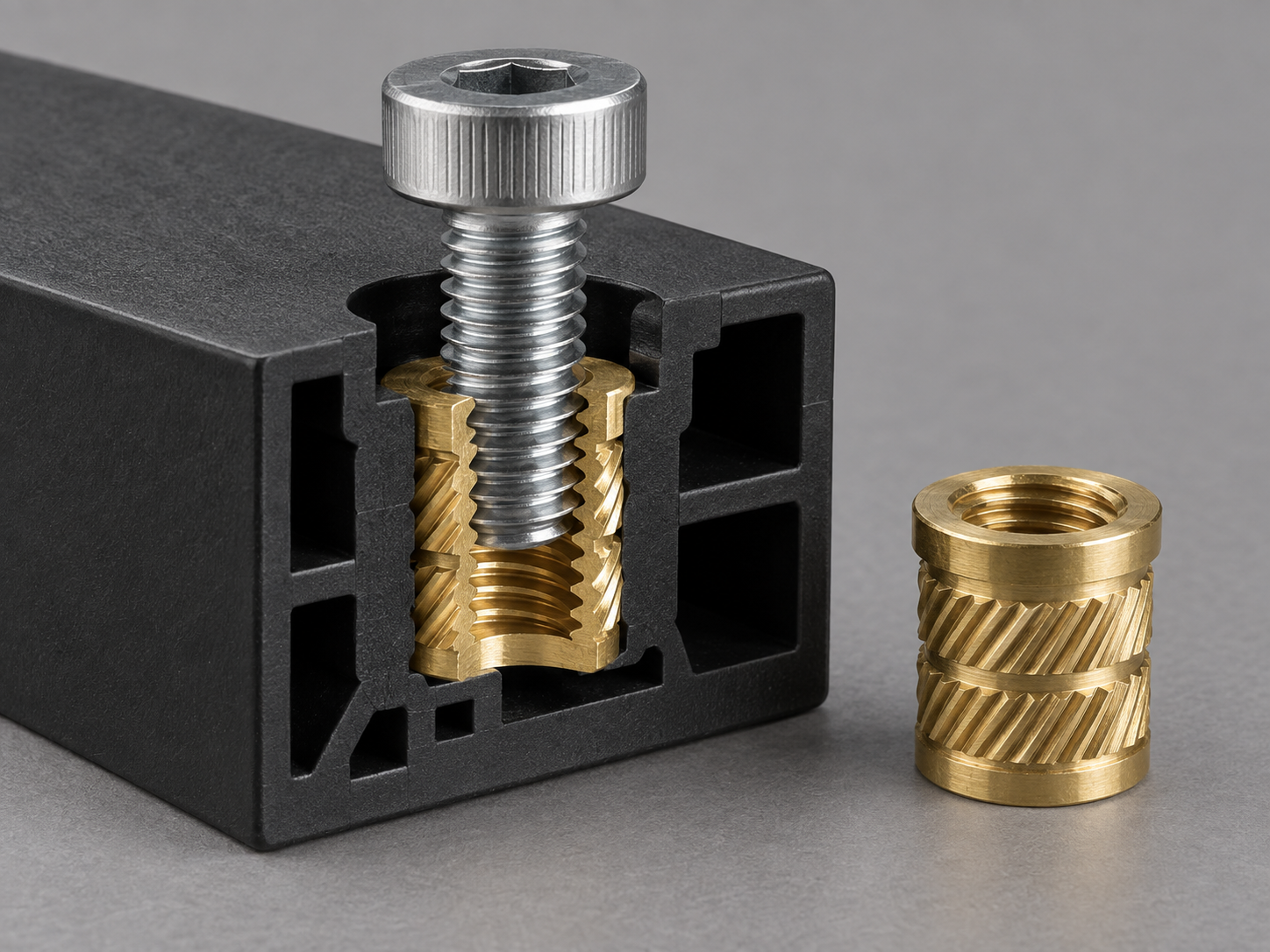
The term “insert nut” is broad in Korean hardware distribution. It can refer to a wood insert, a heat-set insert for plastic, a PEM-style self-clinching nut for sheet metal, or a rivet nut. These parts are not interchangeable. A nylon insert locknut, for example, uses a nylon ring to resist loosening on an existing bolt and does not create a new female thread in the host.
Main types of insert nuts
Choose the type from the host material and production process before comparing the outside shape. Two M4 parts can require completely different hole tolerances, tooling, and inspection if one is heat installed in plastic and the other is pressed into steel sheet.
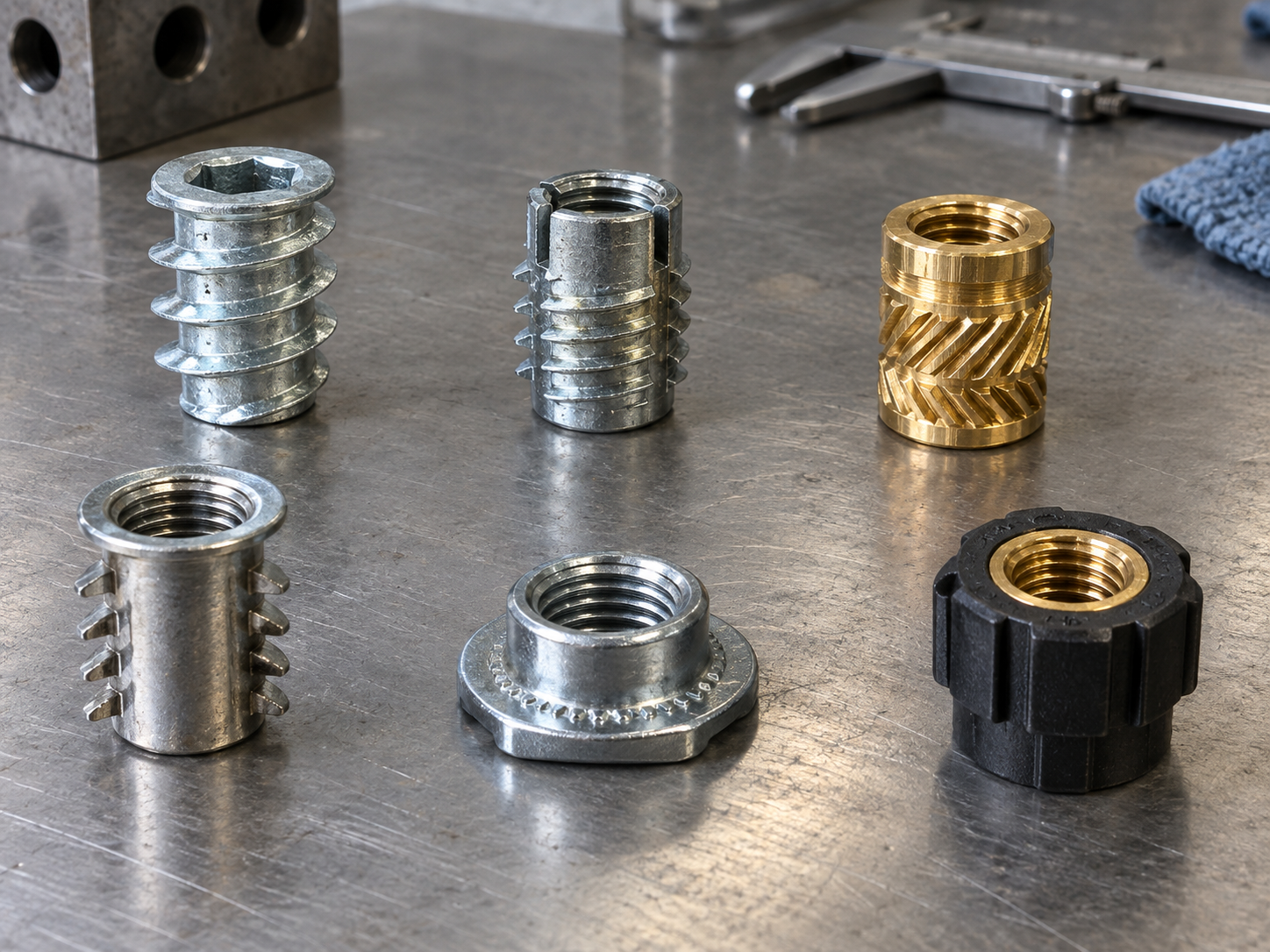
| Type | Typical host | How it is retained | When it fits |
|---|---|---|---|
| Screw-in or self-tapping | Wood, foam, plastic, light metal | External threads or cutting features engage a prepared hole. | Simple field installation, small batches, or serviceable assemblies. |
| Heat-set | Thermoplastic | Heat softens the local plastic and the material closes around the external knurl or groove as it cools. | Molded parts that need repeated tightening and controlled installation. |
| Ultrasonic | Thermoplastic | Ultrasonic energy and pressure move resin around the insert. | High-volume production where cycle time and repeatability matter. |
| Press-in | Plastic or suitable light metal | Barbs, knurls, or ribs grip the hole wall after pressing. | Assemblies where heat is undesirable and part distortion must be limited. |
| Self-clinching | Steel, aluminum, or stainless sheet | Pressing makes sheet material flow into the undercut and prevents rotation. | Thin panels that need load-bearing internal threads without a rear nut. |
| Molded-in | Thermoplastic or thermoset molded parts | The resin or molding compound flows around the external features during molding. | Designs that integrate the insert into the production mold. |
SPIROL groups plastic threaded inserts into press-in, self-tapping, heat or ultrasonic, and molded-in types. Its technical guidance also identifies plastic composition, hole quality, installation process, and alignment as performance factors. Read the SPIROL guide to threaded inserts for plastics for the selected family, then apply the supplier drawing to the production part.
How insert nuts differ from similar fasteners
Search results often mix threaded inserts, rivet nuts, wood insert nuts, self-clinching nuts, and locknuts. The distinctions below help during design review.
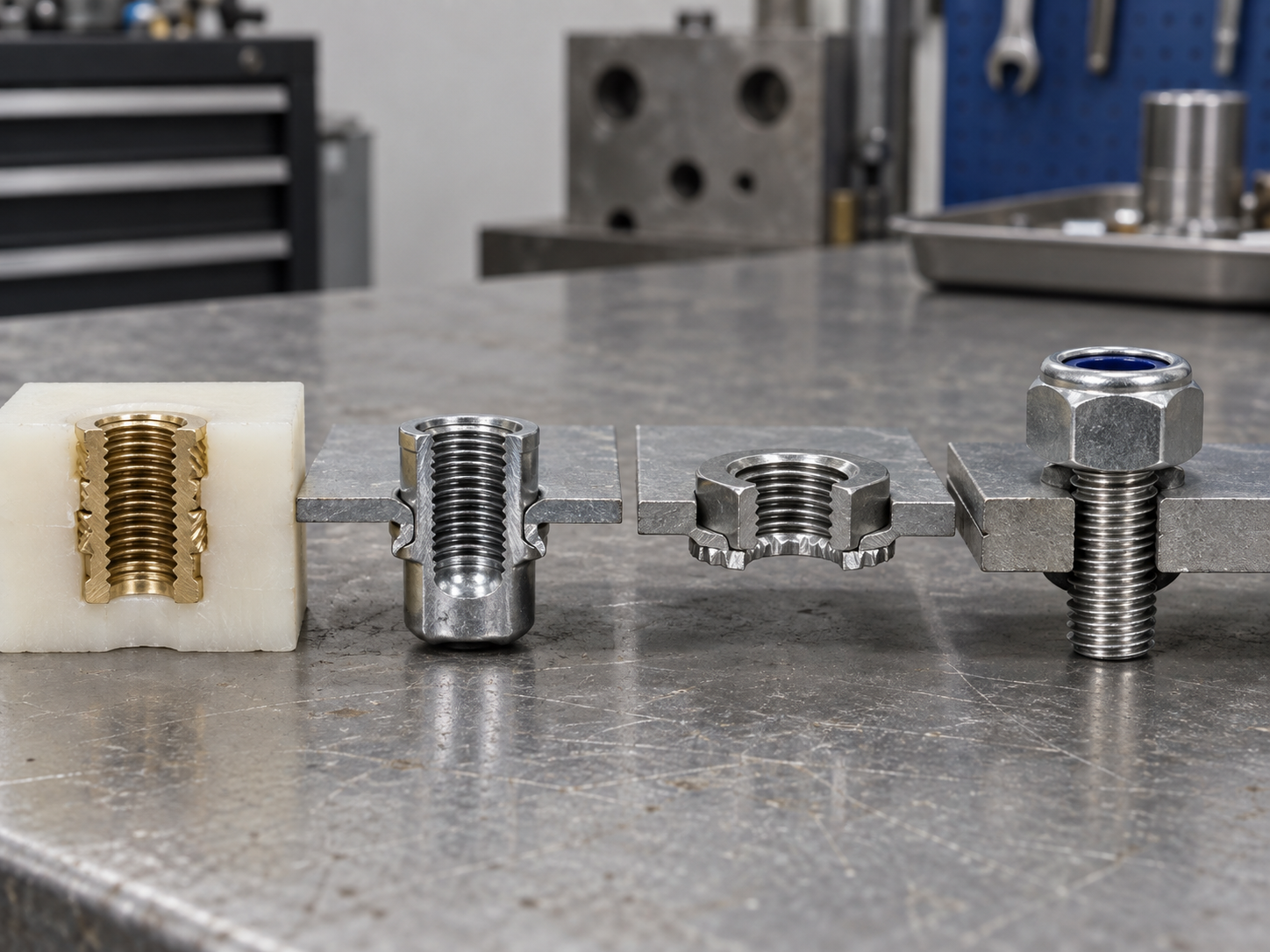
| Part | What it adds | Typical host | Main distinction |
|---|---|---|---|
| Threaded insert | Reusable female thread in the host | Plastic, wood, light metal, composite | Many installation methods are available and the host material controls the design. |
| Rivet nut | One-sided internal thread in a panel | Thin sheet, profile, some plastics | The body deforms like a rivet, which helps when the back of the panel is inaccessible. |
| Self-clinching nut | Anti-rotation thread in sheet | Qualified metal sheet | Press installation, sheet hardness, and hole size are part of the specification. |
| Nylon insert locknut | Loosening resistance on an existing bolt | Bolt and nut assemblies | It is a locking nut, not a part that creates a thread inside a host. |
| Cage nut | Removable nut location in a panel | Racks, panels, enclosures | A spring cage retains the nut instead of embedding an insert in the host. |
Dimensions to confirm on the drawing
An insert specification does not end with M4. M4 identifies the internal thread, while the outside diameter, length, head, external retention feature, host hole, and installation depth must also fit. Product families use different dimensions, so list the following items on the drawing.
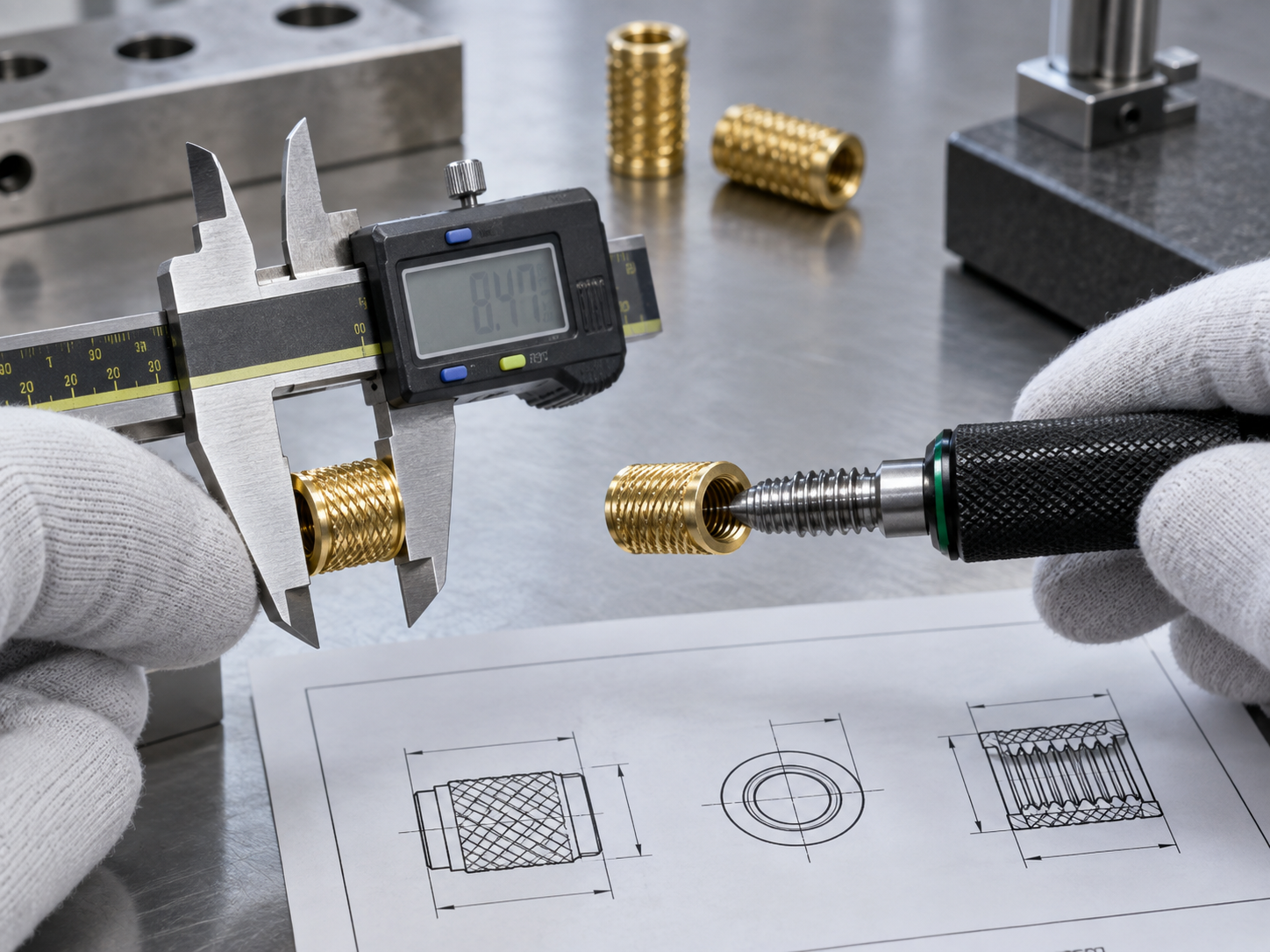
| Drawing item | Example or decision |
|---|---|
| Internal thread | Write M3 x 0.5 or M4 x 0.7 with nominal diameter and pitch. For inch threads, specify UNC or UNF and the size. |
| Insert length | Separate usable thread length from overall length. A short insert reduces height but may change pull-out performance and thread engagement. |
| External feature | Identify knurl, barb, cutting thread, groove, undercut, or hex shape that retains the insert in the host. |
| Head and flange | Decide whether the top must be flush, whether a flange must distribute load, and whether rear protrusion is allowed. |
| Host hole | Confirm diameter, tolerance, depth, counterbore, edge distance, and deburring rule from the supplier drawing. |
| Functional test | Specify pull-out load, spin-out torque, screw tightening torque, and reuse cycles with the test method. |
Bossard’s Tappex portfolio shows why the same threaded insert category contains screw-in, press-in, heat or ultrasonic, and molded-in products with different thread and material ranges. A request that says only “M4 insert nut” leaves too much room for an unsuitable proposal. Send the host material and the required function with the thread size.
Choosing the insert material for the host
Evaluate the insert material and the host material separately. Brass is often used for heat insertion because it transfers heat well and is easy to machine, but it is not automatically the best choice for every temperature, load, or corrosion condition. Carbon steel and stainless steel may suit higher wear or harsher environments, depending on the joint.
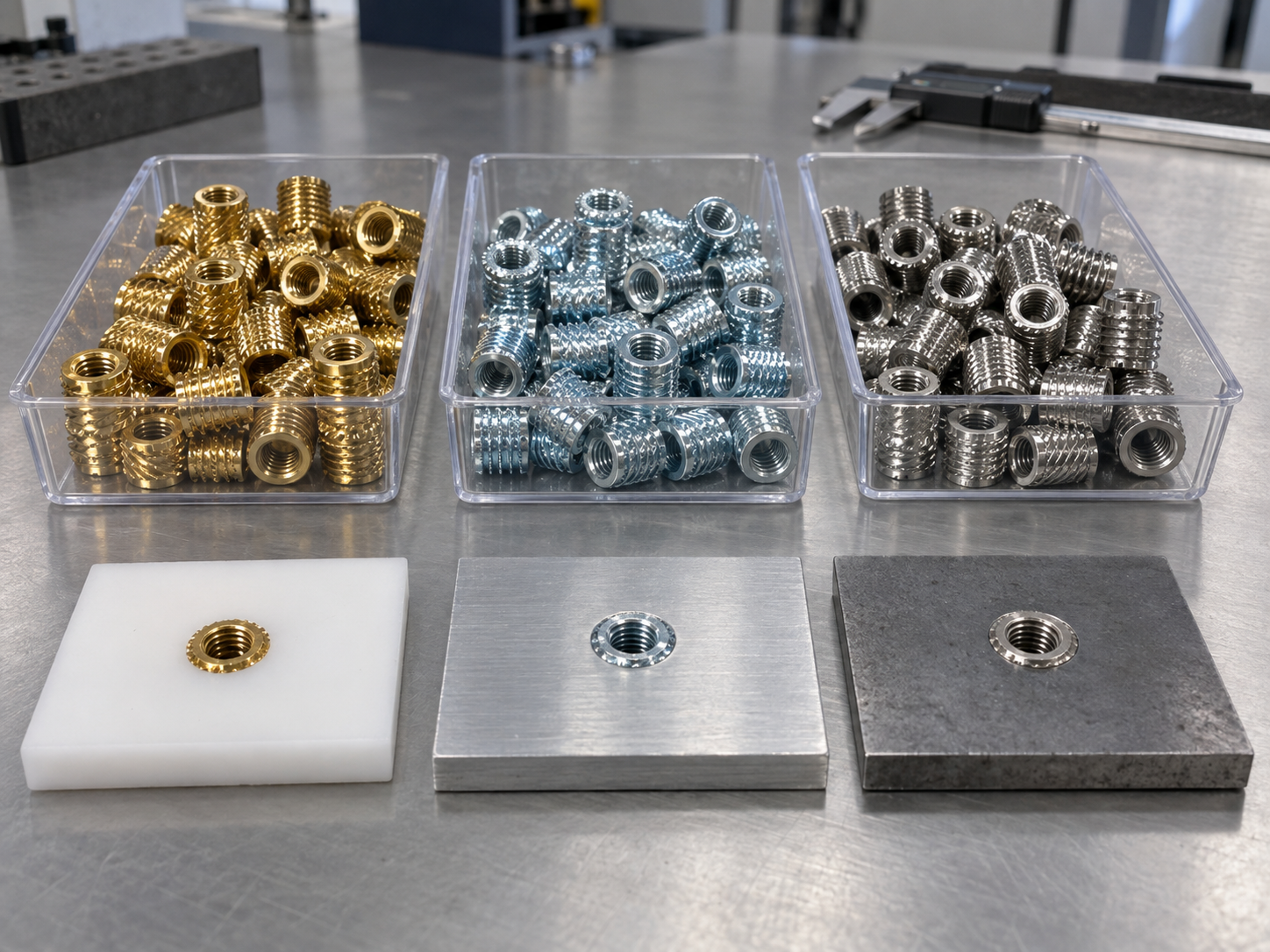
- Thermoplastic: Consider heat or ultrasonic insertion because the host can soften locally. Resin type, glass-fiber content, wall thickness, and boss geometry affect the settings.
- Thermoset plastic: A cured thermoset does not remelt, so do not treat heat insertion like a normal thermoplastic process. Review screw-in, press-in, or molded-in options with the host material.
- Wood and foam: Use an external shape that holds the fibers or foam. Confirm pilot-hole diameter, grain direction, edge distance, and the number of planned disassembly cycles.
- Aluminum and light metal: Check whether direct tapping is durable enough for repeated assembly. A screw-in or self-tapping insert can provide a more serviceable thread.
- Steel and stainless sheet: Compare self-clinching nuts, rivet nuts, and weld nuts by production volume, rear access, sheet hardness, and inspection needs.
How to install a heat or ultrasonic insert in plastic
Heat insertion warms the metal insert and presses it into a plastic hole so the local wall softens and then grips the external features as it cools. Excess temperature or pressure can create flash, cracked bosses, or a tilted insert. Settings must be developed from the insert geometry, plastic, filler, and hole design.
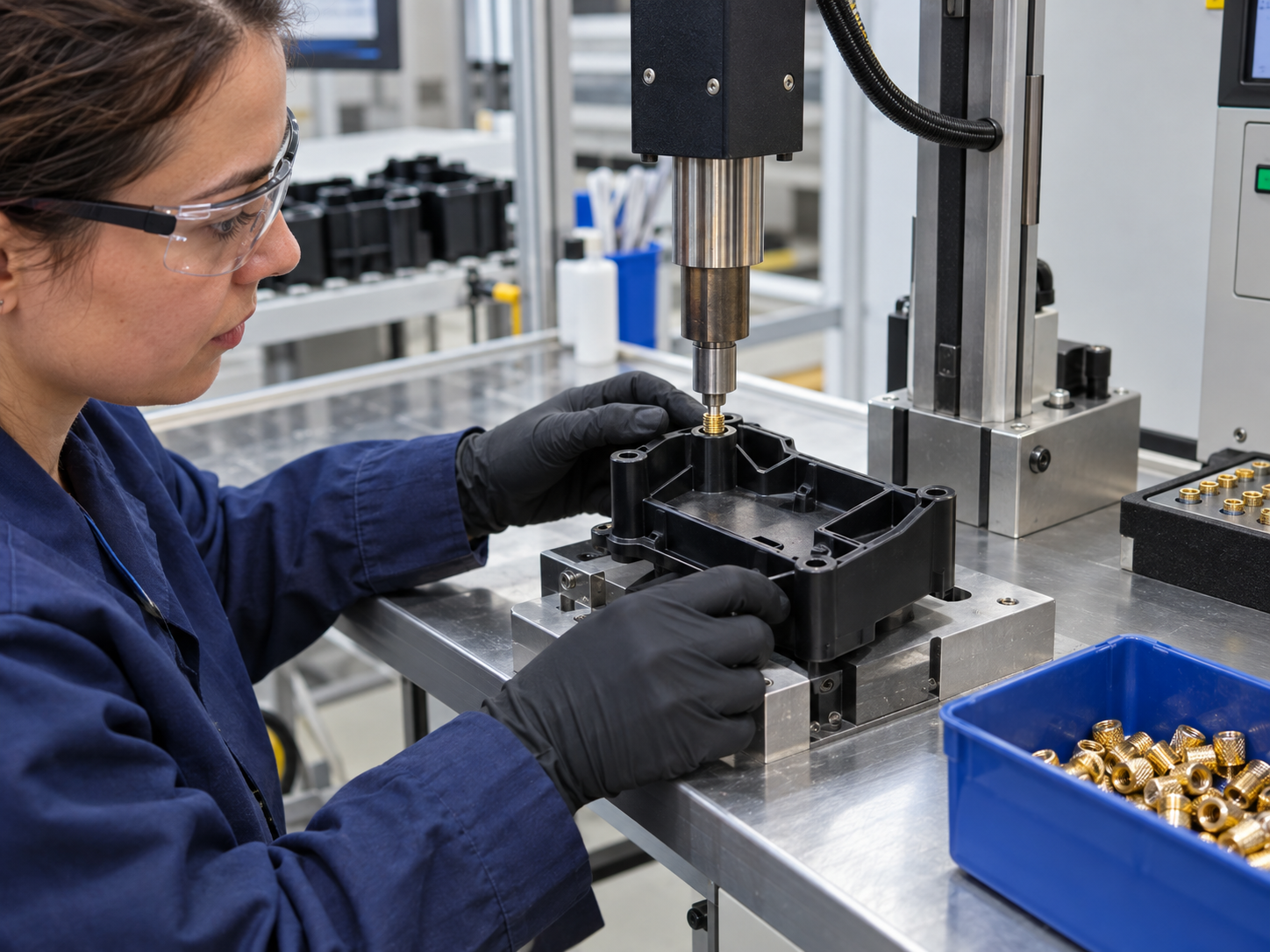
- Confirm resin, filler, wall thickness, and boss outside diameter.
- Prepare the hole to the supplier drawing and remove chips and loose debris.
- Align the heated tip or ultrasonic horn with the insert axis and support the molded part.
- Use the defined temperature, pressure, insertion speed, and stop position. Prevent the insert from sitting too high or too deep.
- After cooling, inspect verticality, surface height, internal thread cleanliness, flash, and boss cracks.
- Test pull-out and spin-out torque on initial samples, then connect the results to the production control plan.
SPIROL’s hole-design guidance recommends enough depth to prevent the assembly screw from bottoming and creating jack-out. Its starting guidance adds two thread pitches to the insert length for the minimum hole depth. This is a design reference, not a universal value for every insert. The selected product drawing and host-material test take priority. See the SPIROL hole-design paper for heat and ultrasonic inserts for the reasoning.
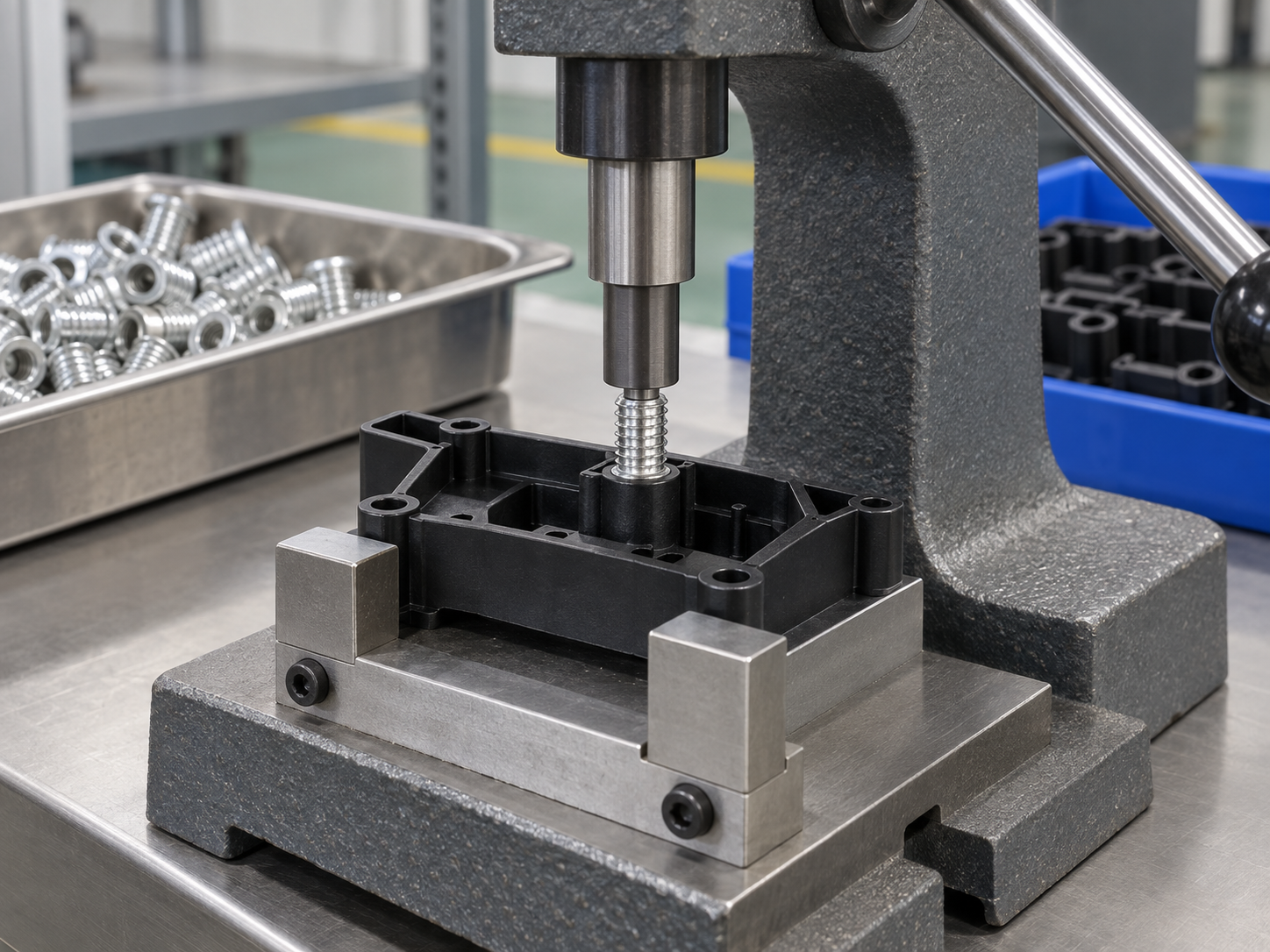
How to install a self-clinching insert in sheet metal
Self-clinching nuts are useful when a thin panel has no room for a rear nut. They still require a qualified combination of sheet thickness, hardness, hole size, edge distance, punch, and anvil. A part that is suitable for one sheet may not be suitable for another.
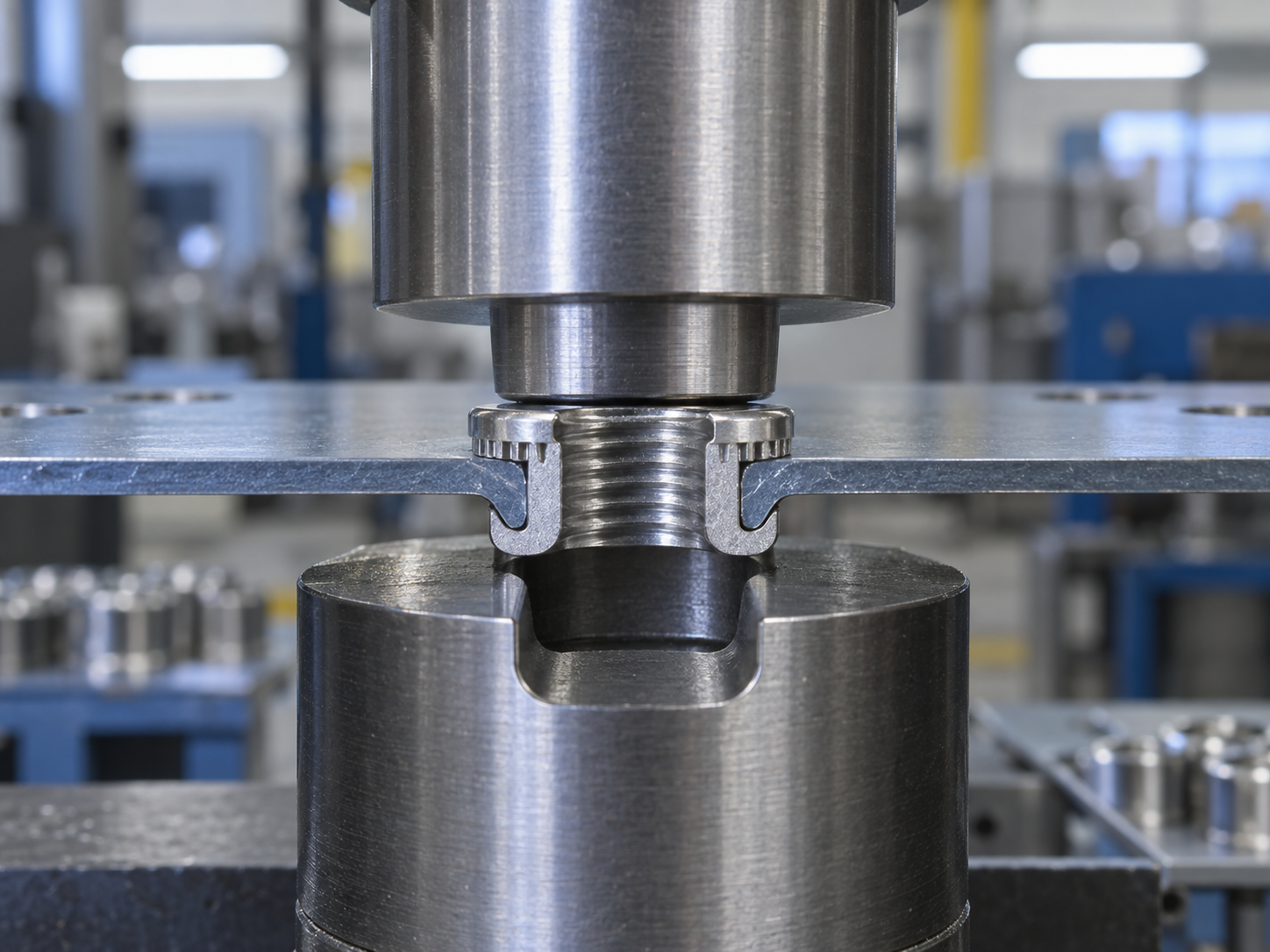
- Confirm sheet material and hardness, then prepare the hole to the product drawing.
- Do not add an unapproved countersink or excessive deburring. Some PEM installation data calls for no secondary operation around the specified hole.
- Center the insert and sheet, keeping the punch and anvil faces parallel.
- Apply the specified force until the nut head contacts the sheet. Angled force can distort the sheet and reduce anti-rotation engagement.
- Test rotation resistance, pull-out, and full screw engagement on production-representative samples.
PEM product data describes the process as placing the nut in a properly sized hole and applying parallel force so sheet material flows into the undercut. It also notes that sheet material and hardness affect product selection. Follow the installation drawing rather than increasing press force by trial and error.
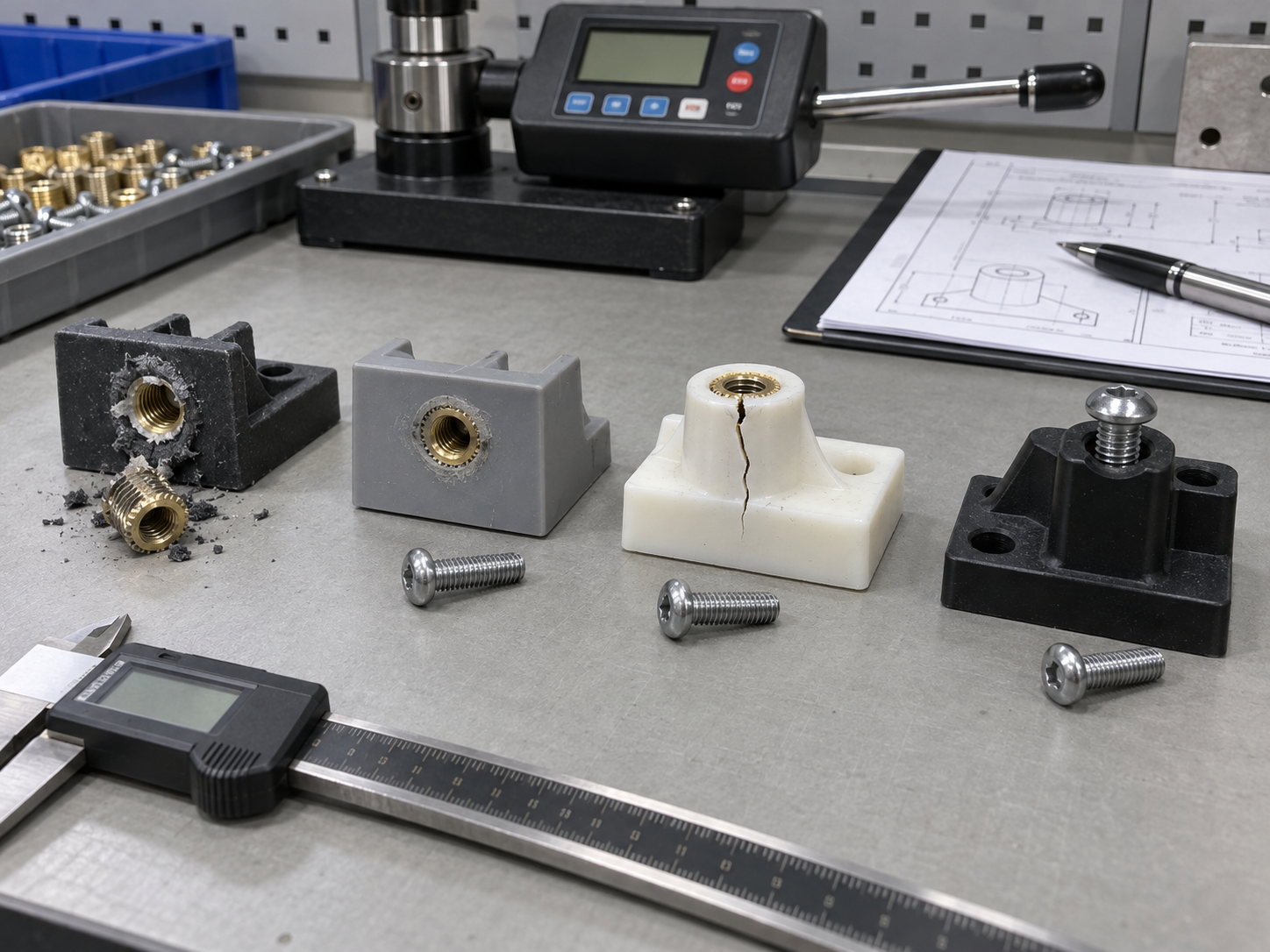
Common failures and their causes
| Symptom | Possible cause | Check or correction |
|---|---|---|
| Insert spins with the screw | Hole is oversized, external retention does not engage, or installation force is insufficient. | Measure the hole and installation depth, then sample-test spin-out torque. |
| Insert pulls out | Insert is too short, the boss wall is too thin, or the applied load exceeds the design. | Review length, outside diameter, host thickness, and pull-out test results. |
| Plastic boss cracks | Hole is too small, temperature or pressure is high, or the insert is too close to an edge. | Adjust the pilot hole and boss geometry, then revalidate the process with the actual resin. |
| Screw stops early | Flash or debris remains in the hole, the insert is tilted, or the screw is too long. | Check internal thread cleanliness, squareness, and bottom clearance. |
| Sheet distorts | Sheet hardness is outside the product range or punch and anvil are not parallel. | Verify sheet data and tooling geometry. Do not solve distortion by raising force. |
| Joint develops play after reuse | Host creep, excessive tightening torque, or an unsuitable insert material or length. | Define tightening torque and reuse cycles, then run a joint life test. |
Where insert nuts are used
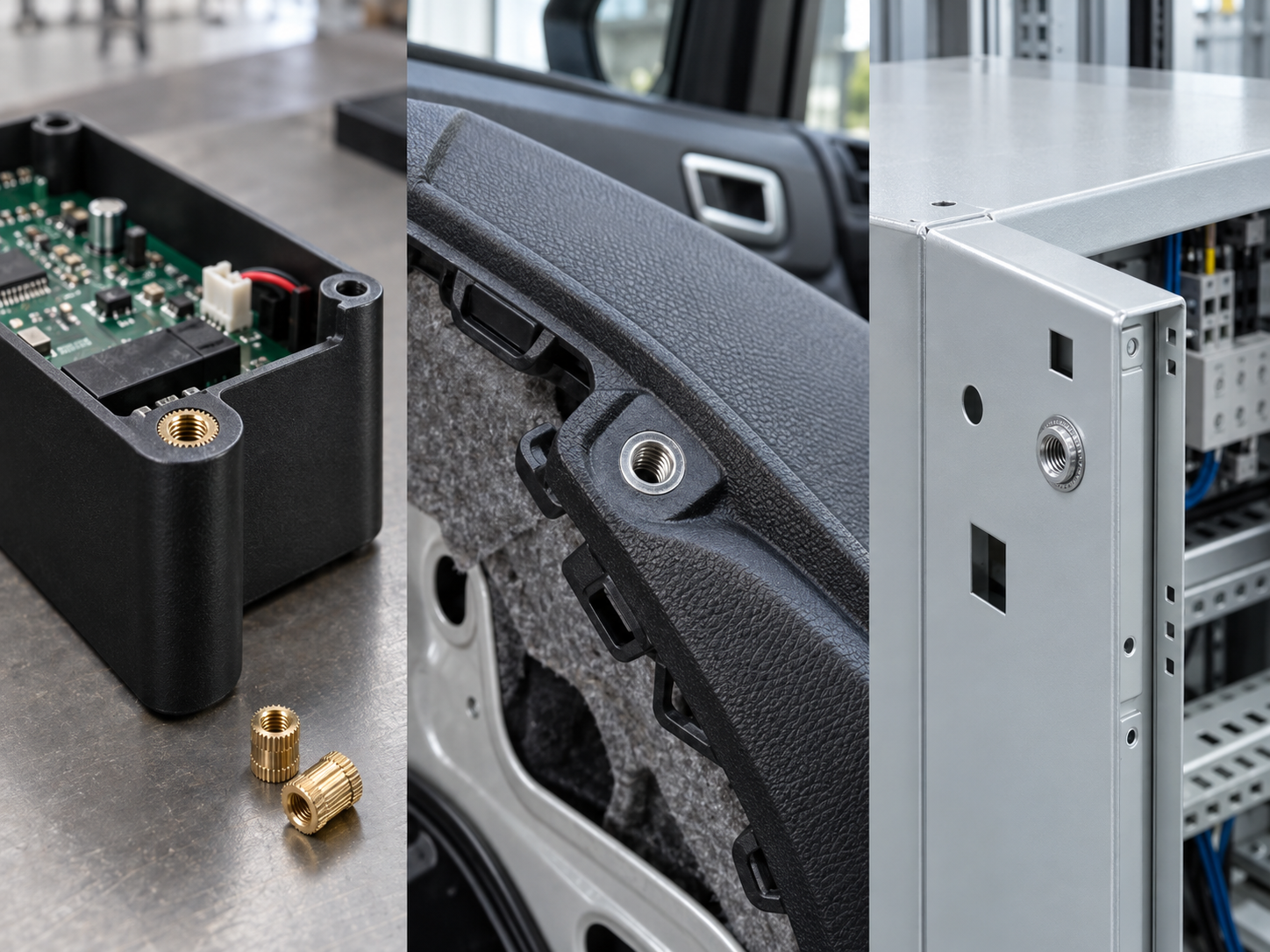
Insert nuts suit the following structures when the host material and process are qualified.
- Electronics and control enclosures: Plastic housings can use inserts for covers, PCB supports, and cable-retention parts that need repeated service.
- Automotive and mobile equipment: Review metal insert choice, vibration, temperature change, and service requirements. Safety-related assemblies need their own validation criteria.
- 3D-printed and molded parts: Thermoplastic parts can use heat-set or press-in inserts to create a serviceable thread for repeated disassembly.
- Sheet-metal enclosures: Self-clinching or rivet nuts can add threads where the rear side cannot be reached.
- Wood furniture and display structures: Wood insert nuts can support repeated assembly and disassembly when pilot-hole and edge conditions are controlled.
Similar applications can have different priorities. An electronics housing may prioritize flush height and reuse, while a sheet-metal enclosure may prioritize rear access, sheet hardness, and anti-rotation performance.
What to inspect for quality
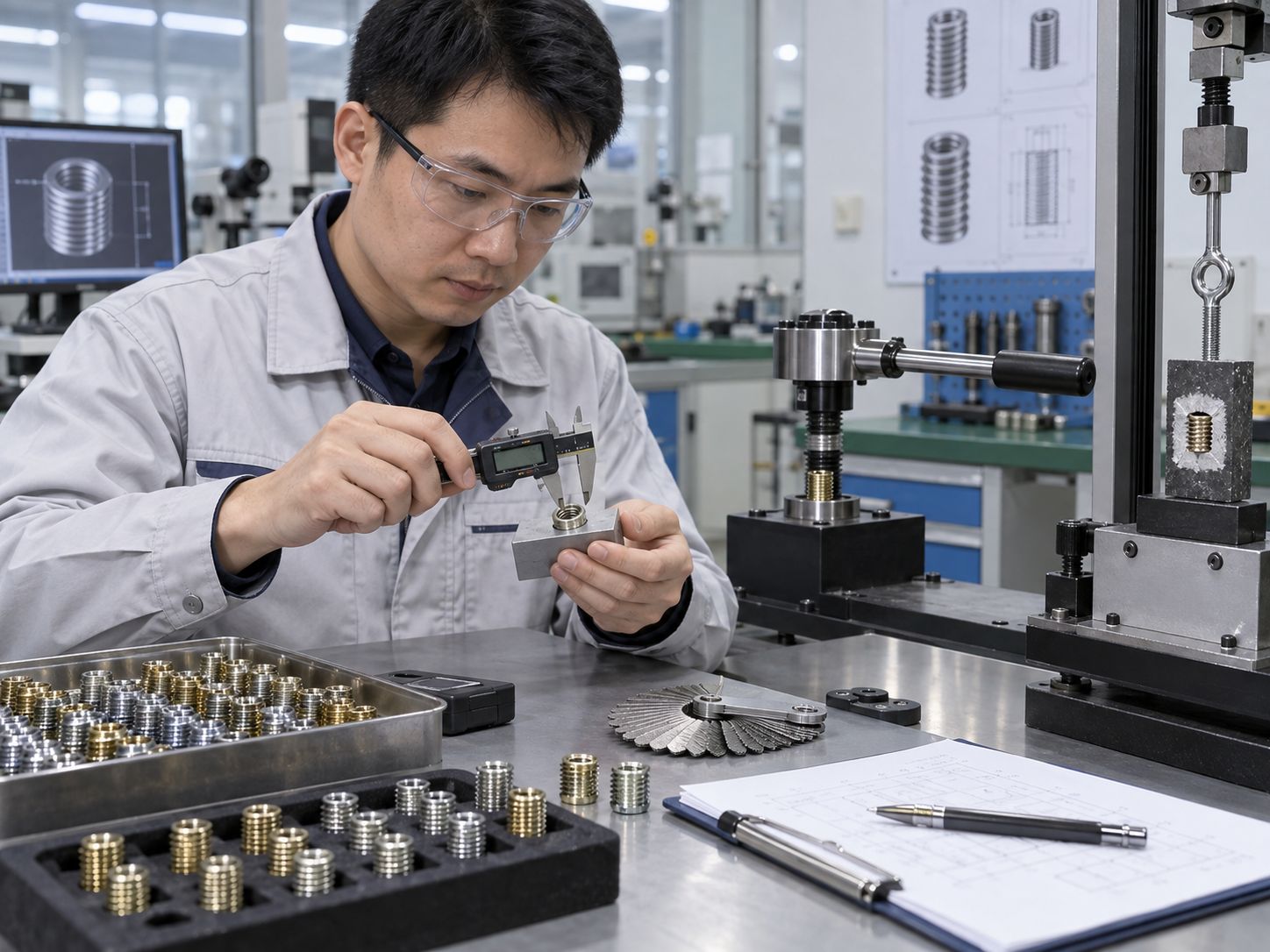
Insert performance depends on the part and the installation. Separate the inspection plan for the insert itself from the plan for the installed assembly.
- Check internal thread with a gauge or mating screw.
- Measure insert height, tilt, and the step between the flange and host surface.
- For plastic parts, inspect boss cracks, flash, voids, and resin fill around external features.
- For sheet parts, test spin-out torque and pull-out load.
- Use the specified screw torque and reuse count on a representative assembly.
- Link supplier lot, host-material lot, installation settings, and inspection results for traceability.
Without numerical performance criteria, “strong insert” is not an inspection plan. When needed, request separate insert-level tests and installed-assembly tests.
What to include in an insert nut RFQ
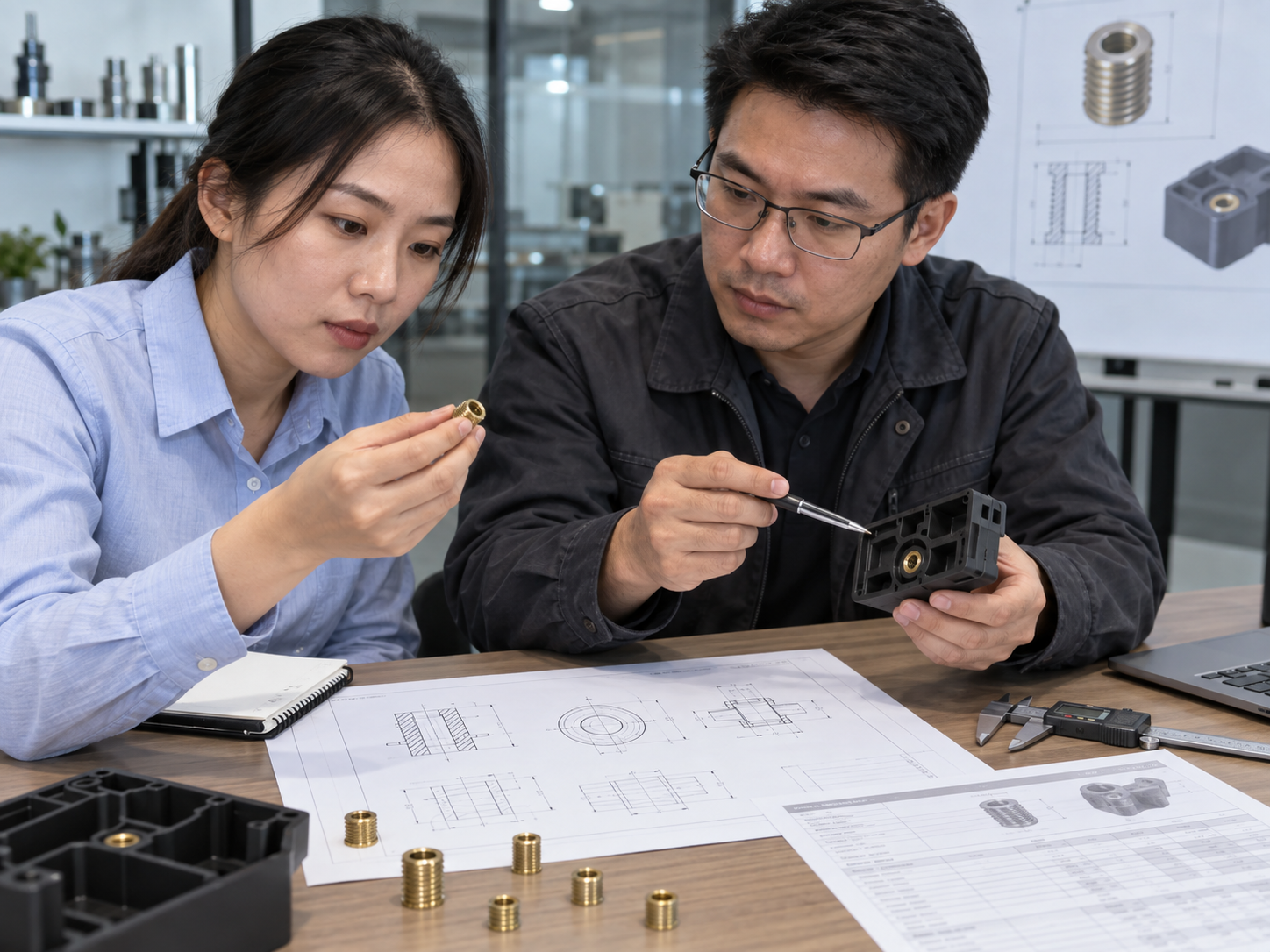
Send the following information together so the supplier can propose the correct insert.
- Host material and grade: resin, filler, wood type, aluminum, or steel sheet grade
- Host thickness and hole: through or blind hole, diameter and tolerance, boss outside diameter, and edge distance
- Thread: metric or inch size, pitch, usable female-thread length, and mating screw material and grade
- Outside form: head, flange, knurl, barb, external thread, and flush-height limit
- Installation process: hand tool, press, heat, ultrasonic, or molding, plus the current process and allowed changes
- Functional criteria: tightening torque, pull-out load, spin-out torque, reuse cycles, service temperature, and environment
- Commercial details: sample quantity, expected order volume, packaging, labels, lead time, and inspection reports
If the drawing is not complete, send the host sample, mating screw, and assembly photo. When requesting a review through DingLong Hardware’s custom fastener solutions, specific host and test information makes it easier to decide whether a standard part, modified part, or separate design review is appropriate.
Insert nut FAQ
How is an insert nut different from a standard nut?
A standard nut normally pairs with a bolt and must be held during assembly. An insert nut is fixed inside the host and provides a reusable female thread, which helps in plastic housings and thin panels where rear access is limited.
Are insert nuts and nylon insert locknuts the same?
No. An insert nut adds a female thread to a host material. A nylon insert locknut uses a nylon collar to increase friction on an existing bolt and reduce loosening. Ordering one in place of the other changes the function.
Can an insert nut be used in metal?
Yes, but the method depends on thickness, hardness, and rear access. Review self-clinching or rivet nuts for sheet, and screw-in or self-tapping inserts for suitable light-metal blocks. The product drawing must define the host limits.
Is brass always the best insert material?
Brass often suits heat insertion and machines easily, but it is not automatically best for every load, temperature, or corrosion environment. Steel or stainless steel may fit high wear, high temperature, or corrosive service better. Compare the host and mating screw materials as well.
Can a heat-set insert be installed in thermoset plastic?
A cured thermoset does not remelt, so it cannot be treated like a thermoplastic heat-set process. Review screw-in, press-in, or molded-in options and validate the choice with the actual resin.
How deep should a plastic insert hole be?
The answer depends on insert length, pitch, installation method, and bottom geometry. A mating screw that touches the bottom of a blind hole can create jack-out and push the insert out. SPIROL’s insert-length-plus-two-pitches value is a design reference; the selected product drawing comes first.
How many times can an insert nut be reused?
There is no single cycle count for every product. Insert material, host creep, screw grade, tightening torque, speed, and environment all matter. Specify the required cycle count and test it in the actual assembly.
What should be sent first when requesting a quote?
Send a 2D drawing or host sample, host material and thickness, installation method, target tightening torque, pull-out or spin-out requirement, and expected quantity. If the design is not final, add an assembly photo and service environment so the supplier can review the options.
Related fastening guides
Need an insert nut matched to your drawing? Send the host material, thread, hole dimensions, installation method, and inspection conditions for a review of standard and custom fastening options. Request a custom fastener review