 English
  German
  Spanish
  Portuguese
  French
  Japanese
  Arabic
  Korean
  Vietnamese
  Russian
 Nylock Nuts: The Complete Guide to Nylon Insert Lock Nuts
A nylock nut is a locknut containing a nylon ring that grips bolt threads to resist loosening caused by vibration, torque, and dynamic loading �� without requiring adhesives or secondary locking devices.
Walk through any manufacturing floor, automotive workshop, or electronics assembly line and you’ll find nylock nuts holding things together that cannot afford to come loose. They’re the quiet workhorse of the fastener world. Yet despite their ubiquity, most engineers and DIYers still install them wrong, reuse them past their limit, or pick the wrong grade for the environment. This guide covers everything you need �� from how the nylon insert actually works at a mechanical level to selecting the right material for a 300��F exhaust application.
!Nylock nuts �� hero illustration showing assortment of nylon insert lock nuts on a metal surface
What Are Nylock Nuts?
Nylock nuts resist loosening because the nylon collar deforms around the bolt thread, creating a friction lock that holds under vibration and shock.
A nylock nut �� also called a nyloc nut, nylon insert lock nut, or elastic stop nut �� is a standard hex nut with one significant addition: a nylon ring pressed into a recess at the top of the nut. When you thread a nylock nut onto a bolt, the bolt eventually reaches the nylon section. The thread cuts slightly into the nylon, and the compressed polymer grips the bolt with what engineers call prevailing torque �� resistance to rotation that exists even without a clamped joint.
As Wikipedia’s entry on nyloc nuts notes, this type of locknut was originally developed for aerospace applications in the mid-20th century, where fastener vibration failures carried catastrophic consequences. The design has changed little since because it works.
The Mechanics of Prevailing Torque
Regular nuts rely on clamping friction between the nut face and the mating surface to stay tight. That friction disappears the moment a vibration cycle momentarily unloads the joint. Nylock nuts solve this at the thread level �� the nylon grips the bolt independently of joint clamp load. Even in a partially loosened joint, the nylon still resists rotation.
The prevailing torque on a standard M8 nylock nut is typically 0.5�C2.0 Nm depending on grade and manufacturer. That sounds modest, but it’s enough to prevent the incremental loosening that ordinary hex nuts experience in high-cycle environments.
How Nylon Deforms Under Thread Engagement
The nylon insert in a nylock nut has no pre-cut threads. When the bolt engages it, the sharp thread form cold-forms the polymer. This creates an interference fit rather than a clearance fit. The result: the nut resists back-rotation through mechanical interference, not just friction. Polyamide (nylon 6 or nylon 66) is the standard insert material �� it provides the right balance of hardness, flexibility, and chemical resistance for most applications.
Types of Nylock Nuts
Nylock nuts come in standard hex, thin/jam, flange, and all-metal variants �� each suited to a different load profile and installation constraint.
Knowing which type to reach for saves time and prevents joint failures. The four main categories differ in profile, load distribution, and the nature of their locking mechanism.
!Nylock nuts types �� diagram showing standard hex, thin, flange, and all-metal variants side by side
Standard Hex Nylock Nuts
The most common form. Full-height hex body with the nylon insert at the top. Available in metric (M3�CM36) and imperial (8-32 through 1-1/4″). Use these for general fastening where you have full thread engagement and normal installation clearance. The full nut height gives maximum thread engagement �� critical for high-tensile applications.
| Size | Nylon Insert Thickness | Typical Prevailing Torque |
|---|---|---|
| M6 | ~4 mm | 0.3�C1.0 Nm |
| M8 | ~5 mm | 0.5�C2.0 Nm |
| M10 | ~6 mm | 1.0�C3.5 Nm |
| M12 | ~6 mm | 2.0�C5.5 Nm |
| M16 | ~8 mm | 4.0�C10.0 Nm |
Thin / Jam Nylock Nuts
Also called half-height nylock nuts. Roughly 60% of standard nut height. Used when vertical clearance is tight �� automotive wheel hubs, panel assemblies, electronics enclosures. The reduced body height means less thread engagement, so maximum recommended torque is lower. Never substitute a thin nylock for a standard one in structural applications.
Flange Nylock Nuts
A serrated or plain flange extends below the hex body, spreading the clamping load over a larger area. This makes flange nylock nuts the right choice for:
- Soft or thin sheet metal that would otherwise deform under a standard nut face
- Applications where a washer would add unacceptable stack height
- Automotive body panels and underhood mounting
The flange’s serrations also add a second locking mechanism �� mechanical bite into the mating surface �� making flange nylock nuts arguably the most secure variant in vibration-heavy environments.
All-Metal Locknuts (Prevailing Torque Alternatives)
Strictly speaking, all-metal locknuts (like the distorted-thread nut or the Philidas nut) are not nylock nuts �� they use a deformed metal section rather than nylon. They belong in this comparison because they serve the same function in environments where nylon fails:
- Temperatures above 120��C (250��F) that degrade the nylon insert
- Exposure to hydraulic fluids, fuels, or solvents that swell or soften polyamide
- Clean-room or food-grade applications where nylon particle contamination is a concern
For everything else �� the vast majority of applications �� standard nylock nuts are lighter, cheaper, and easier to inspect visually.
Materials and Grades for Nylock Nuts
The right nylock nut material depends on load, corrosion exposure, and temperature �� stainless steel handles moisture, grade 8 handles tensile loads, and carbon steel handles most general applications.
Material selection is where many buyers make costly errors. “A nylock nut is a nylock nut” is wrong in practice.
Carbon Steel (Zinc-Plated or Hot-Dip Galvanized)
The default choice for interior or protected environments. Grade 5 or grade 8 carbon steel nylock nuts are strong, inexpensive, and widely available. Zinc plating provides corrosion protection for moderate humidity �� think indoor machinery, furniture frames, light structural work.
Do not use zinc-plated carbon steel nylock nuts in direct outdoor exposure, marine environments, or applications where the coating will be scratched through during installation. Once the zinc is gone, rust follows quickly, and the nylon insert will absorb moisture over time, degrading its mechanical properties.
Stainless Steel (A2 and A4)
The correct choice for outdoor, marine, food-processing, and chemical environments:
- A2 (304 stainless): Standard outdoor and general corrosion resistance. Works in most atmospheric conditions. Susceptible to chloride attack (salt water, pool chemicals).
- A4 (316 stainless): Marine-grade. The molybdenum addition resists chloride pitting. Use A4 for anything near salt water, boat hardware, coastal signage, or pool/spa equipment.
Stainless nylock nuts are softer than grade 8 carbon steel. A2-70 stainless is roughly equivalent to grade 5 carbon steel in tensile strength. Don’t substitute A2 for grade 8 in high-load structural joints.
Brass Nylock Nuts
Used in electrical panels, PCBs, and environments where spark risk or galvanic compatibility with copper conductors matters. Brass is also non-magnetic �� critical for MRI equipment housings and sensitive electronics. Lower strength than steel; use only in light-load, static applications.
| Material | Max Service Temp (Nylon Limit) | Relative Cost | Best For |
|---|---|---|---|
| Carbon Steel Zinc | 100��C | Low | Indoor general use |
| A2 Stainless | 100��C | Medium | Outdoor, food service |
| A4 Stainless | 100��C | Medium-High | Marine, chloride exposure |
| Brass | 100��C | Medium | Electrical, non-magnetic |
| All-Metal (Stainless) | 300��C+ | High | High heat, chemical exposure |
How to Install Nylock Nuts Correctly
Install nylock nuts nylon-side-up on the free end of the bolt, thread by hand until the nylon engages, then tighten with a wrench to the specified torque.
The nylon insert is always on the open (top) face of the nut �� the side you can see the nylon ring when looking down. That side goes on last, against the free end of the bolt. It sounds obvious, but incorrectly oriented nylock nuts fail to lock because the nylon never engages the threads.
Step-by-Step Installation
- Inspect the bolt thread �� damaged or corroded threads will tear the nylon insert on first pass, destroying the locking action before the joint is even assembled.
- Thread the nut by hand until resistance increases �� this is the nylon engaging. Never use an impact gun to drive through the nylon engagement zone; the sudden torque can split the insert.
- Switch to a hand wrench for the final tightening. Apply torque gradually and check the nut’s seating against the mating surface.
- Torque to specification �� nylock nuts require the same torque as standard hex nuts for that bolt diameter and grade. The prevailing torque is additional resistance, not a substitute for proper clamp load.
- Verify thread protrusion �� at least 2 full threads of the bolt should protrude beyond the nut face. If fewer threads show, the nylon may not be fully engaged.
How Much Torque?
Torque specifications for nylock nuts match standard hex nut recommendations for the same bolt size and grade. The nylon insert adds 0.5�C5 Nm of prevailing torque on top of the clamp torque �� account for this when using a torque wrench, as the reading will be higher than expected before the joint is fully seated.
For critical joints, consult the bolt manufacturer’s torque tables. According to Bolt Depot’s fastener torque guide, an M8 class 8.8 bolt should be torqued to approximately 23 Nm �� the nylock nut’s prevailing torque is pre-loaded on top of this.
Which Direction Do Nylock Nuts Thread?
Standard right-hand thread �� clockwise to tighten, counter-clockwise to loosen. The nylon insert does not change the thread direction. If you’re working on a left-hand-threaded bolt (some bicycle pedals, certain rotating equipment), you’ll need left-hand-threaded nylock nuts specifically.
Using Nylock Nuts Without a Bolt Backing
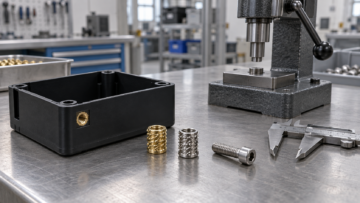
In through-hole assemblies where you can’t hold the bolt head (inside a tube, inside a housing), you need a thread-locking strategy that doesn’t require a wrench on both ends. A thin-profile nylock nut in a hex recess (locking insert nut) can solve this �� the hex countersink in the part holds the nut while you drive the bolt from the other side.
Applications of Nylock Nuts
Nylock nuts are used wherever vibration, shock, or cyclic loading risks loosening standard fasteners �� from automotive suspensions to robotics frames.
The applications span industries precisely because vibration is universal. Here’s where nylock nuts are the right �� and sometimes the only �� answer.
Automotive and Transportation
Suspension components see continuous vibration and shock loading that defeats standard nuts within thousands of cycles. Nylock nuts are OEM-spec for:
- Control arm mounting bolts
- Sway bar end links
- Wheel speed sensor brackets
- Exhaust heat shield mounting
Note: For exhaust manifold studs and turbocharger hardware that run above 120��C, all-metal locknuts or copper-coated nuts are required �� nylon degrades at sustained temperatures above that threshold.
Electronics and Robotics
Nylock nuts are a staple of competition robotics �� they appear throughout VEX Robotics and FIRST Robotics Competition (FRC) builds because robot frames take constant shock and impact during matches. The locking action prevents standoffs and shaft collars from working loose mid-match. M3 and M4 stainless nylock nuts are particularly common on PCB standoffs in professional electronics assemblies.
Construction and Industrial Equipment
Structural steel connections in light industrial framing use nylock nuts where bolt access for periodic re-torquing is limited �� HVAC ductwork hangers, equipment pads, conveyor frames. In heavy equipment, nylock nuts appear on non-structural guard mounting and access panel hardware.
DIY and Home Use
Cabinet making, furniture assembly, bicycle maintenance, and general home repair all have valid nylock nut use cases. The Home Depot and most hardware stores carry M5�CM10 zinc-plated nylock nuts in small packages. For bicycle wheel hubs, the jam-style thin nylock nut prevents wheel bearing preload from shifting under riding load.
Nylock Nuts vs. Other Locking Methods
Nylock nuts outperform split lock washers in most applications and are more reversible than thread-locking compounds �� but all-metal locknuts beat them above 120��C.
The fastener market offers multiple vibration-resistance solutions. Each has genuine advantages in the right scenario. Here’s how nylock nuts compare:
| Method | Locking Mechanism | Reusable | Temp Limit | Cost | Best Application |
|---|---|---|---|---|---|
| Nylock nut | Nylon friction | 1�C2�� | 100�C120��C | Low | General vibration |
| All-metal locknut | Deformed thread | 5�C10�� | 300��C+ | Medium | High heat, repeated assembly |
| Split lock washer | Spring tension | Many | Metal limit | Very low | Light vibration only |
| Thread-locking compound (Loctite 243) | Adhesive | No (heat required) | 150��C | Medium | Precision torque-sensitive joints |
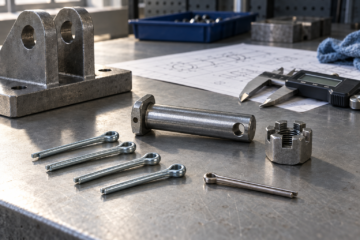
| Castle nut + cotter pin | Mechanical | Many | Metal limit | Low | Safety-critical (brake caliper pins) |
Why Split Lock Washers Underperform
Junker vibration tests �� the industry standard for evaluating fastener locking �� consistently show that split lock washers provide minimal locking benefit once the bolt is properly torqued. The washer flattens under clamp load and acts more like a plain washer than a locking device. Engineers have been debating this for decades, but the data is clear: nylock nuts vastly outperform split washers in sustained vibration environments.
When Thread-Locking Compounds Win
Loctite 243 (medium-strength) and similar anaerobic adhesives are the right call when you need precise torque �� such as fine-thread bolts in precision machinery where any prevailing torque from a nylock nut would distort the torque reading. They also work where nut access is impossible (blind holes). The tradeoff: disassembly requires heat, and the joint cannot be quickly field-serviced.
Disadvantages of Nylock Nuts
The main disadvantages of nylock nuts are temperature limits (nylon degrades above 120��C), limited reusability, and incompatibility with thread-locking compounds.
This is the most common question searchers have �� and for good reason. Knowing the limits prevents failures.
Temperature Limitation
At sustained temperatures above 100�C120��C, nylon softens and loses its clamping force. The nut may still look intact, but the insert has relaxed and the joint is no longer self-locking. This eliminates nylock nuts from:
- Exhaust systems and turbocharger hardware
- Oven and furnace components
- High-power lighting fixtures
- Some automotive engine bays where components run hot
The workaround: all-metal prevailing-torque nuts rated to 300��C+, or castle nuts with cotter pins for safety-critical high-temperature joints.
Limited Reusability
The nylon insert deforms when first engaged. It partially recovers, but each re-use degrades the locking torque. Most manufacturers rate nylock nuts for one reuse maximum �� some safety-critical aerospace specifications prohibit any reuse. In practice, you can feel when the prevailing torque drops significantly during re-installation �� that’s your signal to replace the nut. Never reuse a nylock nut that has been driven past its nylon zone with an impact gun; the impact loading fractures the insert unpredictably.
Chemical Compatibility
Polyamide (nylon) swells when exposed to:
- Petroleum-based hydraulic oils
- Many automotive brake fluids (glycol-based)
- Strong acids and some solvents
In fuel system or hydraulic applications, verify chemical compatibility or specify an all-metal alternative.
Future Trends in Locking Fastener Technology (2026+)
Advanced polymer inserts, hybrid metal-composite designs, and smart torque-indicating coatings represent the next wave of locknut innovation through 2026 and beyond.
The fastener industry evolves slowly �� the basic nylock design is 70+ years old �� but material science is pushing meaningful improvements.
High-Temperature Polymer Inserts
Research into PEEK (polyether ether ketone) and PTFE (Teflon) inserts is extending the service temperature of insert-style locknuts above 200��C. PEEK inserts maintain dimensional stability and hardness at temperatures that destroy standard nylon. The tradeoff is cost �� PEEK inserts can be 5�C10x the price of nylon. As PEEK becomes more widely manufactured, expect to see temperature-rated insert locknuts appearing in automotive and aerospace catalogs at competitive prices.
Torque-Indicating Coatings
Several fastener manufacturers are commercializing coatings that change color at specific torque thresholds, providing visual confirmation that a fastener has reached its clamp load. Applied to nylock nut designs, this eliminates the need for torque wrench verification on high-volume assembly lines. According to industry data tracked by the Aerospace Industries Association, fastener-related assembly errors cost the aerospace sector hundreds of millions annually �� visual verification is a direct response to this problem.
Automated Assembly Compatibility
Modern robotic assembly lines require fasteners that can be handled, oriented, and driven by machines reliably. Nylock nuts present a challenge because their nylon insert creates orientation sensitivity (the locked end must face the correct direction). New designs with symmetrical locking features �� or locknuts with the insert accessible from both faces �� are emerging to eliminate this constraint in automated fastening.
| Innovation | Current Status | Expected Mainstream Adoption |
|---|---|---|
| PEEK insert locknuts | Niche aerospace | 2027�C2028 |
| Torque-indicating coatings | Early commercial | 2025�C2026 |
| Symmetrical dual-face locknuts | Prototype | 2028+ |
| Smart IoT-embedded tension sensors | R&D | 2030+ |
FAQ: Nylock Nuts �� Common Questions Answered
Quick answers to the most-searched questions about nylock nuts, from reusability to installation direction.
What are the disadvantages of Nyloc nuts?
The main disadvantages are a 120��C temperature ceiling, single-use limitation, and incompatibility with some petroleum chemicals. Beyond those limits, the nylon insert softens, fractures, or swells �� eliminating the locking action. In any application that exceeds these parameters, switch to all-metal prevailing-torque locknuts or a mechanical locking system (castle nut + cotter pin).
Can nylock nuts be reused?
Once, at most �� and only if the prevailing torque is still noticeably firm during re-installation. The nylon deforms on first use. A lightly used nut removed carefully still has locking ability for one additional installation. A nut stripped out with an impact gun, or reused more than once, should be discarded. The cost difference between a new nylock nut and a failed joint is never worth it.
Which way do nylock nuts go on?
The nylon insert (visible as a colored ring) faces away from the joint surface �� toward the free end of the bolt. The nut threads through the metal portion first, with the nylon engaging last as the bolt passes through the metal threads and enters the insert zone. You cannot install a nylock nut backwards with a standard bolt; the nylon collar has a smaller inner diameter than the metal thread, so thread engagement stops if oriented incorrectly.
How do you tighten a nylock nut?
Thread by hand until you feel increased resistance (nylon engaging), then switch to a wrench and torque to the bolt’s specification. Never use an impact gun through the nylon engagement zone �� the shock can fracture the insert. Torque the same as you would a standard hex nut; the prevailing torque adds on top, so your wrench reading will be slightly higher when the joint is properly seated.
Are nylock nuts as strong as regular nuts?
Yes �� the metal body of a nylock nut is identical in strength to a standard hex nut of the same grade. A grade 5 nylock nut has the same proof load and tensile strength as a grade 5 hex nut. The nylon insert adds vibration resistance; it does not reduce load capacity. The only strength consideration is the slightly shorter effective thread engagement in thin (jam) nylock variants.
Do nylock nuts work with thread-locking compounds?
No �� and they shouldn’t be combined. Thread-locking compounds like Loctite fill the thread clearances that the nylon insert relies on. Using both typically means the compound penetrates the nylon zone, degrading the insert and leaving you uncertain about the actual locking mechanism. Choose one or the other based on your application requirements.
What size nylock nut do I need?
Match the nut’s thread designation to the bolt’s thread designation exactly. An M8-1.25 nylock nut goes with an M8-1.25 bolt (8mm diameter, 1.25mm pitch). Imperial sizes use the bolt’s inch diameter and threads-per-inch: a 5/16″-18 bolt needs a 5/16″-18 nylock nut. Diameter, thread pitch, and nut grade must all match. See the table in the Materials section above for prevailing torque values by size.
Are nylock nuts rated for outdoor use?
Only stainless steel (A2 or A4) or hot-dip galvanized nylock nuts are suitable for outdoor exposure. Standard zinc-plated carbon steel nuts will corrode when the coating is scratched or in prolonged moisture �� and the nylon insert will absorb water over time, slightly reducing prevailing torque. For marine environments, specify A4 (316) stainless exclusively. For coastal areas without direct saltwater spray, A2 (304) is usually sufficient.
Conclusion
Nylock nuts earn their place in virtually every engineering discipline because they solve a real problem �� vibration-induced loosening �� with a simple, affordable, and installation-friendly mechanism. The nylon insert grips the bolt thread independently of joint clamp load, providing reliable locking across millions of cycles without adhesives, secondary fasteners, or special tools.
The key to using them correctly is understanding their limits: stay below 120��C, treat them as single-use, keep them away from petroleum hydraulic fluids, and install them with a torque wrench rather than an impact gun. Within those parameters �� which cover the overwhelming majority of fastening applications �� nylock nuts outperform every competing locking method on simplicity, cost, and disassembly convenience.
For your next project, match the nut material to the environment (stainless for outdoor/marine, carbon steel for indoor), match the profile to the clearance (standard hex where you have room, thin where you don’t, flange where you need load distribution), and torque to spec. That’s it. The nylon takes care of the rest.
Explore our full range of nylock nuts and locking fasteners to find the right size, grade, and material combination for your application.
Related Products
Solutions & Cluster
Related Articles
- Shear Bolts: Security Types, Materials, and Buying Guide for Permanent Fastening
- All Thread Rod Complete Guide: Types, Applications & Selection Tips (2026)
- Confirmat Screws: Complete Guide to Sizes, Uses & Installation
- Sex Bolt: The Complete Guide to Barrel Nuts, Chicago Screws, and Through-Bolting Fasteners
- Barrel Bolts: Complete Guide to Types, Uses, and Installation
- What Is a Screw? The Complete Guide to Types, Uses & Selection for Production
- Stainless Steel Fasteners: Complete Grade & Application Guide (2026)
- Bolt Nut Stainless Steel: Grades, Pairing, and Buying Guide