 English
  German
  Spanish
  Portuguese
  French
  Japanese
  Arabic
  Korean
  Vietnamese
  Russian
 A metal fastener is a hardware device—bolt, screw, nut, or rivet—that mechanically joins two or more components together.
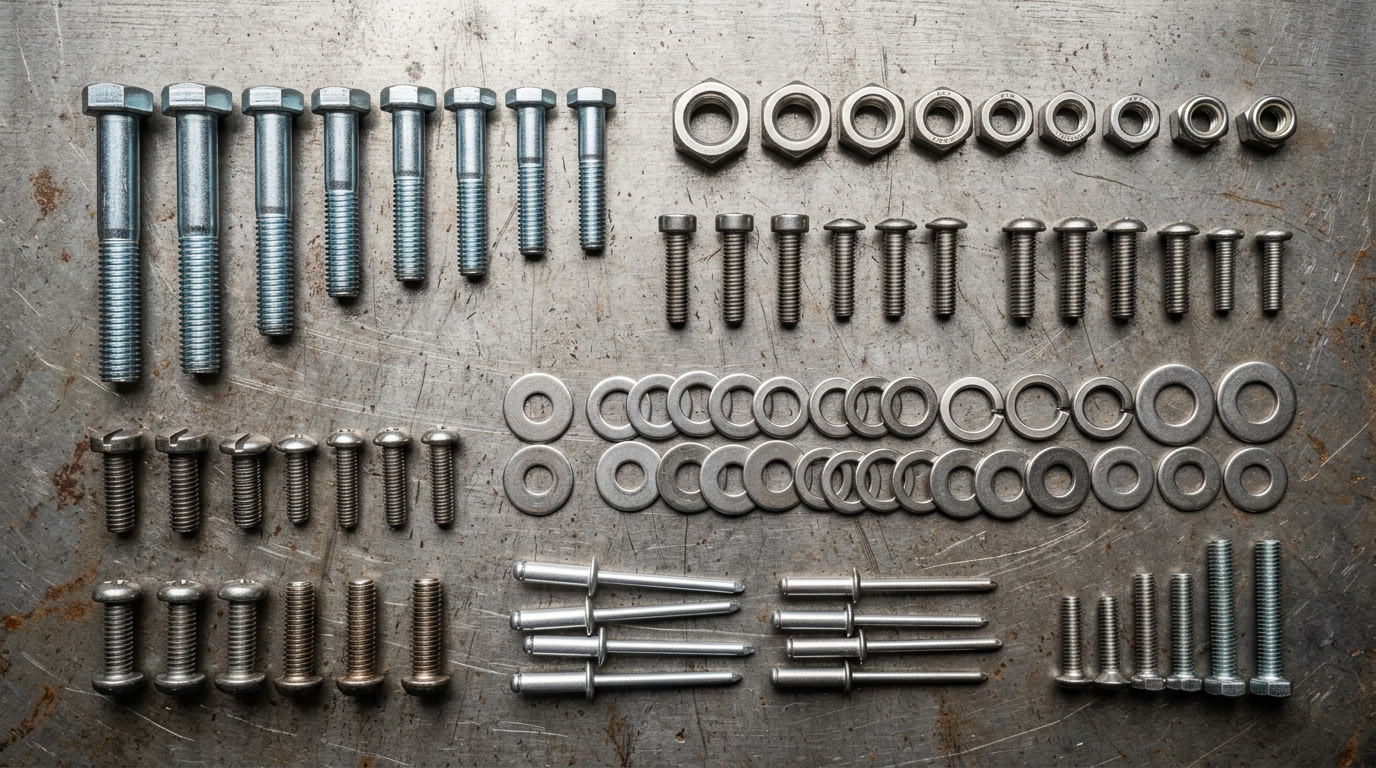
You’re mid-project and you’ve just grabbed a handful of shiny silver hardware from the bin. Bolt? Screw? Does the difference actually matter? It does—badly. The wrong metal fastener choice shows up as a stripped thread at 3 AM, a rusted joint that fails in a rainy season, or a structural connection that creeps loose under vibration. This guide walks you through every major metal fastener category, the materials behind them, and a practical decision framework so you stop guessing and start specifying.
What Is a Metal Fastener?
A metal fastener is any device manufactured from metal that mechanically joins or affixes two or more objects. Unlike adhesives or welds, fasteners create a joint that can typically be assembled and disassembled—making them essential in industries that require maintenance access, component replacement, or design iteration.
The category is enormous. According to Fastener Industry estimates from the Industrial Fasteners Institute, the U.S. fastener market alone ships billions of pieces annually across construction, automotive, aerospace, electronics, and consumer products. What unites all of them: they create a clamping force between joined materials through mechanical means—threads, compression, or deformation.
How Metal Fasteners Work
Thread-based fasteners (bolts, screws, nuts) work by converting rotational force (torque) into clamping force (tension). As you tighten a bolt, the helical thread climbs and stretches the bolt shank slightly—that elastic tension is what keeps the joint clamped. The thread pitch determines how much linear travel per revolution; a finer pitch creates more clamping force per unit of torque but is more vulnerable to stripping.
Non-threaded fasteners work differently. Rivets deform permanently on one end to lock the joint—no threading involved. Clips and retaining rings use spring tension or snap geometry. Press-fit inserts rely on interference between the fastener OD and the hole.
Metal vs. Non-Metal Fasteners
| Property | Metal Fastener | Plastic/Nylon Fastener |
|---|---|---|
| Tensile strength | 400–1,400 MPa (steel grades) | 40–80 MPa |
| Temperature range | –60°C to 800°C+ | –40°C to 120°C |
| Electrical conductivity | Conductive (insulate if needed) | Naturally insulating |
| Corrosion resistance | Varies by alloy/coating | Excellent for most chemicals |
| Recyclability | High | Low to moderate |
| Cost | Medium–high | Low |
The practical bottom line: use metal where strength, heat, or permanence matters; use nylon where electrical isolation, chemical resistance, or low mass is the priority. Most structural and load-bearing applications default to metal.
Types of Metal Fasteners
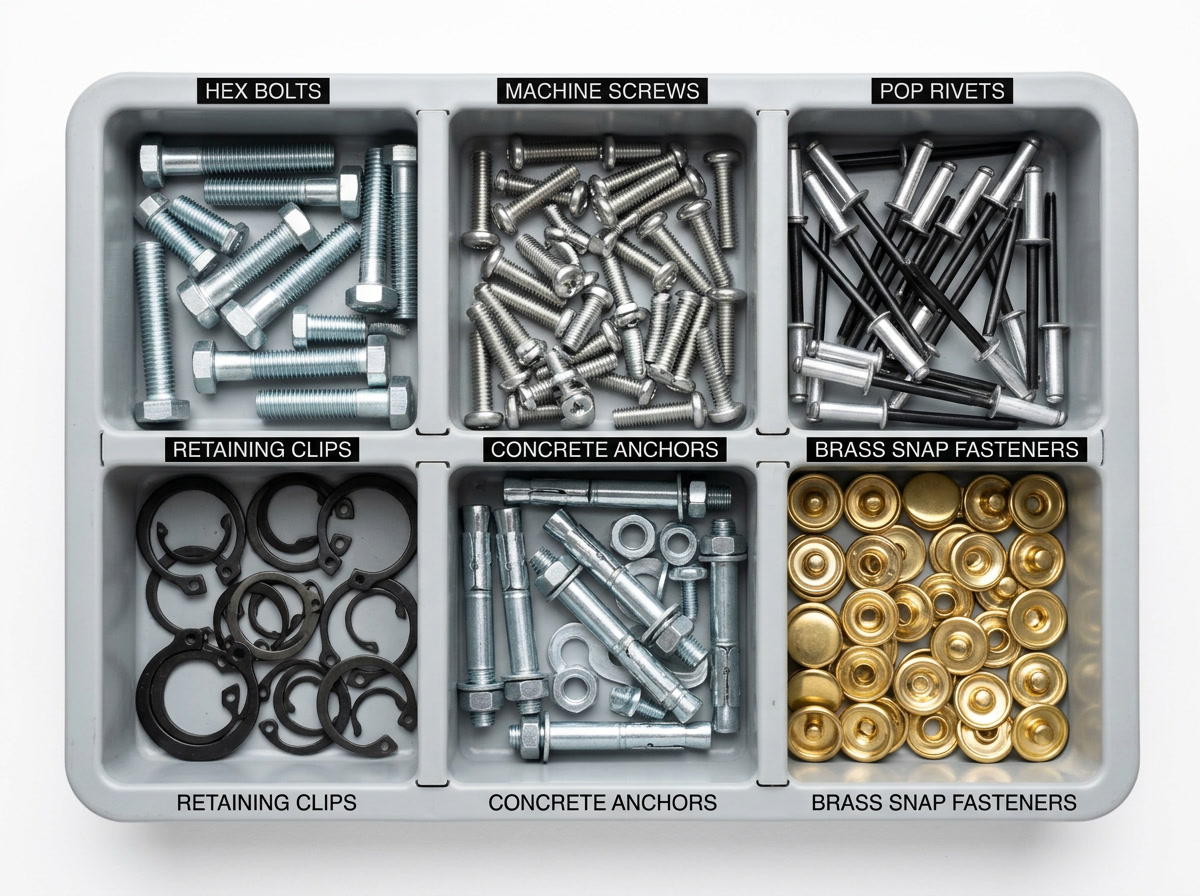
There are dozens of specific fastener forms, but they cluster into six functional families. Understanding which family you’re working in narrows your choice immediately.
Bolts and Nuts
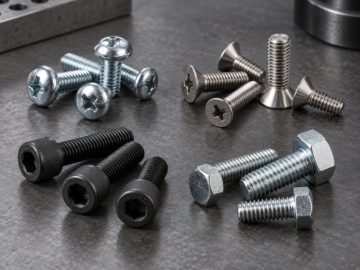
A bolt is an externally threaded fastener designed to be used with a nut—it passes through unthreaded holes in both workpieces and clamps via the nut on the opposite face. This distinguishes it from a screw, which threads directly into material.
Key bolt variables: head style (hex, flange, carriage, eye), thread form (UNC/UNF for inch; M-series for metric), grade (SAE Grades 2/5/8 for inch; ISO 8.8/10.9/12.9 for metric), and shank length. A Grade 8 hex bolt has a proof load of roughly 120,000 psi — adequate for most structural steel work. A Grade 2 bolt at ~55,000 psi is fine for light fixtures and sheet metal.
Hex flange bolts add a built-in washer face that distributes load and prevents loosening — underrated in vibration-heavy applications like HVAC equipment or machinery.
Screws
Screws thread directly into material—wood, metal, plastic, masonry—without a mating nut. The thread profile changes with the application:
- Machine screws: fine uniform thread, designed for metal-to-metal. Require a tapped (pre-threaded) hole or a nut.
- Sheet metal screws: sharp, coarse thread that self-taps into thin metal without pre-tapping. Common in HVAC ductwork and electrical enclosures.
- Wood screws: tapered shank with coarse thread; the taper pulls the joint tight as the screw advances.
- Self-drilling screws (tek screws): a drill-point tip removes the need for a pilot hole. They drill, tap, and fasten in one pass — huge time savings in steel stud framing.
- Socket head cap screws: high-strength machine screws with a hex socket drive. Preferred in precision machinery where a hex wrench access hole can be machined into the housing.
Rivets
Rivets are permanent fasteners — once set, they do not come apart without drilling. A cylindrical shank is inserted through pre-drilled holes; the tail is then deformed (bucked, pulled, or hammered) to create a second head that locks the joint.
Blind rivets (pop rivets) can be set from one side only — the mandrel pulls through and snaps off. This makes them essential for hollow sections or areas where you can’t reach the back face. Structural blind rivets rated for shear loads up to 1,000 lbf are standard in aircraft skins, trailers, and light steel structures.
Solid rivets — the original aerospace fastener — require access to both sides but produce superior joint strength. Commercial aircraft use millions of solid aluminum rivets per fuselage.
Clips, Retaining Rings, and Snap Fasteners
Metal clips encompass a huge range: hose clamps, wire saddle clips, sheet metal joining clips, fabric-to-metal attachment clips for automotive trim, and structural panel clips for siding systems. They work via spring force or a geometry that locks around a ridge or groove.
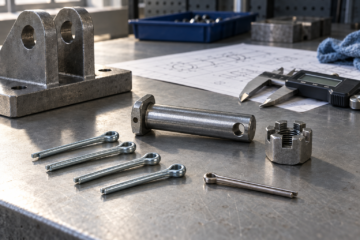
Retaining rings (circlips) fit into a machined groove on a shaft or bore and prevent axial movement of components — common in gearboxes, pulleys, and bearing assemblies.
Metal snap fasteners (press studs, turnbuttons) are standard in clothing, bags, and straps — the “metal fasteners for clothing” category. They consist of a socket and a stud that engage with a satisfying click and hold fabric layers together reliably.
Anchors and Inserts
When you’re fastening into masonry, concrete, or soft base materials, you need an anchor:
- Wedge anchors: expand mechanically when torqued; used for heavy structural connections to concrete.
- Toggle bolts: spring-loaded wings expand behind drywall to distribute load.
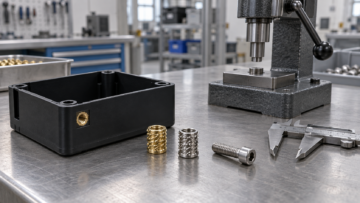
- Threaded inserts (helicoils, E-Z Lok): installed into softer materials (aluminum, plastic, wood) to provide durable metal threads for repeated assembly.
Specialty and Micro Fasteners
The metal fastener clips and metal fasteners for paper categories belong here — small brass or steel brads (paper fasteners) that push through paper stacks and fold over to bind documents, typically 8–20 mm. They’re the same functional concept as a rivet but at stationery scale.
| Family | Primary Function | Removable? | Typical Material |
|---|---|---|---|
| Bolts & Nuts | Structural clamping | Yes | Steel, stainless, brass |
| Screws | Direct thread engagement | Yes | Steel, stainless, brass |
| Rivets | Permanent sheet joining | No (must drill out) | Aluminum, steel, stainless |
| Clips & Retaining Rings | Axial retention / light joining | Yes | Spring steel |
| Anchors & Inserts | Substrate engagement | Partial | Steel, zinc alloy |
| Brads & Paper Fasteners | Document binding | Yes (unfold) | Brass, steel |
Metal Fastener Materials: Which Alloy for Which Job
The metal itself matters as much as the fastener form. Material choice determines corrosion resistance, strength ceiling, electrical behavior, and cost.
Stainless Steel Fasteners
Grade 304 stainless (18% chromium, 8% nickel) is the workhorse for moderate corrosion environments — kitchen equipment, outdoor furniture, marine hardware above the waterline. It resists oxidation but is not immune to chloride-induced pitting.
Grade 316 stainless adds 2–3% molybdenum, which dramatically improves chloride resistance. Use it for anything within salt-spray range: coastal construction, boat hardware, pool and spa equipment, chemical processing. The corrosion resistance premium is about 20–30% more cost per piece — nearly always worth it in those environments.
Carbon Steel Fasteners (Zinc-Plated, Hot-Dip Galvanized)
Plain carbon steel has excellent strength but rusts aggressively. The answer is coating:
- Zinc electroplating (zinc dichromate): 5–12 µm of zinc, adequate for interior or protected applications. Will rust in 6–24 months if exposed to outdoor weather.
- Hot-dip galvanizing: 45–85 µm of zinc alloy. The thick coating provides decades of outdoor service, making it standard for structural lumber connectors, handrail posts, and site hardware.
- Mechanical galvanizing: cold-process zinc coating; avoids hydrogen embrittlement on high-strength bolts — required for Grade 8 and above when galvanizing is specified.
A critical point most guides skip: never mix stainless and hot-dip galvanized steel in wet environments. Galvanic corrosion accelerates rapidly when dissimilar metals contact each other in the presence of electrolyte. Use all-stainless or all-galvanized fastener families in wet joints.
Brass and Bronze Fasteners
Brass (copper-zinc alloy) machines beautifully and resists corrosion in fresh water and mild chemicals. It’s non-magnetic — valuable in electronics, scientific instruments, and MRI facility construction. The downside is strength: brass machine screws max out around 60,000 psi, roughly half a medium-grade steel screw.
Silicon bronze is the premier choice for wooden boat construction — better corrosion resistance than brass, compatible with wood tannins that attack zinc coatings, and strong enough for structural use.
Aluminum Fasteners
Aluminum fasteners are roughly one-third the weight of steel equivalents at about half the strength. Their natural oxide layer provides reasonable corrosion resistance; 2024 and 7075 aluminum alloy bolts are used extensively in aircraft where weight reduction is worth the cost premium.
For general construction, avoid aluminum fasteners in contact with concrete or wood treated with copper-based preservatives (ACQ, CA lumber) — galvanic and chemical reactions will eat the fastener in a season.
| Material | Tensile Strength | Best Use | Avoid |
|---|---|---|---|
| 18-8 Stainless (304) | 70–100 ksi | Indoor/outdoor, food service | Heavy chloride exposure |
| 316 Stainless | 70–100 ksi | Marine, coastal, chemical | High-temp >400°C |
| Carbon steel (galv.) | 60–120+ ksi | Outdoor construction | Mixing with stainless in wet joints |
| Brass | 45–70 ksi | Electronics, plumbing, marine wood | High-load structural use |
| Aluminum (2024) | 55–70 ksi | Aerospace, weight-critical | Contact with copper-treated wood |
Industry Applications of Metal Fasteners
Every manufactured object contains a metal fastener somewhere. The applications below represent the highest-volume and most demanding use cases.
Construction and Structural Steel
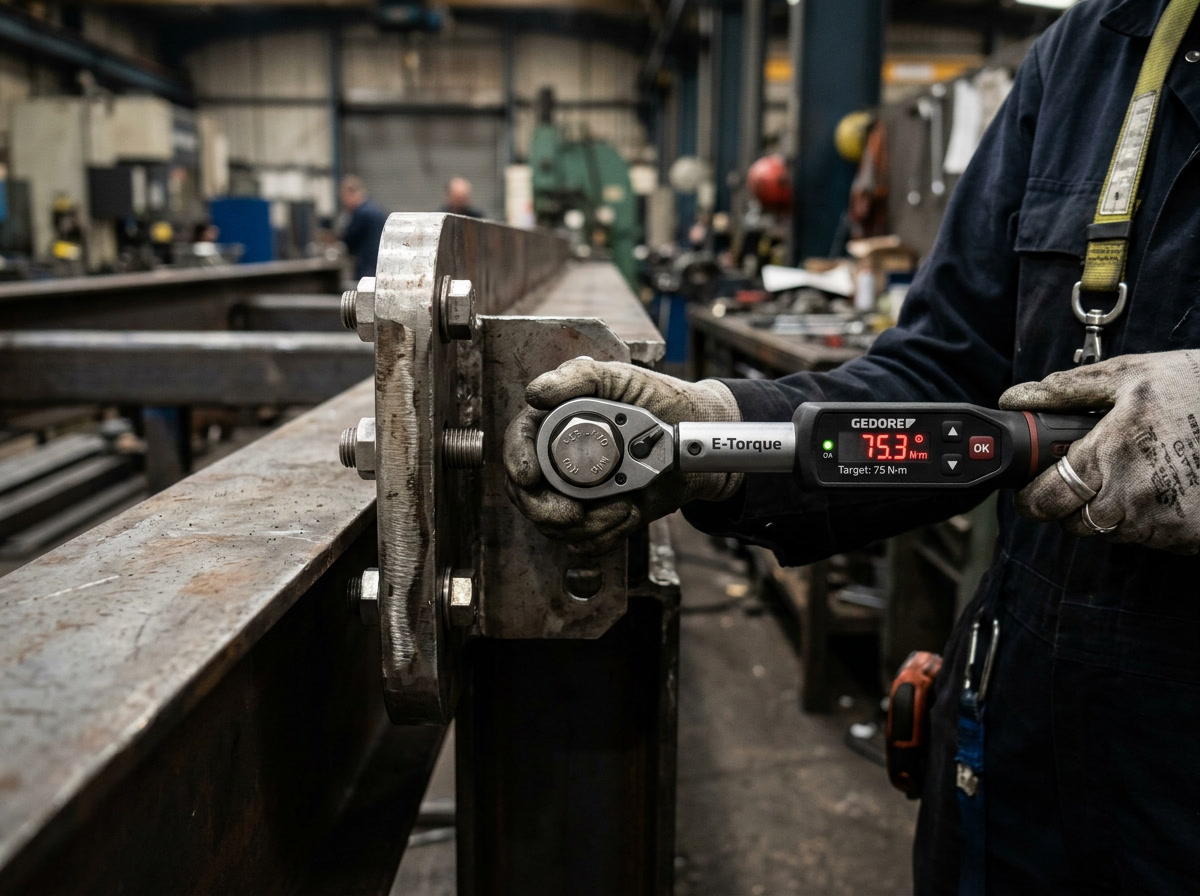
Building construction consumes more fasteners than any other sector. Structural steel connections use heavy hex bolts (A325 and A490 grades) with hardened washers. The bolts are torqued to a specified value — typically 70% of proof load — to develop full pretension. This pretension is what resists slip in friction-type connections.
Residential framing uses joist hanger hardware, hurricane clips, and post caps — all metal fasteners that transfer loads between wood members. These are typically hot-dip galvanized or stainless to handle the ACQ treatment in modern pressure-treated lumber. The American Institute of Steel Construction (AISC) publishes the code of standard practice and connection design specifications that govern structural fastener use in the U.S.
Automotive and Manufacturing
Modern vehicles use thousands of metal fasteners — from M6 body panel screws to M20 suspension bolts with stretch specifications that can only be set once and must be replaced if removed. Prevailing-torque locknuts (nyloc or all-metal) are standard in vibration-heavy chassis locations because they resist self-loosening.
Assembly lines use automated fastener driving systems that monitor torque in real time — a torque signature outside the specification window is flagged immediately. This is why fastener grade consistency matters enormously to manufacturers: a single out-of-spec batch can trigger a production stop.
Metal Fasteners for Clothing and Straps
The fashion and accessories market is a major consumer of specialty metal fasteners. D-rings, O-rings, snap hooks, and lobster clasps are load-rated hardware for bags and outdoor gear. Jeans rivets (copper or brass) reinforce high-stress pocket corners — an application unchanged since Levi Strauss patented them in 1873.
Metal fasteners for clothing specifically include snaps (press studs), hook-and-bar clasps (waistbands), trouser hooks, and decorative rivets. Most are stamped from brass or zinc alloy and plated — gold, silver, antique copper — for appearance. Load ratings in apparel hardware are intentionally modest; the design priority is cycle life (open/close cycles) over tensile strength.
How to Choose the Right Metal Fastener
The worst fastener buying decision is made by size alone — “I need a 1/4-inch bolt” — without specifying grade, material, or thread form. Here’s a structured selection process.
Step 1: Define the Load
Is the fastener in tension (pulling apart), shear (sliding), or combined loading? Bolts and screws handle tension well. Rivets and pins handle shear efficiently. Anchor bolts often see both.
Calculate the required clamping force or shear capacity, then select a fastener grade with a proof load (allowable tension before permanent deformation) at least 2× your design load. For structural applications, AISC and AASHTO standards prescribe specific bolt grades — follow them, don’t substitute.
Step 2: Assess the Environment
| Environment | Recommended Material |
|---|---|
| Indoor, dry | Zinc-plated carbon steel or Grade 304 stainless |
| Outdoor, non-coastal | Hot-dip galvanized or Grade 304 stainless |
| Coastal/marine, salt spray | Grade 316 stainless or aluminum-bronze |
| Chemical / acid exposure | Grade 316L stainless or Hastelloy |
| Electrical isolation required | Brass or nylon-insert composites |
| High temperature (>500°C) | Inconel or high-temp alloy steel |
Step 3: Match Thread Form and Drive
In North America, you’ll encounter two thread systems: Unified (inch) — specified as diameter × threads-per-inch (e.g., 1/4-20 UNC) — and Metric (ISO) — diameter × pitch in mm (e.g., M6×1.0). They are NOT interchangeable. A 1/4-inch bolt will not properly thread into an M6 nut, even though the diameters are close (6.35 mm vs. 6.0 mm).
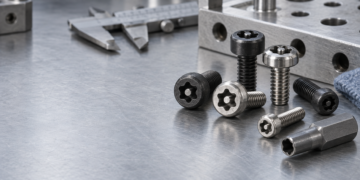
Drive selection matters on the jobsite. Hex heads need an open-end or socket wrench. Phillips strips easily in power tools above 18V without a clutch — prefer Torx (star drive) or hex socket drives for production assembly. For tamper resistance in public installations, choose pin-head drives that require a non-standard tool.
Step 4: Confirm Size and Grade Markings
Steel bolts are marked on the head. SAE Grade 5 shows three radial lines; Grade 8 shows six lines. ISO 8.8 is marked numerically on the head. Grade 2 and basic hardware-store bolts show no markings at all.
Never substitute a lower grade bolt in a structural location to save cost — the failure mode is brittle and sudden. In practice, the material cost difference between Grade 5 and Grade 8 is pennies per fastener; the liability exposure is unbounded.
Use a thread gauge or thread checker when buying used or unidentified fasteners. Mixing inch and metric hardware in a joint can cross-thread and create a false sense of engagement that fails at first load.
Future Trends in Metal Fasteners (2026 & Beyond)
The fastener industry looks traditional from the outside but is undergoing significant technology change driven by automation, sustainability mandates, and data requirements.
Smart Fasteners and IoT-Enabled Joints
Instrumented fasteners — bolts with embedded load cells or strain gauges — are already deployed in critical infrastructure monitoring, bridge expansion joints, and offshore wind turbine towers. The bolt transmits real-time tension data wirelessly, enabling maintenance crews to catch loose fasteners before a joint fails. As sensor costs continue dropping (MEMS load cells now cost under $5 in volume), smart fasteners will migrate into mid-tier applications like building facades and large solar array structures.
A parallel development: tightening systems with torque traceability. Each fastener’s final torque value is logged to a digital work order, enabling warranty tracing and quality audits years after assembly. This is already standard in automotive Tier-1 suppliers; it’s expanding into construction and renewable energy.
Sustainability and Circular Fastener Manufacturing
Steel production accounts for roughly 7–9% of global CO₂ emissions, and fastener manufacturing is not exempt. Two shifts are underway:
Electric arc furnace (EAF) steel — made from recycled scrap — now accounts for over 70% of U.S. steel production. EAF steel has a carbon footprint roughly 75% lower than blast-furnace virgin steel. Specifying fasteners made from EAF steel is increasingly part of green building certification point systems (LEED, BREEAM).
Fastener reuse programs: some large manufacturers and construction firms are piloting programs to recover, clean, and re-certify high-value fasteners (structural A325/A490 bolts) after demolition. The Occupational Safety and Health Administration (OSHA) and structural codes currently restrict reuse without re-testing — but the economics and sustainability pressure are building a case for certified reuse protocols.
| Trend | Timeline | Impact |
|---|---|---|
| Smart/instrumented fasteners | 2026–2028 | Predictive maintenance in infrastructure |
| EAF-sourced fastener materials | Now–2027 | Lower embodied carbon in green buildings |
| Certified fastener reuse programs | 2027–2030 | Cost and carbon savings in commercial demo |
| Digital twin integration | 2026–2029 | Full lifecycle traceability per fastener |
| Additive-manufactured specialty fasteners | 2027+ | On-demand complex geometries, aerospace |
Frequently Asked Questions About Metal Fasteners
What is a metal fastener?
A metal fastener is any hardware device made of metal that mechanically joins components—including bolts, screws, nuts, rivets, clips, and anchors. The defining characteristic: it creates a joint through mechanical means rather than adhesive or weld.
What are the most common types of metal fasteners?
The six main types are bolts (used with nuts), screws (self-threading), rivets (permanent deformation joints), clips and retaining rings (spring-retention), anchors (substrate engagement), and specialty forms like brads for paper or snaps for clothing. Each family serves different load, removability, and material requirements.
What metal fasteners are used for clothing?
Press studs (snap fasteners), hook-and-bar clasps, jeans rivets (copper/brass), D-rings, O-rings, and lobster clasps. Most are stamped from brass or zinc alloy and plated for appearance. The Crafts Industry Alliance publishes guidance on testing cycle life for apparel hardware.
How do I choose between stainless steel and galvanized fasteners?
Use stainless (304 or 316) where you need cleanliness, appearance, or resistance to chlorides. Use hot-dip galvanized where maximum zinc thickness is needed for long-term outdoor protection and cost is a priority. Never mix the two in wet conditions — galvanic corrosion will attack the zinc coating rapidly.
What is the difference between a bolt and a screw?
A bolt passes through unthreaded holes and requires a nut on the opposite face to clamp. A screw threads directly into one of the workpieces (tapped metal, wood, or via a self-tapping point). The distinction matters for joint design: bolts allow disassembly from either face; screws require access to only one side but strip more easily under repeated assembly.
What grade of bolt should I use for structural connections?
For standard structural steel connections, use SAE Grade 5 (minimum) or ASTM A325 equivalents. High-strength critical connections—friction joints, column splices, moment frames—require ASTM A490 or ISO 10.9. Always follow the applicable code (AISC, AASHTO, or local building standard) rather than substituting based on availability.
Are metal fasteners recyclable?
Yes—steel, stainless, brass, and aluminum fasteners are all fully recyclable. Most metal fasteners are small enough to pass through standard scrap separation magnetically (steel) or by density sorting (aluminum, brass). In large construction projects, recovering and recycling fasteners during demolition is increasingly part of LEED deconstruction credits.
Where can I find metal fasteners near me?
Hardware stores (Home Depot, Ace Hardware, Fastenal branches) carry standard bolts, screws, and anchors. For industrial quantities, specialty fastener distributors stock full grade and material ranges. For production quantities of machine screws, rivets, or custom fasteners, direct-from-manufacturer sourcing through suppliers like productionscrews.com reduces per-piece cost and ensures consistent grade certification.
Conclusion
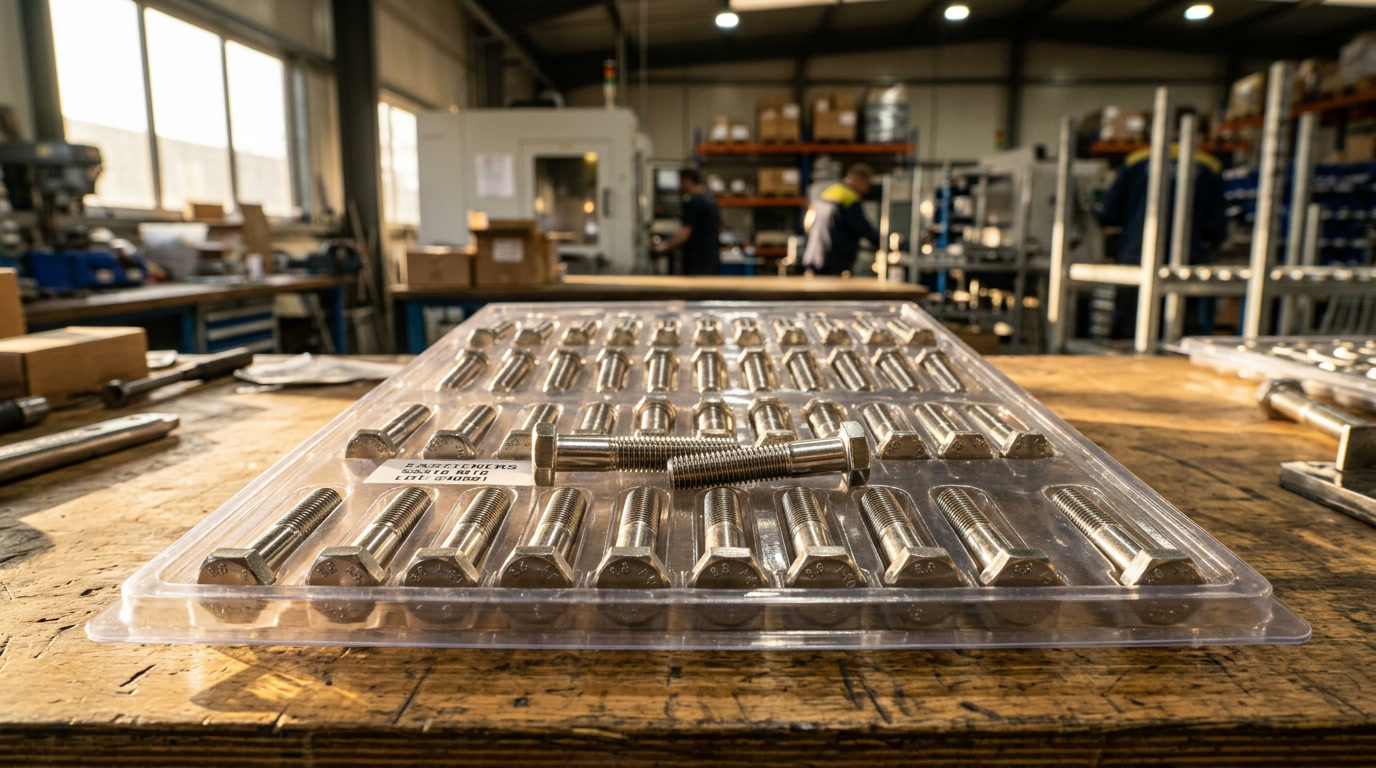
The right metal fastener for your project comes down to three things: the load it needs to carry, the environment it will live in, and the thread or form that matches your assembly process. A Grade 8 hex bolt and a brass snap fastener are both metal fasteners — but they live in entirely different engineering worlds.
Start with load and environment, then narrow to form and material. Verify grade markings before installation. And for anything structural, follow the published standards rather than approximating — the cost of a code-compliant fastener is always lower than the cost of a failure.
Whether you’re sourcing a bag of self-drilling tek screws for a roofing run or specifying high-strength A490 bolts for a steel moment frame, the principles here give you a foundation to specify confidently and communicate clearly with your supplier. Bookmark the table of materials and environments above — it’s the reference that saves you the re-order.
Related Products
Solutions & Cluster
Related Articles
- Bolt Screw Guide: Types, Differences, Sizes, and Industrial Applications
- Nylon Lock Nuts: The Complete Guide to Types, Sizes, Specs & Applications (2026)
- How Do You Use a Rivet Gun? Step-by-Step Guide for Clean, Strong Blind Rivets
- Vehicle Threads Explained: A Complete Guide to Automotive Fastener Thread Types, Standards, and Selection
- M2 Screws: The Complete Guide to Specifications, Types, and Applications
- Acme Thread Explained: The Complete Engineer’s Guide to Design, Specs, and Real-World Use
- A2-70 Bolt: Complete Guide to Grade, Strength, and Applications
- Bolt Nut Stainless Steel: Grades, Pairing, and Buying Guide