 English
  German
  Spanish
  Portuguese
  French
  Japanese
  Arabic
  Korean
  Vietnamese
  Russian
 Bolts vs Screws: Key Differences, Strength & When to Use Each
Bolts require a matching nut and a through-hole to clamp parts together; screws thread directly into the material — wood, metal, or plastic — without needing a nut.
Walk into any hardware store and you’ll find bins labeled “bolts” right next to bins labeled “screws.” The shapes look similar. Both have threaded shafts. Both use a wrenched or driven head. So what’s actually different — and does it matter?
It matters enormously. Pick the wrong fastener for a structural joint and you risk slippage, stripping, or outright failure under load. Pick the right one and you get a joint that holds for decades. This guide walks through every practical difference between bolts and screws: thread design, installation mechanics, strength behavior, material compatibility, and which industries favor each. By the end, you’ll be able to pick the right fastener for almost any job without second-guessing yourself.
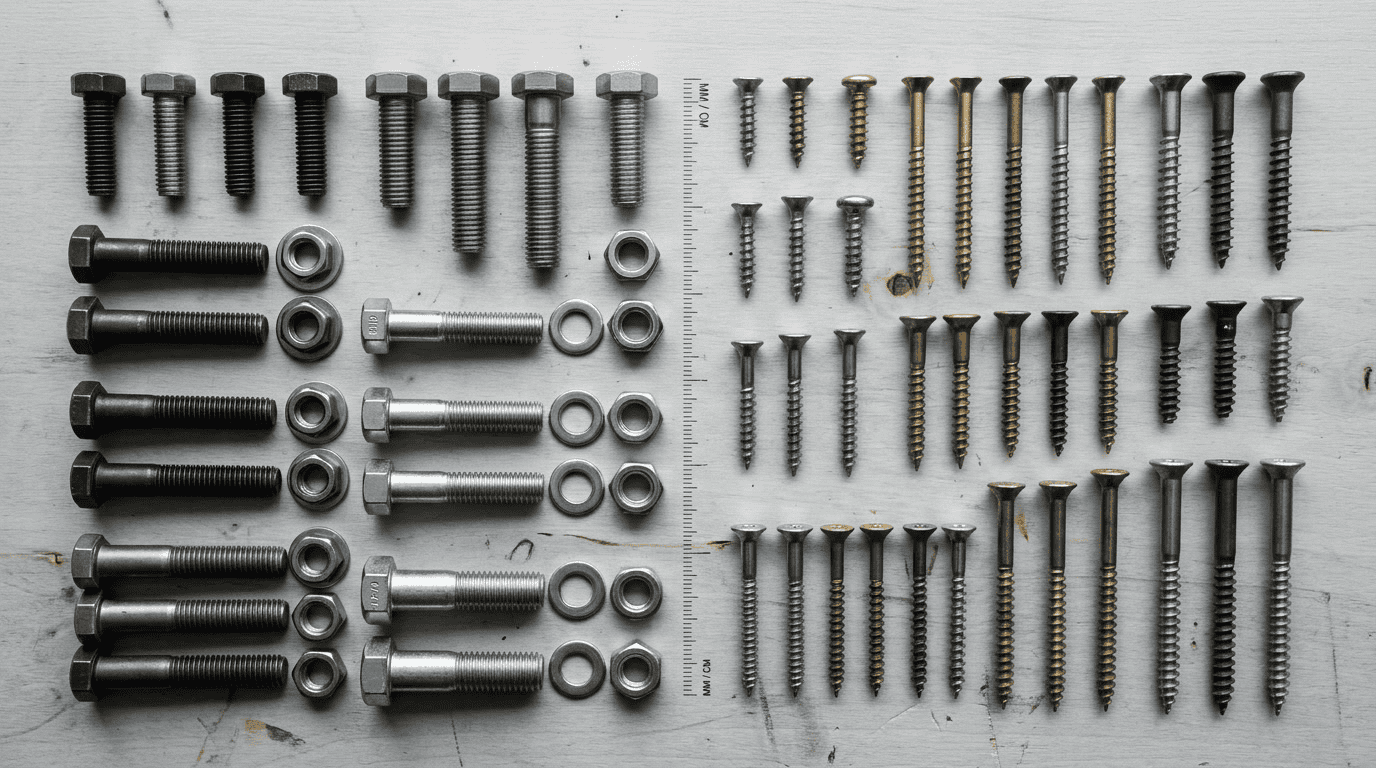
What Are Bolts and Screws?
Bolts and screws are both externally threaded fasteners, but they work through fundamentally different mechanisms — and understanding that distinction is the foundation of every fastener decision.
A bolt is designed to pass completely through two (or more) parts and clamp them together using a nut on the far side. The joint is held by the compressive clamping force created when you torque the nut. Per Wikipedia’s fastener classification, a bolt is formally defined by this “through-hole plus nut” assembly method. No nut, no bolt.
A screw is designed to be driven directly into a material — wood, metal, plastic, masonry — where the threads either cut into or mate with existing internal threads in the host material. No nut required. The holding force comes from thread engagement with the material itself.
The confusion arises because modern usage has blurred the line. Many manufacturers call lag screws “lag bolts,” and machine screws are routinely used with nuts. Here’s the working definition used in structural engineering and manufacturing:
| Term | Thread engagement | Requires nut? | Torqued from | Typical application |
|---|---|---|---|---|
| Bolt | Through a clearance hole | Yes | The nut (usually) | Structural joints, machinery |
| Screw | Into the material itself | No | The head | Wood framing, sheet metal, assemblies |
| Stud | Both ends threaded | Yes (one end) | External nut | Engine blocks, wheel hubs |
How Thread Design Differs Between Bolts and Screws
Bolts and screws take fundamentally different approaches to thread design.
Bolt threads are cut to precise tolerances following metric M-series or imperial UNC/UNF standards. The bolt shank passes through a clearance hole — the hole is slightly larger than the bolt diameter, so the threads never engage the hole walls. All clamping force transfers through the nut. Because the bolt isn’t threading into anything, the thread pitch is standardized and consistent across bolt grades.
Screw threads are engineered specifically to bite into the host material. Wood screws have aggressive, widely spaced threads designed to displace wood fibers and resist pull-out. Sheet-metal screws carry sharp, self-tapping profiles that cut through thin steel. Machine screws use fine, controlled threads sized to mate with pre-tapped holes. According to Britannica’s engineering reference on screws, the helix angle and thread profile of each screw type are deliberately optimized for the specific material being fastened.
The Shank Difference That Matters Most
Bolts often feature a partially threaded shank — a plain cylindrical section between the head and where the threads begin. This unthreaded shank sits inside the clearance hole and provides excellent resistance to shear forces (lateral loads trying to slide the joint sideways). The smooth shank transfers shear directly through the bearing area.
Most screws are fully threaded, from tip to head. This maximizes pull-out resistance — the force required to yank the screw straight out of the material — which is the primary load direction a screw must resist in most applications.
Key Structural Differences: A Deep Dive
Most guides on bolts vs screws stop at “bolts use nuts, screws don’t.” That’s accurate but incomplete. The real engineering differences go considerably deeper.
Thread Pitch and Profile
Bolt threads follow ISO metric or ASME Unified standards. A standard M10 bolt has a 1.5 mm thread pitch; an M10 fine-thread version uses 1.25 mm pitch. Finer pitch means more thread contact per unit length — better for precision and vibration resistance — but also more vulnerable to stripping in soft materials.
Screw threads are optimized by material and application:
- Wood screws: Coarse pitch (typically 8–16 TPI for #8 screws), partial thread near the head designed to pull the top piece tight against the bottom piece
- Self-tapping metal screws: Thread-forming or thread-cutting profiles, often with a sharp drill-point or gimlet point
- Machine screws: Fine pitch, designed for pre-tapped holes or nut engagement at close tolerances
Clamping Force and Preload
This is where the performance gap between bolts and screws is most dramatic. A properly torqued bolt creates a preload — a tensile force inside the bolt shank that compresses the clamped parts together with significant force. That preload is what makes bolted joints resistant to vibration loosening and cyclic fatigue loading.
As documented in Engineering Toolbox’s bolt torque and preload reference, an M12 Grade 8.8 bolt torqued to 85 Nm generates approximately 34 kN of clamping force — roughly 3.4 metric tons of compression holding your joint together.
Screws don’t generate preload in the same controlled, measurable way. Their holding strength is primarily about thread engagement length and pull-out resistance. In wood framing, a #10 wood screw delivers roughly 70–100 lbs of pull-out resistance per inch of thread engagement in standard pine lumber. A 3-inch screw gives you approximately 200–300 lbs total pull-out — adequate for many applications, but nowhere near the multi-ton clamping force of a structural bolt.
Head Types and Drive Systems for Bolts vs Screws
Bolts predominantly use:
– Hex heads — driven by wrench or socket, the standard for structural applications
– Flange heads — hex with integrated washer, better load distribution on softer surfaces
– Carriage bolt heads — domed, with a square neck that self-locks in wood
Screws use a much wider variety of drive systems:
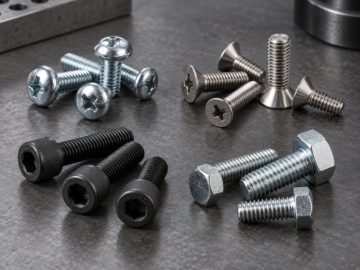
– Phillips / Pozidriv — consumer and light construction, widely available
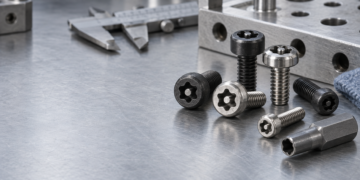
– Torx / Robertson — higher torque transfer, cam-out resistant, preferred for power tools
– Hex socket (Allen) — machine screws in tight or confined spaces
– Slotted — older applications, limited torque, light duty only
Strength Comparison: Bolts vs Screws
Head-to-head strength comparisons between bolts and screws require specifying what kind of strength you’re measuring. Bolts dominate in some categories; screws in others.
| Strength type | Bolts | Screws | Winner |
|---|---|---|---|
| Tensile (axial pull) | Grade 8.8 M12: ~74 kN | #12 wood screw: ~0.5 kN | Bolts by ~100× |
| Shear (lateral force) | Unthreaded shank resists cleanly | Fully threaded shank shears more easily | Bolts |
| Pull-out (in wood/plastic) | Depends on washer bearing area | Very high per inch of engagement | Screws often better |
| Vibration resistance | High (with lock nut/washer) | Lower unless thread-locking compound used | Bolts |
| Fatigue life (cyclic loading) | Very high in preloaded joints | Moderate, degrades with repeated cycling | Bolts |
| Installation speed | Slow (thread nut, torque) | Fast (one-operation drive) | Screws |
When Screw Pull-Out Strength Exceeds Bolts
In wood-to-wood connections, structural screws sometimes outperform bolts on pull-out because they engage the full thread depth along their entire embedded length. A 3.5-inch deck screw embedded in Douglas Fir can resist 350–500 lbs of pull-out force. A carriage bolt with a small washer depends on the washer bearing into the wood surface — if the washer is undersized, the bolt simply pulls through the wood rather than pulling out of it.
Structural screws (such as those meeting ASTM C1513 or engineered by manufacturers like Simpson or Spax) specifically address this with larger thread diameters, longer engagement lengths, and precision-engineered thread forms tested to specific load values. In some timber-to-timber connections, structural screws are tested to loads that meet or exceed those achievable with structural bolts.
Grade and Specification Matters for Both
Bolt strength is formally graded and universally recognized:
– Grade 5 / SAE J429: Common construction bolt (~120 ksi tensile strength)
– Grade 8 / SAE J429: High-strength (~150 ksi tensile strength)
– A325 / A490: Structural steel bolts per AISC specifications
– Metric 8.8 / 10.9 / 12.9: ISO property classes for metric bolts
Screw grades are less standardized but critically important in structural applications. ASTM International publishes F1667 for driven fasteners used in construction — verify screw specifications against load tables whenever screws are used in load-rated assemblies, particularly in decks, ledger connections, or engineered lumber systems.
Types of Bolts You Should Know
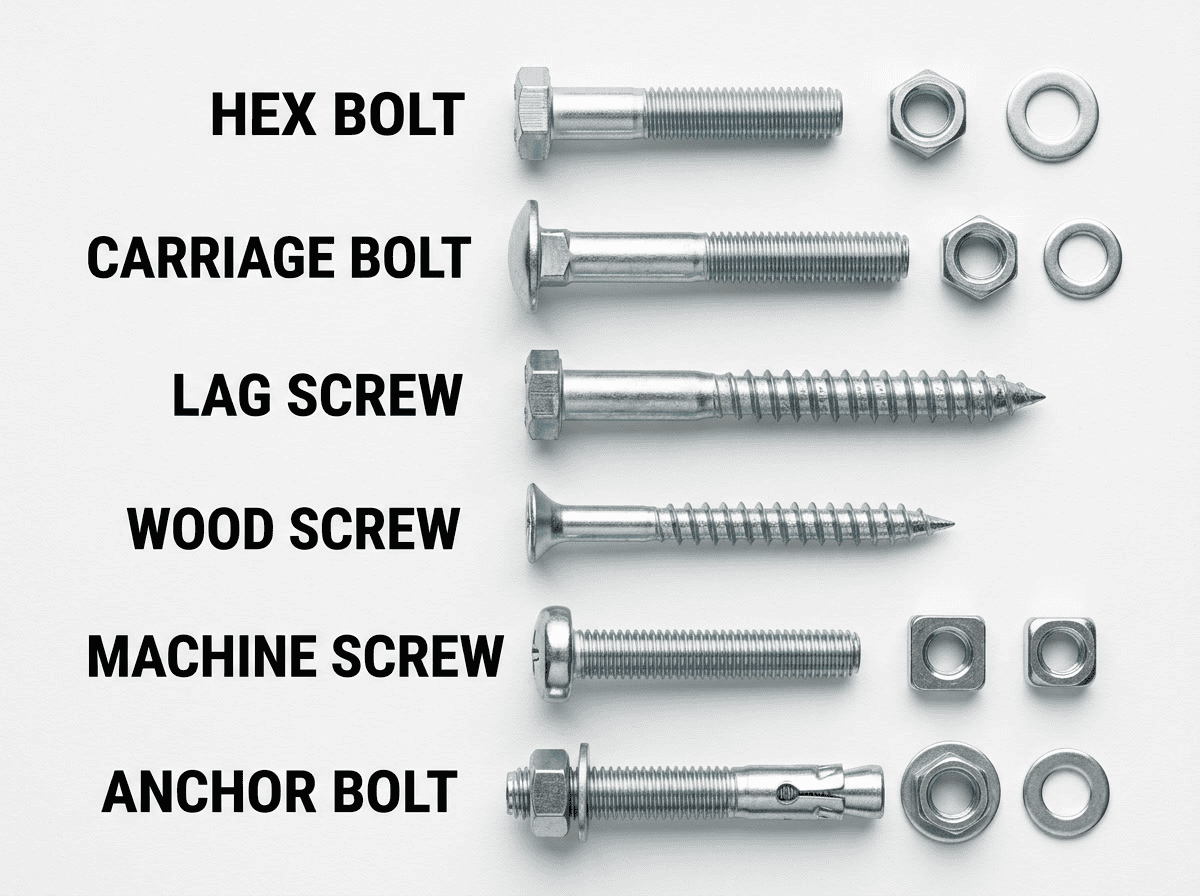
Understanding bolt types helps you match the right fastener to both the structural requirement and the installation constraints of bolts vs screws decisions in your project.
Hex Bolts
The workhorse of structural assembly. Partially threaded, hex-driven, available in every common grade from Grade 2 through Grade 8 and the metric equivalents. Used in steel construction, machinery, automotive, and industrial equipment. When someone says “bolt” in a machine shop or structural steel context, they almost always mean a hex bolt.
Carriage Bolts
A domed, rounded head with a square neck immediately below it. That square neck bites into wood, preventing rotation while you tighten the nut from the opposite side — meaning you only need access to one face during assembly, even though you need a through-hole. Standard for wood-to-wood structural connections: deck ledger boards, pergola posts, and heavy timber frames.
Anchor Bolts
Cast into concrete foundations to provide tie-down points for structural steel columns, sill plates, or equipment bases. The J-bolt (L-bolt) is the most common form — the bent end embedded in the concrete pour, the threaded end protruding above for nut-and-washer attachment. Critical for seismic regions where uplift and lateral forces must be transferred from structure to foundation.
Flange Bolts
A hex bolt with an integrated washer flange built into the underhead. Distributes bearing load over a larger surface area, eliminates the need for a separate washer, and is common in automotive and plumbing flange connections where vibration resistance and leak prevention are both required.
Stud Bolts
Threaded on both ends with no head. Used where the fastener must pass completely through both mating parts and accept nut engagement on each side — boiler flanges, pressure vessel covers, heavy equipment bearing housings. The symmetrical design allows equal preloading from both ends.
Types of Screws You Should Know
The landscape of screw types is broader than bolt types because screws serve more material environments. According to Wikipedia’s comprehensive overview of screw fasteners, screws are classified primarily by their intended host material, thread design, and drive type — the combination of which determines where in the bolts vs screws decision matrix each type belongs.
Wood Screws
Coarse-thread, tapered shank, designed to pull two pieces of wood together. The upper (unthreaded) shank portion pulls the top piece down against the bottom piece; the threaded section bites into and holds within the bottom piece. Available in #4 through #14 gauge and lengths from ½ inch to 5 inches for consumer applications. Larger diameters and lengths are available in specialty structural lines.
Drywall Screws
Available in fine-thread (for metal stud) or coarse-thread (for wood stud) versions. The black phosphate or zinc coating provides light corrosion resistance. The bugle head drives flush without a pilot hole and without tearing the face paper of drywall. These are not structural fasteners — never substitute drywall screws for structural screws in any load-bearing application.
Deck Screws
Exterior-rated with ceramic coating, hot-dipped zinc, or stainless steel finish, engineered to resist corrosion in pressure-treated lumber. Torx or square drive heads prevent cam-out during the extended drive time required for 3-inch screws into dense hardwood decking. The thread profile is typically optimized to resist seasonal wood movement.
Sheet Metal Screws
Self-tapping or self-drilling (commonly called tek screws). Self-tapping screws require a pilot hole slightly smaller than the thread’s minor diameter; the screw cuts its own internal thread as it drives. Self-drilling screws carry a drill-point tip that creates the pilot hole and cuts the thread in a single operation. Standard for HVAC ductwork, metal roofing, steel framing, and thin aluminum panels.
Machine Screws
Uniform thread diameter from tip to head, designed for pre-tapped holes or use with a hex nut. Available in UNC, UNF, and every common metric pitch. The boundary between “machine screw” and “bolt” is genuinely fuzzy in practice — the rule of thumb: if it’s under ¼ inch diameter and primarily used in pre-tapped holes, it’s called a machine screw regardless of whether it’s occasionally used with a nut.
Lag Screws
Large-diameter (typically ¼ to ¾ inch) hex-head wood screws driven with a wrench or impact driver. Despite being called “lag bolts” colloquially, they’re screws — no nut required. Used for heavy timber connections, attaching structural hardware to wall studs, securing ledger boards (where through-bolting is impractical), and anchoring heavy equipment to wood substrates. In the bolts vs screws debate, lag screws are a genuine hybrid: screw-thread mechanism, bolt-like installation torque and load capacity.
Concrete and Masonry Screws
Hardened and specially coated screws (Tapcon is the best-known brand) that thread directly into a pre-drilled masonry hole. Faster to install than cast-in anchor bolts for lighter loads, simpler to relocate if attachment points change. Load capacity per fastener is lower than a properly embedded anchor bolt of the same diameter — verify load ratings against the specific masonry substrate before specifying.
When to Use Bolts vs Screws: Application Guide
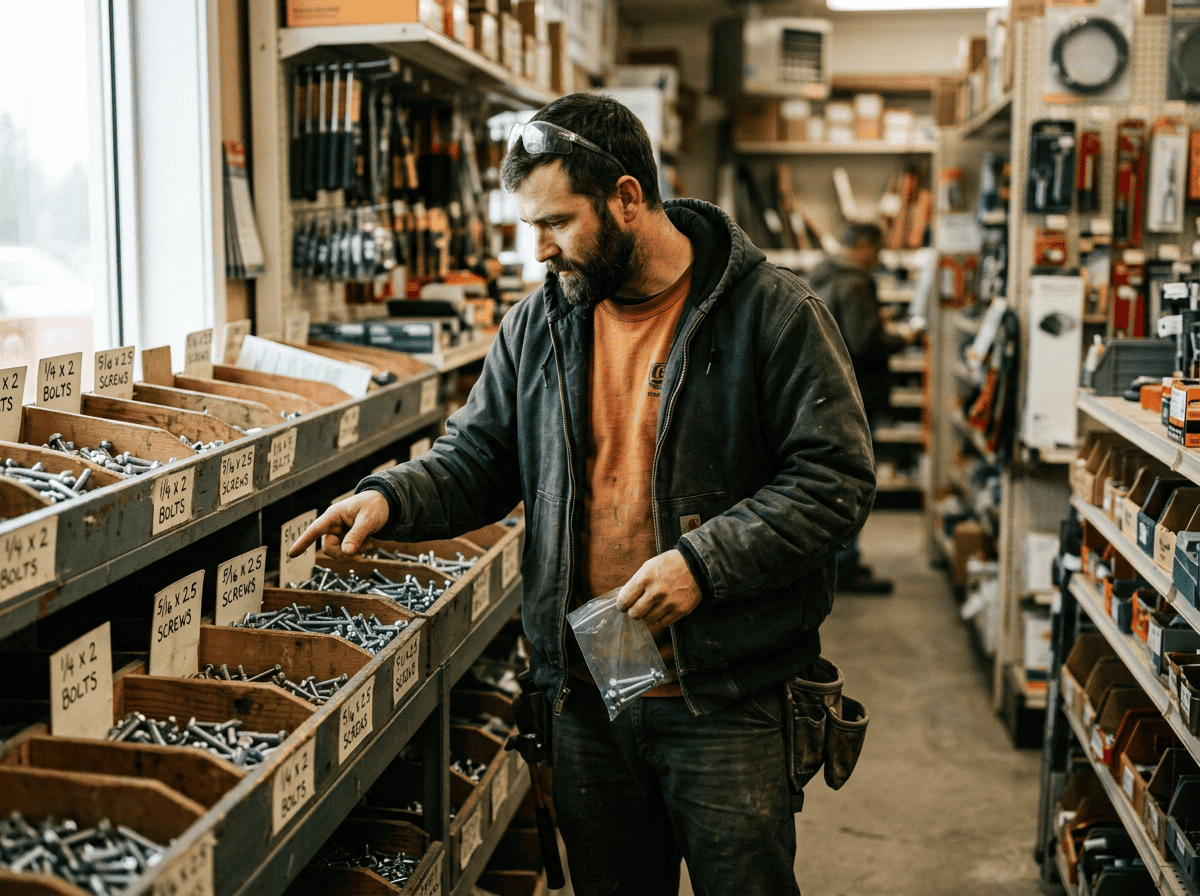
Knowing when to use bolts vs screws is more nuanced than most guides admit. Here is a practical breakdown by application scenario.
Use Bolts When:
- Parts must be disassembled — bolted joints can be opened and remade without degrading the fastener hole. Once a screw strips out of wood or thin metal, the hole is compromised and the holding strength drops significantly.
- High tensile or shear loads — steel-to-steel structural connections where AISC 360 governs typically require high-strength bolts (A325 or A490). This isn’t optional — it’s code-mandated.
- Vibration-prone environments — engines, industrial machinery, vehicle suspensions, pumps. Bolts with lock nuts, Nordlock washers, or anaerobic adhesive (Loctite) maintain preload under cyclic vibration where screws work loose.
- Precise preload is required — bolted joints can be torqued to a specific preload using a calibrated torque wrench. Screws driven by hand or power tool offer no reliable preload control.
- Both surfaces are accessible — through-bolting requires access to the back face for nut installation, but that’s the trade-off for the higher performance.
Use Screws When:
- Only one side is accessible — drywall installation, face-fastening decking to joists, attaching hardware to wall studs. Through-bolting is impossible; screws are the only viable fastener.
- Wood-to-wood or wood-to-composite connections — screws engage wood fibers more efficiently per inch of fastener length than bolts in most light framing scenarios.
- Speed matters in production — a screw gun installs dozens of screws per minute; each bolt requires threading a nut and torquing with a wrench. In production environments, the time difference is enormous.
- Sheet metal and thin materials — self-tapping screws are the industry standard for sheet metal assembly; bolting thin sheet is impractical and over-engineered.
- Decorative hardware — hinges, pulls, handles, brackets, and trim hardware on wood all use screws because they’re one-sided, low-load, and need to look clean.
Material-Specific Bolts vs Screws Guidelines
Structural steel: Bolts only. AISC 360 requires high-strength bolts for all moment connections and most shear connections. No screw replacement is code-compliant for primary structural steel.
Wood framing (light construction): Either, depending on load. Light framing uses structural screws; heavy timber uses lag screws or through-bolts with large bearing washers.
Sheet metal (HVAC, roofing, metal framing): Screws (self-tapping or self-drilling) for all standard assembly. Bolts only where panels must be frequently serviced and removed.
Concrete: Anchor bolts for pre-pour embedment in new construction; concrete screws (Tapcon-style) for post-pour attachment of lighter loads where embedding is not an option.
Aluminum structures: Either, but use compatible (stainless, aluminum, or coated) fasteners to prevent galvanic corrosion. Match material families wherever possible.
How to Choose the Right Fastener: Step-by-Step
Step 1 — Define the load direction. Is the load trying to pull the fastener straight out (tension/axial)? Slide the joint sideways (shear)? Some combination? Bolts handle shear better through their unthreaded shank; screws handle pull-out in wood extremely well per inch of engagement.
Step 2 — Check access. Can you reach both sides of the joint? If yes, through-bolting is an option. One-sided access means screws or blind fasteners are your only viable choice.
Step 3 — Consider disassembly frequency. Will this joint be opened? Bolts can be re-torqued after disassembly without degradation; screws in wood or thin metal degrade with repeated removal and re-drive.
Step 4 — Check applicable code. Structural applications have specific fastener requirements. Residential decks require fastener schedules per IRC. Steel construction follows AISC and local amendments. Verify what’s required before making any “preference-based” choice.
Step 5 — Match grade to load. Never use a drywall screw where a structural screw is specified. Never substitute a Grade 5 bolt for a Grade 8 in a high-strength bolted connection. Slight over-engineering (one grade up) is acceptable; under-engineering is not.
Step 6 — Consider environment and corrosion. Exterior and coastal applications need appropriate corrosion protection — hot-dipped galvanized, stainless, or engineered coatings. Pressure-treated lumber is corrosive to standard zinc-plated fasteners; it requires ACQ-compatible (hot-dipped galvanized or stainless) hardware.
Common Mistakes When Choosing Bolts vs Screws
Mistake 1: Using drywall screws in structural applications. Drywall screws are brittle by design. They snap cleanly under shear loading — exactly what a structural connection experiences. Never use them to attach ledger boards, stair stringers, or any load-carrying member.
Mistake 2: Over-driving screws in wood. Screws in wood reach their optimal holding condition when the head is flush with the surface. Continuing to drive until the head sinks below the surface crushes the wood fibers around the hole, reducing pull-out strength by 30–60% and creating a stress concentration point for future splitting.
Mistake 3: Under-sizing washers on bolts. In wood connections, the washer bearing area must be large enough to prevent pull-through. A standard ½-inch flat washer has only about 0.6 square inches of bearing area — often insufficient for high-load timber connections. Use plate washers or structural timber connector plates when load demands it.
Mistake 4: Mixing incompatible metals. Aluminum in direct contact with steel fasteners will galvanically corrode over time in wet environments. Stainless steel fasteners in contact with carbon steel can accelerate carbon steel corrosion in coastal or high-humidity conditions. Match metal families, use anti-seize in dissimilar-metal assemblies, or add insulating spacers.
Mistake 5: Assuming “bolt” and “screw” are interchangeable labels. “Lag bolt” is a common name for lag screws. The naming confusion leads builders to assume functional equivalence. It doesn’t exist. The thread mechanism, installation method, and structural behavior are different — treat them differently in load calculations and specifications.
Mistake 6: Skipping thread engagement calculations. For screws in wood, more thread engagement is better up to a point. For screws in metal, insufficient engagement (less than 1.0× fastener diameter) dramatically reduces pull-out strength. In practice, a minimum of 1.5× fastener diameter in steel and 2.0× in aluminum is a defensible starting point; verify against load tables for structural applications.
Future Trends in Fastener Technology (2026+)
Smart and Sensor-Integrated Fasteners
The next generation of structural bolts will incorporate embedded strain sensors and RFID chips. These “smart bolts” allow real-time preload monitoring in critical joints — bridges, wind turbines, large crane systems — without requiring physical access for re-torquing. Trials reported at several European infrastructure programs in 2024 showed smart-bolt retrofits reduced inspection costs by approximately 40% over a five-year monitoring period.
For screws, the near-term innovation is torque-indicating heads that change color or provide tactile feedback when the optimal installation torque is reached — reducing over-drive failures in automated assembly lines and improving quality control in production environments.
Advanced Coatings and Corrosion Resistance
The global fastener market is transitioning away from hexavalent chromium platings (restricted under EU RoHS directives) toward zinc-nickel alloy, Dacromet, and proprietary organic-resin coatings. Zinc-nickel plating achieves 800–1,000 hours of salt-spray resistance per ASTM B117 versus 120–250 hours for standard zinc plating — a critical improvement for offshore, automotive underbody, and coastal construction applications.
Stainless steel fastener demand is growing at approximately 5.2% CAGR through 2028, driven by coastal construction, food processing, and pharmaceutical manufacturing where corrosion resistance and contamination prevention justify the 3–5× price premium over carbon steel equivalents.
High-Strength and Lightweight Materials
Aerospace and electric vehicle programs are driving demand for fasteners that reduce weight without sacrificing strength:
- Grade 12.9 metric bolts: Ultra-high-strength (1,220 MPa minimum tensile) for compact, high-load applications
- Titanium fasteners (Ti-6Al-4V): 45% lighter than steel at comparable strength-to-weight ratio, used in aircraft and high-performance automotive
- Carbon fiber composite screws: Emerging for non-metallic airframe assembly in UAV and advanced air mobility applications
These materials require highly specific installation torque specifications and, in some cases, dedicated torque-to-yield installation tools. Using the wrong installation lubricant or substituting torque values from standard steel tables can reduce joint integrity even when the fastener specification itself is correct.
FAQ: Bolts vs Screws
Is it better to use screws or bolts?
Neither is universally better — it depends entirely on the application. For through-hole structural joints that require controlled preload or future disassembly, use bolts. For wood framing, sheet metal, or one-sided access, use screws. Match the fastener to the load type, material, and access constraints, and you’ll make the right call.
What is the difference between a metal screw and a bolt?
A metal screw (machine screw or sheet-metal screw) threads into the material itself or a pre-tapped hole. A bolt passes through a clearance hole and is secured by a nut on the far side. The distinction is about joint mechanism, not what the fastener is made of — both can be steel, stainless, or titanium.
Why use bolts over screws for structural steel?
Steel construction codes (AISC 360, EN 1993-1-8) require bolts because bolted joints can be engineered to precise, verifiable preload values; inspected for torque compliance with a calibrated wrench; and re-torqued after initial seating relaxation. Screws cannot be reliably torque-verified in the same way, and their thread engagement in pre-drilled steel depends entirely on hole preparation quality.
Can I use a screw instead of a bolt for wood decking?
For attaching deck boards to joists, deck screws are the standard and preferred method in virtually all residential building codes. For the ledger-board-to-house connection — the highest-load connection in a deck — code typically requires through-bolts or lag screws at specific minimum spacings. Check your local building code (or the IRC for US residential construction) before finalizing the fastener schedule.
How do I know what size bolt or screw to use?
For bolts, diameter is typically 20–33% of the thinnest member being clamped. For screws, length should provide at least 1 inch (preferably 1.5 inches) of thread engagement in the receiving material. For structural applications, always verify against published load tables — manufacturers publish tested values by fastener type, diameter, length, and wood species.
What’s the difference between a lag screw and a bolt?
A lag screw has a coarse hex head and wood-screw threads — it drives directly into the wood and requires no nut. A bolt passes through a clearance hole and requires a nut. Despite the common “lag bolt” name, lags are screws by mechanism. They’re the right choice when through-bolting isn’t possible but you need bolt-class load capacity.
Are bolts stronger than screws?
In raw tensile strength and shear strength for a given diameter, high-grade bolts significantly outperform screws. In pull-out resistance per inch of thread engagement in wood, structural screws are highly competitive — sometimes exceeding what a through-bolt achieves without large plate washers. The right question isn’t which is stronger in the abstract; it’s which delivers the required strength in the specific joint geometry.
Conclusion
Bolts and screws solve different structural problems. Bolts clamp through clearance holes with a nut on the far end, delivering measurable preload, superior shear resistance, and joints you can inspect and disassemble. Screws engage the material directly, offering faster installation, excellent pull-out resistance in wood, and the ability to fasten from only one side.
In practice, most construction and manufacturing projects rely on both — bolts for primary structural connections where load and inspectability matter, screws for secondary framing, sheathing, finishing, and hardware installation. The errors happen when builders reach for the wrong one: a structural joint assembled with drywall screws, or a simple wood panel connection over-complicated with through-bolts and nuts. Match the fastener to the mechanism, verify against code requirements, and the joint will outlast everything around it.
Related Products
Solutions & Cluster
Related Articles
- Sex Screw (Sex Bolt): Complete Guide to Types, Uses & Installation
- Nut Caging: Complete Guide to Cage Nuts, Types & Installation
- Nylon Insulation: Essential Guide to Properties & Applications in Electronics
- Threaded Bar: Complete Guide to Types, Grades, and Applications (2026)
- Screw Bolt Complete Guide: Types, Differences, Sizes & How to Choose (2026)
- Plastic Spacers: Complete Guide to Types, Materials & Selection
- Wing Nuts and Bolts: The Complete Buyer’s and User’s Guide (2026)
- Bolt Nut and Washer: The Complete 2026 Guide to Choosing and Using Fasteners Correctly