 English
  German
  Spanish
  Portuguese
  French
  Japanese
  Arabic
  Korean
  Vietnamese
  Russian
 Decorative screws are visible fasteners selected for both holding power and appearance, so the right choice depends on head style, material, finish, and the service environment.
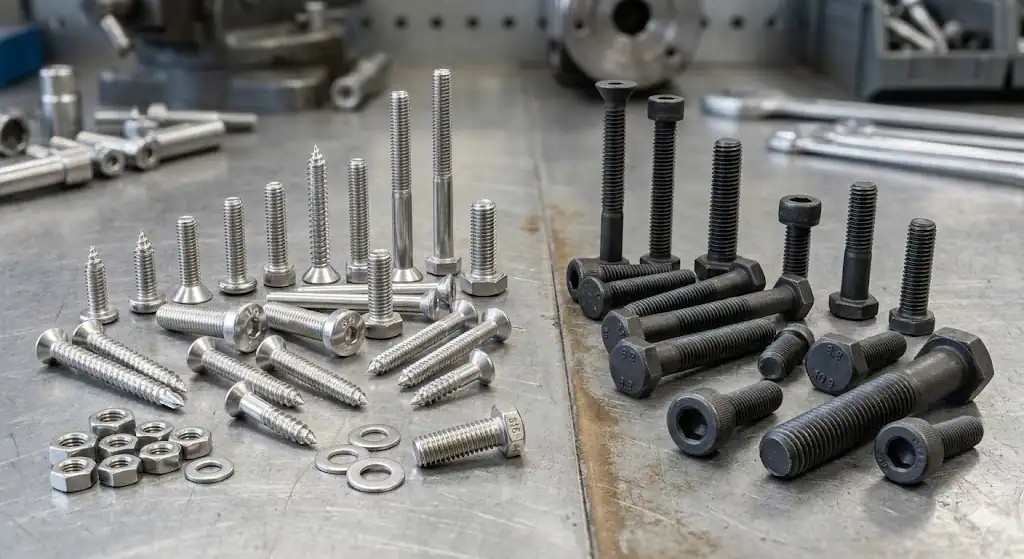
If a fastener will stay in sight, the decision changes. You are no longer buying only for clamp load or installation speed. You are buying for finish match, scratch resistance, drive appearance, corrosion behavior, replacement consistency, and how the screw will look after six months of handling, cleaning, or weather exposure.
That is where many generic fastener guides fall short. They explain screws in broad categories, but they rarely go deep on visible hardware, finish selection, or how industrial buyers should balance aesthetics with torque, substrate compatibility, and long-run supply consistency. This guide closes that gap for buyers, manufacturers, furniture shops, architectural hardware teams, and OEM sourcing managers evaluating decorative screws in 2026.
We will cover what decorative screws are, when they make sense, how the main materials and finishes behave, which standards still matter even on appearance-driven projects, and how to avoid the two most common failures: finish damage during installation and choosing a surface treatment that looks right on day one but ages badly in service.
What are decorative screws?
Decorative screws are screws intentionally chosen to remain visible and contribute to the finished look of a product, fixture, or assembly.
Unlike hidden structural screws, decorative screws must do two jobs at the same time: hold parts together and support the design language of the finished assembly. That usually means the head profile is more intentional, the finish is more controlled, and the acceptable cosmetic defect level is tighter.
In practice, we group decorative screws into three broad use cases:
- Visible furniture and cabinetry fasteners
- Architectural and hardware trim fasteners
- Consumer-product screws where the head is part of the visual design
Most buyers picture brass slotted wood screws first. That is only one segment. Modern decorative screws also include black oxide socket heads on premium fixtures, stainless button heads on marine interiors, nickel-plated machine screws on retail displays, and color-matched painted screws used on panels, signage, and metal trim.
The competitor pages we reviewed explain general screw categories well, but they do not separate “looks decorative” from “specified as decorative.” That distinction matters. A standard screw can be used in a visible location, but true decorative screws are usually purchased with tighter expectations around:
- Head consistency from lot to lot
- Surface color match
- Reduced burrs and plating defects
- Cleaner driver engagement
- Better packaging to prevent head damage in transit
According to Lowe’s screw buying guide, decorative finishes such as brass, chrome, and nickel plating offer some corrosion protection but are generally best suited to indoor use. That one line captures a major sourcing truth: in decorative screws, appearance alone is never enough. The finish has to match the environment.
What makes a screw “decorative” in procurement terms?
A screw becomes decorative when its visible surface quality is part of the specification, not just a nice bonus. Buyers often add appearance notes that cover head symmetry, plating uniformity, color tolerance, scratch limits, and packaging method.
We have found that many field complaints blamed on “bad screws” are actually incomplete purchase specs. If the PO lists only size and thread, the supplier may ship a mechanically correct part that still looks wrong next to brushed brass hinges or matte black pulls.
Why decorative screws are harder to replace than generic screws
Size is only part of replacement. The real challenge is matching head shape, sheen, undertone, driver style, and recess depth. One nickel-plated screw may look cool silver, another slightly warm. One black finish may read satin, another glossy. In small repair runs, that mismatch stands out immediately.
Types of decorative screws by head style, drive, material, and finish
The best way to compare decorative screws is to evaluate head style first, then match drive type, base material, and finish to the substrate and visual goal.
Many top-ranking pages describe screw families, but they usually stop short of the visible-hardware buying logic that designers and industrial purchasers need. For decorative screws, the head and finish often drive the short list before thread form does.
Head styles used most often for decorative screws
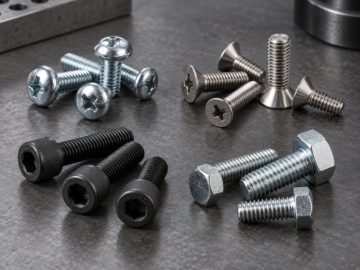
Flat and oval heads dominate when a clean, intentional visible surface matters. Pan, truss, round, and button heads are common when the head itself is part of the visual statement.
| Head style | Visual effect | Best fit | Main caution |
|---|---|---|---|
| Flat head | Flush, understated | Countersunk wood, trim, hardware plates | Finish damage is obvious if countersink is rough |
| Oval head | Traditional, slightly raised | Brass hardware, restoration, mirrors | Needs aligned seating for even reveal |
| Pan head | Modern utility look | Display fixtures, sheet metal covers | Can look too industrial for fine furniture |
| Button head | Soft contemporary profile | Stainless visible assemblies | Lower tool engagement than some deeper recesses |
| Truss head | Wide decorative face | Thin materials, signage, covers | Broad head can dominate small assemblies |
Short sentence. Head geometry changes the visual mood more than many buyers expect.
Here is the nuance: if the screw sits next to a premium handle set, lighting trim, or furniture edge, the head diameter and crown height matter nearly as much as the color. That is why successful decorative screws programs start with photo-based approval samples, not only dimensional drawings.
Drive types and visible quality
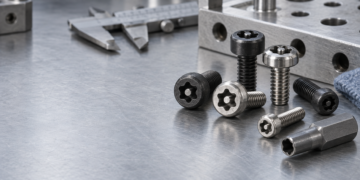
Drive choice affects installation speed and cosmetic risk. Slotted drives remain popular for traditional and restoration aesthetics, but they mark more easily in production. Phillips is familiar, though cam-out risk is still real. Torx and hex drives tend to protect the finish better during repeated assembly, especially on harder materials and coated screws.
According to All Points Fasteners’ screw buying guide, common drive options include Phillips, slotted, Allen, square, and star, and the practical difference is not just tool preference. On visible assemblies, drive style changes rework rate and scrap.
Material and finish combinations that buyers use most
Decorative screws are usually specified around one of four material paths: carbon steel with a decorative finish, stainless steel, brass, or bronze. Each behaves differently.
| Material or base system | Typical finish options | Where it works well | Where it struggles |
|---|---|---|---|
| Carbon steel | Zinc, black oxide, chrome, nickel, painted | Indoor fixtures, furniture hardware, cost-sensitive visible parts | Corrosive or wet environments without protective design |
| Stainless steel | Plain passivated, polished, brushed, black-coated | Marine interiors, kitchens, sanitary equipment | Premium cost, color mismatch with brass hardware |
| Brass | Natural, polished, lacquered, antique brass | Furniture, mirrors, joinery, electrical hardware | Softer metal, easier to deform under high torque |
| Bronze | Natural or patinated | Marine woodwork, heritage architecture | Higher cost, longer lead times |
Fastenright notes in its brass screws overview that brass screws are widely used in manufacturing, construction, electrical, furniture, and decorative applications where both performance and appearance matter. That is exactly why brass remains a staple in decorative screws despite its softer mechanical behavior.
Finish families for decorative screws
Finish selection decides whether decorative screws stay attractive after installation and during service.
The finish families that buyers compare most often are:
- Polished or brushed stainless for clean modern hardware
- Brass or antique brass for warm furniture and period-style hardware
- Nickel or chrome for cool reflective interiors
- Black oxide or black-coated finishes for premium contrast
- Painted or color-matched heads for panels and branded fixtures
This is where many competitor pages are thin. They mention coatings, but they do not explain that “decorative” and “corrosion resistant” are not interchangeable. Lowe’s and All Points both warn that brass, chrome, and nickel decorative finishes are generally better suited to indoor conditions than wet outdoor service. For decorative screws, that buyer warning belongs near the top of the decision tree, not buried in a coating paragraph.
Where decorative screws are used in real assemblies
Decorative screws are most valuable when the fastener remains visible and the product would look unfinished, mismatched, or cheaper without a controlled head style and finish.
The obvious use case is furniture, but industrial demand is broader than that. We regularly see decorative screws specified in mixed-use environments where the screw has to look good during customer interaction yet still survive vibration, cleaning chemicals, or repeated maintenance.
Furniture, cabinetry, and millwork
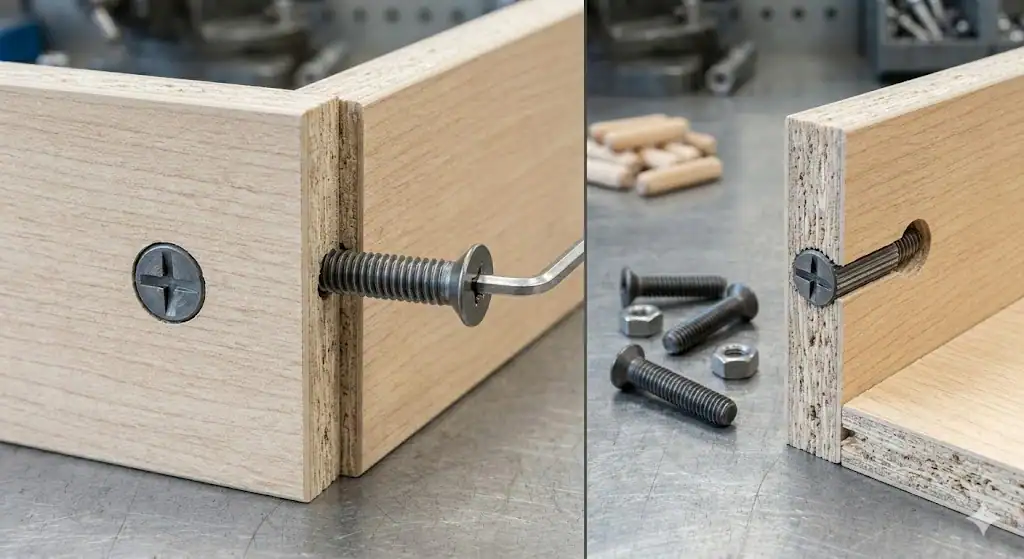
This is the highest-volume visual-hardware segment. Cabinet hinges, exposed hardware plates, shelving supports, speaker grilles, decorative brackets, mirror frames, and premium flat-pack furniture all use decorative screws where the head stays visible.
For engineered wood, pre-drilling matters more than many teams allow for in assembly SOPs. Brass and plated decorative screws can twist, mar, or seat unevenly if installers drive them straight into dense hardwood or MDF without controlling pilot size and torque.
If your project also uses engineered-wood connectors, the site’s guide to confirmat screws is a useful companion because it covers the panel-holding logic behind furniture fastener selection.
Architectural hardware and interior fixtures
Door hardware, escutcheons, display systems, handrail trim, signage, and decorative metal panels often rely on decorative screws for a consistent face appearance. In these assemblies, buyers care about light reflectivity, flush seating, and how well the finish matches surrounding brass, stainless, powder-coated, or anodized components.
One field lesson shows up again and again: if the surrounding hardware is premium but the screw finish is generic bright zinc, the whole assembly reads as downgraded. Small part, big visual penalty.
Electrical, marine, and specialty product assemblies
Some decorative screws are chosen because appearance and functional material properties overlap. Brass is a good example. Fastenright highlights conductivity and non-magnetic properties as reasons brass screws are specified in terminals, connectors, and electronic assemblies, not only for looks. Stainless visible screws are equally common where washdown resistance or salt exposure matters.
For broader material comparison, the site’s article on aluminum screws helps frame where lightweight corrosion-resistant fasteners do and do not fit compared with decorative stainless or brass options.
How to choose decorative screws without overpaying or under-specifying
Choose decorative screws by working through the application in this order: environment, substrate, load path, head style, finish match, installation method, and replacement availability.
This sequence matters. Buyers often start with color. They should start with service conditions.
Step 1: Define the environment before the finish
Indoor dry service gives you far more finish freedom. Humidity, exterior exposure, chlorides, cleaning chemicals, and touch frequency narrow the field quickly.
| Selection factor | What to ask | Why it matters for decorative screws |
|---|---|---|
| Exposure | Indoor dry, bathroom, exterior, coastal, washdown? | Determines whether decorative plating is enough or stainless is safer |
| Substrate | Hardwood, MDF, sheet metal, plastic, composite? | Changes thread form, pilot strategy, and head seating |
| Access | One-time install or repeated service removal? | Repeated cycles punish soft finishes and shallow drives |
| Visual match | Warm brass, cool silver, matte black, painted? | Filters finish family and packaging expectations |
| Quantity | Repair, project batch, OEM volume? | Affects custom finish feasibility and lot control |
According to the ASTM B633 specification page, electrodeposited zinc coatings are supplied in four thickness classes with supplementary finish options, and the standard includes pre- and post-treatment requirements to reduce hydrogen embrittlement risk. That matters because many plated decorative screws start as steel. If the finish is part of the aesthetic and the substrate needs steel strength, the plating spec cannot be an afterthought.
Step 2: Match the base material to the real load path
If the screw is mainly ornamental and lightly loaded, brass or plated steel may be fine. If it also carries meaningful clamp force, repeated service loads, or outdoor risk, stainless or a better-protected steel system is often the smarter choice.
Here is where it gets nuanced: not every visible screw needs to be premium stainless, and not every brass-looking screw should be real brass. If the assembly needs high strength plus a warm decorative face, buyers often use steel-based decorative screws with a controlled finish rather than solid brass. That can reduce cost and improve torque capacity, but only if the service environment supports it.
Step 3: Decide whether field installation can protect the finish
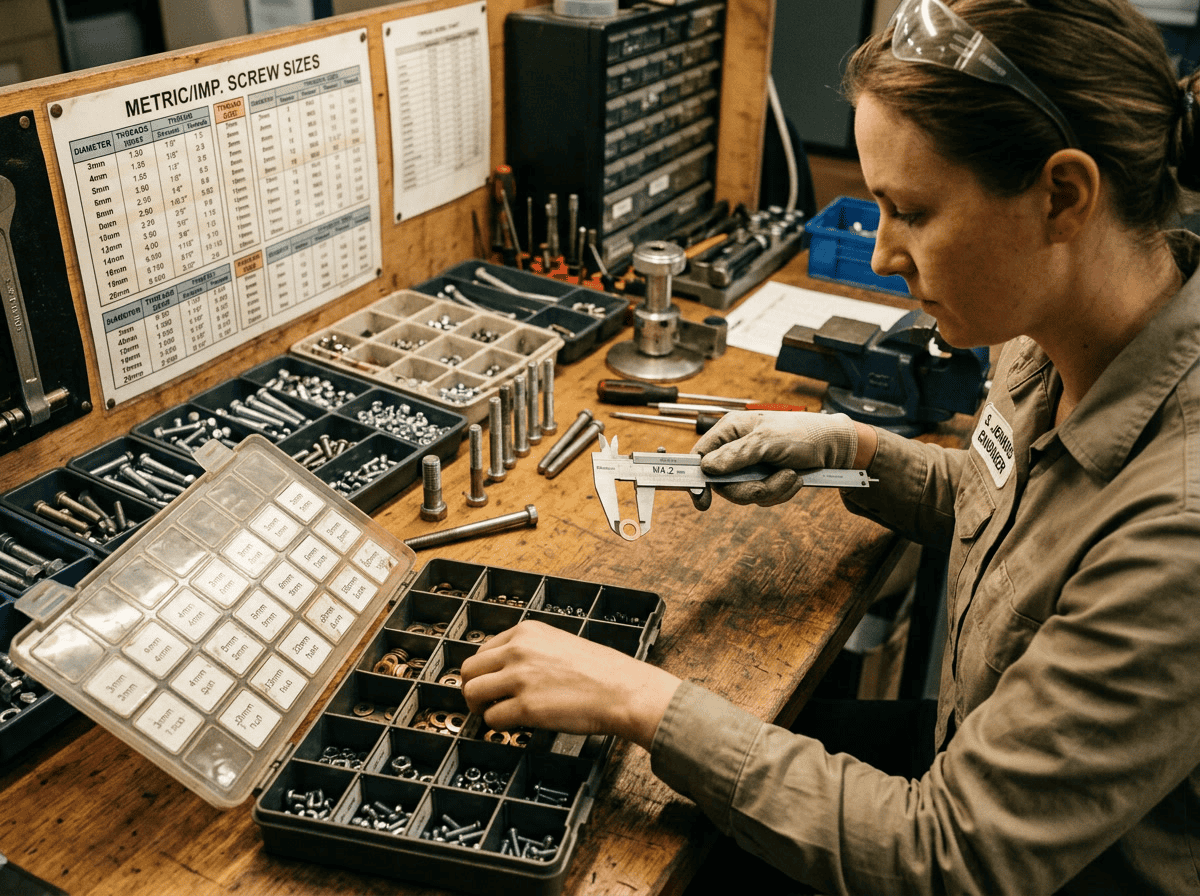
This is one of the biggest gaps in generic content. Installability determines whether decorative screws still look decorative after the driver touches them.
Use these controls when appearance matters:
- Pre-drill or pre-tap where the material is dense.
- Use the correct driver geometry with low wear.
- Limit driver speed on final seating.
- Protect visible heads from bin abrasion before line use.
- Keep a few sacrificial setup screws for pilot validation.
In practice we have found that switching from “install final screw immediately” to “run a sacrificial steel screw first, then seat the decorative part” can cut cosmetic damage dramatically on brass wood screws and fine plated assemblies.
Step 4: Check standards and quality language before placing the order
Even when the purchase is design-led, standards still protect the project. ISO 3506-6 states that it provides general selection rules for corrosion-resistant stainless steel fasteners and applies to austenitic, martensitic, ferritic, duplex stainless grades, and nickel alloys used for fasteners. That reference is useful whenever stainless decorative screws are being chosen for demanding environments.
For plated steel, ASTM B633 remains relevant because it frames zinc electroplating expectations and flags a hard limit: high-strength steels above 1700 MPa should not be zinc electroplated under that specification. That is not a niche detail. It is a real sourcing checkpoint when a buyer wants both a decorative plated finish and a high-strength steel substrate.
If the project needs broader screw-family comparison before narrowing to visible hardware, link back to bolts vs screws or fasteners, screws & bolts on the site.
Materials, coatings, and standards that matter in 2026
In 2026, the biggest shift in decorative screws is not a new head shape but tighter alignment between appearance, corrosion performance, and repeatable sourcing standards.
The fastener market has moved away from treating visible screws as cosmetic accessories. Buyers increasingly expect the same documentation discipline they apply to structural hardware, especially in hospitality interiors, premium retail fixtures, electrical assemblies, and export furniture.
Stainless selection is becoming more specification-driven
ISO 3506-6 exists because “stainless” is not a complete answer. Austenitic, ferritic, martensitic, and duplex grades behave differently, and the correct grade depends on corrosion risk, temperature, and the rest of the joint environment.
That means buyers of stainless decorative screws should stop writing vague notes like “SS screw, polished.” A more durable specification includes size, head style, drive, grade family, finish expectation, and packaging controls.
Decorative plating needs real process control
ASTM B633 does not exist for looks. It exists for corrosion-protection process requirements on zinc-coated iron and steel parts. Still, it is highly relevant for decorative screws because many “silver” and “yellow” visible screws rely on electroplated steel systems under the final appearance.
Most guides stop at “zinc plated for corrosion resistance.” The better question is: what thickness class, what supplementary finish, what substrate, and what cosmetic acceptance criteria? Without that, two approved samples can look similar while aging very differently.
Buyers want finish consistency across mixed hardware kits
This is a strong 2026 trend in furniture and branded fixtures. The screw is no longer sourced alone. It is sourced as part of a visible hardware set: hinge screws, pull screws, trim screws, cover screws, and panel fasteners all need a matched face.
| 2026 sourcing trend | Why it matters | Practical buying response |
|---|---|---|
| Hardware-set color matching | Visible mismatch hurts perceived product quality | Approve screw samples alongside hinges, pulls, and trim |
| More export furniture compliance checks | Inconsistent coatings trigger returns and complaints | Add finish and packaging notes to supplier QC plans |
| Greater use of black and warm-metal palettes | Aesthetic demand outpaces generic stock availability | Lock finish codes early and secure replenishment stock |
| Higher rework sensitivity in premium interiors | Scratched visible heads create field punch-list costs | Specify install methods and spare quantities |
Installation mistakes and purchasing mistakes to avoid
Most decorative screws fail visually before they fail mechanically, and most of those failures come from incorrect pilot preparation, poor driver fit, or an environment-finish mismatch.
Common installation mistakes
- Driving soft brass decorative screws into a pilot that is too small
- Using worn Phillips bits that cam out and scar the recess
- Seating plated screws at full driver speed on the final turn
- Mixing finish lots on one visible assembly
- Allowing loose bulk packaging to rub visible heads together
Common sourcing mistakes
- Buying by “brass color” instead of by actual material and finish system
- Assuming indoor decorative plating will survive outdoor use
- Ignoring replacement continuity for future service parts
- Omitting appearance tolerances from the PO
- Forgetting that the visible head must match washers, escutcheons, or hinges
One practical bottom line: when decorative screws are customer-facing, a slightly more expensive, better-packed, better-matched fastener is often cheaper than field touch-up, replacements, or a disappointed end user staring at scratched hardware every day.
FAQ about decorative screws
These are the buyer questions that come up most often when decorative screws are compared for furniture, fixtures, and visible hardware.
Are decorative screws strong enough for load-bearing joints?
Sometimes, but not always.
Many decorative screws are fully capable of carrying meaningful loads, but the answer depends on base material, shank size, substrate, and joint design. A visible screw in brass may be chosen for appearance first and strength second, while a stainless button-head machine screw can handle much more demanding service. Bottom line: treat “decorative” as an appearance category, not a strength rating.
Are brass decorative screws only for indoor use?
Mostly, but not exclusively.
Brass performs well indoors and can also work in some outdoor or coastal conditions, especially where corrosion resistance and appearance both matter. Fastenright notes that brass offers anti-rust and corrosion-resistant properties, but brass is also softer than many steel options. Bottom line: brass is excellent for visible hardware when torque demands are controlled.
What finish is best for black decorative screws?
It depends on wear and environment.
Black oxide gives a refined dark appearance but usually needs the right service conditions and maintenance expectations. Painted or specialty black coatings may hold color better in some applications, while black-coated stainless can be a better choice where moisture is present. Bottom line: choose black finishes by exposure and scratch risk, not by color sample alone.
Can decorative screws be used outdoors?
Yes, if the material and finish fit the environment.
Plain indoor decorative plating is a poor choice for rain, condensation, or coastal air. Stainless, bronze, or more robust protective systems are safer for outdoor-visible assemblies. Bottom line: outdoor decorative screws should be specified from the environment backward.
How do I avoid scratching decorative screws during installation?
Control the pilot hole, bit fit, and final torque.
Pre-drill properly, use a fresh matching driver, reduce speed on final seating, and consider using sacrificial setup screws before installing the finished visible part. Bottom line: cosmetic quality is an installation process issue as much as a screw issue.
Are slotted decorative screws still worth using in 2026?
Yes, for the right look.
Slotted decorative screws remain popular in restoration, heritage hardware, mirrors, and traditional joinery because the slot itself signals craftsmanship and period style. They are slower to install and easier to mark than Torx or hex alternatives. Bottom line: choose slotted heads for aesthetics, not assembly speed.
What should industrial buyers put on a decorative screw purchase order?
More than size and thread.
A strong PO for decorative screws should include head style, drive type, base material, finish, color or sheen expectation, packaging method, sample approval status, and any relevant standards or coating notes. Bottom line: the appearance requirement has to be written down, or it usually gets optimized away.
Conclusion
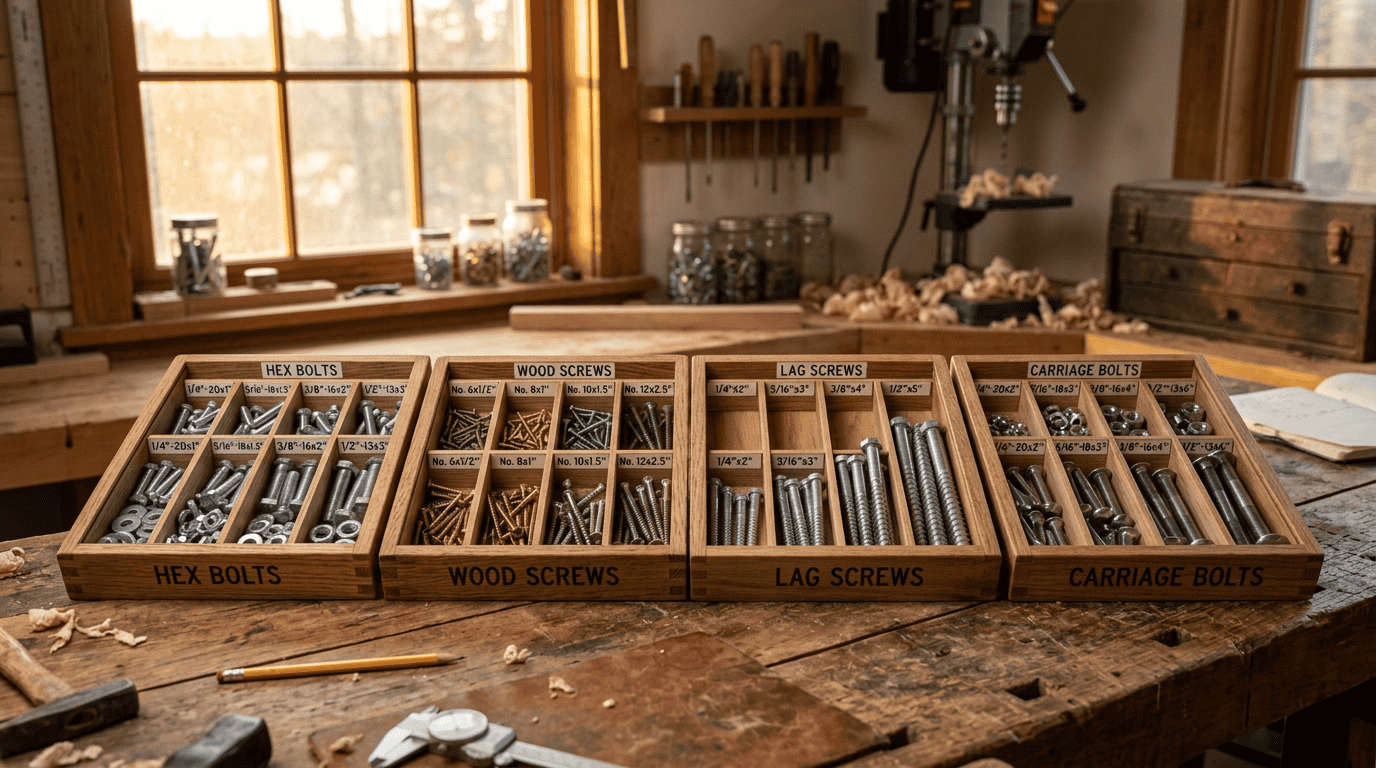
Decorative screws are not a niche afterthought. They are visible design components that still have to behave like real fasteners. The right selection comes from combining visual intent with the same engineering discipline you would apply to any other specified part: service environment, substrate, material, finish system, installation process, and replacement continuity.
If you are buying decorative screws for furniture, fixtures, or industrial hardware in 2026, start with the environment, narrow the material and finish, confirm how the screw will actually be installed, and write the cosmetic expectations into the order. Do that, and the screw stops being a small risk item and becomes a controlled part of the finished product quality.
Related Products
Solutions & Cluster
Related Articles
- Bolt Screw Guide: Types, Differences, Sizes, and Industrial Applications
- Bolts and Screws: The Complete Guide to Types, Differences, and Choosing the Right Fastener
- Bolt and Screw: The Complete Guide to Industrial Fasteners (2026)
- The Complete Guide to Stainless Fixings: Grades, Types, and How to Choose Right (2026)
- Do Brass Screws Have More Copper Than Zinc? Composition, Grades, and Buying Guide
- What Is a Screw and Nut — and Why Does the Pairing Matter
- Bolt vs Screw: The Complete Difference Guide for Engineers and DIYers (2026)
- Fasteners Brass: Complete Guide to Brass Fasteners, Grades, Uses, and Buying in 2026