 English
  German
  Spanish
  Portuguese
  French
  Japanese
  Arabic
  Korean
  Vietnamese
  Russian
 High strength bolts are heat-treated fasteners built to deliver higher preload, stronger tensile performance, and better fatigue resistance in demanding structural and industrial joints.
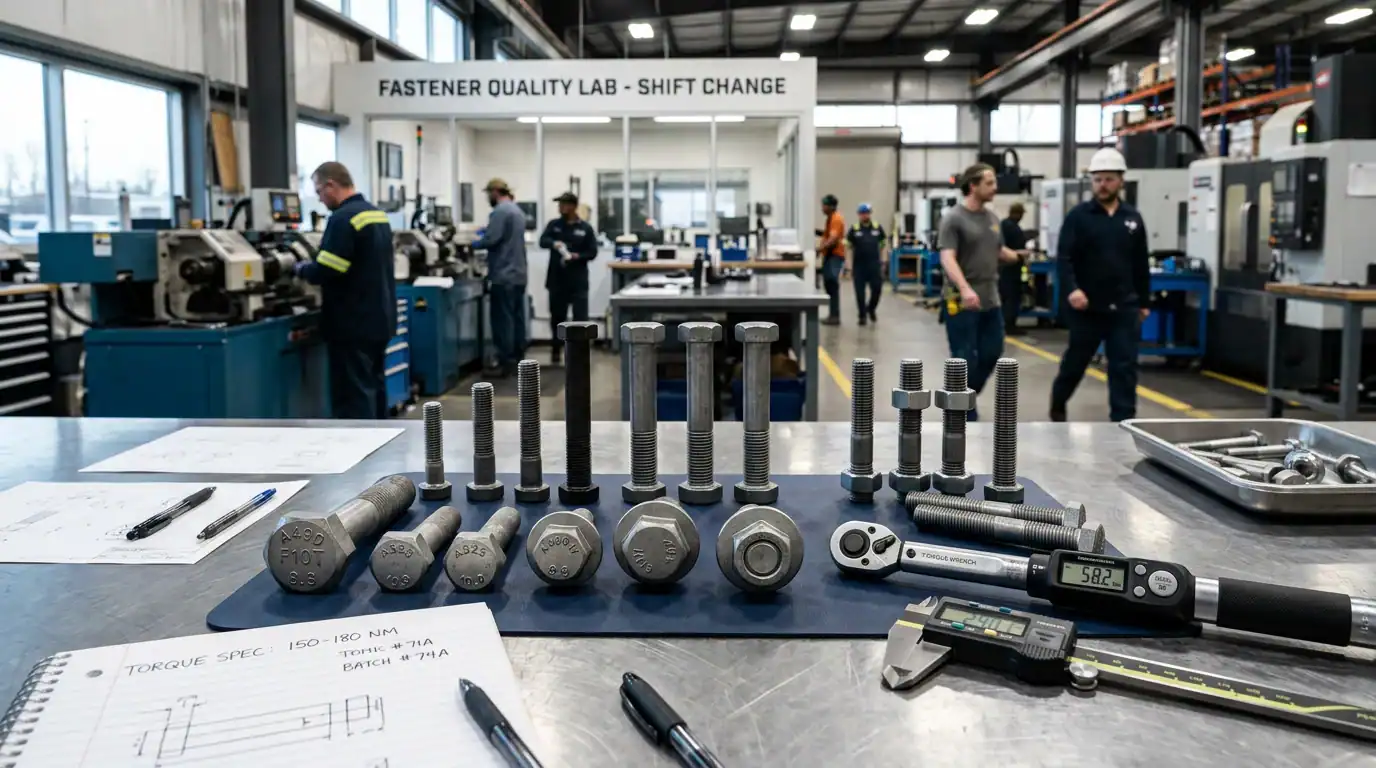
If you are sourcing high strength bolts for structural steel, machinery, automotive assemblies, energy equipment, or precision industrial projects, the first problem is rarely finding a bolt. The real problem is finding the right one.
Most buying guides stop at grade charts. That is not enough. In practice, failures usually come from the details that spec sheets compress into a footnote: coating limits, preload method, thread engagement, joint slip risk, hydrogen embrittlement, or the mismatch between a strong bolt and a weak nut.
This guide is written for engineers, procurement teams, plant buyers, and OEM fastener customers who need to choose high strength bolts that hold up in real service. We will cover grades, standards, materials, applications, selection logic, installation, common mistakes, and what is changing in 2026 procurement.
What Are High Strength Bolts?
High strength bolts are fasteners designed to achieve higher clamp load and tensile capacity than general-purpose bolts, usually through controlled alloy selection and heat treatment.
When buyers ask for high strength bolts, they usually mean bolts that are intended for critical load-bearing joints where joint integrity matters more than low purchase price. That includes structural steel connections, flange joints, heavy machinery, rail systems, and assemblies exposed to vibration, cyclic loading, or elevated temperature.
The simplest way to think about high strength bolts is this: they are not chosen only for breaking strength. They are chosen because they can be tightened to a predictable preload and keep that preload under service conditions. That is what separates a commodity fastener from one that belongs in a serious engineered joint.
Which standards define high strength bolts?
There is no single global definition. Instead, high strength bolts are defined by the standard system used in your market and application.
- Metric mechanical property classes are commonly organized under ISO-style property class systems such as 8.8, 10.9, and 12.9.
- Structural steel bolting in North America often references ASTM F3125 families and the RCSC structural joint specification.
- SAE inch-series applications often rely on Grade 5 or Grade 8 language, with Grade 8 being the more relevant comparator for many high strength bolts discussions.
According to Engineering ToolBoxs summary of metric property classes, class 8.8 bolts have a minimum tensile strength of 830 MPa, class 10.9 reaches 1040 MPa, and class 12.9 reaches 1220 MPa. Those numbers matter because they immediately tell buyers that not all strong-looking bolts belong in the same strength family.
How are high strength bolts marked and classified?
High strength bolts are usually identified by head markings, grade designations, and traceable standard references rather than appearance alone.
In the field, the quickest mistake is visual guessing. Black oxide, zinc finish, or a heavy hex head does not automatically confirm that a fastener is one of the required high strength bolts for the project. You need the actual grade mark, standard callout, diameter, length, thread form, and coating specification.
For structural applications, the geometry also matters. The RCSC specification notes that structural bolts differ from general-application bolts through features such as heavy hex head dimensions and a shorter threaded length. That distinction is easy to miss in purchasing if the team focuses only on nominal diameter and length.
Why do high strength bolts outperform standard bolts?
High strength bolts outperform standard bolts because they carry more preload, resist joint separation better, and tolerate demanding fatigue or shear conditions more consistently.
The practical gain is not only higher tensile numbers. The gain is joint reliability:
- Better clamp force reduces slip in friction-type joints.
- Better fatigue resistance helps in vibrating or cyclic assemblies.
- Better hardness and heat treatment support heavy industrial loading.
- Better system compatibility exists with hardened washers, matched nuts, and verified pretensioning methods.
In practice, we have found that many bolt failures are actually joint-design failures. The bolt was correct on paper, but the preload target, hole condition, washer stack, or coating system was wrong. That is why buying high strength bolts without installation context creates expensive surprises.
| Common class or grade | Typical minimum tensile strength | Typical use context | Buying note |
|---|---|---|---|
| 8.8 | 830 MPa | Machinery, industrial equipment, general structural duty | Good baseline where moderate high preload is needed |
| 10.9 | 1040 MPa | Heavy equipment, automotive, dynamic assemblies | Common choice when strength and compact size both matter |
| 12.9 | 1220 MPa | Highly loaded machine joints, tooling, compact assemblies | Strong, but less forgiving for corrosion/coating mistakes |
| F3125 120 ksi family | 830 MPa equivalent | Structural steel, bridges, buildings | System-level installation rules matter as much as grade |
| F3125 150 ksi family | 1040 MPa equivalent | Structural connections needing higher strength | Coating restrictions must be checked carefully |
Types of High Strength Bolts
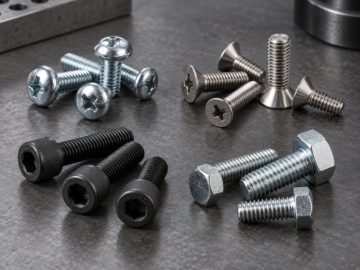
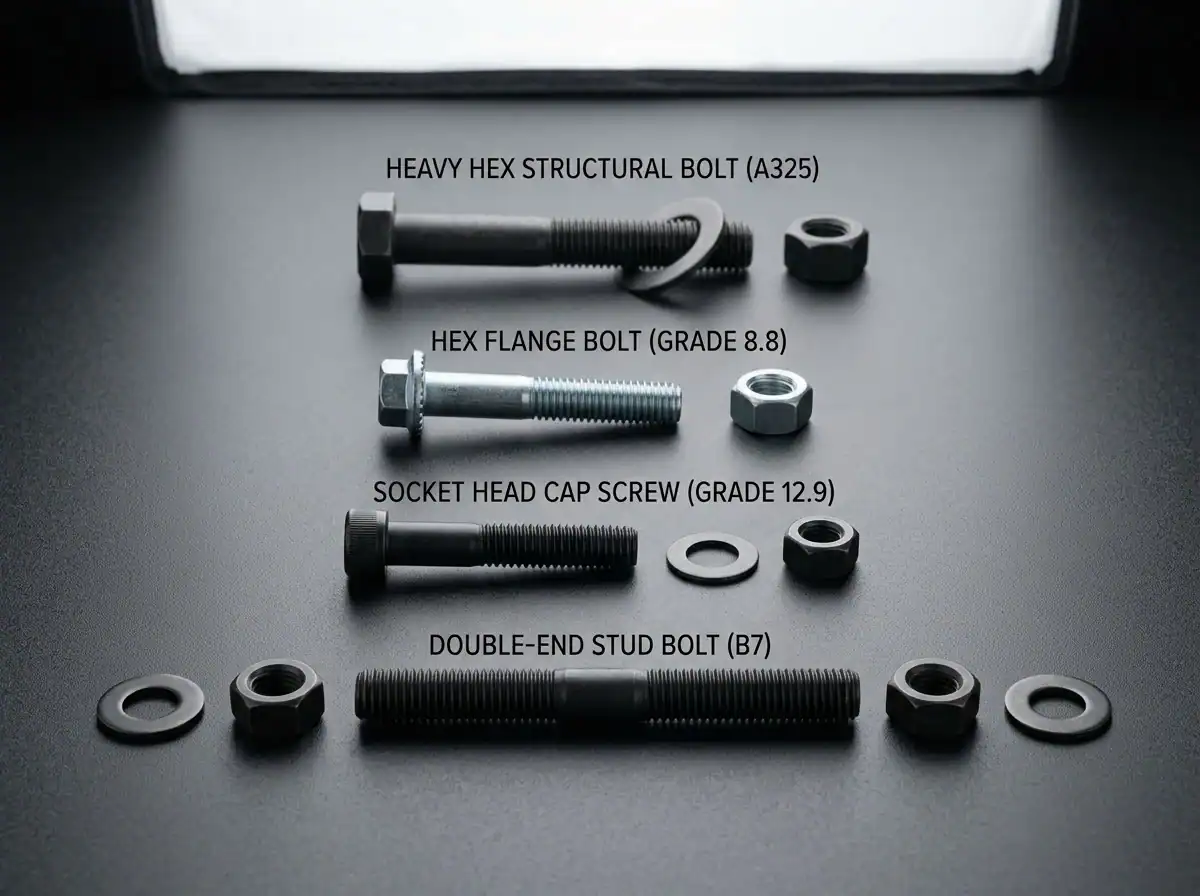
High strength bolts come in several families, and the right family depends on whether your joint is driven by structural preload, machine design, corrosion risk, access limits, or installation speed.
A lot of competitors stop after listing A325 and A490 equivalents. That is too narrow. Buyers on sites like productionscrews.com often need a broader comparison because industrial demand spans flange bolts, stud bolts, heavy hex bolts, socket screws, and custom cold-formed or hot-forged designs.
Structural heavy hex bolts
Structural heavy hex bolts are the standard choice for steel connections where controlled pretension and code-based inspection are required.
These are the classic high strength bolts used in steel buildings, bridges, towers, and other load-bearing steel structures. They are usually paired with hardened washers and compatible heavy hex nuts. The system matters. You do not specify the bolt in isolation.
The FHWA bridge guidance states that ASTM F3125 is the adopted specification for high-strength structural bolts used in this context, covering 120 ksi and 150 ksi minimum tensile strength families. That matters for buyers because old project documents may still call out withdrawn legacy grade names. In 2026, procurement teams need to normalize legacy references into current spec language before ordering.
If your project involves structural fasteners, it also helps to compare this topic with the sites own guides on grades of bolts and ASTM A193, because grade naming confusion is still one of the biggest sourcing delays.
Machine bolts, socket screws, and studs
In machinery and equipment, high strength bolts often appear as alloy-steel hex bolts, flange bolts, socket head cap screws, or stud bolts rather than structural heavy hex fasteners.
This is where application nuance matters. A machine designer may need high strength bolts because:
- The joint space is tight, so a smaller fastener must carry more load.
- The assembly sees vibration, shock, or thermal cycling.
- The joint uses threaded tapped holes instead of nut-and-bolt through connections.
- The design needs repeatable service disassembly.
For these cases, a 10.9 or 12.9 metric fastener may be the more relevant choice than a structural-grade heavy hex bolt. Yet stronger is not automatically better. In one plant retrofit we reviewed, the team upgraded from 8.8 to 12.9 without changing washer hardness or tightening method. The result was thread galling and inconsistent clamp load, not better reliability.
Tension control and HSFG systems
Some high strength bolts are sold as installation systems, not just fasteners, so the buying decision includes the tensioning method itself.
That includes tension-control bolts, direct-tension-indicator systems, and HSFG-style friction-grip assemblies. Portland Bolts overview of tension-control bolts explains that F1852 corresponds to the 120 ksi structural family while F2280 corresponds to the 150 ksi family, and that the spline-shear installation method gives a visible sign that target tension has been reached.
That is useful for buyers because labor cost and installation consistency can justify a higher unit price. In high-volume steel erection, faster and more repeatable pretensioning often saves more money than shaving a few cents off each bolt.
| Type of high strength bolt | Main advantage | Typical downside | Best fit |
|---|---|---|---|
| Heavy hex structural bolt | Reliable code-based structural use | Needs full matched assembly control | Buildings, bridges, towers |
| Hex flange bolt | Good bearing surface, fewer loose parts | Not always code-equivalent for structural joints | Machinery, automotive, equipment frames |
| Socket head cap screw | High strength in compact spaces | Sensitive to surface condition and head access | Tooling, precision machinery |
| Stud bolt | Strong clamping in flanges and hot service | Requires nut selection and installation discipline | Pressure joints, energy, piping |
| Tension-control bolt | Faster, more repeatable pretension | Specialized installation tools needed | Large steel erection projects |
Materials, Heat Treatment, and Coatings
The performance of high strength bolts depends as much on material and coating compatibility as on the grade stamped on the head.
This is where many purchasing decisions go wrong. A bolt can be correct in strength but wrong in corrosion system, wrong in plating, or wrong in service temperature. Then the joint fails months later and the supplier gets blamed for a design mismatch.
Carbon steel, alloy steel, and stainless options
Most high strength bolts are made from medium carbon steel, alloy steel, or specialized stainless systems, and each material family solves a different problem.
Medium carbon and alloy steels dominate high strength bolts because they respond well to quench-and-temper heat treatment. They give a strong balance of preload capacity, availability, and price. That is why you see them everywhere from structural steel to heavy industrial assemblies.
Stainless is more nuanced. If corrosion is the first priority, stainless may be the correct answer, but standard stainless does not automatically equal the same strength category as alloy structural bolts. Buyers frequently assume stainless = premium = stronger. Often it means more corrosion-resistant, but not directly equivalent.
That is why related internal reading on stainless steel bolt and bolt nut stainless steel can help when the selection question is really about environment rather than pure load.
Coating restrictions and hydrogen embrittlement
Not every coating is safe for every class of high strength bolts, especially at the upper end of strength.
Here is where spec discipline matters. The RCSC specification states that applying zinc to Grade A490 bolts by galvanizing, metallizing, or mechanical coating is not permitted because embrittlement and delayed cracking effects have not been fully resolved. Portland Bolts technical note on A490 galvanizing makes the same point more directly: hot-dip and mechanical galvanizing are not allowed for that grade due to hydrogen embrittlement risk.
That sentence saves real money. We have seen RFQs that specify a 150 ksi structural family and hot-dip galvanizing in the same line item. That combination can trigger re-quoting, production delays, or field substitution pressure. When the joint is critical, that is not a paperwork issue. It is a failure path.
For buyers, the rule is simple:
- Confirm the required mechanical grade.
- Confirm the allowable coating system for that grade.
- Confirm nut overtapping and washer compatibility if coating changes thread fit.
- Confirm the environment: marine, chemical, outdoor, galvanic, or high heat.
Heat, fire, and elevated-temperature behavior
High strength bolts can lose mechanical performance as temperature rises, so hot service and fire exposure cannot be treated as afterthoughts.
The NIST study on double-shear tests of high-strength structural bolts at elevated temperatures tested A325 and A490 bolts in diameters of 19 mm, 22 mm, and 25.4 mm at five temperatures from 20 C to 600 C. That is a useful reminder that a room-temperature grade stamp does not answer a fire-design or thermal-service question.
Here is where it gets nuanced: in many industrial environments, the issue is not an actual fire. It is repeated heat soak, thermal expansion mismatch, or maintenance disassembly after long exposure. Short sentence. Those are different failure modes, but they all push you toward better material review, lubricant control, and retightening strategy.
Applications of High Strength Bolts in Industry
High strength bolts are used when the joint must hold preload, resist fatigue, or transfer load safely under real service variation rather than ideal lab conditions.
The top-three competitor pages barely touched application-specific decision-making. That is a gap worth fixing, because procurement teams do not buy a bolt grade in the abstract. They buy a fastener for a joint, a material stack, a coating system, and an inspection workflow.
Structural steel and bridge connections
In structural steel, high strength bolts are selected to maintain joint integrity under static and cyclic load while supporting code-compliant pretensioning and inspection.
This is the most visible use case for high strength bolts. Buildings, bridges, industrial platforms, towers, and rail-related steel components all rely on fasteners that can be installed to prescribed tension and inspected consistently. The FHWA bridge memo emphasizes ASTM F3125 adoption and notes that most bridge bolts require pretensioning.
If your application is structural, the question is usually not Which bolt is strongest? It is Which approved bolting assembly, coating, washer stack, and installation method suits this joint and inspection plan?
Heavy machinery, mining, and energy equipment
In machinery and energy systems, high strength bolts are often chosen for compact load capacity, vibration resistance, and serviceability under maintenance cycles.
Heavy equipment frames, crushers, pumps, compressors, motors, flange joints, and industrial tooling all use high strength bolts because bolt diameter cannot grow forever. At some point, stronger fasteners allow the assembly to stay compact without sacrificing clamp load.
But stronger bolts demand cleaner design discipline:
- Thread engagement becomes more critical.
- Surface flatness under the head or washer matters more.
- Lubrication changes actual preload dramatically.
- Reuse policy must be defined instead of guessed.
Most guides stop at use 10.9 for heavy duty. That is incomplete. For example, if the joint surface embeds under load, a stronger bolt may still lose preload. In practice, the washer hardness and contact surface finish can matter just as much as the bolt class.
Automotive, manufacturing, and precision assemblies
Where space is limited and repeatability matters, high strength bolts help engineers achieve preload targets in smaller packages.
Automotive subsystems, automation equipment, molds, fixtures, and machine tools often rely on high strength bolts because compact joints need more force per millimeter of diameter. A 12.9 socket screw can solve a geometry problem that a larger standard bolt cannot.
That said, the margin for misuse is thinner. Over-torquing, wrong lubricant assumptions, poor female-thread material, or mixed-strength hardware can turn a premium fastener into a warranty issue. If your use case is closer to precision equipment than to structural steel, you may find more relevant comparisons in 8.8 bolt, bolt and screw, and bolts vs screws.
How to Choose High Strength Bolts
The best high strength bolts are selected from joint requirements backward: load, environment, installation method, standard, coating, and inspection all have to align.
This is the section most buyers need. Fast. Practical. No filler.
Step 1: Define the actual load case
Choose high strength bolts based on the joint��s real failure mode, not just peak tensile force in a spreadsheet.
Start with these questions:
- Is the joint tension-dominant, shear-dominant, or slip-critical?
- Is the load static, impact, or cyclic?
- Is preload essential for sealing or friction transfer?
- Will the joint see heat, corrosion, or outdoor exposure?
- Will the bolt be routinely removed during maintenance?
If the joint is slip-critical, pretension method and faying surface condition matter immediately. If the joint is maintenance-heavy, coating, lubrication, and reusability move up the priority list.
Step 2: Match the grade to the application window
Select the lowest grade that safely meets the design requirement with margin, because over-specifying strength often creates coating, brittleness, or sourcing complications.
This is a point many competitors missed. Buyers often assume the highest available grade is the safest purchase. Usually it is not.
- Use moderate high-strength classes where the joint needs reliable preload without extreme stress concentration.
- Move to 10.9 or equivalent families when load density, dynamic duty, or size limits justify it.
- Use top-end high-strength classes only when design, mating materials, and installation control are all strong enough to support them.
The AISC Engineering Journal study tested 1,533 structural bolts across four grades and six diameters. That study is helpful because it shows how real strength and ductility discussion should be based on actual fastener families and thread conditions, not generic stronger is better language.
Step 3: Confirm material, coating, and environment
Always verify that the corrosion strategy is allowed for the chosen high strength bolts, especially in galvanized or outdoor specifications.
This is where purchasing teams save themselves from avoidable NCRs:
- Outdoor steel structure: verify coating approval before quoting.
- Marine or chemical setting: compare coated alloy steel versus stainless-system redesign.
- Hot equipment: review temperature exposure, preload loss, and maintenance interval.
- Dissimilar metals: assess galvanic risk, not just bolt price.
Step 4: Check dimensions, thread, and joint geometry
High strength bolts only perform as intended when grip length, thread position, hole type, and bearing surfaces are correct.
The RCSC specification includes dedicated guidance on bolt length selection and installation geometry. That matters because the most expensive strength upgrade can still fail if threads sit in the shear plane where they should not, or if the grip stack is wrong.
We regularly see buyers focus on diameter and overlook:
- Thread pitch and fit class
- Unthreaded shank length
- Washer requirements
- Hole oversize or slot condition
- Nut height and proof load
- Clearance for tool access
Step 5: Define installation and inspection before ordering
If you do not know how the joint will be tightened and verified, you do not yet know which high strength bolts to buy.
This is especially true for steel fabrication, OEM assembly, and export projects. Torque-only installation, turn-of-nut, DTI verification, and tension-control systems do not create the same field behavior or labor cost.
| Selection factor | What to confirm | Why it matters for high strength bolts |
|---|---|---|
| Load type | Tension, shear, vibration, slip-critical | Determines whether preload or pure strength dominates |
| Standard | ISO class, ASTM family, SAE grade | Prevents cross-system confusion in RFQs |
| Material | Carbon steel, alloy steel, stainless system | Balances strength, toughness, corrosion, and cost |
| Coating | Plain, zinc-aluminum, galvanized, other approved finish | Avoids forbidden combinations and field cracking risk |
| Joint geometry | Grip, hole, washer, thread engagement | Controls real load transfer and fatigue behavior |
| Installation method | Torque, turn-of-nut, DTI, TC bolt | Controls preload consistency and inspection burden |
| Traceability | Lot, test certs, head marks | Supports QA, export, and warranty requirements |
Installation and Common Mistakes
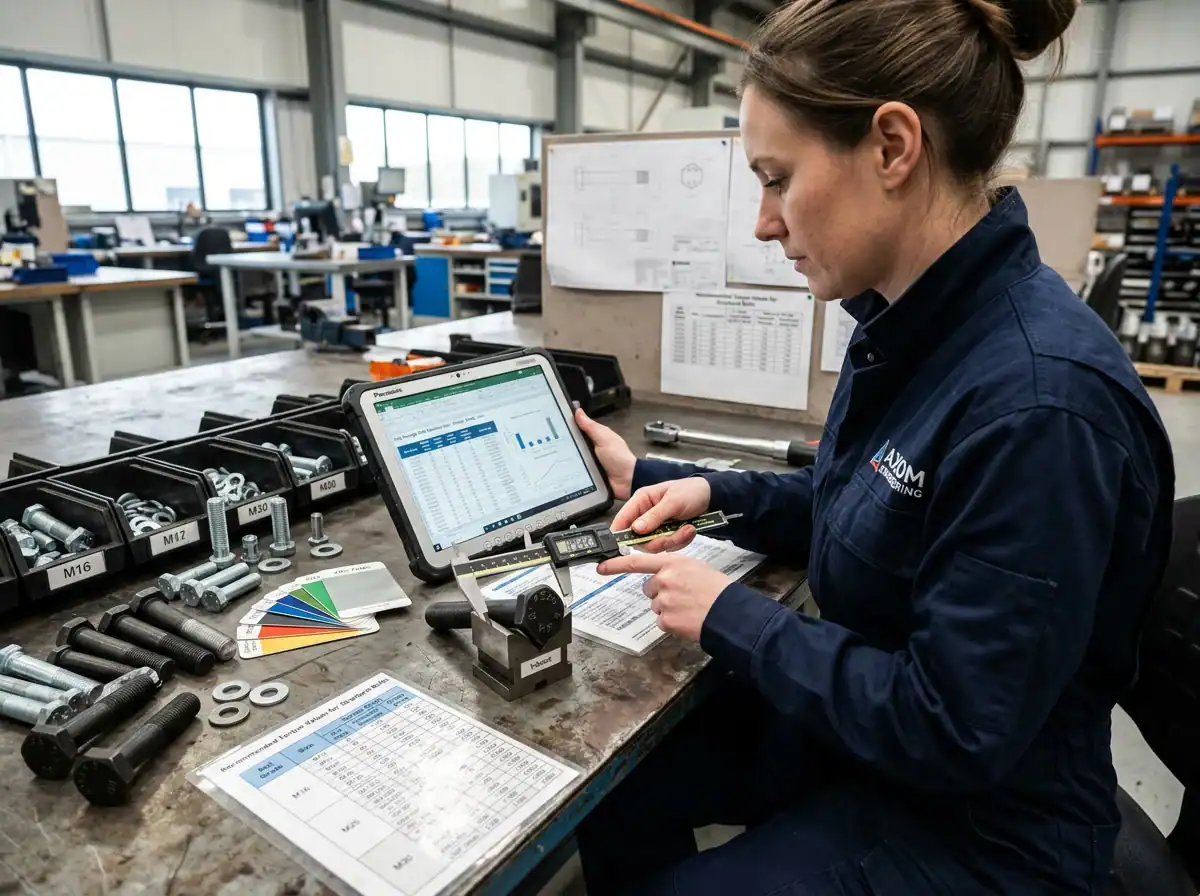
Even correctly specified high strength bolts can fail in service if installation, lubrication, or inspection are treated casually.
This section is where the article moves beyond generic definitions and into the failure modes buyers actually pay for.
Pretension methods: torque, turn-of-nut, DTI, and tension-control
Different installation methods can deliver very different preload consistency, so the method must be selected as part of the fastener system.
Torque-only tightening is common because it is simple. But friction variation can make actual preload drift more than many buyers realize. Here is the uncomfortable truth: the same torque value can produce noticeably different clamp loads depending on coating, lubricant, thread condition, and under-head friction.
That is why structural projects often rely on method-based specifications. The RCSC standard provides formal pretensioning and DTI requirements, including orientation and inspection rules. For high-volume steel work, tension-control systems can also improve speed and repeatability, as noted in Portland Bolts TC bolt overview.
Common mistakes with high strength bolts
The most common mistakes are grade mismatches, forbidden coatings, reused damaged hardware, poor washer practice, and assuming torque equals tension.
Watch for these problems:
- Specifying high strength bolts with an incompatible coating.
- Mixing unmatched nuts and washers from unknown lots.
- Letting threads sit in a critical shear plane without review.
- Reusing fasteners after overload, galling, or coating damage.
- Applying dry torque values to lubricated bolts, or the reverse.
- Treating stainless and alloy systems as interchangeable.
One short sentence: do not guess.
In one procurement review we handled, the real issue was not bolt class at all. The plant had upgraded the bolt, kept the old torque value, changed lubricant supplier, and started seeing loosening in a vibrating frame. The preload target moved, the joint relaxed, and the bad bolts were blamed. That pattern is more common than many sourcing teams expect.
Inspection, paperwork, and receiving checks
Receiving inspection for high strength bolts should confirm traceability, markings, dimensions, coating, and documentation before the hardware reaches the line or the site.
A practical receiving checklist includes:
- Head markings match the required grade
- Diameter, pitch, and length match PO
- Nut and washer are compatible and documented
- Coating matches approved spec
- Mill or mechanical test certificates are present
- Packaging protects against moisture and mix-up
- Lot traceability is maintained to installation
If the project is structural, inspection obligations may continue into pre-installation verification and field tightening records. That is why procurement should coordinate with quality and site erection teams early instead of treating the bolt order as a stand-alone commodity purchase.
Future Trends for High Strength Bolts in 2026 and Beyond
The 2026 direction for high strength bolts is tighter specification control, better traceability, smarter coatings, and stronger alignment between design data and field installation.
A few trends are clear now.
1. Legacy grade language is being cleaned up
More buyers are converting old grade references into current standard families before ordering, reducing substitution errors and RFQ confusion.
That matters because old drawings still mention withdrawn or mixed naming systems. The FHWA memo explicitly pushed industry use toward ASTM F3125 adoption, and that ripple is still shaping how bridge and structural hardware gets specified.
2. Coating choice is becoming a bigger engineering decision
Corrosion protection for high strength bolts is moving from ��finish preference�� to ��system engineering decision�� because strength, friction, and embrittlement all interact.
Buyers are asking better questions now:
- Is this coating actually permitted on this grade?
- How does the coating affect nut fit and torque-tension behavior?
- Is zinc-aluminum a better path than hot-dip galvanizing for this family?
- What is the long-term maintenance strategy?
That shift is healthy. It reduces the classic mistake of specifying a very high-strength fastener and then asking plating vendors to make it outdoor-ready after the fact.
3. Documentation and digital QA are becoming procurement differentiators
Suppliers that can provide clean lot traceability, test records, and application-aware support are gaining an edge over low-price-only sellers.
The product is still a bolt. But in 2026, the commercial difference often comes from responsiveness on documents, custom geometry, coating guidance, and fast feedback on RFQ mistakes. For OEM and export customers, that support layer is part of the product.
FAQ About High Strength Bolts
What is considered high strength bolting?
High strength bolting means using fastener assemblies designed for elevated preload and load transfer in critical joints, not just any bolt with a higher-than-average strength number. In practical terms, high strength bolts are specified where the joint must safely hold clamp force, resist fatigue, or transfer structural load with controlled installation methods.
What is the difference between HSFG and normal bolts?
HSFG bolts are designed to create a pretensioned friction-grip joint, while normal bolts more often rely on bearing or simple clamping without the same inspection discipline. That means HSFG systems are about controlled preload and slip resistance, not just bolt strength alone.
Are grade 8.8 bolts considered high strength bolts?
Yes, many buyers treat class 8.8 as an entry-level high-strength category, though whether it is sufficient depends on the actual load case and environment. For many industrial assemblies, 8.8 is the practical starting point, but for compact, highly loaded, or dynamic joints, 10.9 or a structural family may be more appropriate.
Are stainless bolts as strong as alloy high strength bolts?
Usually no; stainless may be chosen for corrosion resistance, but it should not be assumed to match the preload and tensile performance of alloy high strength bolts. Stainless can be the better total solution when corrosion dominates, yet it is not automatically a direct substitute for structural or high-alloy heat-treated systems.
Can high strength bolts be galvanized?
Some can, but some cannot, and the restriction is especially important for higher-strength structural families. Certain 150 ksi structural families have galvanizing restrictions because of embrittlement concerns, so buyers should always verify allowed coating by grade before ordering.
How do I choose between 10.9 and 12.9 high strength bolts?
Choose 12.9 only when the design truly needs the extra strength and the joint, mating materials, and coating plan can support it without raising failure risk. If 10.9 meets the requirement with margin, it is often the better engineering and purchasing choice.
Do high strength bolts need special inspection?
Yes, critical high strength bolts often require more than a visual check because preload, lot traceability, and assembly compatibility all affect performance. Structural projects may require formal pre-installation verification and field inspection, while machinery projects need torque procedure control and receiving checks.
What is considered high strength bolting?
High strength bolting means using fastener assemblies designed for elevated preload and load transfer in critical joints, not just any bolt with a higher-than-average strength number.
In practical terms, high strength bolts are specified where the joint must safely hold clamp force, resist fatigue, or transfer structural load with controlled installation methods. Bottom line: if preload reliability matters, the joint likely belongs in a high-strength category.
What is the difference between HSFG and normal bolts?
HSFG bolts are designed to create a pretensioned friction-grip joint, while normal bolts more often rely on bearing or simple clamping without the same inspection discipline.
That means HSFG systems are about controlled preload and slip resistance, not just bolt strength alone. Bottom line: use HSFG-style systems when joint slip and structural behavior are part of the design basis.
Are grade 8.8 bolts considered high strength bolts?
Yes, many buyers treat class 8.8 as an entry-level high-strength category, though whether it is sufficient depends on the actual load case and environment.
For many industrial assemblies, 8.8 is the practical starting point. But for compact, highly loaded, or dynamic joints, 10.9 or a structural family may be more appropriate. Bottom line: 8.8 counts as high-strength in many contexts, but not all.
Are stainless bolts as strong as alloy high strength bolts?
Usually no; stainless may be chosen for corrosion resistance, but it should not be assumed to match the preload and tensile performance of alloy high strength bolts.
Stainless can be the better total solution when corrosion dominates, yet it is not automatically a direct substitute for structural or high-alloy heat-treated systems. Bottom line: compare both corrosion and strength requirements before substituting.
Can high strength bolts be galvanized?
Some can, but some cannot, and the restriction is especially important for higher-strength structural families.
As the RCSC specification and Portland Bolts A490 guidance explain, certain 150 ksi structural families have galvanizing restrictions because of embrittlement concerns. Bottom line: always verify allowed coating by grade before ordering.
How do I choose between 10.9 and 12.9 high strength bolts?
Choose 12.9 only when the design truly needs the extra strength and the joint, mating materials, and coating plan can support it without raising failure risk.
Class 12.9 is stronger, but it is also less forgiving of poor installation, weak female threads, and careless corrosion treatment. Bottom line: if 10.9 meets the requirement with margin, it is often the better engineering and purchasing choice.
Do high strength bolts need special inspection?
Yes, critical high strength bolts often require more than a visual check because preload, lot traceability, and assembly compatibility all affect performance.
Structural projects may require formal pre-installation verification and field inspection, while machinery projects need torque procedure control and receiving checks. Bottom line: the stronger the joint requirement, the more disciplined the inspection should be.
Conclusion
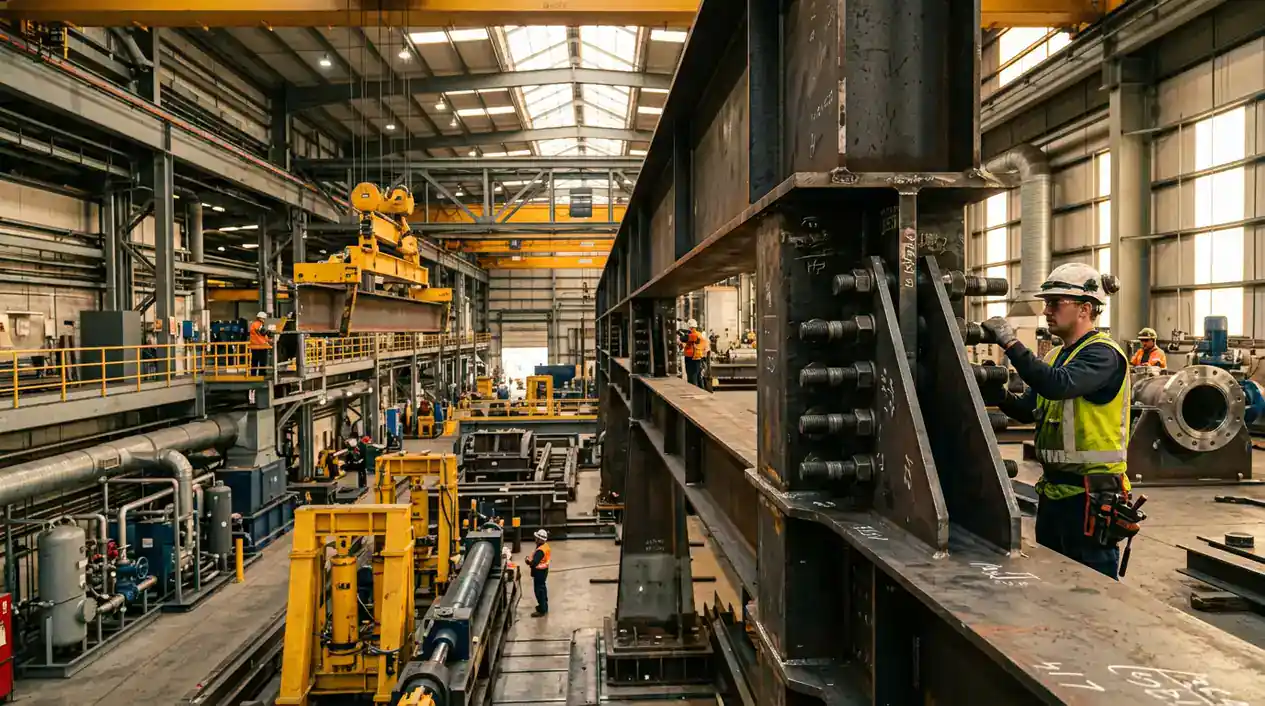
High strength bolts are not just stronger versions of standard fasteners. They are system components that only perform properly when grade, geometry, coating, preload method, and inspection all line up with the real joint requirement.
If you are buying high strength bolts for structural steel, heavy machinery, automotive assemblies, or industrial projects, start with the application, not the catalog. Define the load path, environment, coating limits, installation method, and documentation requirements first. Then match the bolt family to that reality.
That approach is slower at the RFQ stage. It is much faster than a site delay, a rejected lot, or a field failure.
Related Products
Solutions & Cluster
Related Articles
- Nylon Nut Guide: Types, Applications, and How to Choose the Right One
- Locking Nuts: Complete Guide to Types, Selection, and Installation
- Essential Guide to Triangle Bolt Applications and Removal Techniques
- Rivet Nut Ultimate Guide: Installation, Selection & Applications for 2026
- Metal Fasteners: Types, Materials, and How to Choose the Right One
- Male to Female Hex Spacer: The Complete Guide to Types, Materials, Specs, and Industrial Applications
- Plastic Spacers: Complete Guide to Types, Materials & Selection
- Nylon Spacers: The Complete Guide to Types, Sizes, and Applications